


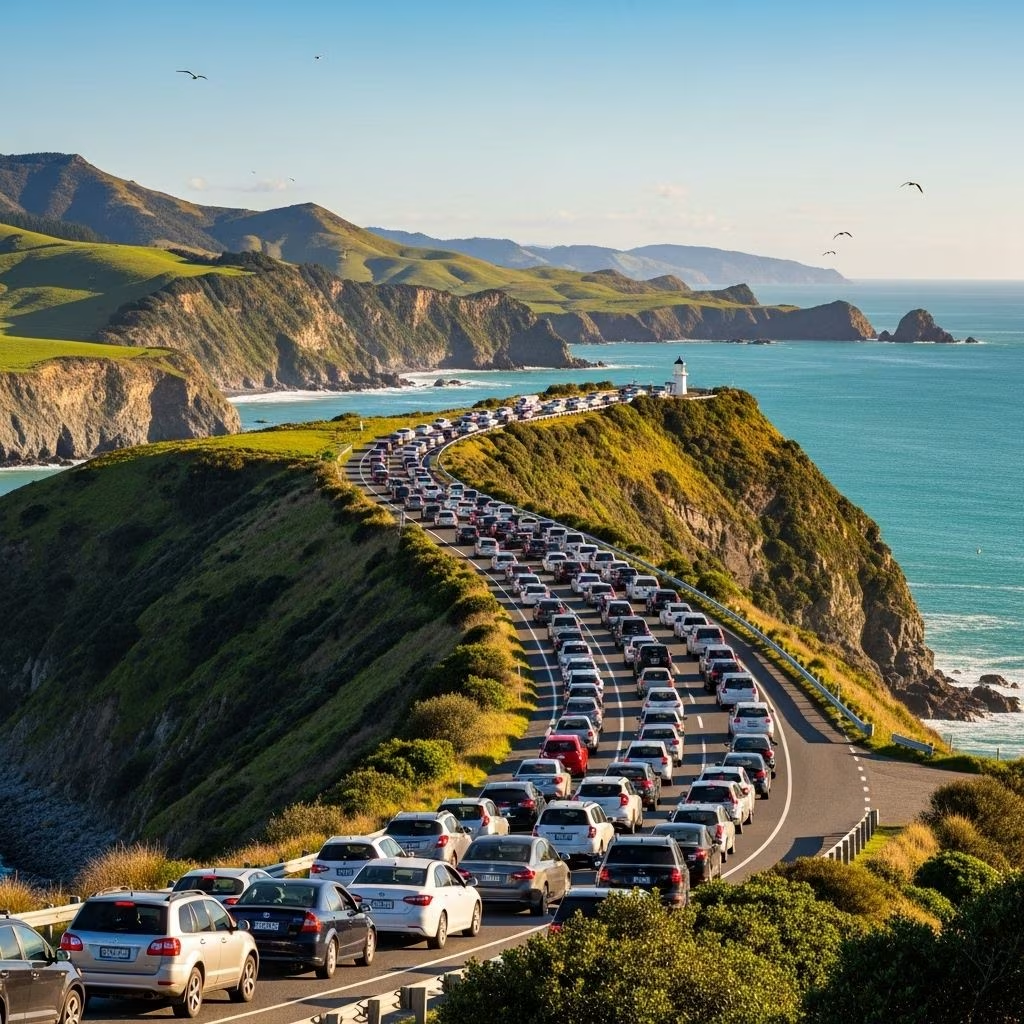
New Zealand: The Only Nation With More Cars Than People
When discussing the world’s automotive leaders, countries like the United States or Germany often come to mind. But in the realm of vehicles per capita—cars relative to population—one country stands uniquely above the rest: New Zealand. With a car ownership rate surpassing one car for every person, New Zealand holds the record for the highest cars-per-capita ratio globally, a surprising distinction that reveals much about mobility, economics, and culture in this island nation.
Understanding ‘Cars Per Capita’
Before unraveling how New Zealand achieved this top spot, it’s crucial to define what “cars per capita” means. The metric typically reflects the number of registered passenger vehicles (sometimes including both privately-owned and commercial cars) divided by the population, presented as cars per 1,000 people or as a simple average per individual.
- In New Zealand’s case, the ratio exceeds one car per person—a world first among nations with significant populations.
- This figure includes a considerable number of second-hand imports and excludes very small microstates with population nuances affecting vehicle counts.
How New Zealand Reached This Milestone
New Zealand’s population is relatively small—about 5 million—but the number of registered vehicles dwarfs that of larger nations relative to population size. As of 2025, with 869 cars per 1,000 people, it trumps even the heavily motorized United States (860 per 1,000).
Several factors have contributed to this phenomenon:
- Car Import Policies: Since the 1980s, New Zealand has pursued vehicle deregulation, allowing a flood of affordable, used cars into the country, especially from Japan. This policy dramatically increased the country’s vehicle stock while making car ownership accessible to nearly every resident, including young drivers and families.
- Urban and Rural Geography: With many small towns, vast rural areas, and limited public transportation infrastructure outside large cities, owning a car is often a necessity. Public transport exists but isn’t comprehensive enough for most daily needs, making personal vehicle ownership the “default”.
- Cultural Attitudes: There’s a deeply entrenched car culture in New Zealand, where outdoor recreation, travel, and adventure are part of national identity. Cars—and especially recreational vehicles—are regarded as tools of freedom and exploration.
- Low Barriers to Ownership: Registration fees, insurance costs, and taxes for car ownership are relatively low compared to many developed nations.
The Global Car Ownership Landscape
New Zealand’s car ownership rate stands out starkly when compared with other countries, large and small.
| Country | Cars per 1,000 People | Notable Information |
|---|---|---|
| New Zealand | 869 | Leads the world; dominated by used Japanese imports |
| United States | 860 | Vast land, high urban sprawl, truck/SUV dominated |
| Poland | 761 | Highest in Europe, but low percentage of EVs |
| Italy | 756 | Sizable share of small city cars, dense road networks |
| Japan | 612 | Homegrown industry, efficient but high rate |
| Australia | 737 | Car essential in most areas |
| China | 223 | Rapid growth, but still low per capita due to population |
| India | 33 | Vast potential; many rely on two-wheelers |
| Libya | 490 | Highest in Africa |
It’s important to note that some European microstates like San Marino or Gibraltar report >1,000 vehicles per 1,000 people, but these are statistical outliers due to their small size and taxation policies. Among larger, economically developed nations, only New Zealand averages more than one car per person in practical, everyday terms.
Why Aren’t Other Countries at New Zealand’s Level?
- Urbanization: In many densely urbanized countries, public transportation networks reduce the need for multiple vehicles per household. European cities often have robust train, tram, and subway systems.
- Regulations and Costs: High taxes, urban congestion charges, pricy insurance, and fuel costs all dampen car ownership in places like Singapore, Norway, and the UK.
- Geographical and Socioeconomic Barriers: In many developing nations, car ownership is still a distant aspiration. India, most African nations, and Southeast Asia have low rates, with many residents relying on motorcycles or public transport.
- Sustainability Concerns: Several countries are actively discouraging car growth to meet climate goals by promoting bikes, walking, and electric transit options.
New Zealand’s Car Culture and Its Roots
Much of New Zealand’s landscape is rural or semi-rural. Without comprehensive rail or bus services, mobility is near-synonymous with car ownership. For many, the car isn’t just a status symbol but a functional tool: for commuting, shopping, school runs, and leisure.
The strong presence of secondhand Japanese imports has kept vehicle prices particularly low, allowing for fleet renewal and widespread access. The ongoing popularity of recreational vehicles, trucks, and SUVs speaks to the country’s outdoor ethos—camping, surfing, farming, and exploring are central to local lifestyles.
Environmental and Social Implications
New Zealand’s high vehicle rate comes with complex consequences:
- Traffic and Urban Design: Increasing vehicle numbers increase traffic congestion and urban sprawl. Parking demand shapes city planning and public space allocation.
- Emissions: The road transport sector accounts for a significant share of New Zealand’s carbon emissions. While adoption of electric vehicles (EVs) is growing, the vast existing fleet remains primarily fossil-fuel dependent.
- Infrastructure Demand: High vehicle numbers strain road maintenance, requiring ongoing public investment.
- Sustainability Debate: Policies now seek to balance mobility’s benefits with goals like reducing congestion, encouraging cleaner vehicles, and increasing investment in public and active transport.
How New Zealand Is Responding
The government and local authorities have launched diverse efforts, including:
- Incentives for consumers to purchase electric and hybrid vehicles
- Expanding infrastructure for cycling, walking, and public transport
- Public awareness campaigns about the impacts of excessive vehicle use
- Regulations aimed at reducing the oldest and most polluting vehicles on the road
Yet, change remains gradual, and car ownership continues to be a central part of New Zealand life—at least for now.
The Global Future of Car Ownership
New Zealand may currently lead in vehicles per capita, but global car ownership patterns are in flux. Factors shaping tomorrow’s rankings include rapid urbanization, investment in sustainable transport, economic growth in developing countries, and the advent of new mobility solutions (such as ride-sharing and autonomous vehicles).
Worldwide car ownership averages about 203 vehicles per 1,000 people, a measure expected to rise as incomes in Asia, Africa, and Latin America increase. Conversely, some developed countries are seeing a plateau or even slight declines as city dwellers increasingly prioritize walkability, cycling, or shared transport. Young people, especially in urban centers, value flexible, on-demand mobility over traditional ownership.
Countries with the Fastest Growth
- Vietnam: Between 2015 and 2020, vehicle ownership expanded at 17% yearly—a record pace—driven by a rising middle class.
- China: A massive absolute increase, even though per capita rates are lower than Western countries.
- India: Rapid growth, but motorcycles and scooters still dominate transport for most families.
Frequently Asked Questions (FAQs)
Q: What is the only country with more cars than people?
A: New Zealand is the only nation with more than one car per person among countries with populations greater than a few hundred thousand. Its current rate exceeds 869 vehicles per 1,000 people.
Q: Why does New Zealand have so many cars per capita?
A: Key reasons include vehicle deregulation and used car imports from Japan, a rural geography necessitating private transport, a vibrant car culture, and relatively low costs of car ownership.
Q: Are there any countries where car ownership is even higher?
A: Some European microstates (San Marino, Gibraltar, Jersey) show higher vehicles-per-capita, but these figures are statistical anomalies due to small populations and unique tax/tourism dynamics. New Zealand leads among sizable nations.
Q: How does New Zealand’s car ownership affect the environment?
A: The nation’s fleet contributes significantly to transport emissions, prompting government strategies to promote electric vehicles, update regulations, and develop more sustainable urban designs.
Q: Is the cars-per-capita number rising or falling worldwide?
A: Car ownership is still rising in many developing economies with emerging middle classes, but some wealthy cities are seeking alternatives to personal car ownership to address congestion and climate goals.
Key Takeaways
- New Zealand occupies a unique position as the global leader in cars-per-person, with factors including geography, policy, and culture underpinning this status.
- Worldwide, car ownership continues to grow, though at varying rates, and with growing attention to sustainability and alternative modes of transport.
- Other countries may eventually close the gap with New Zealand, but significant shifts in infrastructure, economics, and consumer preference would be needed.
References
- https://electroiq.com/stats/car-ownership-statistics/
- https://www.voronoiapp.com/automotive/Who-Owns-the-Most-Vehicles-per-Capita-by-Country-701
- https://autokunbo.com/number-of-cars-in-the-world-2025-key-stats-figures/
- https://www.visualcapitalist.com/vehicles-per-capita-by-country/
- https://en.wikipedia.org/wiki/List_of_countries_and_territories_by_motor_vehicles_per_capita
- https://worldpopulationreview.com/country-rankings/cars-by-country
- https://www.statista.com/forecasts/1452573/share-of-car-owners-in-selected-countries-worldwide
- https://www.autoinsurance.com/research/car-ownership-statistics/
- https://hedgescompany.com/blog/2021/06/how-many-cars-are-there-in-the-world/
- https://www.threads.com/@marcelale13/post/DIqrOzLNazj/top-10-countries-with-the-most-cars-per-capita-2025vehicles-per-1000-people1-san


