France’s First Vegan Michelin Star: ONA and Claire Vallée’s Culinary Revolution
ONA—short for Origine Non-Animale, or Animal-Free Origin—made history when chef-owner Claire Vallée became the first in France to be awarded a Michelin star for an entirely vegan restaurant. The journey from humble beginnings to culinary stardom has not only transformed local perceptions of plant-based cuisine but also set a powerful example for sustainable gastronomy worldwide.
The Rise of Vegan Cuisine in French Fine Dining
France, lauded as the epicenter of classical gastronomy, has long prioritized animal-based delicacies in its celebrated culinary canon. Against this backdrop, the emergence of a vegan Michelin-starred restaurant marks a seismic shift. Historically, plant-based restaurants struggled for recognition in a country where butter, cream, and foie gras were culinary cornerstones. Yet, ONA’s success demonstrates that veganism is evolving from niche to revered, combining gourmet excellence with strong ethical values.
Claire Vallée: The Visionary Behind ONA
Claire Vallée, former archaeologist turned chef, embarked on a unique culinary path after a transformative trip to Thailand. Inspired by vibrant plant-based cuisine, she returned to France determined to create a fine dining experience rooted in ethical, sustainable, and innovative principles.
Facing skepticism from lenders and industry peers, Vallée could not secure traditional banking support for her dream. Banks considered vegan gastronomy both risky and commercially unsound, especially for an establishment planned in the coastal town of Arès, a location judged insufficiently promising by financial standards.
- Claire Vallée launched ONA (“Origine Non Animale”) in 2016 after a successful crowdfunding campaign.
- More than 120 supporters rallied to raise €10,000, and a vibrant volunteer network transformed her vision into reality via workfunding—collaborative renovations and construction led by community hands.
- ONA opened its doors to diners with a philosophy rooted in respect for people, animals, and the environment.
Challenges and Triumphs: Building a Vegan Fine Dining Destination
ONA’s journey was far from easy. The idea of “gourmet vegan” initially attracted disbelief—even derision. Traditional banks dismissed the project, citing doubts about market demand for plant-based haute cuisine. Investors believed the absence of animal products would doom the venture from the start.
Vallée refused to back down. Energized by the belief in her cause, she rallied supporters through social media, initiated a crowdfunding campaign, and leveraged the power of communal action.
- Workfunding: Community volunteers helped transform the restaurant space in Arès through painting, constructing, plumbing, and gardening.
- Passion-driven: ONA became a life project for Vallée and her team—culinary innovation coupled with activism.
The challenge of running a fully vegan kitchen required continuous culinary innovation. ONA’s menu favored local, organic produce, foraged plants, seaweed, seeds, roots, and wild herbs sourced meticulously from the region. Each plate became a testament to creativity and craftsmanship, changing perceptions of what vegan cuisine could be.
ONA’s Cuisine: Rewriting the Rules of Gastronomy
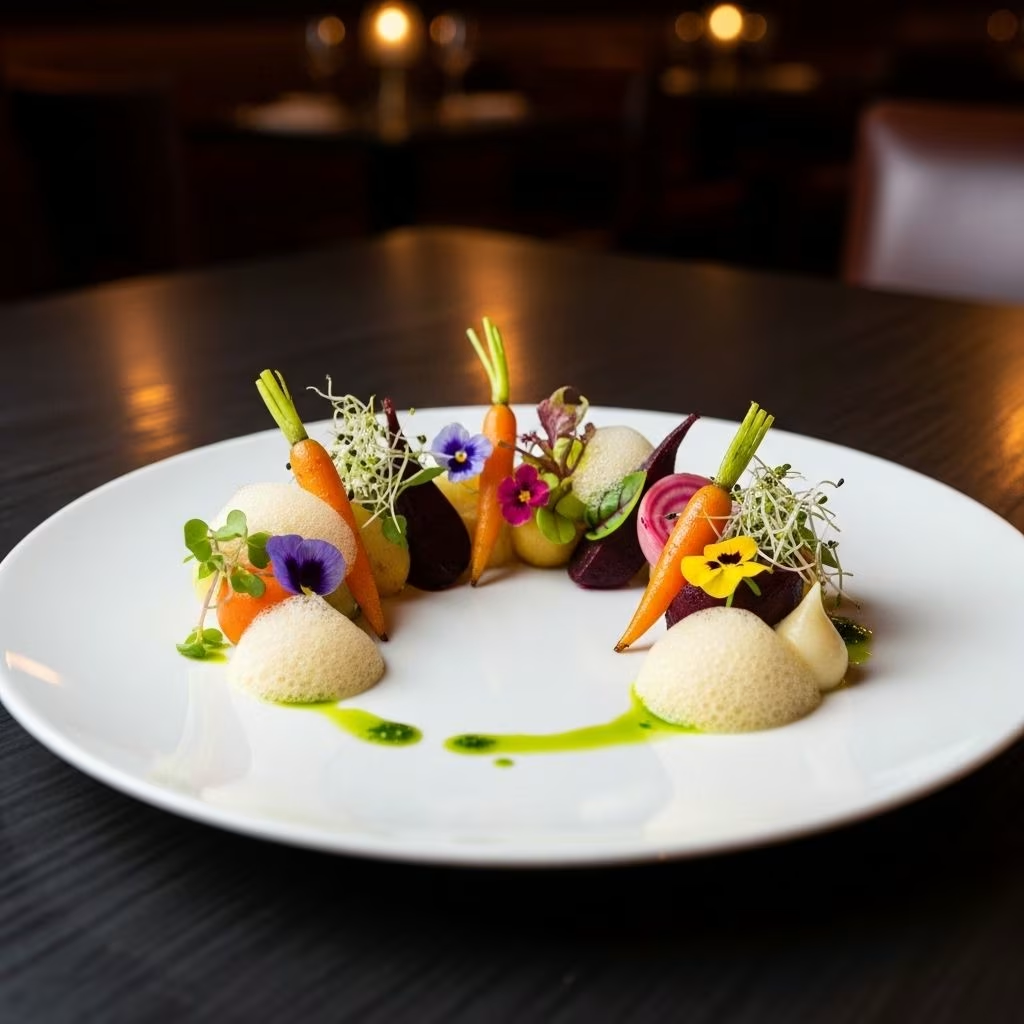
ONA’s menu is a celebration of the region’s terroir, enhanced through modern cooking techniques and an unwavering respect for nature’s bounty. Far more than mere substitution for meat and dairy, each dish reimagines flavor, texture, and visual appeal from the ground up.
- Plates feature seasonal produce, wild herbs, edible flowers, legumes, nuts, and grains.
- Techniques include fermentation, slow-roasting, and precise plating—a nod to classical French haute cuisine, but without animal products.
- Special attention is paid to sustainability, from local sourcing to zero-waste cooking and eco-friendly materials in every aspect of the dining experience.
These dishes strive not only for taste and beauty but also for ecological harmony. Vallée’s cooking reflects “an ethical cuisine, respectful of life and the planet,” as she describes in her own words.
The Double Michelin Award: Classic and Green Stars
In early 2021, after years of perseverance and creativity, ONA received its first Michelin star. This distinction signified global culinary recognition for vegan cuisine, shattering longstanding barriers. On the same night, ONA was also awarded the Michelin Green Star, a relatively new recognition for restaurants leading the way in sustainable gastronomy.
- Michelin Star: Awarded for culinary excellence, creativity, and high-quality ingredients and execution.
- Green Star: Honors leadership in ethical, sustainable, and environmentally responsible practices within hospitality.
The chef described her emotions as overwhelming—a sense of disbelief and pride after years of dedication. “It felt like I got hit by a train,” Vallée admitted in interviews following the announcement, emphasizing how the achievement seemed impossible when she started.
Sustainability at the Heart of ONA
ONA’s ethos is anchored in sustainable gastronomy. This influences every operational facet, including:
- Partnerships with organic farmers and local producers, creating a low-carbon supply chain.
- No plastic usage and eco-friendly materials in décor, furnishings, and packaging.
- Integrated zero-waste approach—composting, upcycling, and minimizing leftovers.
- Use of reclaimed wood and recycled paper for restaurant renovation and tableware.
- Water and energy-saving systems, reinforcing environmental accountability.
The restaurant’s renovation after the Michelin recognition, led by designer Anja Mertens, further embraced green principles. The contemporary, naturalistic makeover used sustainable woods, recycled elements, and eco-friendly paint, allowing the space itself to mirror ONA’s philosophy of ecological respect.
Ethical Philosophy: Food as Activism
Claire Vallée is outspoken about the activism at the core of ONA’s culinary identity. Her philosophy is to refuse “animal exploitation in all its forms” and cultivate a “place of life,” where respect for all living beings and the planet is central to every decision.
The restaurant’s menu commits to 100% vegan ingredients, and its wine list is meticulously curated for vegan, biodynamic, and organic labels—a rarity even among acclaimed establishments.
- Emphasis on plant-based nutrition as a means of personal and planetary health.
- Advocacy for animal welfare through non-exploitative sourcing and resource use.
- Encouraging diners to experience food in new, conscious ways—turning each plate into a subtle lesson in sustainability.
The Global Significance: Redefining Gastronomic Standards
ONA’s recognition sent shockwaves across the international food scene. The awarding of a Michelin star to a vegan restaurant symbolized broader acceptance of the plant-based movement, once considered a passing trend but now firmly at the center of culinary innovation.
- Establishes proof that vegan cuisine can match—and exceed—the standards of traditional fine dining.
- Inspires chefs and restaurateurs worldwide to experiment fearlessly with plant-based menus.
- Shows that ethical impact and gastronomic excellence can coexist, influencing future Michelin criteria and restaurant culture globally.
Following ONA’s success, the trend of Michelin-recognized vegan and vegetarian fine dining is accelerating throughout Europe and beyond, fostering a creative renaissance in plant-based gastronomy.
Community, Collaboration, and the Power of Crowdfunding
The story of ONA is also a story of communal effort, grassroots support, and resilience. When faced with institutional barriers, Claire Vallée leveraged the power of the internet and collective action—a movement that’s becoming more common among chefs with visionary goals but limited access to traditional capital.
ONA’s community-driven approach included:
- Crowdfunding for initial capital, giving supporters a sense of ownership and direct investment in the process.
- “Workfunding” campaigns where locals volunteered time and skills to refurbish the restaurant, strengthening its ties with the community.
- Inclusive, transparent business practices, furthering a sense of shared ethos and purpose among staff, diners, and local residents.
Frequently Asked Questions
- Q: What does ONA mean?
A: ONA stands for “Origine Non Animale” or “Animal-Free Origin” in French. It reflects the restaurant’s commitment to 100% plant-based cuisine. - Q: Who is Claire Vallée?
A: Claire Vallée is the chef and founder of ONA, who transitioned from archaeology to vegan gastronomy, becoming the first to win a Michelin star for a vegan restaurant in France. - Q: What is unique about ONA’s cuisine?
A: The cuisine is entirely vegan, using local, organic, and seasonal ingredients. Every dish is crafted with attention to sustainability and culinary innovation, drawing on classical French techniques without animal products. - Q: What is the Michelin Green Star?
A: The Green Star is a distinction awarded by the Michelin Guide to restaurants that demonstrate outstanding commitment to sustainability and ecological responsibility in all aspects of their operations. - Q: How did ONA fund its opening?
A: Claire Vallée and her team relied on crowdfunding, with over 120 supporters providing start-up capital, alongside community volunteering campaigns for renovation and setup. - Q: Why is ONA’s achievement significant?
A: ONA is the first fully vegan restaurant in France to earn a Michelin star, breaking new ground for plant-based gastronomy and setting a precedent in one of the world’s most traditional food cultures.
Table: Key Features of ONA Compared to Traditional Michelin Fine Dining
| Category | ONA | Traditional Michelin Fine Dining |
|---|---|---|
| Foundation | 100% plant-based, animal-free | Often animal proteins and dairy central |
| Ingredients | Local, organic, foraged produce; wild herbs | Luxury animal products, imported specialities |
| Sustainability | Zero waste, eco-materials, green energy | Rapidly evolving toward sustainability, variable by venue |
| Philosophy | Planet and animal-centered, activism through food | Culinary art with variable ethical focus |
| Recognition | Classic Michelin star and Green Star | Classic stars (Green Star if prioritizing sustainability) |
Impact on the Future of Culinary Arts
ONA’s triumph is emblematic not only of a changing food culture but also of the future of hospitality: one in which gastronomy, sustainability, and social values are inextricably linked. The historic achievement affirms that ethical cuisine can stand at the pinnacle of culinary artistry—delicious, innovative, and respectful of both people and the planet.
- Encourages the next generation of chefs to rethink what’s possible in the kitchen, embracing bold plant-based approaches.
- Signals to diners and critics that gastronomic excellence is no longer bound by tradition, but by thoughtful innovation.
- Challenges the hospitality industry to place equal value on sustainability and savor, merging taste with ecological purpose.
Claire Vallée and ONA have started a new chapter in the global food story—one where compassion, sustainability, and craft unite at the heart of fine dining.
References
- https://womensagenda.com.au/latest/claire-vallees-origine-non-animale-becomes-first-vegan-restaurant-to-win-a-michelin-star/
- https://www.youtube.com/watch?v=IbYFriDTzzE
- https://clairevallee.com/en/ona/
- https://www.rfi.fr/en/france/20250802-no-bones-about-it-as-star-chef-sets-vegan-milestone-in-french-fine-dining-passard-l-arp%C3%A8ge-gastronomy