


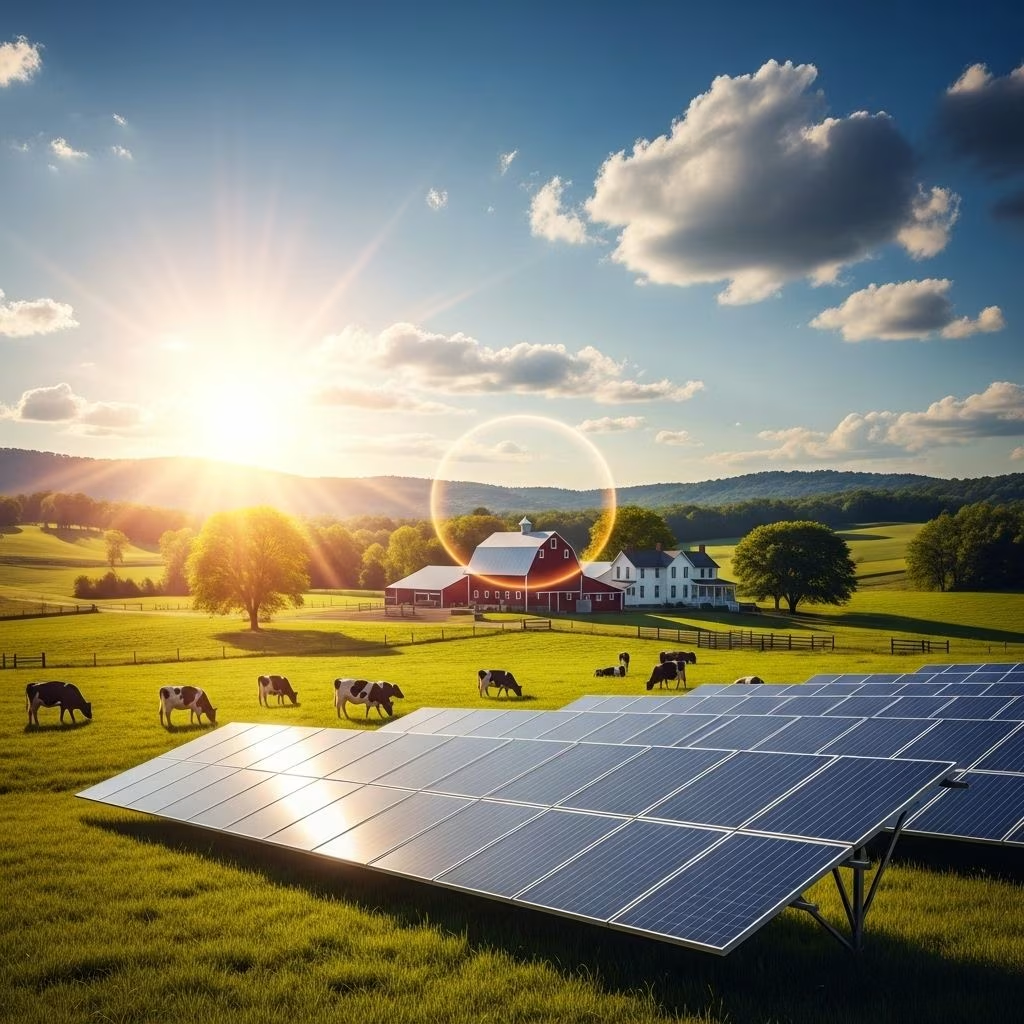
In a groundbreaking move toward comprehensive sustainability, Organic Valley has launched an innovative financing program that puts renewable energy within reach of organic farmers across America. The Powering the Good Loan Fund represents a first-of-its-kind initiative in the organic food industry, specifically designed to help farmers reduce their carbon footprint while simultaneously cutting energy costs. Through a strategic partnership with Clean Energy Credit Union, this $1 million fund addresses a critical gap in agricultural financing, offering farmers the capital they need to transition to clean energy without the prohibitive costs that typically accompany such investments.
The cooperative’s approach tackles one of agriculture’s most pressing challenges: the upfront costs of sustainability improvements. While renewable energy installations offer long-term economic and environmental benefits, the initial investment has traditionally been a significant barrier for family farms. Organic Valley’s loan fund removes this obstacle by providing below-market interest rates and extended repayment terms that align monthly loan payments with the savings farmers realize from reduced electricity bills. This innovative financing structure ensures that farmers can begin their clean energy journey without adding financial strain to their operations.
Understanding the Financial Innovation Behind Powering the Good
The structure of Organic Valley’s loan program reflects a deep understanding of the financial realities facing modern farmers. Traditional agricultural lenders have often been hesitant to finance renewable energy projects, viewing them as higher-risk investments or lacking the expertise to properly evaluate such proposals. This reluctance has left many farmers unable to access the capital needed for sustainability improvements, even when the projects make clear economic sense over the long term.
Organic Valley’s program offers two distinct financing tracks tailored to different types of projects. Energy efficiency improvements, including LED lighting upgrades, plate coolers for milk refrigeration, insulation, and ventilation systems, receive loans with interest rates between 2.275 and 4.25 percent over a 10-year repayment period. These relatively modest projects deliver immediate energy savings while requiring less capital upfront.
For more substantial renewable energy installations, particularly solar electric systems and geothermal heating and cooling, the fund offers longer-term financing with slightly higher rates. These loans feature repayment periods ranging from 12 to 20 years with interest rates between 4.5 and 5 percent. The extended terms are crucial because they allow the monthly loan payment to match or fall below the monthly savings on electricity costs, creating an immediate positive or neutral cash flow situation for farmers.
The Scope of Eligible Clean Energy Projects
The Powering the Good Loan Fund supports a comprehensive range of renewable energy and efficiency improvements designed to address the specific energy needs of dairy farms. Each eligible project type has been carefully selected based on its potential to deliver meaningful reductions in fossil fuel consumption while providing strong return on investment for participating farmers.
Solar electric systems represent the flagship technology supported by the fund. These photovoltaic installations can offset a significant portion or even all of a farm’s electricity consumption, depending on the system size and the farm’s energy profile. Dairy farms, which require substantial electricity for milk cooling, barn lighting, and automated milking equipment, are particularly well-suited to benefit from solar power. The predictable energy production of solar panels aligns well with the steady energy demands of dairy operations.
Plate coolers represent one of the most cost-effective efficiency improvements for dairy farms. These devices use cold well water to pre-cool fresh milk before it enters refrigerated bulk tanks, dramatically reducing the energy required for milk storage. The technology is simple, reliable, and delivers immediate energy savings that can be measured and verified.
LED lighting upgrades throughout barns and facilities offer another quick-payback opportunity. Modern LED technology consumes a fraction of the electricity required by traditional lighting while providing superior illumination and lasting significantly longer. For farms operating lights throughout the night for animal care and milking operations, LED conversion can cut lighting costs by 75 percent or more.
Geothermal systems, including ground-source heat pumps, leverage the stable temperature of the earth to provide highly efficient heating and cooling. While these systems require more substantial upfront investment, they deliver exceptional long-term performance and virtually eliminate the need for fossil fuel-based heating. The loan fund’s extended repayment terms make these advanced systems accessible to farmers who might otherwise be unable to afford them.
Addressing Scope 3 Emissions Through Farm-Level Action
Organic Valley’s loan fund represents a strategic approach to addressing the cooperative’s Scope 3 emissions—the indirect emissions that occur throughout its value chain, primarily at the farm level. For food companies, Scope 3 emissions typically account for the vast majority of total carbon footprint, with agricultural production being the largest contributor. By enabling farmers to transition to renewable energy, Organic Valley directly reduces emissions across its entire supply chain.
The cooperative has already achieved significant milestones in its own operations, reaching 100 percent renewable power for all company-owned facilities since 2019. This achievement came through investments in regional solar projects, including three new solar sites in Wisconsin developed in collaboration with rural communities and the city of Madison. However, leadership in corporate facilities represents only a portion of the sustainability equation. The emissions from farming operations—where milk is produced, animals are raised, and crops are grown—constitute the larger environmental challenge.
Nicole Rakobitsch, Organic Valley’s director of sustainability, emphasized that while the cooperative’s farmers already practice many regenerative methods such as rotational grazing that sequester carbon, reducing fossil fuel consumption at the farm level requires addressing specific financial barriers. Many farmers recognize the value of renewable energy and efficiency improvements but struggle to secure traditional financing for these projects. Banks may lack familiarity with renewable energy technologies, require collateral that farmers cannot easily provide, or offer loan terms that make the projects economically unfeasible.
The Growing Trend of Agricultural Sustainability Financing
Organic Valley joins a growing movement of food companies actively financing sustainability improvements among their farmer-partners. This trend reflects increasing recognition that achieving meaningful environmental goals requires investment throughout the supply chain, not just within corporate operations. Several major agricultural companies have pioneered similar approaches, each bringing unique strategies to address farmer financing needs.
The Land O’Lakes Sustain program, launched in 2018 and now part of Truterra, provided early leadership in this space. The cooperative’s program offered loans enabling farmers to adopt sustainable practices including water-reuse systems and manure separation technology. By directly financing these improvements, Land O’Lakes helped overcome the capital barriers that prevented many farmers from implementing practices that would benefit both their operations and the environment.
Danone took a different approach through a partnership with rePlant Capital, an impact investment fund focused on regenerative agriculture. Danone committed to contributing up to 40 percent of rePlant’s $50 million fund, with proceeds designated for Danone’s farming partners pursuing conversion to regenerative or organic farming methods. The fund’s first loan, issued in January 2020, supported a Kansas family farm in installing moisture probes to optimize irrigation and reduce water consumption.
What distinguishes Organic Valley’s initiative is its exclusive focus on renewable energy and energy efficiency. While other programs support a broader range of sustainability practices, Organic Valley has identified energy transition as a critical priority and designed its program specifically to address this need. This focused approach allows the cooperative to develop deep expertise in renewable energy financing, provide specialized technical assistance, and negotiate favorable terms with equipment suppliers and installers.
Economic Benefits Beyond Environmental Impact
While environmental benefits drive the program’s sustainability mission, the economic advantages for participating farmers provide equally compelling motivation. Energy costs represent a significant and ongoing expense for dairy operations, with electricity needed for milk cooling, barn climate control, milking equipment, and general farm operations. By generating their own renewable energy or improving efficiency, farmers gain greater control over these costs and insulate themselves from volatile energy markets.
The program’s financing structure has been carefully designed to ensure that sustainability and profitability work in tandem rather than in conflict. Bob Kirchoff, Organic Valley’s CEO, emphasized that the initiative must work economically for farmers, not just environmentally. The combination of favorable interest rates and extended loan terms creates a scenario where farmers can begin realizing net economic benefits immediately or within a very short timeframe.
Consider a typical solar installation: A farmer might invest $50,000 in a solar array that reduces annual electricity costs by $5,000. With traditional bank financing at higher interest rates and shorter terms, monthly loan payments might exceed the monthly electricity savings, creating a financial burden during the payback period. Under Organic Valley’s program, the longer repayment term and lower interest rate bring monthly payments in line with monthly savings, allowing the farmer to pursue the project without compromising cash flow.
Beyond direct energy savings, renewable energy installations can provide additional economic benefits through net metering programs, renewable energy credits, and federal or state incentive programs. Many states allow farms to sell excess solar production back to the grid, further improving project economics. The loan fund works in conjunction with these other financial incentives, maximizing the total economic benefit for participating farmers.
Technical Assistance and Implementation Support
Access to capital represents only one component of successful renewable energy adoption. Many farmers lack the technical expertise to evaluate different renewable energy options, size systems appropriately, select qualified installers, or navigate permitting requirements. Recognizing these challenges, Organic Valley’s program includes technical assistance to help farmers through the entire implementation process.
For farmers who already have specific clean energy projects in mind, the program provides financing and support to move forward efficiently. For those still exploring options, Organic Valley offers guidance to help identify the most appropriate technologies based on each farm’s unique energy profile, available resources, and financial situation. This consultative approach ensures that farmers make informed decisions and select solutions that will deliver optimal performance and return on investment.
The partnership with Clean Energy Credit Union brings additional expertise to the program. As a financial institution specializing in clean energy financing, Clean Energy CU understands the technical and economic characteristics of renewable energy projects in ways that traditional agricultural lenders typically do not. This specialized knowledge allows for more accurate risk assessment, appropriate loan structuring, and better support for borrowers throughout the life of their projects.
Program Scale and Future Expansion
The initial $1 million fund represents a meaningful commitment, but Organic Valley has designed the program with significant growth potential. The cooperative serves over 1,700 farmers across the United States, representing an enormous opportunity for clean energy deployment. As farmer interest grows and early projects demonstrate success, Organic Valley expects to substantially expand the fund’s capitalization.
Early response has been encouraging, with approximately a dozen farms across the national cooperative already applying for loans in the program’s initial phase. Kirchoff indicated that demand is expected to accelerate as farmers see their peers successfully implementing projects and as word spreads about the favorable loan terms and support services available.
The program’s structure allows for organic growth driven by farmer interest and demonstrated results. As participating farms complete installations and begin realizing savings, they serve as proof points for other farmers considering similar projects. This peer-to-peer influence within the cooperative can be particularly powerful, as farmers often trust the experiences and recommendations of fellow farmers more than external marketing or advocacy.
Broader Implications for Agricultural Sustainability
Organic Valley’s loan fund represents more than just a financing mechanism; it embodies a whole systems approach to sustainability that recognizes the interconnection between environmental stewardship, economic viability, and farmer autonomy. By helping farmers reduce their reliance on fossil fuels, the program simultaneously addresses climate change, improves farm profitability, and increases energy independence for rural communities.
The initiative demonstrates how cooperatives can leverage their structure and scale to address challenges that individual farmers cannot easily solve alone. By pooling resources and negotiating as a collective, Organic Valley creates opportunities that would be unavailable to farmers acting independently. This cooperative advantage extends beyond favorable loan terms to include technical expertise, vendor relationships, and the ability to learn from peer experiences across a large network.
The program also contributes to the broader narrative of agriculture’s role in climate solutions. Farming has often been portrayed primarily as a source of greenhouse gas emissions, but initiatives like Powering the Good highlight agriculture’s potential to be part of the solution. Organic farming practices already sequester significant carbon through methods like rotational grazing and maintaining healthy soils. Adding renewable energy generation and efficiency improvements further reduces agriculture’s carbon footprint while demonstrating that sustainable practices and economic success can coexist.
Frequently Asked Questions
Q: Who is eligible to apply for loans through the Powering the Good Loan Fund?
A: The loan fund is available exclusively to Organic Valley member farmers across the United States. The cooperative serves over 1,700 organic farmers who could potentially access these financing opportunities for renewable energy and energy efficiency projects.
Q: What makes Organic Valley’s loan terms more favorable than traditional bank financing?
A: The program offers lower interest rates (2.275-5% depending on project type) and longer repayment periods (10-20 years) compared to typical agricultural loans. These terms are structured so monthly loan payments match or fall below monthly energy savings, creating immediate positive or neutral cash flow. Traditional banks also typically require collateral and may be less comfortable financing renewable energy projects.
Q: Can farmers combine Powering the Good loans with other incentive programs?
A: Yes, farmers can typically layer these loans with federal tax credits, state incentive programs, renewable energy credits, and utility rebates to maximize the total economic benefit of their clean energy projects. The program is designed to work in conjunction with other available financial support.
Q: How long does the application and approval process typically take?
A: While specific timelines vary based on project complexity and completeness of applications, the program is designed to move efficiently. Organic Valley provides technical assistance to help farmers prepare strong applications and works through the partnership with Clean Energy Credit Union to expedite processing.
Q: What kind of technical support does Organic Valley provide to farmers pursuing these projects?
A: The program includes comprehensive technical assistance to help farmers identify appropriate technologies for their specific situations, properly size systems, select qualified installers, and navigate permitting requirements. Support is available both for farmers with existing project plans and those still exploring options.
Q: Does the loan fund support projects beyond solar panels?
A: Yes, the fund covers a wide range of renewable energy and efficiency improvements including solar electric systems, geothermal heating and cooling, LED lighting, plate coolers, energy-efficient ventilation, insulation upgrades, and variable frequency drives (VFDs) for motors and pumps.
References
- https://trellis.net/article/organic-valley-loans-dairy-farmers-funds-renewable-energy/
- https://www.smartenergydecisions.com/news/organic-valley-launches-re-financing-program-for-farmers/
- https://www.wpr.org/agriculture/organic-valley-launches-loan-program-clean-energy-projects-farms
- https://energyonwi.extension.wisc.edu/2021/04/01/organic-valley-launches-loan-program-for-clean-energy-projects-on-farms/
- https://www.prnewswire.com/news-releases/organic-valley-launches-national-clean-energy-fund-for-its-farmers-301251202.html
- https://www.organicvalley.coop/newspress/organic-valley-launches-national-clean-energy-fund-its-farmers/
- https://www.organicvalley.coop/why-organic-valley/sustainability/
- https://www.organicvalley.coop/blog/Innovative-Carbon-Insetting-Program/


