


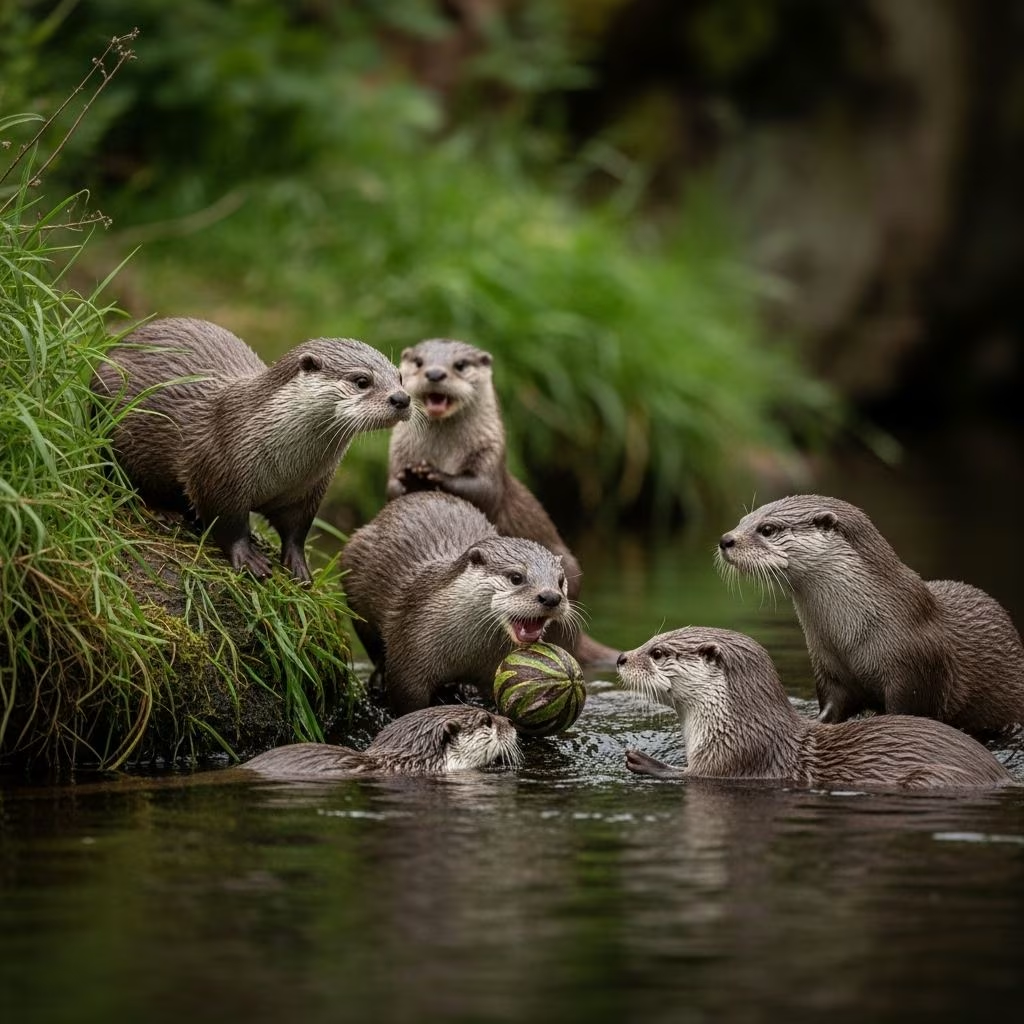
Otters—sleek, playful, and endlessly fascinating—delight observers in rivers, estuaries, and along rugged coastlines across the globe. These semi-aquatic mammals belong to the Mustelidae family, which also includes badgers, weasels, and wolverines. Otters are renowned for their lively antics, social complexity, and unique adaptations that allow them to thrive both on land and in water. Below, we dive deep into the wondrous world of otters, exploring the facts, myths, and ecological significance of these captivating creatures.
Meet the Otters: Diversity Across the Globe
There are 13 different species of otters found worldwide, each with their own unique behaviors, habitats, and conservation stories.
- River Otters (e.g., North American river otter): Found in freshwater lakes, rivers, and streams across North America, South America, Asia, and Africa.
- Sea Otters: Most famously inhabit the cold coastal waters of the northern Pacific, especially along the coasts of North America and Russia.
- Giant Otters: The Amazon’s largest otter, remarkably social and endangered.
- Other prominent species include the European otter, Asian small-clawed otter, and smooth-coated otter found in various aquatic habitats from marshes to mangroves.
While all otters share a set of adaptations for aquatic life, each species occupies a special ecological niche, reflecting the remarkable evolutionary flexibility of the group.
Physical Adaptations: Built for Aquatic Mastery
Otters demonstrate exquisite natural engineering:
- Streamlined bodies for efficient swimming, with muscular tails that act as rudders.
- Webbed feet that aid rapid movement in water.
- Dense fur—the densest in the animal kingdom—that insulates even in freezing waters. Sea otters, for example, can have up to one million hairs per square inch.
- Closeable ears and nostrils that help keep water out while diving.
Rather than relying on blubber, like seals or whales, sea otters depend entirely on their extraordinary fur coat for warmth. This adaptation requires constant grooming and cleaning to maintain its insulating effectiveness.
Diet and Feeding Behaviors: Supreme Aquatic Predators
Otters are carnivores, but their exact diet varies by species and local environment:
- River otters primarily eat fish, crayfish, amphibians, and crustaceans, but will also sample birds’ eggs, small mammals, insects, and occasionally aquatic plants.
- Sea otters are specialists in shellfish—diving for clams, sea urchins, crabs, abalone, and snails.
- Giant otters in South America are top predators of lakes and rivers, preying on fish (including piranhas) and even small caiman.
Otters have high metabolic rates and need to eat enormous amounts relative to their size—sometimes consuming up to 25% of their body weight daily in food. Their hunting and feeding habits play a key role in maintaining healthy ecosystem dynamics, especially by keeping prey populations in check.
Tool Use: Intelligent and Innovative Behavior
Among non-primate mammals, otters are standout tool users. Sea otters, in particular, are famous for employing rocks as anvils to crack open hard-shelled prey:
- They float on their backs, set a stone on their chest, and smash open shells for their meal.
- Some individuals keep a favorite stone tucked under their ‘armpit’ skin flap for repeated use.
- This trait highlights otters’ intelligence and problem-solving skills.
Social Lives: Playful, Curious, and Remarkably Social
Otters exhibit a wide repertoire of playful behaviors, which, beyond being adorable, serve vital biological purposes:
- Sliding down mud or snow banks, wrestling, somersaulting, and playing with objects are all part of daily life.
- Youth play hones essential skills for hunting, fighting, and survival.
- Otters are highly curious and can solve complex challenges both in captivity and in the wild.
Social structure varies dramatically:
- River otters can be solitary, but are often observed in family groups, with strong maternal care from females.
- Sea otters are famous for forming loose rafts—groups of up to 1,000 individuals—especially when resting.
- Giant otters display intense cooperative behavior within family units, with both parents and older siblings helping to raise pups.
Life Cycle and Reproduction
Otters have evolved fascinating reproductive strategies including delayed implantation (where a fertilized egg’s development pauses before implantation), which ensures pups are born when environmental conditions are optimal. Gestation periods and breeding seasons vary by species and region, but general highlights include:
- Litter sizes can range from 1 to 6 pups/cubs, depending on species.
- Females usually raise the young alone; the exception is the highly social giant otter.
- Pups are born with a full fur coat but are blind at first and only learn to swim after a few weeks.
- Weaning typically occurs around three months of age, though some species nurse longer.
Habitats: Rivers, Oceans, and Beyond
Otters are semi-aquatic mammals (with the notable exception of sea otters, which are true marine mammals) and exhibit a remarkable adaptability to different freshwater and coastal habitats. Examples include:
- Rivers, lakes, wetlands, estuaries, and mangrove forests
- Collapsed beaver lodges, logjams, hollows under rocks, and self-dug burrows as dens
- Abandoned dens of other animals or naturally occurring structures on the water’s edge
Despite their swimming prowess, river otters spend most of their time on land, while sea otters are almost entirely aquatic.
Threats and Conservation Challenges
While otters are apex predators in their habitats, they face several looming threats—almost all due to human activity:
- Habitat loss and degradation from urban development, deforestation, and draining of wetlands
- Pollution, especially chemical and oil spills that harm food sources and disrupt the otters’ delicate fur structure
- Overtrapping and illegal hunting for fur, once a major threat, are now managed but remain problematic in some areas
- Climate change impacting the availability of prey and suitable habitat, particularly for sea otters
Predators of otters include large carnivores such as bobcats, foxes, alligators, and even domestic dogs. However, human impact far outweighs natural predation in terms of population decline.
Otters as Ecosystem Guardians
Otters, especially river and sea otters, play a critical role in maintaining the health of aquatic ecosystems:
- As apex predators, they keep populations of fish, shellfish, and invertebrates in balance, preventing overgrazing of aquatic plants and maintaining clear water.
- Their presence is often an indicator of good water quality and a stable natural environment.
- Sea otters, in particular, are central to kelp forest ecosystems—by preying on sea urchins, they prevent these invertebrates from decimating kelp beds, which are vital marine habitats for countless species.
Interesting Otter Quirks and Fun Facts
- Unique sleeping habits: Sea otters often wrap themselves in kelp or hold paws with other otters while sleeping, creating adorable ‘rafts’ and preventing them from drifting away on ocean currents.
- Mischievous personalities: Otters are notorious for ‘stealing’ food and even objects. Their curiosity is boundless!
- No blubber for sea otters: Unlike other marine mammals, sea otters rely entirely on their fur for insulation, which means hours each day spent grooming.
- Aquatic acrobatics: Otters can somersault, slide, and even ‘dance’—both for fun and to shed excess water after swimming.
- Remarkable longevity: Some otters in the wild live up to 16 years, though many factors, especially predation and changing environments, can shorten this.
Otters and Humans: A Delicate Relationship
Throughout history, otters have inspired myths, legends, and affection wherever they are found. Yet, humans have also been their greatest threat. Conservation efforts are making a difference:
- Many otter species are now protected under national laws and international treaties.
- Environmental restoration and wetland conservation benefit otter populations worldwide.
- Eco-tourism initiatives provide economic incentives to preserve otter habitats.
However, ongoing advocacy and greater awareness are urgently needed, especially for critically endangered otters like the giant otter and the Asian small-clawed otter.
Glossary of Key Otter Terms
| Term | Definition |
|---|---|
| Carnivore | An animal that feeds primarily on other animals |
| Delayed Implantation | A reproductive adaptation in which implantation of a fertilized egg is delayed to ensure optimal timing of birth |
| Pelage | The fur or hair covering a mammal |
| Predator | An animal that hunts and eats other animals |
| Dorsal | Relating to the back or upper side of an animal |
Frequently Asked Questions (FAQs)
Q: How many species of otters exist worldwide?
A: There are 13 recognized species of otters found across every continent except Australia and Antarctica.
Q: What makes otter fur so special?
A: Otter fur is the densest of any animal, providing crucial insulation in cold waters. For example, sea otters can have over 800 million hairs on their bodies, helping them survive frigid ocean temperatures.
Q: Why are otters important for the environment?
A: Otters are key indicator species—their presence often signifies healthy aquatic ecosystems. As apex predators, they help regulate prey populations and maintain ecological balance, particularly in wetlands and coastal kelp forests.
Q: Are otters endangered?
A: Many species of otters face threats from habitat loss, pollution, and hunting. Some, like the giant otter and sea otter, are considered endangered or threatened, while others are recovering thanks to targeted conservation efforts.
Q: Can river otters and sea otters interbreed?
A: No, river otters and sea otters are distinct species with different genetic lineages, adaptations, and ranges, so they cannot produce hybrid offspring.
Q: What’s the main reason for otters’ playful behavior?
A: Playful acts help otters develop essential hunting, social, and survival skills. Play is also believed to relieve stress, maintain physical condition, and foster bonding among family members.
Further Reading and Learning
- Observe local otters in nature reserves or through wildlife webcams for firsthand insight into their behavior.
- Support conservation groups working to restore otter populations and aquatic habitats worldwide.
- Read more about otter-friendly policies and the importance of clean water stewardship in your region.
With their captivating antics, ecological significance, and resilience, otters remain some of the most enchanting, yet vulnerable, mammals in our natural world. Our appreciation and stewardship today will ensure that generations to come can continue marveling at these amazing animals—whether sliding through a stream or floating in a kelp bed under the sun.
References
- https://www.ebsco.com/research-starters/zoology/otters
- https://www.cbf.org/blogs/save-the-bay/2021/09/five-facts-you-otter-know.html
- https://www.youtube.com/watch?v=H15B7DFEnw0
- https://www.montereybayaquarium.org/animals/animals-a-to-z/sea-otter
- https://www.marinemammalcenter.org/news/how-sea-otters-can-help-save-the-planet
- https://news.sonoma.edu/articles/2024/significant-otters-nature-cover-article-features-ssu-professor-brent-hughes-research


