Paris’s Innovative Underground Mushroom Farms
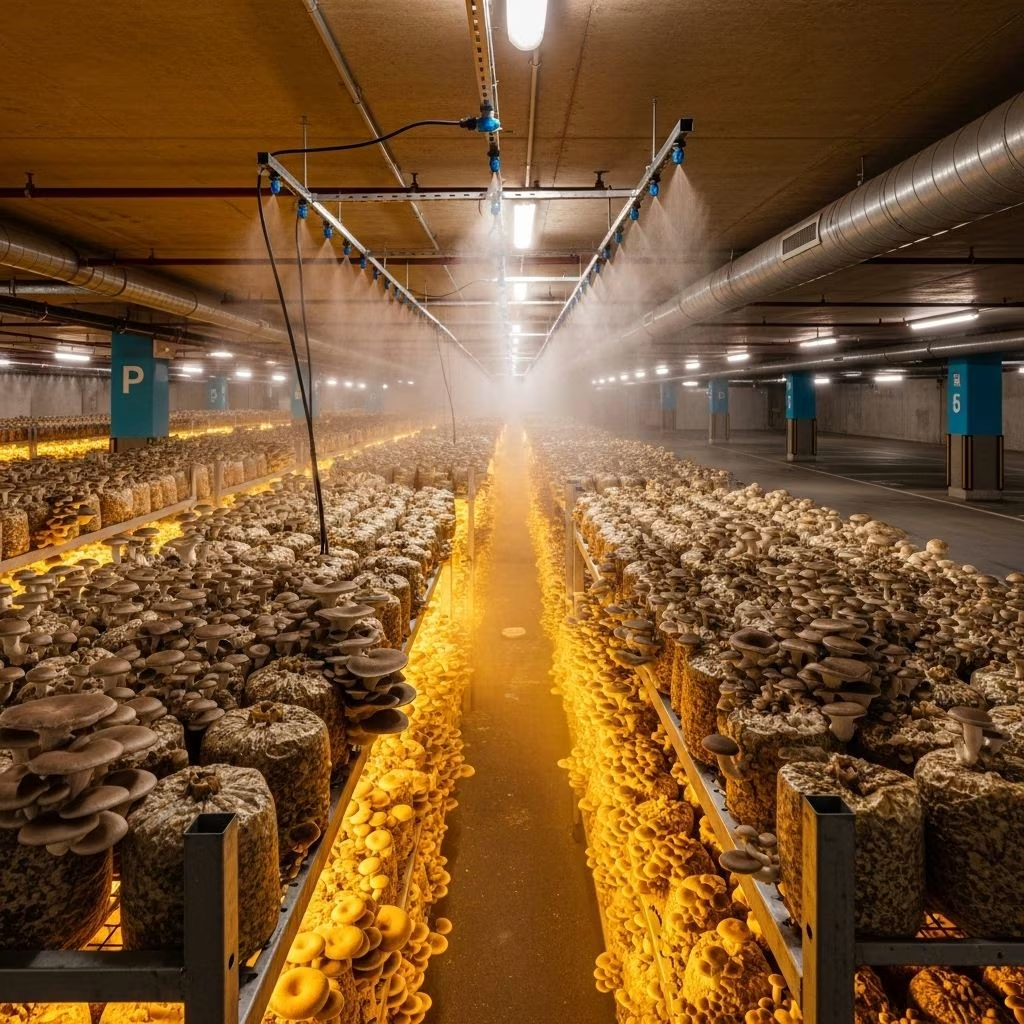
Paris has pioneered an urban agriculture revolution by converting unused underground parking garages into productive mushroom farms and microgreen gardens. This initiative, led by the company Cycloponics, is transforming neglected city spaces into hubs for sustainable farming, supporting local food systems and reducing environmental impact.
Why Paris Has Empty Underground Parking Garages
During the 1960s and 1970s, Paris constructed thousands of square meters of underground parking beneath new apartment complexes in anticipation of high urban car ownership. However, recent trends—such as a rise in alternative mobility solutions and active city policies discouraging car use—have led to a steady decline in car ownership. As a result, many of these once-essential parking garages fell into disuse, often becoming derelict spaces or hotbeds for illicit activities.
From Derelict Spaces to Urban Farms: The Birth of Cycloponics
The search for innovative urban renewal prompted Paris to hold competitions for creative re-use of abandoned infrastructure. Cycloponics, a farming start-up, won recognition for its vision of repurposing underground car parks into productive, sustainable farms. Their flagship location, La Caverne, is situated beneath a 300-unit affordable housing complex in the La Chapelle neighborhood. Spanning over 3,500 square meters (37,700 square feet), La Caverne symbolizes a new model of agriculture, bringing food production back into the heart of the city while restoring the profession of urban farmer.
- La Caverne: Largest and most prominent Cycloponics farm in Paris.
- Other Locations: Cycloponics has also converted underground car parks in Bordeaux and Strasbourg.
- Founded by Theo Champagnat: Driven by a vision to address urban food demand and repurpose abandoned city spaces.
Ideal Conditions for Mushroom Cultivation
Underground parking garages provide perfect growing conditions for mushrooms due to their stable darkness, moderate humidity, and naturally cool temperature. These attributes, unsuitable for conventional farming, are optimal for mushroom varieties such as oyster, shiitake, and white button mushrooms. Additionally, crops like chicory—a French delicacy known as endive—can thrive entirely without sunlight. Cycloponics also cultivates microgreens, including mini broccoli and lettuce, using hydroponic systems illuminated by energy-efficient LED lighting.
- Mushrooms: Oyster, shiitake, white button.
- Chicory (Endive): Requires no sunlight, traditional in northern French cuisine.
- Microgreens: Mini broccoli, lettuce; grown hydroponically under LED lights.
Permaculture Principles and Resource Cycles
The Cycloponics farms operate on permaculture concepts, designing a self-sustaining system where crops and resources interact beneficially. For example, the carbon dioxide released by growing mushrooms is absorbed by leafy greens, while organic waste from farming operations is composted and reused, closing the nutrient cycle and minimizing external inputs.
- Closed-loop system: Composting organic waste for substrate renewal.
- Complementary crops: Mushrooms produce CO2; microgreens absorb it.
- Hydroponics: Nutrient-rich water supports crops lacking soil and sunlight.
Efficient Urban Supply Chains and Local Distribution
Paris’s underground farms demonstrate how local production can reduce “food miles,” lowering the pollution and resource consumption associated with transporting produce from rural areas into cities. Cycloponics delivers its fresh organic mushrooms and greens to nearby organic grocery stores, restaurants, and end consumers, often by bicycle or electric vehicles, ensuring freshness and dramatically reducing transportation emissions.
- Local delivery: Bicycles and electric vehicles provide eco-friendly transport.
- Short supply chains: Farm-to-table distance is minimal, enhancing quality and shelf life.
- Community partnerships: Collaborations with organic grocers and restaurants support urban food ecosystems.
Production Capacity and Impact
With advanced growing techniques, the productivity of Paris’s underground farms is impressive. Yields vary by crop—La Caverne produces up to 300 kilograms of endives per square meter and two kilograms of herbs per square meter. The goal is to eventually produce 54 tons of vegetables and mushrooms annually, generating local employment and reinvigorating the urban economy.
| Crop | Growing Conditions | Yield per Square Meter |
|---|---|---|
| Oyster, Shiitake, Button Mushrooms | Composted manure bricks, darkness, stable humidity | Variable (high yield for mushrooms) |
| Chicory (Endive) | Darkness, hydroponics | Up to 300 kg |
| Microgreens | LED lighting, hydroponically grown | Up to 2 kg |
Sustainability and Urban Regeneration
By breathing new life into abandoned parking garages, Cycloponics promotes urban sustainability and regeneration. These initiatives not only address local food demand, but also revitalize forgotten city infrastructure, reduce environmental footprints, and create green jobs. Paris’s example has inspired other cities across France to consider similar conversions—a movement echoing the global urgency to rethink urban resource use.
Challenges and Regulatory Hurdles
Operating underground farms involves overcoming regulatory and logistical challenges, particularly concerning safety and compliance. France enforces strict regulations for business activities in subterranean spaces, covering air quality, fire safety, and worker conditions. Cycloponics’ successful navigation of these complexities sets a precedent, showing that with the right vision and support, derelict urban spaces can be converted into productive, sustainable enterprises.
Looking Forward: Expansion and Innovation
The success of Cycloponics in Paris has prompted similar underground agricultural projects in other French cities such as Bordeaux and Strasbourg. There is active interest from city officials and entrepreneurs to replicate this model, unlocking new possibilities for sustainable urban food production. Innovations in hydroponics, vertical farming, and resource recycling continue to make previously impossible spaces fertile grounds for growing fresh food within metropolitan areas.
Key Benefits of Underground Urban Farming
- Efficient land use: Utilizes abandoned infrastructure in densely populated areas.
- Reduction in food miles: Local production reduces transportation emissions.
- Food security: Supports access to fresh, healthy produce in urban environments.
- Economic revitalization: Creates new jobs and economic opportunities.
- Environmental sustainability: Enables closed-loop resource cycles and minimizes waste.
Frequently Asked Questions (FAQs)
What types of crops are grown in Paris’s underground farms?
Primarily mushrooms (oyster, shiitake, white button), chicory, and several microgreens like mini broccoli and lettuce.
How are crops grown without sunlight?
Mushrooms and chicory naturally thrive in darkness; microgreens are grown hydroponically, receiving light from energy-efficient LEDs.
What are the environmental benefits of converting parking garages into farms?
- Reduces urban blight by repurposing abandoned infrastructure.
- Shortens food supply chains, lowering emissions.
- Creates closed-loop systems that reuse nutrients and compost organic waste.
- Supports local, sustainable agriculture near consumers.
How is produce distributed to consumers?
Fresh mushrooms and greens are delivered using bicycles and electric vehicles to local restaurants, grocers, and directly to residents, keeping food miles low and freshness high.
Is the underground farming model being adopted elsewhere?
Yes, Cycloponics has expanded to Bordeaux and Strasbourg; other French cities and global urban areas are considering or planning similar conversions.
What are some challenges faced by underground farms?
- Meeting stringent safety and regulatory requirements.
- Ensuring proper air quality and working conditions in subterranean environments.
- Securing funding and public support for urban agriculture innovations.
Conclusion: A Blueprint for Greener Cities
Paris’s transformation of abandoned parking facilities into thriving mushroom farms stands as an emblem of urban resilience and sustainability. These projects demonstrate how cities can rethink infrastructure use, enhance local food systems, and foster environmentally responsible innovation. As more urban centers examine ways to make their underutilized spaces productive, Cycloponics’ approach offers inspiration for integrating food production seamlessly into city life—making tomorrow’s cities greener, cleaner, and healthier for all residents.
References
- https://www.goodnewsnetwork.org/cycloponics-grow-organic-mushrooms-underground-in-paris-strasbourg-and-bordeaux/
- https://www.optimistdaily.com/2021/02/paris-unused-parking-garages-make-the-perfect-home-for-mushroom-farms/
- https://en.reset.org/la-caverne-underground-farming-pilzen-und-keimlingen-12172017/
- https://www.youtube.com/watch?v=3av_vlZhcuY
- https://www.agritecture.com/blog/2017/12/15/paris-has-a-new-underground-a-massive-farm-for-mushrooms-and-veggies
- https://atlasofthefuture.org/project/cycloponics-underground-farm/
- https://sustainableavenue.com/project/unused-underground-garage-in-paris-turned-into-an-urban-farm/
- https://cnuhrd.org/2021/02/16/paris-is-turning-its-dark-underground-parking-lots-into-mushrooms-farmsandy-corbleyon-febbraio-16-2021-at-500-pm-on-febbraio-16-2021-at-500-pm-on-febbraio-16-2021-at-500-pm-all-news-go/
- https://www.ledinside.com/news/2019/11/french_startup_lacaverne_urban_farm