


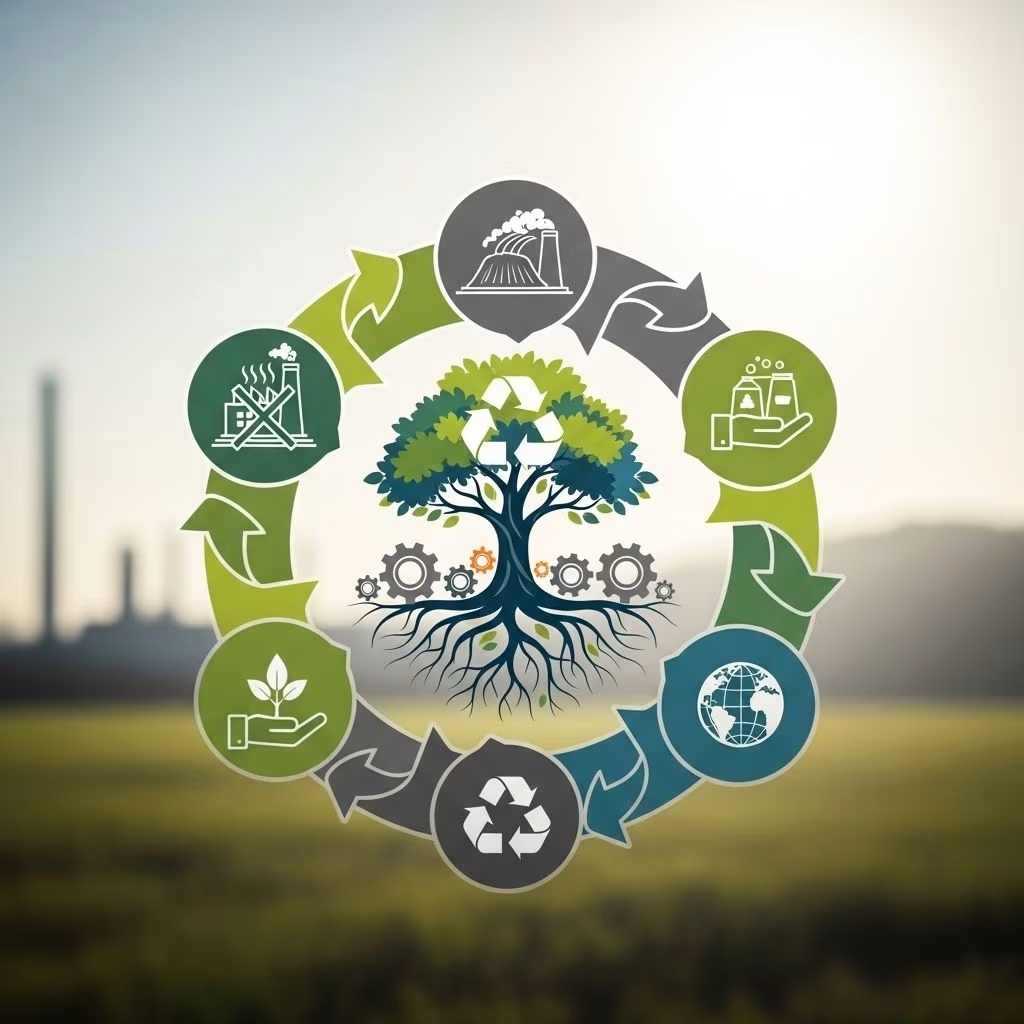
The Resource Conservation and Recovery Act stands as one of the most significant environmental laws in United States history. Enacted in 1976, this comprehensive federal legislation fundamentally transformed how America manages its solid and hazardous waste. As industrial activities expanded and waste generation increased throughout the 20th century, the need for systematic waste management became critically apparent. RCRA emerged as Congress’s response to mounting environmental concerns and the growing realization that improper waste disposal threatened both human health and natural ecosystems.
This landmark legislation established a regulatory framework that would govern waste management practices for decades to come. By creating a structured system for tracking and controlling hazardous materials from their point of origin through final disposal, RCRA introduced accountability into an industry that had previously operated with minimal oversight. The act’s influence extends far beyond simple waste disposal, encompassing resource conservation, pollution prevention, and environmental protection as core principles guiding modern waste management practices.
The Origins and Purpose of RCRA
The Resource Conservation and Recovery Act did not emerge in a vacuum. It represented an amendment and expansion of the Solid Waste Disposal Act of 1965, building upon earlier efforts to address waste management challenges. By the mid-1970s, the United States faced escalating problems from the sheer volume of municipal and industrial waste being generated. Landfills were filling rapidly, and incidents of environmental contamination from improper disposal practices were becoming increasingly common. Congress recognized that a more robust regulatory framework was essential to protect public health and the environment.
The act established several ambitious national goals that continue to guide waste management policy today. First and foremost, RCRA aimed to protect human health and the natural environment from the potential hazards associated with waste disposal. This objective recognized that improperly managed waste could contaminate groundwater, pollute air quality, and create direct health risks for communities living near disposal sites.
Beyond protective measures, RCRA promoted energy conservation and natural resource preservation. The legislation encouraged waste reduction through source reduction techniques and recycling programs, recognizing that the best waste management strategy involves generating less waste in the first place. By promoting resource recovery and reuse, RCRA sought to reduce the environmental footprint of industrial activities while simultaneously conserving valuable materials and energy.
Understanding the Cradle-to-Grave System
Perhaps the most innovative aspect of RCRA is its cradle-to-grave tracking system, a comprehensive approach that monitors hazardous waste from the moment of generation through final disposal. This system fundamentally changed how hazardous materials are managed by creating transparency and accountability throughout the entire waste lifecycle. Under this framework, every entity that generates, transports, treats, stores, or disposes of hazardous waste becomes part of an interconnected regulatory system.
The cradle-to-grave system operates through a sophisticated tracking mechanism. Hazardous waste generators must obtain unique identification numbers that serve as their credentials within the regulatory framework. When hazardous waste is transported or transferred between parties, it must be accompanied by a manifest document that tracks its movement. This manifest system ensures that disposal facilities never receive unidentified or unexpected hazardous materials, and it creates a paper trail that regulators can audit to verify compliance.
Each time waste moves from one party to another within the disposal chain, the regulating authority receives notification. This continuous monitoring prevents waste from disappearing into unregulated disposal channels and ensures that all parties involved understand their responsibilities. The system notifies everyone within the chain about the waste’s status and location, creating multiple checkpoints where regulatory violations can be detected and addressed.
Defining Waste Under RCRA
One of RCRA’s most important functions involves defining what constitutes regulated waste. The statute specifically focuses on solid wastes that facilities discard, but the definition extends far beyond materials that are literally solid. According to the legal definition found in 42 USC § 6903(27), RCRA waste includes solid materials, semi-solids, sludge, liquids, and even contained gaseous materials. This broad interpretation ensures that hazardous substances in various physical states fall under regulatory control.
The Environmental Protection Agency, charged with implementing RCRA, emphasizes actual waste rather than materials that remain part of active manufacturing processes. This distinction is crucial because the EPA does not intend to interfere with legitimate industrial operations. However, determining what qualifies as waste versus what remains a manufacturing input can be complex, particularly when materials undergo recycling or recovery processes.
To address these ambiguities, the EPA developed a five-factor test for determining waste status. This analytical framework helps regulators and businesses distinguish between legitimate recycling activities and disposal practices disguised as recycling. The test prevents fraudulent backdoor recycling schemes that might otherwise circumvent RCRA’s regulatory requirements, ensuring that the statute’s protective goals are not undermined by creative interpretations of recycling definitions.
RCRA’s Dual Structure: Subtitle C and Subtitle D
RCRA establishes its regulatory framework through two primary subtitles that address different categories of waste. Subtitle C governs hazardous waste management, creating comprehensive requirements for the generation, transportation, treatment, storage, and disposal of materials that pose significant risks to human health or the environment. Under Subtitle C, the EPA has developed detailed regulations that implement the cradle-to-grave tracking system and establish strict standards for facilities that handle hazardous materials.
Subtitle C regulations set specific criteria for different actors in the hazardous waste management system. Generators must follow protocols for identifying, storing, and preparing hazardous waste for transport. Transporters must meet safety standards and maintain proper documentation. Treatment, storage, and disposal facilities face the most stringent requirements, including obtaining permits that verify their capability to handle hazardous materials safely. These facilities must demonstrate proper design, operational procedures, financial assurance, and plans for eventual closure.
Subtitle D addresses non-hazardous solid waste, establishing a different regulatory approach that gives states primary responsibility for implementation. Under Subtitle D, the EPA sets minimum national technical standards for disposal facility design and operation, but states take the lead in developing and enforcing their own programs. These standards ban open dumping practices and establish requirements for municipal and industrial waste landfills, including location restrictions, design criteria, financial assurance mechanisms, corrective action protocols, and closure procedures.
The Role of States in RCRA Implementation
RCRA represents a joint federal-state endeavor where the EPA establishes basic requirements that states then adopt, adapt, and enforce. This cooperative federalism approach recognizes that state governments often have better knowledge of local conditions and can tailor regulatory programs to address specific regional needs. States authorized to implement RCRA programs must ensure their regulations meet or exceed federal standards, creating a regulatory floor rather than a ceiling for environmental protection.
For hazardous waste management under Subtitle C, states can seek authorization to implement key provisions in lieu of direct federal enforcement. When states receive this authorization, they assume primary responsibility for permitting facilities, conducting inspections, and taking enforcement actions against violators. However, the EPA retains oversight authority and can intervene if state programs fail to meet federal standards. In states without authorized programs, the EPA directly implements RCRA requirements.
The division of responsibility differs somewhat for non-hazardous waste under Subtitle D. States play an even more prominent role in these programs, with the EPA providing minimum federal criteria while states develop comprehensive implementation plans. States issue permits to waste facilities and conduct compliance monitoring to ensure facilities meet both federal and state requirements. This state-led approach recognizes the diverse waste management challenges facing different regions and allows for regulatory flexibility tailored to local circumstances.
The 1984 Amendments: Strengthening RCRA
In 1984, Congress significantly strengthened RCRA through the Hazardous and Solid Waste Amendments, commonly known as HSWA. These amendments reflected growing concerns about the limitations of existing waste management practices and the need for more aggressive pollution prevention strategies. HSWA focused heavily on waste minimization and phasing out land disposal of hazardous waste, recognizing that even well-designed landfills posed long-term environmental risks.
The amendments established a preference hierarchy for waste management, with source reduction and recycling at the top, followed by treatment, and finally disposal as a last resort. This hierarchy encouraged businesses to rethink their production processes and find ways to generate less waste rather than simply managing waste more carefully. HSWA also mandated corrective action for releases, requiring facilities to clean up contamination resulting from past disposal practices.
Beyond waste minimization, HSWA significantly expanded the EPA’s enforcement authority. The amendments provided regulators with stronger tools to compel compliance and penalize violations. They also established more stringent hazardous waste management standards, tightening requirements for treatment, storage, and disposal facilities. Additionally, HSWA created a comprehensive underground storage tank program to address environmental problems from leaking petroleum and chemical storage tanks, a significant source of groundwater contamination.
Underground Storage Tanks and RCRA
The 1986 amendments to RCRA specifically addressed environmental problems posed by underground storage tanks containing petroleum and other hazardous substances. These tanks, commonly found at gas stations, industrial facilities, and other commercial properties, had become a major source of soil and groundwater contamination. Many older tanks were constructed from materials that corroded over time, leading to leaks that released thousands of gallons of petroleum products and chemicals into the environment.
The underground storage tank program established under RCRA created national standards for tank design, installation, operation, and closure. New tanks must incorporate leak detection systems, corrosion protection, and spill prevention equipment. Existing tanks had to be upgraded to meet these standards or removed from service. Tank owners must demonstrate financial responsibility for cleanup costs in case of releases, ensuring that resources are available to address contamination.
RCRA Regulations and Implementation
The EPA translates RCRA’s statutory requirements into operational programs by developing detailed regulations, guidance documents, and policy directives. These regulations are codified in Title 40 of the Code of Federal Regulations, specifically in parts 239 through 282. Regulations governing hazardous waste management begin in part 260 and extend through subsequent sections covering waste identification, generator requirements, transporter standards, and facility permitting.
The regulatory framework creates legally enforceable requirements that the regulated community must follow. These requirements are highly detailed, specifying everything from container labeling standards to groundwater monitoring protocols. While regulations carry the force of law, EPA guidance documents and policy directives provide additional clarification on how to interpret and implement regulatory requirements in specific situations.
The regulated community under RCRA is remarkably diverse, encompassing hazardous waste generators ranging from large chemical manufacturers to small businesses, government agencies, treatment and disposal facilities, waste transporters, and gas stations with underground petroleum tanks. Each category faces different regulatory requirements based on the type and quantity of waste they generate or handle, with larger generators and facilities that treat, store, or dispose of waste facing the most comprehensive obligations.
State Implementation: The California Example
California provides an instructive example of how states implement and often exceed federal RCRA requirements. The Department of Toxic Substances Control serves as the primary authority enforcing RCRA requirements in California, working alongside the California Hazardous Waste Control Law of 1972. California’s program demonstrates how states can build upon federal standards to create more protective regulatory frameworks tailored to their specific circumstances.
California has developed some of the nation’s most stringent hazardous waste regulations, going beyond federal minimums in several areas. The state maintains a broader definition of hazardous waste than the federal program, bringing additional waste streams under regulatory control. California also imposes stricter requirements for waste facility permits, inspections, and enforcement, reflecting the state’s commitment to environmental protection and its unique challenges with a large industrial base and significant population density.
RCRA’s Impact on Environmental Protection
Since its enactment, RCRA has fundamentally transformed waste management practices in the United States. The cradle-to-grave tracking system has significantly reduced incidents of illegal dumping and improved accountability throughout the waste management chain. Facilities that generate, transport, or dispose of hazardous waste now operate under comprehensive regulatory oversight, with clear standards for safe practices and consequences for violations.
The act has driven substantial improvements in facility design and operation. Modern hazardous waste facilities incorporate multiple protective barriers, monitoring systems, and emergency response capabilities that were uncommon before RCRA’s implementation. Landfills now feature sophisticated liner systems, leachate collection, and groundwater monitoring to detect and prevent contamination. These improvements have significantly reduced environmental releases from waste management facilities.
RCRA has also influenced corporate behavior beyond waste management operations. Many companies have invested in pollution prevention and waste minimization programs to reduce their regulatory burden and liability exposure. By redesigning production processes, substituting less hazardous materials, and implementing recycling programs, businesses have reduced the volume of hazardous waste requiring disposal. This shift toward source reduction represents one of RCRA’s most significant long-term impacts.
Challenges and Ongoing Evolution
Despite its successes, RCRA faces ongoing challenges in addressing modern waste management issues. The regulatory framework was designed primarily for traditional industrial wastes, and it sometimes struggles to address emerging waste streams such as electronic waste, pharmaceutical waste, and nanomaterials. These materials may not fit neatly into existing regulatory categories, creating uncertainty about appropriate management requirements.
The complexity of RCRA regulations also poses challenges, particularly for small businesses that may lack the resources to maintain sophisticated compliance programs. The EPA and states have developed assistance programs to help small quantity generators understand their obligations, but regulatory complexity remains a barrier to full compliance. Balancing comprehensive environmental protection with practical implementability continues to challenge regulators and the regulated community.
Climate change considerations are increasingly influencing waste management policy, creating pressure to update RCRA’s framework to address greenhouse gas emissions from waste facilities and to promote circular economy principles. Future amendments may place greater emphasis on waste prevention, extended producer responsibility, and resource recovery to align waste management with broader sustainability goals.
Frequently Asked Questions
Q: What types of waste does RCRA regulate?
A: RCRA regulates both hazardous and non-hazardous solid waste. Hazardous waste includes materials that are ignitable, corrosive, reactive, or toxic. The definition of solid waste is broad, encompassing not just solids but also liquids, semi-solids, sludge, and contained gases that are discarded.
Q: Who needs to comply with RCRA regulations?
A: Any entity that generates, transports, treats, stores, or disposes of hazardous waste must comply with RCRA. This includes manufacturers, healthcare facilities, laboratories, gas stations with underground storage tanks, and waste management companies. Requirements vary based on the quantity and type of waste handled.
Q: What is a RCRA permit and who needs one?
A: A RCRA permit authorizes facilities to treat, store, or dispose of hazardous waste. Facilities engaging in these activities must obtain permits that specify detailed operational requirements, monitoring protocols, and closure procedures. Generators who only produce and ship waste typically do not need permits, but they must follow generator standards.
Q: How does the cradle-to-grave system work in practice?
A: The cradle-to-grave system tracks hazardous waste through a manifest system. Generators obtain EPA identification numbers and complete manifest forms when shipping waste. Transporters sign the manifest when accepting waste, and disposal facilities sign when receiving it. Copies go to all parties and regulators, creating a complete tracking record.
Q: Can states have stricter requirements than federal RCRA standards?
A: Yes, states with authorized RCRA programs must meet federal minimums but can establish more stringent requirements. Many states have adopted broader definitions of hazardous waste, stricter facility standards, or additional regulatory requirements beyond federal law.
Q: What happens if someone violates RCRA requirements?
A: RCRA violations can result in civil penalties, criminal prosecution, and corrective action orders requiring cleanup of contamination. The EPA and authorized states can conduct inspections, issue violations, and impose fines. Serious violations involving knowing endangerment can lead to criminal penalties including imprisonment.
Q: How has RCRA evolved since its original enactment?
A: RCRA has been amended several times, most significantly through the 1984 Hazardous and Solid Waste Amendments. These amendments strengthened waste minimization requirements, restricted land disposal, expanded enforcement authority, and created the underground storage tank program. The EPA also regularly updates regulations to address new challenges and technologies.
References
- https://en.wikipedia.org/wiki/Resource_Conservation_and_Recovery_Act
- https://www.law.cornell.edu/wex/resource_conservation_and_recovery_act_(rcra)
- https://www.epa.gov/laws-regulations/summary-resource-conservation-and-recovery-act
- https://www.epa.gov/rcra/resource-conservation-and-recovery-act-rcra-overview
- https://des.sc.gov/programs/bureau-land-waste-management/hazardous-waste/resource-conservation-and-recovery-act-rcra
- https://usequantum.com/wp-content/uploads/2017/03/Guide_Summary-of-the-RCRA.pdf
- https://www.wwdmag.com/what-is-articles/article/21169925/what-is-the-resource-conservation-recovery-act-rcra
- https://allsource-environmental.com/what-is-the-resource-conservation-and-recovery-act-rcra/
- https://home.army.mil/wainwright/about/garrison/public-works/environmental/RCRA


