


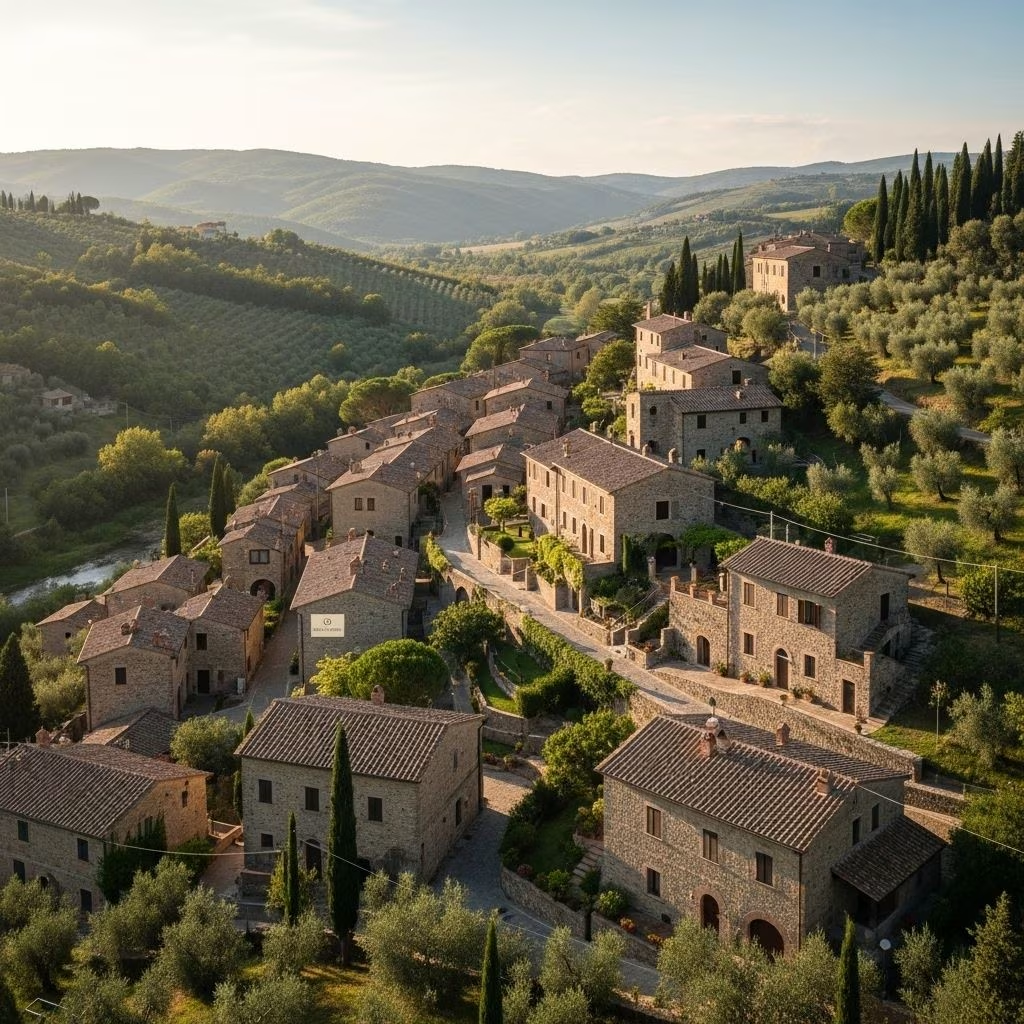
Scattered Hotels: Revitalizing Italy’s Historic Villages
Throughout Italy, ancient hill towns and picturesque mountain villages dot the landscape. Yet many of these settlements, rich in cultural heritage and architecture, have faced severe depopulation and decay. Enter the albergo diffuso, or scattered hotel, an innovative hospitality model transforming neglected hamlets into thriving destinations—and in the process, breathing new life into Italy’s historical heartlands.
What Is an Albergo Diffuso?
The term albergo diffuso translates as ‘scattered hotel’ and refers to an unconventional form of lodging where guest rooms and suites are distributed across multiple buildings throughout a historic village, rather than centralized in one new structure. Guests stay in restored houses and apartments, often centuries old, within a compact area—typically no more than a few hundred meters from the central reception and communal facilities.
While providing many of the services associated with a traditional hotel, the scattered hotel model is carefully integrated into the local community, preserving both the physical and social fabric of the place. Rather than isolating visitors, this approach immerses them in everyday village life, fostering genuine connections with local residents and traditions.
The Origins of the Scattered Hotel Concept
The roots of the albergo diffuso trace back to the 1980s, when Giancarlo Dall’Ara, a tourism consultant, began advocating for a new strategy to respond to the twin crises of village abandonment and post-earthquake reconstruction in Italy’s Friuli region. Recognizing the value locked within rural heritage buildings—many crumbling or left behind as young people migrated to cities—Dall’Ara proposed restoring vacant homes as hotel rooms, operating them collectively and sensitively within their historical context.
This eco-conscious and community-oriented model soon gained traction, especially in regions like Molise and Friuli-Venezia Giulia, where small towns dotted the countryside but lacked the modern infrastructure or appeal of more popular tourist destinations.
How Does an Albergo Diffuso Work?
- Distributed Accommodation: Guest rooms, suites, and apartments are found in renovated houses throughout the heart of the village, creating a dispersed yet cohesive hospitality experience.
- Centralized Services: There is typically a main reception area, concierge, and common lounge or dining space within easy walking distance of every room.
- Authentic Local Experience: Meals may be served in village cafés or family kitchens, and guests are encouraged to participate in traditional activities and community events.
- Sustainable Restoration: Renovations prioritize local materials and traditional techniques, emphasizing preservation over transformation.
- Integration with Residents: Guests live side by side with villagers, supporting local businesses and craftspeople as part of their stay.
The Benefits of Scattered Hotels
- Historic Preservation: Vacant and sometimes derelict historic buildings are rescued, repaired, and maintained, preventing cultural loss.
- Environmental Sustainability: Using existing structures drastically reduces the environmental costs of new building, conserves land, and minimizes waste.
- Revitalized Local Economies: Scattered hotels provide employment and income in places at risk of economic decline, from construction and hospitality to farming and crafts.
- Community Renewal: The return of activity and investment fosters pride, encourages former residents or new families to settle, and halts the spiral of depopulation.
- Unique Traveler Experience: Unlike standardized hotels, guests experience the rhythms of real village life, from local festivals to neighborhood bakeries and artisanal shops.
Key Features of the Albergo Diffuso Model
| Feature | Description |
|---|---|
| Decentralized Accommodation | Rooms and suites are scattered over multiple historic buildings within the village core. |
| Community Integration | Guests interact with local residents and businesses as part of their daily experience. |
| Heritage Conservation | Renovations are undertaken using traditional methods and local materials, preserving character. |
| Centralized Services | Reception, guest services, and public areas (like lounges or cafés) provide cohesion and accessibility. |
| Sustainability | Minimal new construction, focus on environmental efficiency and supporting the local economy. |
Case Studies: Scattered Hotels Reviving Communities
Across Italy, many towns have embraced the albergo diffuso formula. Below are several regions where the model has demonstrated remarkable success:
- Friuli-Venezia Giulia: After the devastating 1976 earthquake, widespread hotel models were established to rehab rural hamlets, staunching population loss and attracting new residents and visitors. The tradition continues today, with the growth of alberghi diffusi in both the mountains and lowlands.
- Molise: In this sparsely populated, agricultural region, entire historic centers have been converted into scattered hotels. The restoration of deserted dwellings provides accommodation while rejuvenating village economies and preserving rural traditions. The city of Termoli exemplifies this, with its “Swabian residence” spread across renovated historical buildings.
- Abruzzo: In Castel del Giudice, the Borgotufi project transformed a village on the verge of extinction into a bustling destination, spurring job creation, cultural activities, and renewed civic pride.
- Labro, Lazio: Once at risk of abandonment, Labro’s population has stabilized, with its charming medieval houses hosting rooms and apartments for visitors who want an immersive, off-the-beaten-path experience.
The Social and Economic Impact
The far-reaching effect of the scattered hotel model extends beyond tourism. By creating demand for local goods and services, reviving crafts, and supporting farms and markets, the model stitches tourism into the everyday economic and social tapestry of the village. The benefits include:
- Direct and indirect job creation in construction, hospitality, and services
- Increased revenue for local producers and entrepreneurs
- Opportunities for cultural exchange and language learning
- Revitalization of public spaces and infrastructure, from plazas to roads
- Stimulation of property restoration and maintenance
Sustainability and the Environment
Alberghi diffusi offer a clear alternative to mass tourism, which can strain fragile landscapes and overwhelm local resources. By reusing existing buildings, scattered hotels reduce the need for new construction and limit the encroachment on green spaces. This model also aligns with Italy’s push for more sustainable tourism, championing low-impact travel that respects cultural and ecological heritage.
Moreover, the focus on local products—such as food and wine, crafts, and furnishings—means lower carbon footprints and support for traditional industries threatened by globalization.
Travelers’ Perspective: The Experience of Staying in a Scattered Hotel
For visitors, a stay at an albergo diffuso is an invitation to slow down. Instead of the generic tourist itinerary, guests discover:
- Accommodations with character—stone-vaulted ceilings, frescoed walls, or hand-crafted furnishings
- Breakfast prepared by a local nonna, or shared at a neighborhood café
- Direct access to village life: festivals, markets, folk events, and spontaneous conversations with townsfolk
- Walkable exploration of winding medieval lanes, churches, and artisan workshops
This style of lodging appeals especially to travelers seeking authenticity, immersion, and a break from crowds—whether families, couples, or solo wanderers wanting to connect with Italy’s deep-rooted traditions.
Challenges and Opportunities
While the albergo diffuso approach offers many advantages, it is not without challenges:
- Coordination: Managing distributed properties and ensuring consistent quality of experience require careful oversight.
- Accessibility: Some historic villages may lack modern infrastructure, making them harder to reach or less suitable for those with mobility issues.
- Resident Relations: Integrating tourism with community life must be respectfully balanced to avoid friction or loss of local identity.
- Marketing: Many scattered hotels are in little-known areas and must compete for visibility against more established tourist circuits.
However, the growing desire for slow, meaningful travel and widespread interest in sustainability suggest a bright future for the model—both in Italy and beyond.
The Spread of Scattered Hotels Beyond Italy
Inspired by Italy’s success, the scattered hotel concept is beginning to influence rural regeneration and tourism strategies elsewhere in Europe. Countries with underpopulated heritage villages and a desire to attract responsible travelers are considering similar approaches. With careful adaptation to local cultures and needs, the albergo diffuso philosophy may provide a blueprint for revival around the globe.
Frequently Asked Questions (FAQs)
What makes a scattered hotel different from a traditional hotel?
Unlike traditional hotels, rooms in a scattered hotel are located in separate historical buildings throughout a village, often mixed in with local residents’ homes, enabling direct cultural immersion and authentic experiences.
How do guests check in and access services in an albergo diffuso?
Guests typically check in at a central reception area within the village. Services such as housekeeping and breakfast are coordinated centrally but may be delivered to different locations as needed.
Is staying at an albergo diffuso suitable for families?
Yes, scattered hotels often provide suites or small apartments, and the community-oriented atmosphere can be particularly welcoming to families seeking a quiet, educational, and engaging vacation.
How does the albergo diffuso model support the local economy?
By restoring neglected buildings and creating jobs, stimulating demand for local foods, crafts, and experiences, and providing a stable income stream for areas threatened by depopulation, the model sustains local economies.
Where can I find scattered hotels in Italy?
They are found throughout Italy, particularly in regions with historic towns—such as Friuli-Venezia Giulia, Molise, Abruzzo, and Lazio. A national association (Alberghi Diffusi) lists certified establishments for travelers.
Conclusion
The albergo diffuso or scattered hotel offers hope for Italy’s endangered historic villages. By blending hospitality with heritage restoration, economic support, and community engagement, these hotels provide a model for sustainable tourism that benefits both travelers and residents. As the world seeks more sustainable, immersive travel options, the scattered hotel story serves as a testament to creativity, adaptability, and the enduring power of place.
References
- https://www.hedonistichiking.com/blog/hotels/rise-scattered-hotel/
- https://www.propertyguides.com/italy/news/the-albergo-diffuso-reviving-italian-villages/
- https://www.tourissimo.travel/blog/italys-scattered-hotels-the-alberghi-diffusi
- https://www.interregeurope.eu/good-practices/albergo-diffuso
- https://www.sawdays.co.uk/detour/archive/the-scattered-hotels-saving-italys-villages/
- https://www.smithsonianmag.com/travel/how-alberghi-diffusi-turn-villages-into-hotels-180981951/


