


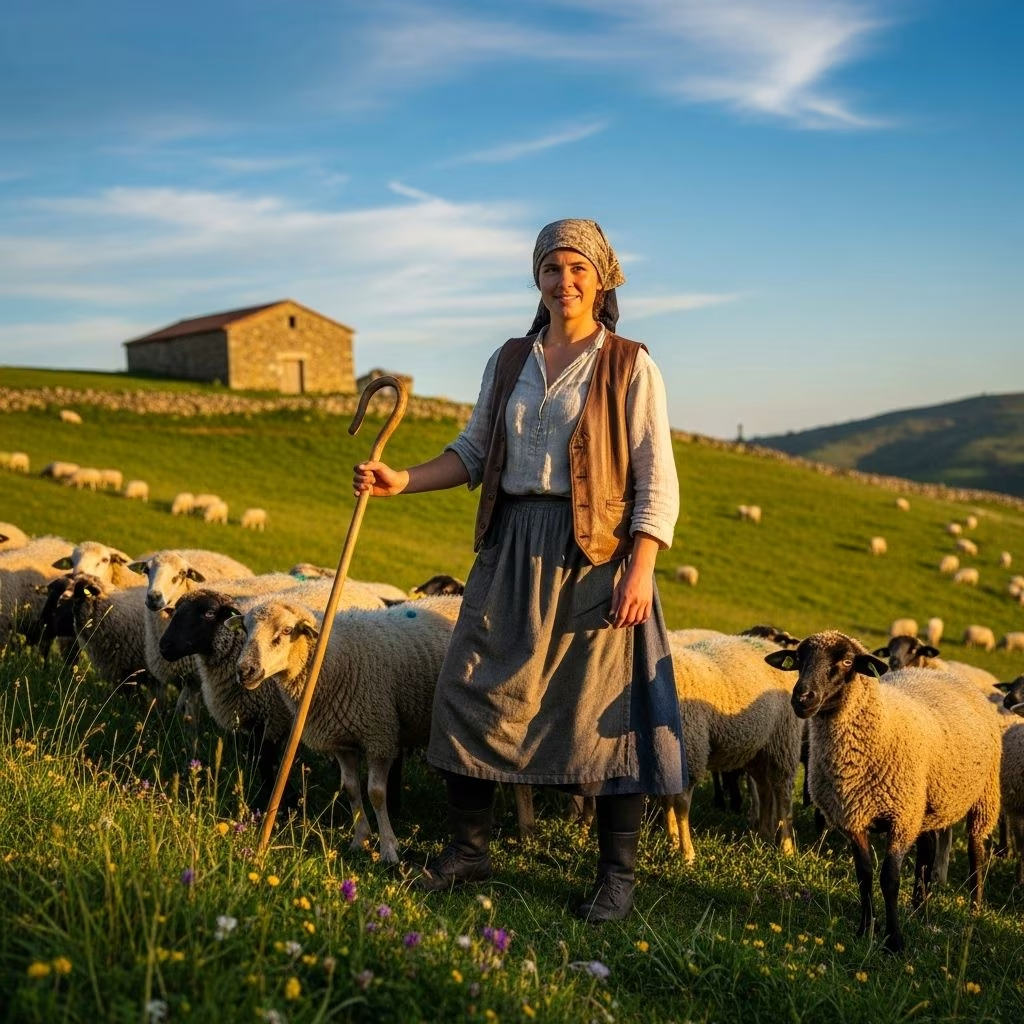
Spain’s School for Shepherdesses: Empowering Women and Reviving Rural Life
In the heart of Spain, a transformative initiative is challenging centuries-old gender roles while addressing the urgent needs of a dwindling countryside. The Escuela de Pastoras del Siglo XXI (School for Shepherdesses of the 21st Century) stands as a testament to innovation, tradition, and the remarkable role that women can play in restoring balance to rural communities.
Why a School for Shepherdesses? Understanding a Rural Crisis
Rural Spain is facing a profound demographic crisis. Thousands of villages are seeing their populations decline as younger generations, particularly women, leave in search of opportunities in urban centers. The consequence has been the so-called “masculinization” of the countryside, where the population skews seen toward older, predominantly male residents. This trend threatens not only the social fabric of these regions but also the survival of traditional environmental practices and the sustainability of food production.
- The rural exodus: Young people, especially women, are abandoning villages for cities, leaving an aging, shrinking population behind.
- Masculinization of villages: In many areas, there are far fewer young women than men, deepening demographic imbalances.
- Societal impact: An aging populace endangers local economies, social supports, and traditions critical to regional identity.
Facing this challenge, the Spanish Association Against Depopulation launched the school as both a practical and symbolic response, addressing deep-rooted gender disparities while offering a vision for a more vibrant, inclusive countryside.
From Tradition to Transformation: Women in Shepherding
Shepherding has for generations been perceived as a male occupation in Spain, despite women’s frequent roles behind the scenes. The School for Shepherdesses seeks to confront gender stereotypes directly—both to empower women with new economic opportunities and to reshape rural life itself.
- Breaking gender barriers: The school’s purpose is not just to bring women into a male-dominated field, but to do so from a uniquely female perspective.
- Social transformation: By training women as shepherds, the school intends to restore balance, dignity, and sustainability to rural communities.
As Susana Pacheco, the school’s organizer, explains, “We’re talking about work-life balance, creating networks of mutual support and collaboration.” The program is deliberately designed to address needs often unrecognized by traditional training: family life, support systems, and the realities women face in rural economies.
Curriculum: Merging Ancient Skills with Modern Tools
While shepherding is an ancient craft, the school embraces technological advances and a forward-looking curriculum. The program’s structure ensures rigorous training while remaining adaptable to changing landscapes and modern needs.
- Duration and structure: The course spans nine months, combining nearly 500 hours of online instruction with in-person, hands-on training weekends in Cantabria, a mountainous region renowned for its pastoral heritage.
- Subjects covered include:
- Flock management and animal welfare
- Sustainable small-scale farming
- Use of modern technology such as drones to track livestock
- Additional skills: beekeeping, cheese making, and eco-tourism for diversified income
- Holistic approach: The curriculum isn’t limited to practical skills; it is designed to foster mutual support, collaborative networks, and personal development—qualities essential for long-term success.
In a unique move, the school also incorporates modules on sustainable agriculture and entrepreneurship, equipping students to launch independent ventures and diversify incomes.
Technological Innovation: Bringing Shepherding Into the 21st Century
Far from clinging to the past, the School for Shepherdesses integrates cutting-edge practices and tools. These innovations support both environmental sustainability and modern business needs.
- Drones for herd monitoring: Participants learn to use drones for efficient livestock tracking, mapping difficult terrain, and ensuring animal security.
- Online community building: A portion of the instruction is online, fostering a digital support network connecting women from across the country as they learn and build peer relationships.
- Eco-enterprises: Training in cheese making, beekeeping, and eco-tourism allows shepherdesses to create additional revenue streams reflective of rural economies’ shifting realities.
Admission and Demand: A Competitive Opportunity
Interest in the school was overwhelming. In its inaugural year, 265 women applied for just thirty coveted spots. The selection process focused on both aptitude and a commitment to rural revitalization—emphasizing the broader mission beyond individual job placement.
- Application criteria: Prospective students are evaluated on their commitment to rural development, willingness to collaborate, and passion for shepherding or land stewardship.
- Demographic focus: While open to all backgrounds, the program gives careful attention to women from depopulated areas or with family ties to rural life.
Combating Depopulation: Rural Revival Through Empowerment
The school represents more than economic opportunity; it is a strategic intervention in Spain’s struggle against depopulation. By providing women with desirable work and fostering social support, the program hopes to:
- Retain and attract women to rural areas, reversing migration trends
- Encourage younger generations to view rural life as viable and rewarding
- Boost local economies through new skills and enterprises
- Revitalize regional cultures and traditions endangered by demographic change
Initiatives such as subsidized land and family-friendly policies have had mixed success, often failing to focus squarely on women’s needs and ambitions. The School for Shepherdesses is unique in addressing this gap directly, recognizing women as critical agents of rural transformation.
A Model for Social Change: Work-Life Balance and Collaborative Networks
Organizers stress that the goal is not simply job training but social change. The school’s curriculum actively supports:
- Work-family integration: Techniques for balancing shepherding responsibilities with family and community life
- Mutual support networks: Building alliances among students and alumni to foster ongoing collaboration, resilience, and collective growth
- Self-advocacy and leadership: Developing women’s confidence and skills to advocate for their needs and become community leaders
The program’s collaborative approach seeks to cultivate a new generation of rural leaders, equipped to face both modern and traditional challenges.
What Makes the School Unique?
- First-of-its-kind: While mixed-gender shepherd schools exist, this is the first in Spain to be designed and led entirely from a female perspective.
- Sustainability focus: The curriculum covers ways to make shepherding both environmentally and economically sustainable.
- Bridging tradition and innovation: Students master time-tested practices while learning how new technology and diversified business models can increase resilience.
Frequently Asked Questions (FAQs)
Q: Why is there a need for a women-only shepherd school in Spain?
A: The school was established to address gender imbalances, offer pathways for women’s economic participation in rural Spain, and counteract rural depopulation by making shepherding accessible and appealing to women.
Q: How do drones help modern shepherds?
A: Drones allow shepherds to efficiently track and monitor their flocks, especially in mountainous or difficult terrain, making the job safer, more effective, and accessible to those who may not have traditional experience.
Q: Is the program only for women?
A: While the flagship School for Shepherdesses explicitly trains women, other shepherd schools in Spain and across Europe are open to all genders. This program is distinct for its female-focused design.
Q: What additional skills are taught at the school?
A: The curriculum includes beekeeping, cheese making, eco-tourism, digital literacy, and sustainable business management, supporting a holistic approach to rural livelihoods.
Q: How are graduates supported after completing the program?
A: Graduates are encouraged to stay in contact through a digital alumni network, access ongoing mentorship, and are connected with resources to help them start enterprises or join rural cooperatives.
The Bigger Picture: Shepherd Schools Across Spain and Europe
This pioneering school joins a budding movement throughout Spain and Europe to renew interest in pastoralism and rural work, each with unique local variations:
| School | Location | Duration | Highlights |
|---|---|---|---|
| Escuela de Pastoras del Siglo XXI | Cantabria, Spain | 9 months | Women-only, modern tech, life-balance focus |
| Shepherds School, Madrid | Madrid Region, Spain | 4 months | Mixed gender, mountain ecology, cheese making, work experience in Sierra de Guadarrama |
| School of Shepherds, Catalonia | Catalonia, Spain | 6 months | Theory + practical training |
| LIFE ShepForBio ShepherdSchool | Tuscany, Italy | Variable (multi-cycle) | European networking, free accommodation, recognition in Training System |
This network of initiatives demonstrates widespread recognition that revitalizing rural life means investing in new skills, new technologies, and, crucially, in women.
Looking Ahead: Measuring Success and Expanding the Model
While the first 30 trainees await their start date, anticipation is high for the social and economic ripples this project may create. Organizers and stakeholders look to several metrics for success:
- Graduate outcomes: Will participants remain in rural regions, find employment, or start new ventures?
- Community impact: Are villages experiencing population renewal or increased local economic activity?
- Replication and scaling: Can the model inform further projects across Spain, Europe, or other countries facing similar rural challenges?
While some question the need for gender-segregated training, organizers counter that novel approaches are required for longstanding and deeply entrenched social problems. As Susana Pacheco describes, “We see this school as a social transformation project—we want to empower women and dignify this work.”
Conclusion: Shepherdesses as Catalysts for Sustainable Futures
The School for Shepherdesses of the 21st Century is more than an educational institution—it is a social innovation experiment, fusing tradition and progress. By placing women at the heart of rural revival, it offers a model for how communities can adapt, thrive, and redefine themselves in the face of modern challenges.
Through its unique blend of legacy and innovation, the school highlights a central lesson: empowering women is key to building resilient rural communities and a sustainable future for all.
References
- https://www.goodnet.org/articles/new-school-in-spain-trains-female-shepherds
- https://www.ree.es/en/press-office/news/press-release/2020/05/shepherds-school-madrid-launches-new-training-programme-to-promote-extensive-shepherding-in-the-region
- https://dream-italia-euprj.eu/en/life-shepforbio/shepherdschool/
- https://rederaplus.castillalamancha.es/en/good-practices/school-shepherds-catalonia
- https://www.redeia.com/en/projectdiversity/shepherding-school
- https://pop.inquirer.net/107134/spains-first-school-for-female-shepherds-gets-ready-for-first-intake-of-students


