


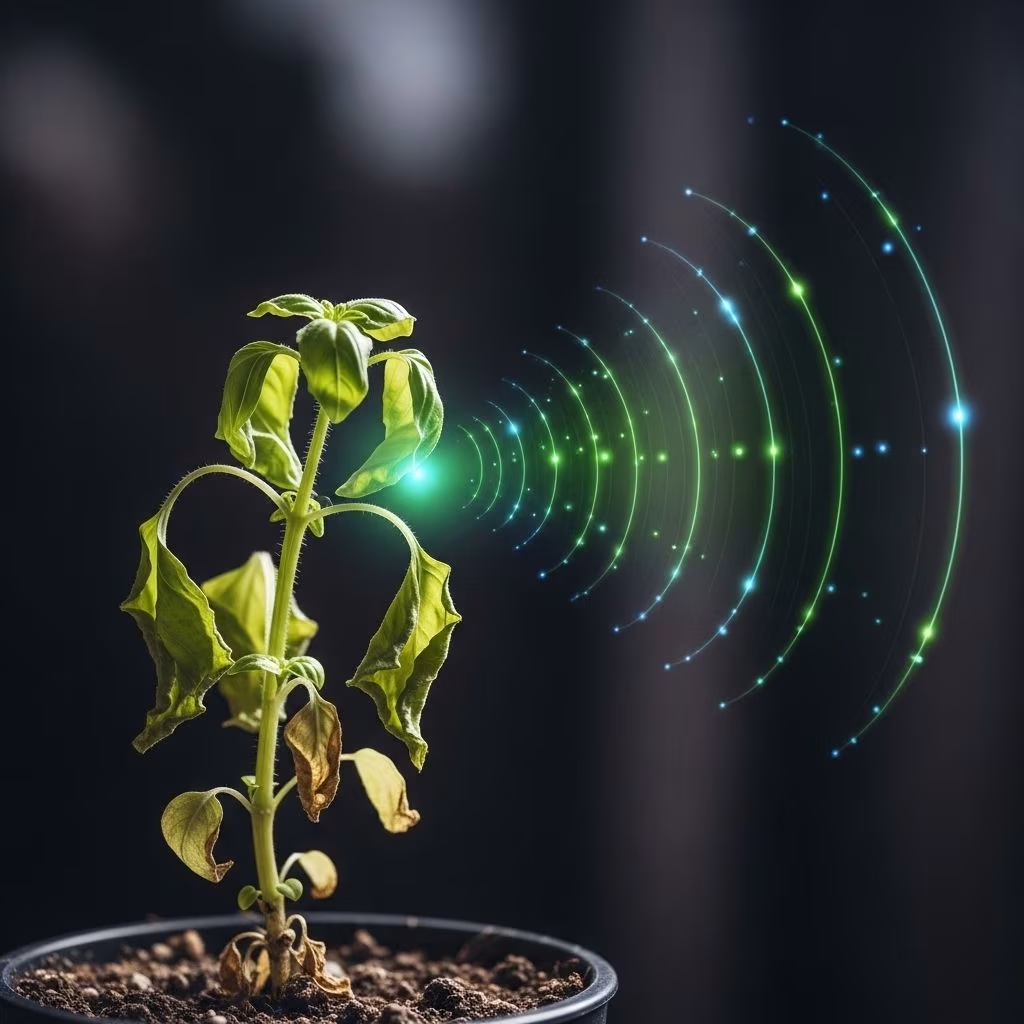
Stressed Plants: The Mysterious Sounds We Can’t Hear
If you thought plants were silent, think again. Recent scientific breakthroughs reveal that stressed plants emit ultrasonic sounds, far beyond the range of human hearing. These clicking and popping noises, detectable only with sensitive equipment, open a hidden auditory dimension to plant life—suggesting plants are far from passive in their environments.
What Kind of Sounds Do Stressed Plants Make?
When plants such as tomatoes or tobacco face drought or are physically damaged (for example, having their stems cut), they emit distinct ultrasonic clicks or pops. These sounds typically occur in frequencies between 20–100 kHz, well above the limit of the human ear. For comparison, humans hear up to about 20 kHz, while dogs and some insects can detect much higher frequencies.
- Thirsty tomato plants may emit up to 35 ultrasonic clicks per hour.
- Different stresses (drought vs. cutting) produce distinct patterns of sound.
- Other species, including tobacco, wheat, corn, grapevines, and even cacti, also emit such noises under stress, though at different rates and intensities.
When these ultrasonic sounds are adjusted for human hearing, they resemble the popping of bubble wrap or popcorn.
How Are These Sounds Detected?
Researchers place ultrasonic microphones near living plants without actually touching them, ensuring the sounds travel through air, similar to how we hear. Intriguingly, the noises:
- Can be measured in air, not just through physical contact with the plant.
- Reach volumes comparable to a normal human conversation (about 60–70 decibels), though the pitch is much higher than we can perceive.
- Can be detected up to several meters away by animals with acute high-frequency hearing, such as bats, mice, and some insects.
How Often and Why Do Plants Make These Noises?
The exact biological cause for these sounds is not fully understood, but evidence suggests they may be related to the formation and collapse of air bubbles within the plant’s vascular system—a phenomenon known as cavitation.
- Severe water stress leads to an increase in tiny air bubbles forming and popping within water-carrying tissues.
- This popping produces distinct ultrasonic bursts, which differ in number and pattern based on the type and severity of stress.
- Recent studies found that cut stems generate their own unique signature of ultrasonic noise, slightly less frequent than water-stressed samples but distinguishable.
Are Plants Really ‘Screaming’?
It’s tempting to anthropomorphize and say that plants “scream” when in trouble. However, current research emphasizes that plants are likely not producing these sounds intentionally. Instead, the noises are probably a byproduct of physical processes occurring inside the plant during stress. Whether other organisms use these sounds as informational cues in nature remains a tantalizing possibility.
Why Does This Matter?
Listening to plants’ ultrasonic noises could revolutionize our understanding of plant communication and ecology. Practical applications span from agriculture to environmental science:
- Monitoring Crop Stress: Farmers could use networks of ultrasonic sensors to detect early signs of water deficiency, disease, or damage, intervening before visible signs appear.
- Selective Breeding: The technology could drive breeding of crops that warn more effectively or resist stress, improving food security in fluctuating climates.
- Ecosystem Insights: Animals sensitive to ultrasonic frequencies, such as certain moths, bats, and rodents, might already be listening in. These sounds could influence pollination, herbivory, or even plant-to-plant communication (though evidence for the latter is still being explored).
The Science Behind Ultrasonic Plant Sounds
How do researchers actually capture and analyze what our ears cannot hear?
- Experiments involve isolating plants in sound-dampening acoustic boxes, away from human-made noise, to record true plant emissions.
- Sophisticated machine learning algorithms help distinguish between the sound signatures of different plant species and stressors, even in noisy environments like working greenhouses.
- The algorithm can differentiate not just between plant species, but also between types of stress (thirst vs. physical damage).
Table: Sound Emission Rates By Plant and Stress Type
| Plant Species | Water-Stressed | Cut Stem | Unstressed |
|---|---|---|---|
| Tomato | ~35 clicks/hour | Slightly fewer than 35/hour | Near silent |
| Tobacco | Less frequent than tomato | Few pops | Near silent |
| Wheat, Corn, Grapevine, Cactus | Popping detected | Popping detected | Rare or no pops |
Could Plants Use This for Communication?
The possibility of plant-to-plant or cross-species communication through ultrasound is actively being studied. Some scientists suggest that neighboring organisms—including insects or even other plants—might tune in on these botanical “pops” to gain information about local threats or conditions.
- Moths and bats, which use ultrasounds for their own biology, could alter behavior based on what they hear from plants.
- Plants could possibly detect each other’s stress, triggering defensive or adaptive changes. Definitive evidence for such signaling is an exciting, ongoing area of research.
Implications for Agriculture and Beyond
If proven reliable, plant sound detection could offer myriad benefits:
- High-tech farming: Acoustic sensors could be installed in greenhouses or fields, providing real-time, non-invasive monitoring of crop health, potentially reducing water waste and improving yields.
- Biodiversity research: Investigating which animals hear and respond to plant ultrasounds may uncover new ecological relationships.
- Resilience strategies: Understanding stress responses equips scientists to develop hardier, more responsive plant varieties for a changing climate.
How Far Can These Sounds Travel?
While extremely high in pitch, plant-emitted noises are quite robust in volume. In controlled experiments, they were detectable several meters from the source. Some mammals, like mice, and many insects can hear at these frequencies from at least five meters away.
Are All Plants Equally ‘Talkative’?
No. Sound emission varied not only by stress type, but also by species. Tomato plants, for instance, are more “talkative” under stress than tobacco, and both emit more sounds than the same plants under normal, healthy conditions. Other species like wheat, corn, grapevine, and cacti have also been recorded making ultrasonic emissions, suggesting a widespread phenomenon with unique patterns for each species.
Debates and Open Questions
- Intentionality: Most scientists agree the sounds are not “cries” for help, but stress byproducts. Still, they may carry evolutionary significance if other organisms respond.
- Information transfer: Animal eavesdropping is considered plausible; whether plants themselves use ultrasound to communicate is unknown, though research is ongoing.
- Ecological impact: If plant sounds shape animal behavior, or vice versa, it may shift our fundamental understanding of ecological networks.
What Does the Future Hold?
As technology advances, we may soon see:
- Widespread use of “listening farms” leveraging AI and acoustic analysis for precise, automated crop management.
- New discoveries about previously unnoticed channels of communication within natural ecosystems.
- Efforts to genetically enhance or manipulate plant acoustic emissions for agricultural benefit.
Frequently Asked Questions (FAQs)
Q: Do all stressed plants make sound?
A: Research shows a wide range of species emit ultrasonic sounds when stressed, but the frequency and intensity vary. Some plants may be quieter or not produce detectable emissions under certain conditions.
Q: Can humans hear plant sounds naturally?
A: No, the frequencies are far above the human hearing range. However, with ultrasonic microphones and audio conversion techniques, researchers can make these sounds audible.
Q: Are these plant sounds a form of communication?
A: Intentionally communicative plant sound emission is not proven. The sounds appear to be unintended byproducts of stress mechanisms, but they may still convey information to animals or other plants in the environment.
Q: How might this research help agriculture?
A: By monitoring plant-emitted ultrasounds, farmers could detect drought, disease, or injury earlier—which could improve yields, save water, and make agriculture more sustainable and resilient.
Q: What could eavesdrop on plant sounds?
A: Animals that hear in the ultrasonic range, such as bats, insects, and some rodents, could potentially “hear” these plant sounds and adjust their behaviors accordingly. Scientists are still investigating this possibility.
Key Takeaways
- Plants emit ultrasonic sounds when stressed, revealing an unseen dimension of plant-environment interaction.
- These noises are not cries for help but likely the result of physical changes, particularly in water transport tissues.
- Advanced recording and AI techniques allow scientists to monitor, identify, and interpret plant sounds for science and agriculture.
- The field is new, with profound implications for agriculture, ecology, and our basic understanding of plant life.


