California Teen’s Shocking Discovery: Golf Balls Polluting the Ocean
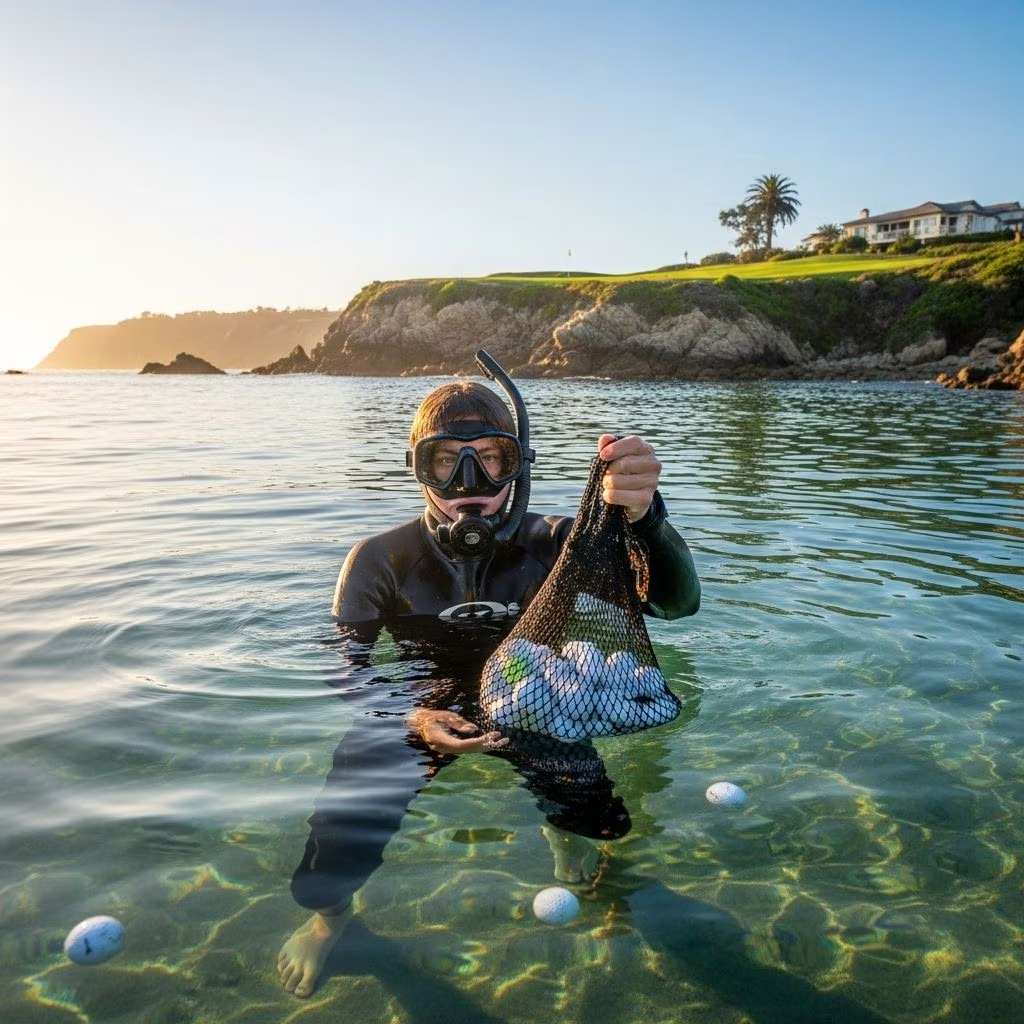
On a seemingly routine free-diving trip in the cold waters off Pebble Beach, California, teenager Alex Weber noticed an unexpected but unmistakable pattern on the ocean floor: golf balls. Thousands of them, scattered across the sandy seabed, forming what looked like a vast, artificial reef of plastic and rubber debris.
This disturbing sight was not a one-time fluke. Weber, accompanied by her father, soon realized that every dive in the area turned up hundreds more golf balls, confirming that a persistent, overlooked problem had been quietly worsening for decades. As the days passed, the question shifted from “Why isn’t anyone cleaning this up?” to “What can we do to stop it?”
The Source: Golf Courses Lining the Coast
Pebble Beach and the surrounding Carmel coastline are renowned for their world-famous, ocean-edge golf courses. While offering dramatic seaside fairways, these venues unwittingly contributed to the problem. Every errant drive or intentional ocean shot sent balls tumbling down cliffs or directly into the waves, never to be seen by golfers again—until Weber’s discovery.
- Pebble Beach Golf Links: Host to multiple major tournaments and one of several courses contributing to the issue.
- Cypress Point, Carmel River Mouth Courses: Other nearby sites found polluted with thousands of submerged balls.
- Golf balls regularly enter the ocean due to location, wind, and routine game play.
From Alarm to Action: The Birth of a Citizen Science Project
The sight of the ocean blanketed by rotting golf balls galvanized Alex Weber to take action. Every dive became a cleanup mission, with Weber hauling up hundreds, then thousands of balls. Soon, her family and friends joined in, and together they started systematically removing the balls from the ocean floor.
What began as a local effort quickly revealed the overwhelming magnitude of the problem:
- Initial daily tallies: At least 500 golf balls collected per day.
- Collaboration: Weber enlisted help from golf course employees, scientists, and volunteers.
As the pile of retrieved balls grew into the tens of thousands, Weber recognized the need for a scientific approach. She contacted Matt Savoca, a Stanford postdoctoral researcher specializing in marine pollution. Teaming up, they documented and quantified the golf ball pollution, eventually co-authoring a peer-reviewed study published in the Marine Pollution Bulletin.
The Scale of Golf Ball Pollution: Startling Numbers and Toxic Impact
For over two years, Weber and her volunteers meticulously collected and catalogued balls in multiple locations near the Central California coast. The numbers were staggering:
| Site | Balls Collected |
|---|---|
| Pebble Beach area and adjacent courses | Nearly 40,000 |
| Additional beach recoveries | 10,000+ |
| Total in two years | 50,681 |
This equates to around 2.5 tons (about the weight of a pickup truck) of compact, synthetic debris hidden underwater. Golf balls, constructed from shells of polyurethane elastomer and rubber cores spiked with zinc oxides and acrylates, proved highly persistent and toxic in marine conditions.
- Golf ball composition: Polyurethane shell, synthetic rubber, zinc additives.
- Degradation: Wave action breaks balls down, releasing microplastics and toxic compounds.
- Environmental threat: Microplastic fragments can be ingested by fish, birds, and other marine organisms.
Though most balls showed light wear, many were severely degraded, leaking toxic material and microplastics. A conservative estimate from Savoca and Weber put the total microplastic release at more than 60 pounds from their haul alone.
Why These Golf Balls Stayed Undetected
Unlike floating bottles or bags, golf balls sink immediately, vanishing from sight and settling among rocks and sand. Without divers or dedicated cleaning, they remain invisible, quietly polluting until broken down by relentless waves. This “hidden” marine debris has been overlooked for decades, despite the frequent shedding of balls by coastal and riverside golf courses worldwide.
Wider Problem: How Many Golf Balls End Up in Our Waterways?
Pebble Beach is not alone. With an estimated over 34,000 eighteen-hole courses across the globe and 60 million regular players generating 400 million rounds per year, the potential for aquatic golf ball pollution is immense.
- Each round commonly results in 1–3 balls being lost, many disappearing into water hazards or ocean out-of-bounds areas.
- Annual estimates for lost balls at select coastal courses can exceed 100,000.
Given their size, weight, and persistent material, lost golf balls are likely a major source of microplastic and chemical contamination in aquatic environments globally.
Golf Ball Toxins: Unseen Dangers to Marine Life
The core construction of golf balls poses further risks once they enter the marine ecosystem:
- Material breakdown: Mechanical impact from waves causes shells to erode, exposing the inner rubber and leaching harmful additives.
- Chemical toxicity: Substances such as zinc oxide and zinc acrylate are acutely toxic to aquatic animals, even at low concentrations.
- Bioaccumulation risk: Microplastics and chemicals can enter the food web as fish or birds mistake fragments for food.
Although large-scale wildlife die-offs specifically caused by golf balls have not yet been fully documented, scientists warn of the possibility for chronic, sub-lethal effects on marine communities over time.
Clean-up Strategies and Prevention: Turning Science into Solutions
Recognizing the need for sustainable intervention, Alex Weber and collaborators worked alongside local golf courses, including Pebble Beach, and the Monterey Bay National Marine Sanctuary to develop cleanup and prevention strategies.
- Immediate actions: Regular removal of balls from beaches and shallow waters, with increased participation from golf course employees.
- Long-term interventions: Monitoring ball losses, piloting netting or containment for likely sink areas, and regularly scheduled underwater cleanups.
- Research and outreach: Publishing findings, increasing public awareness, and advocating for industry-wide best practices.
- Non-profit initiatives: Weber and a collaborator launched a non-profit to continue the work and promote global change.
Moving the Industry
Initial reactions from some course managers reflected surprise at the sheer volume of submerged balls, but engagement grew as evidence mounted. The experience showed that environmental problems, even those previously unnoticed, could be combated by a combination of grassroots activism and scientific research.
Global Implications: A Call for Action Beyond California
While the study focused on a narrow segment of California’s coast, its implications are global. Any golf course bordering rivers, lakes, or the ocean risks contributing to a similar buildup. The problem is likely underreported and requires coordinated action from the golf industry and regulatory bodies worldwide.
Solutions proposed include:
- Redesigned course layouts to minimize risk of balls entering sensitive waterways.
- Adopting biodegradable or less-toxic ball materials for play near water.
- Institutionalized routine golf ball recovery efforts for all waterfront courses.
- Wider environmental monitoring and research using Weber and Savoca’s scientific blueprint.
Impact of Citizen Science: Inspiring Others to Protect the Planet
Alex Weber’s project highlights the power of young leaders and citizen scientists in confronting and remedying hidden forms of pollution. The cleanup has become a case study in how individual action, guided by curiosity and scientific rigor, can resonate globally and prompt real-world change.
Her campaign serves as an invitation for:
- Communities to track unexplored sources of local pollution.
- Schools and sports organizations to educate about proper disposal and environmental stewardship.
- Industry stakeholders to take accountability for their sector’s hidden ecological costs.
Frequently Asked Questions (FAQs)
Q: Why are golf balls considered a serious ocean pollutant?
A: Golf balls are made of highly durable plastics and rubbers that don’t degrade easily. When they end up in the ocean, wave action can break them down into microplastics and release toxic chemicals, threatening marine life through ingestion and leaching.
Q: How did Alex Weber and her team remove so many balls?
A: Through persistent diving and collection efforts, often gathering hundreds of balls per session. Collaboration with other volunteers and local golf course staff helped expand the cleanup operation until over 50,000 balls had been retrieved in two years.
Q: Is this problem unique to Pebble Beach?
A: No. While the study focused on Pebble Beach and nearby courses, any golf course near water can contribute to similar pollution. There are thousands of coastal and riverside courses worldwide, many of which likely lose golf balls to aquatic environments every year.
Q: What can golf courses do to prevent this pollution?
A: Courses can redesign risk areas to reduce the likelihood of balls entering water, conduct regular underwater and shoreline cleanups, use less-toxic or even biodegradable balls near water, and educate players about the issue.
Q: How can individuals help address this kind of pollution?
A: Supporting local cleanups, raising awareness, and practicing responsible recreation—avoiding intentionally hitting balls into water and properly disposing of golf balls—are all important steps. Everyone can play a part in minimizing plastic and chemical pollution in natural environments.
Conclusion: Small Actions with Ripple Effects
Alex Weber’s tenacity and scientific approach have exposed a long-ignored source of plastic pollution and helped initiate lasting change on California’s coast. The ongoing collaboration between citizens, scientists, and stakeholders provides a model for tackling invisible environmental threats worldwide. If one high school student can influence the fate of tons of ocean-bound debris, the path to healthier oceans may begin with the next dive—or the next idea.
References
- https://sciencespin36.scholastic.com/issues/2020-21/110120/Plastic-Problem.html
- https://www.smithsonianmag.com/smart-news/teenager-finds-hidden-marine-pollutant-thousands-golf-balls-180971329/
- https://grist.org/article/california-teen-helps-pull-50000-golf-balls-from-the-ocean/
- https://www.green-technology.org/teen-scientist/
- https://www.montereybayaquarium.org/stories/teens-tackle-an-unlikely-source-of-plastic-pollution-wayward-golf-balls
- https://www.youtube.com/watch?v=EdW0ONqc8WQ