The Green Revolution: History, Technologies, and Global Impact
The Green Revolution was a transformative period in 20th-century agriculture, marked by the adoption of new technologies and farming practices that dramatically increased food production and changed the landscape of global food security. While hailed for helping stave off famine and poverty, the Revolution also had complex social and environmental repercussions that continue to shape agriculture today.
What Is the Green Revolution?
The term “Green Revolution” describes a set of research, development, and technology transfer initiatives between the 1940s and late 1980s, aimed at boosting agricultural yields, especially in developing countries. The revolution chiefly involved the introduction of high-yielding crop varieties, intensive irrigation, use of synthetic fertilizers and chemical pesticides, and modern farming techniques.
Although crop improvement had been ongoing for centuries, the Green Revolution represented a concentrated, rapid shift in practices, triggered by international collaboration and scientific advancements. It is sometimes referred to as the Third Agricultural Revolution following the earlier Neolithic and British agricultural revolutions.
Origins: Why and Where Did the Green Revolution Start?
- Historical Context: The 1930s and 1940s saw recurrent famines in Mexico and India, threatening millions with food scarcity. Traditional farming methods failed to keep pace with the growing populations.
- The Mexican Agricultural Program: In 1943, the Rockefeller Foundation partnered with the Mexican government to launch research initiatives focused on wheat and corn. Norman Borlaug, later called the “Father of the Green Revolution,” led the development of disease-resistant, high-yield wheat varieties using a novel technique called shuttle breeding.
- Spread to Asia and Beyond: After successes in Mexico, attention turned to Asia, where similar breakthroughs were applied to rice. The work of Yuan Longping in China, whose research produced high-yield hybrid rice, is credited with saving millions from starvation.
Key Figures in the Green Revolution
| Name | Contribution |
|---|---|
| Norman Borlaug | Pioneered shuttle breeding and high-yield wheat varieties. Nobel Peace Prize laureate for his contributions to global food security. |
| Yuan Longping | Developed hybrid rice varieties that greatly increased harvests in China and beyond. |
| M.S. Swaminathan | Instrumental in introducing Green Revolution technologies to India, improving wheat and rice production. |
Core Technologies and Innovations
The Green Revolution’s success centered on a powerful combination of agricultural innovations:
- High-Yielding Varieties (HYVs): Genetically improved seeds for wheat, rice, and corn, bred for higher productivity, disease resistance, and adaptability to varying climates.
- Fertilizers: Heavy use of synthetic nitrogen and other chemical fertilizers, which greatly accelerated crop growth and yields.
- Pesticides: Modern chemical pesticides controlled insect pests and diseases, protecting crops and boosting harvests.
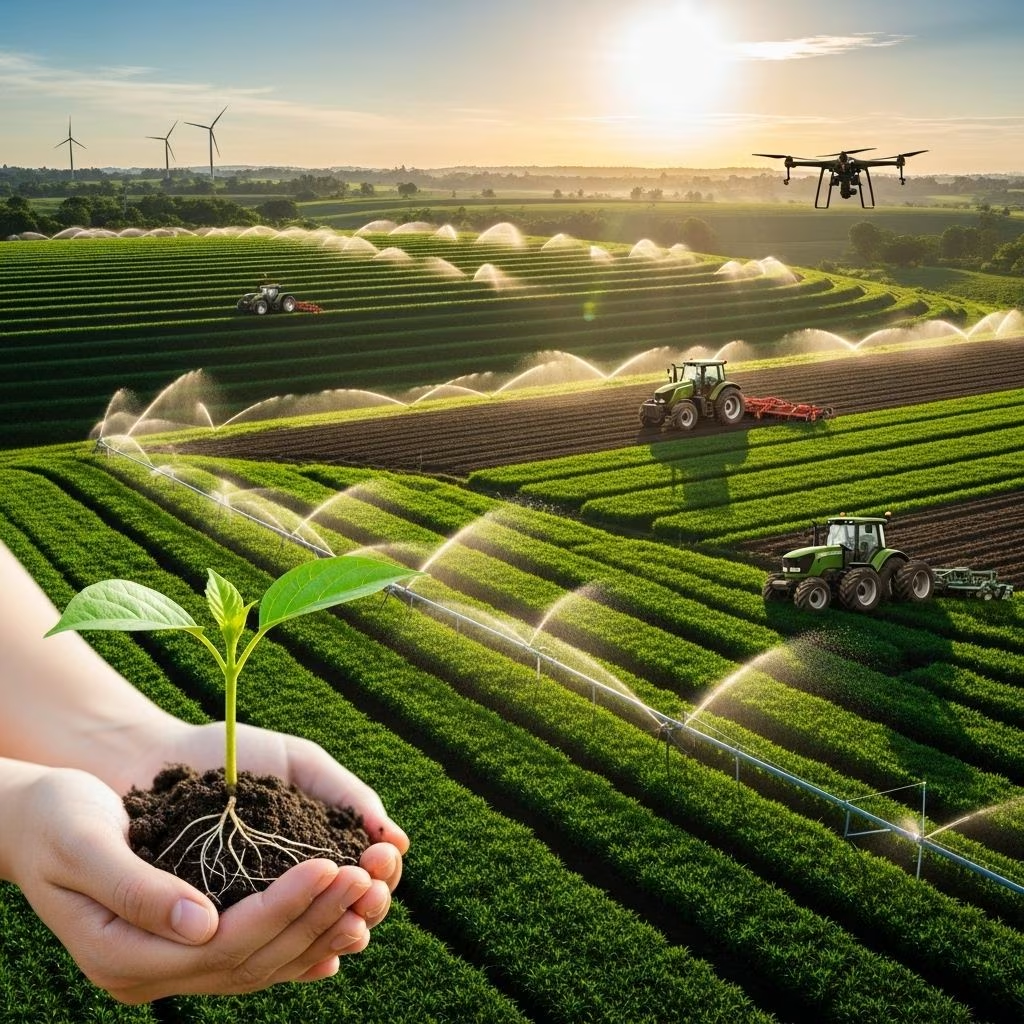
- Irrigation Innovations: Expansion and modernization of irrigation systems, including technologies like drip irrigation, allowing for more consistent water supply to crops.
- Mechanization: Introduction of tractors, harvesters, and modern farm implements, reducing labor requirements and increasing efficiency.
- Hybridization and Genetic Modification: Breeding strategies evolved to include hybrid crops and early forms of genetic modification, pushing the limits of traditional selection methods.
How Did the Green Revolution Work?
The Revolution operated on a ‘package approach’, where the deployment of improved seeds was synchronized with the application of fertilizers, pesticides, mechanized tools, and enhanced irrigation systems. Often, these packages came with policy reforms, such as privatization of fertilizer production and distribution. Farmers, especially in developing nations, required financial support or loans to access these new technologies.
- Double-Cropping: Farmers began growing two crops annually instead of one, thanks to improved irrigation and crop varieties.
- Expansion of Cultivated Land: Land previously considered unsuitable for agriculture became productive with irrigation and resilient hybrid crops.
- Research and Infrastructure: Major investments in agricultural research, transport networks, and market development accelerated adoption.
Global Impact: Successes and Achievements
- Food Production Surges: Global cereal production, especially wheat and rice, tripled with only a small increase in cultivated land area.
- Reduced Hunger and Poverty: Many countries, particularly in Asia and Latin America, drastically reduced famine and malnutrition rates. India went from chronic food shortages to the ability to export grain.
- Lower Food Prices: Increased yields led to broader food availability and lower prices, making staples more affordable.
- Calorie Availability: Studies suggest that without these breakthroughs, global caloric availability would have fallen by about 11–13%, with disastrous consequences.
- Economic Growth: Agricultural surpluses enabled developing nations to invest in other sectors and relieve socio-political pressure from rural hunger.
| Region | Main Crops | Key Results |
|---|---|---|
| Mexico | Wheat, Corn | Became a net wheat exporter by the late 1950s |
| India | Wheat, Rice | Self-sufficiency, reduced famine, export capacity |
| China | Rice | Hybrid rice feeding millions, overcoming cycles of famine |
| South Asia and Southeast Asia | Rice, Wheat | Tripled yields, widespread adoption of HYVs, improved food security |
| Africa (select regions) | Wheat, Corn | Partial adoption, increased yields where technologies applied |
Adoption and Spread
- By the 1970s, HYVs and associated technologies had replaced traditional crops across millions of hectares, especially in India and Asia.
- By the 1990s, approximately 75% of Asian rice fields and over half the wheat fields in Africa, Latin America, and Asia utilized Green Revolution varieties. About 40% of farmers in the developing world adopted these seeds, with Asia leading the way.
Environmental and Social Consequences
The Green Revolution’s legacy is mixed, with both celebrated advances and significant problems emerging from its rapid changes.
- Environmental Damage: Heavy reliance on chemical fertilizers and pesticides has contaminated waterways, caused soil degradation, and contributed to biodiversity loss.
- Water Use and Scarcity: Intensive irrigation led to overuse of water resources, salinity issues, and in some cases, desertification.
- Socioeconomic Disparity: The technologies favored larger farms with access to capital, leaving smallholders and subsistence farmers struggling to compete or facing debt cycles.
- Loss of Indigenous Knowledge: Traditional farming methods and local crop varieties declined as standardized technologies took precedence.
- Health Risks: Chemical exposure poses risks for farmers and communities, including pesticide poisoning and long-term health effects.
- Monocultures: Emphasis on a small group of cereal crops reduced agricultural diversity and resilience to disease.
Ongoing Debates and Lessons Learned
- Need for Sustainable Practices: The environmental drawbacks have fueled investments in organic farming, integrated pest management, and sustainable intensification.
- Policy Support: Research underscores the importance of appropriate policy and infrastructure, including access to credit, education, and market development, for equitable technological adoption.
- New Waves of Innovation: Advances in biotechnology, precision agriculture, and climate-smart crops offer potential new “revolutions” that could address limitations of the first Green Revolution.
Legacy: The Green Revolution Today
The Green Revolution remains a defining chapter in modern agriculture, shaping not only how food is grown but how societies are organized around production and distribution. It is cited as one of the main reasons for the prevention of mass starvation in the second half of the 20th century.
However, its environmental costs have sparked calls for a “greener” revolution centered on ecological stewardship, equity, and sustainability.
Frequently Asked Questions (FAQs)
Q: Who is considered the Father of the Green Revolution?
A: Norman Borlaug is widely regarded as the Father of the Green Revolution for his pioneering work on high-yield wheat varieties and for saving millions from food insecurity.
Q: What were the main technologies driving the Green Revolution?
A: Key technologies included high-yielding crop varieties (HYVs), synthetic fertilizers, chemical pesticides, expanded irrigation systems, and mechanization of farming.
Q: Was the Green Revolution benefical for the environment?
A: While it dramatically increased food production, the heavy use of chemical fertilizers and pesticides led to environmental damage like pollution, soil degradation, and biodiversity loss.
Q: How did the Green Revolution affect global hunger?
A: The Revolution helped many countries achieve self-sufficiency and lower food prices, significantly reducing both hunger and poverty in the developing world.
Q: Is there a need for another agricultural revolution?
A: With challenges posed by environmental degradation, climate change, and inequity, many experts argue for a new wave of innovation—one that balances productivity with sustainability and social justice.
References
- https://bigimpacthq.com/green-revolution-examples/
- https://en.wikipedia.org/wiki/Green_Revolution
- https://pmc.ncbi.nlm.nih.gov/articles/PMC7611098/
- https://www.britannica.com/event/green-revolution
- https://www.iatp.org/sites/default/files/Lessons_from_the_Green_Revolution_Do_We_Need_N.htm
- https://www.pnas.org/doi/10.1073/pnas.0912953109
- https://voxdev.org/topic/agriculture/when-agriculture-drives-development-lessons-green-revolution