Introduction
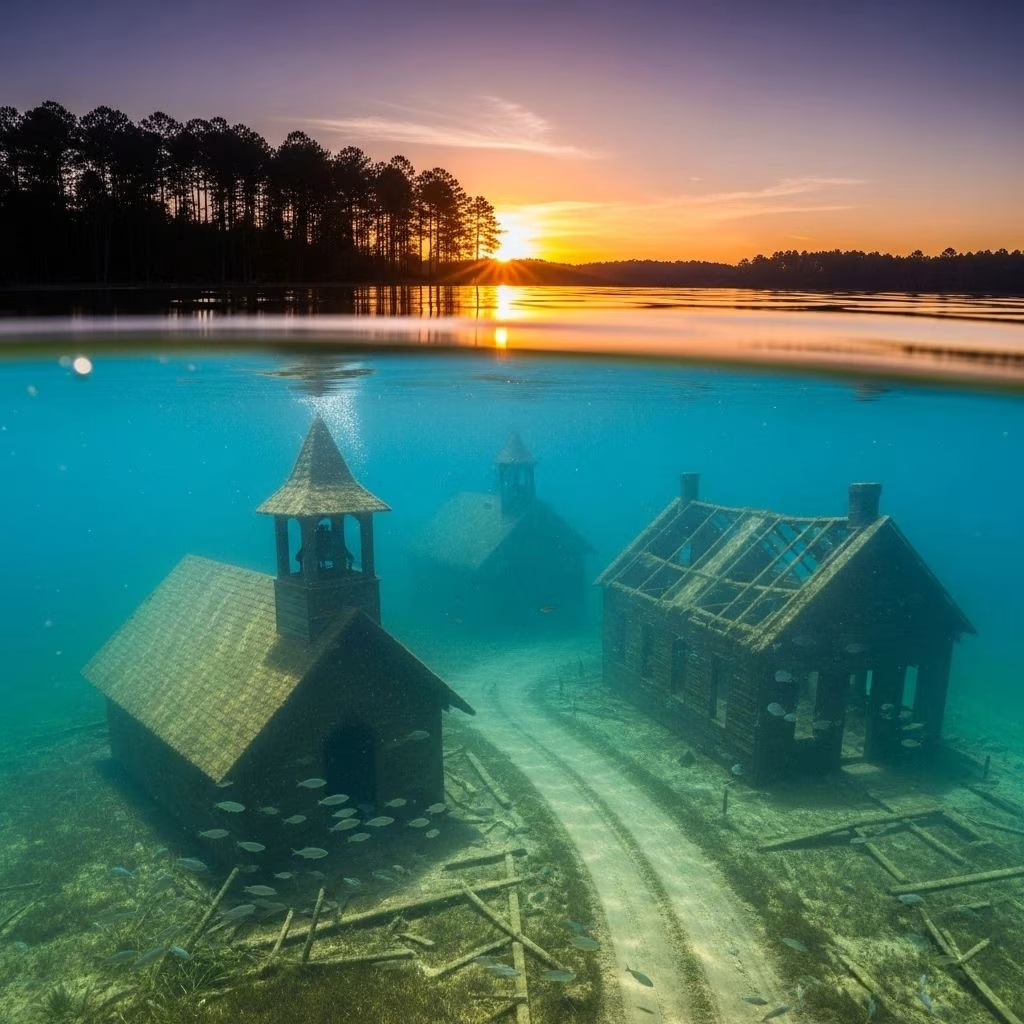
Beneath the vast, tranquil surface of Lake Murray in central South Carolina lies a history long forgotten by many. This history is composed of entire towns, family homes, churches, cemeteries, and relics from a way of life that vanished in the early twentieth century. In the process of building Lake Murray—a project designed to bring electricity and growth to the region—thousands of residents were forced to relocate, while their communities disappeared under the rising waters.
The Making of Lake Murray
Lake Murray was constructed as a massive hydroelectric project, designed to meet the growing demand for electricity in the South Carolina Midlands. The Lexington Water Power Company, later known as South Carolina Electric and Gas (SCE&G), spearheaded the undertaking in the late 1920s. Named for chief engineer William S. Murray, the lake was completed in 1930, ultimately covering nearly 78 square miles and stretching across four counties: Lexington, Richland, Newberry, and Saluda.
- Construction began in 1927 and was completed by 1930.
- It required building the largest earthen dam in the world at the time, the Saluda Dam.
- When finished, Lake Murray’s shoreline exceeded 500 miles.
The Submerged Valley
Before the lake, the region was known as the Saluda River Valley, a thriving area settled by German, Swiss, and Dutch immigrants as early as the 1750s. Farming communities, bustling small towns, graveyards, and churches dotted the landscape. By the 1920s, about 5,000 people called the valley home, living in nine principal towns, as well as rural homesteads and crossroads communities.
The Lost Communities of Lake Murray
When the land was bought up by SCE&G, residents faced a pivotal choice: accept compensation and relocate or resist the coming tide—literally. Ultimately, the lake swallowed up:
- Nine towns and villages including Dutch Fork, Saxe Gotha, and other established communities.
- 6 schools
- 3 churches
- 2,000 graves and several private family cemeteries
Entire ways of life—school routines, church gatherings, family reunions—ceased as people dismantled homes or left them for the lake to claim. Today, their stories persist only in memories, family records, and the artifacts occasionally uncovered when the lake is drained for maintenance or through underwater exploration.
Remembering the People
Some families, such as those of Susan Brown, have direct personal ties to the submerged region, with ancestors’ graves among those relocated—or, in some cases, left beneath the water’s surface. The emotional cost of relocation echoed through generations, as cherished sites became inaccessible, and family histories disappeared under the water.
Saluda River Valley: Life Before the Flood
For nearly two centuries, the Saluda River Valley thrived as an agricultural heartland and a patchwork of small communities. Life revolved around:
- Farming and the changing seasons
- Visits to local churches, many of which also served as schools and social hubs
- Family graveyards maintained for generations
- Local businesses, mills, general stores, and post offices that formed the backbone of rural life
Residents practiced strong community bonds, and traditions could be traced back to their European ancestors. Many structures, such as buildings made from heart pine and hand-hewn logs, exemplified the unique regional character that would soon disappear.
The Displacement: A Community Uprooted
Starting in 1927, the process of acquiring land and relocating residents began in earnest. Most were offered compensation for their land and property, but the loss of home could not be measured only in dollars. Extensive planning was required to move large structures, graves, and sometimes entire buildings by wagon or rail.
| Item Relocated | Number |
|---|---|
| Citizens | ~5,000 |
| Churches | 3 |
| Schools | 6 |
| Gravesites | 2,000+ |
Relocation was a traumatic and logistically complex process. In some cases, headstones were moved while actual remains remained behind, either intentionally or unintentionally. This practice continues to spark debate and sadness among descendants of those buried beneath the lake.
What Lies Beneath: Remnants of the Past
The world beneath Lake Murray remains largely inaccessible, but not completely forgotten. Underwater explorers, sonar teams, and—on rare occasions—receding water levels have revealed tantalizing glimpses of what was left behind:
- Portions of old bridges and roadbeds
- Stone and brick foundations of former homes and mills
- Sunken grave markers, sometimes visible when the lake is drawn down
- Occasional debris and artifacts from everyday life in the valley
These remnants continue to captivate divers and local historians seeking to preserve the memory of the valley. Some local families, when low water conditions exposed part of a submerged cemetery in 1996, rushed to visit the gravestones of long-lost relatives—opportunities that are rare and poignant.
Unusual Discoveries
In addition to expected relics, divers have unearthed surprising artifacts, such as the wreckage of a World War II B-25 bomber, and even an old airplane. These strange findings add further layers to the lake’s already complex and often haunting heritage.
The Cultural and Environmental Impact of Lake Murray
The creation of Lake Murray brought significant changes to the Midlands—both positive and negative. On the one hand, electricity catalyzed economic growth, modernized infrastructure, and spurred population expansion. The lake also created new recreational opportunities, earning it the title “The Jewel of South Carolina.” On the other hand:
- Irreplaceable communities were scattered and lost
- Unique regional cultures were diluted or went extinct
- Thousands of graves were disturbed or rendered permanently inaccessible
- Landmarks and habitats, including those important to Native American tribes such as the Catawba and Cherokee, were submerged
Despite its present-day beauty and recreational appeal, Lake Murray is a living reminder of the complex trade-offs between progress and preservation, power and loss.
Legacy and Preservation Efforts
Efforts continue to honor and remember those whose lives and homes were forever changed by Lake Murray’s creation. Local historical societies, museums, and dive teams archive stories, artifacts, and oral histories of the lost valley. Some initiatives include:
- Maps and interpretive signs at visitor centers indicating the locations of submerged towns
- Community memory projects and oral history collections from descendants
- Occasional archaeological dives and sonar surveys to locate structures and artifacts
- Genealogy groups tracking displaced families and relocated cemeteries
New generations are encouraged to recognize the hidden layer of history just beneath the lake’s surface, ensuring the stories are not lost as the lake evolves into the future.
Frequently Asked Questions (FAQs)
Q: Why was Lake Murray created, and what happened to the communities that existed there?
A: Lake Murray was constructed in the late 1920s for hydroelectric power and to provide electricity for the region. Local towns and communities, along with homes, schools, churches, and cemeteries, were either displaced or left beneath the rising waters. About 5,000 residents were relocated, and nine towns disappeared under the lake.
Q: Are any structures from the lost towns still visible or accessible?
A: Most structures are permanently submerged and only reachable by diving or specialized equipment. Occasionally, low water levels expose old road beds, bridges, or grave markers.
Q: Did anyone remain in the valley during the flooding?
A: All legal residents were required to relocate before the flooding. Some graves and possibly relics were inadvertently left behind.
Q: What efforts exist today to remember or commemorate the lost towns?
A: Local historical societies, museums, and genealogy groups work to record oral histories, maintain records, and engage with the descendants of those displaced by the creation of Lake Murray.
Q: Are any artifacts ever recovered from beneath Lake Murray?
A: Yes, divers and sonar teams occasionally find foundations, gravestones, personal items, and, in one case, a World War II aircraft. Artifacts are sometimes displayed in local museums or used in historical presentations.
Conclusion: The Past Beneath the Present
Lake Murray is more than a recreational gem or an energy source; it is also the site of profound and sometimes haunting local history. It shelters the remnants of whole communities, echoing the sacrifices made in the name of progress. While the world above continues to thrive, the world below remains silent—a testament to the passage of time and a call to remember the stories submerged beneath its waters.
References
- https://www.youtube.com/watch?v=T6gy0y6XFAo
- https://www.sciway.net/ccr/lostplaces.html
- https://www.youtube.com/watch?v=gI-lWxAv94g
- https://en.wikipedia.org/wiki/Lake_Murray_(South_Carolina)
- https://www.lexingtonchronicle.com/stories/memories-of-lost-towns-under-lake-murray,13738
- https://www.youtube.com/playlist?list=PL5iYMJCeZpDhZWab884IxwYIUY9Nvak-T