Designing With Nature: Tony Brown and the Philosophy of the Ecosa Institute
Tony Brown—architect, educator, and founder of the Ecosa Institute—has dedicated his life to redefining design education. By promoting the integration of ecological principles into architecture and planning, he has inspired generations of designers to see the built environment not as separate from nature, but as a living extension of it. This article delves into Brown’s formative influences, the genesis and philosophy of the Ecosa Institute, and the far-reaching impact of his approach to regenerative and systems-thinking design.
Origins: Early Influences and Arcosanti
Tony Brown’s approach to design was shaped by pivotal experiences early in his career. Central to his development was his relationship with visionary architect Paolo Soleri, whose concepts of arcology—the fusion of architecture and ecology—became a foundation for Brown’s later work.
- Mentorship under Paolo Soleri: Brown spent 13 years at Arcosanti, Soleri’s experimental desert community, where he served as architect-in-residence. This experience immersed him in urban design, systems thinking, hands-on construction, and the challenge of harmonizing human habitats with the natural world.
He managed not only architectural detailing but also construction logistics, including operating cranes and heavy machinery, developing a dynamic, multidisciplinary skillset. - Frank Lloyd Wright’s Influence: Soleri himself was a protégé of Frank Lloyd Wright. This lineage connects Brown to a legacy of architects who prioritized the integration of buildings with their natural environments.
- Diverse Experience: Brown’s career spans London, Boston, San Francisco, and Prescott, plus award-winning projects like Grand Canyon renovations and Arizona’s first container house, reflecting a blend of ecological intent with practical, innovative design.
Founding the Ecosa Institute
The founding of the Ecosa Institute in 1996 marked Brown’s commitment to transforming design education. Motivated by mounting ecological challenges—from climate change to urban sprawl—he envisioned a new pedagogical model preparing students to tackle 21st century environmental crises.
- Mission: “To teach regenerative design and ecological principles that align human aspirations with nature’s systems—empowering students to create resilient, responsible solutions through integrated education.”
- Vision: “To cultivate a community of visionary thinkers who design with nature and challenge convention.”
- Origins of the Name: ‘Ecosa’ is derived from combining ‘ecology’ and ‘society,’ underscoring the institute’s belief that sustainable design bridges the needs of the natural world and human civilization.
Brown crafted Ecosa’s curriculum as an interactive, multidisciplinary program focused on systems thinking—the understanding that all design decisions echo throughout ecological and social webs.
Why a New Model Was Needed
- The world’s environmental problems result from narrowly focused solutions that ignore systemic consequences.
- Traditional design education often treats environmental and aesthetic considerations as separate concerns, rather than seeing beauty, utility, and ecology as indivisible.
- Brown’s approach sought to empower designers as integrators—solving problems for both people and planet, not through isolation but inclusion of all environmental stakeholders.
Philosophy: Ecological and Regenerative Design
At the core of the Ecosa Institute’s teachings is a belief in the interconnectedness of all living systems. Ecosa’s philosophy can be summarized by several key tenets:
- Ecological Design: Every human intervention should strive to maintain, restore, or enhance the health of ecosystems. Buildings are not just shelters—they are potential contributors or detractors from ecological resilience.
- Regenerative Design: The goal isn’t merely to reduce environmental harm, but to create systems that actively regenerate ecological health, e.g., buildings that clean water, sequester carbon, or create wildlife habitat.
- Sustainability: True sustainability requires respecting natural limits, ensuring resources are left abundant for future generations.
- Systems Thinking: Design is part of physical and social systems. Small changes can cascade outward; thus, an understanding of ecology, biology, and social science is fundamental.
- Interdisciplinary Approach: Ecosa’s model draws from architecture, landscape design, planning, art, engineering, and natural sciences, recognizing that no single discipline can solve today’s complex problems.
Brown’s Signature Ideas
- Inviting Nature In: Instead of separating humans and nature, design should foster coexistence, such as in multi-species habitats that serve both people and wildlife.
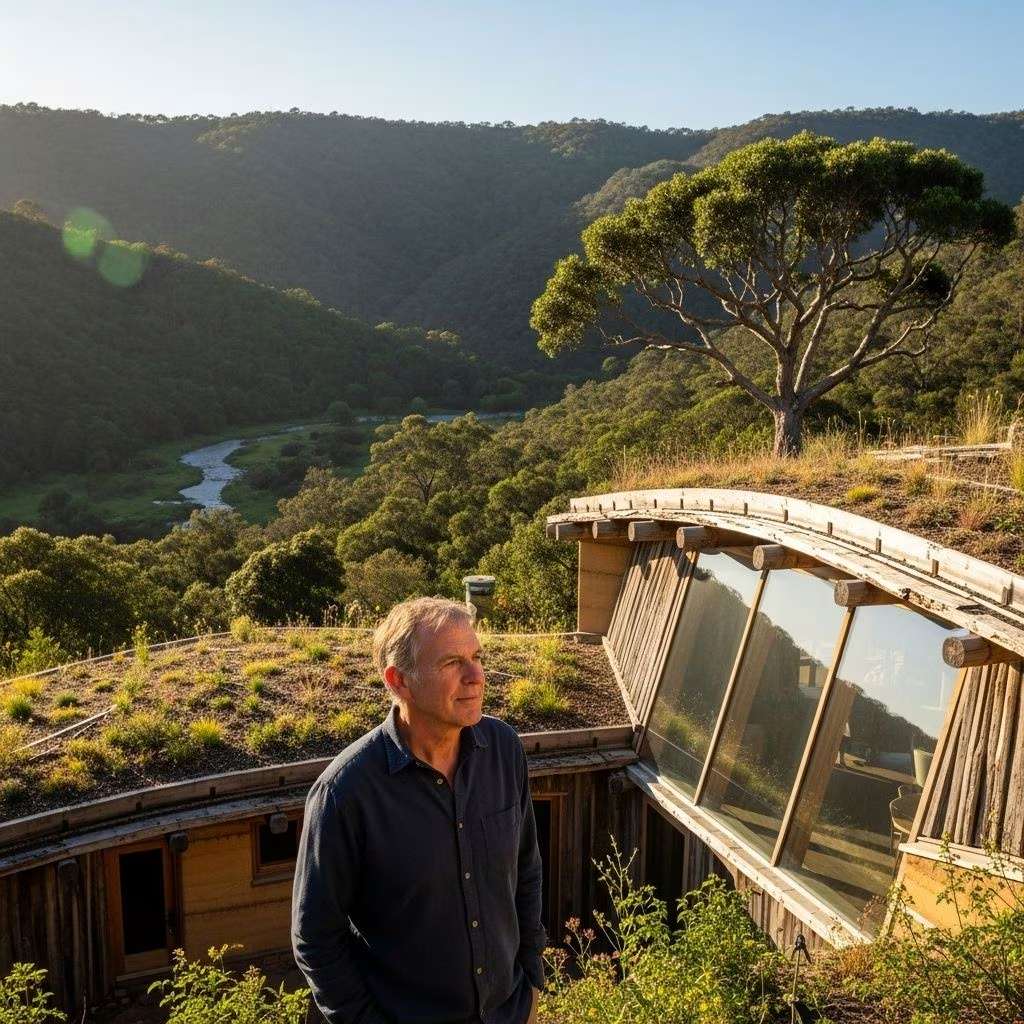
- Architecture as Ecosystem: Buildings that mimic forests—collecting and purifying water, producing energy via sunlight, sequestering carbon, and forming ecological niches for a range of species.
“Nature is a symphony. We must learn to join the music.” — Tony Brown
Curriculum and Interdisciplinary Approach
Brown’s vision at Ecosa is to redesign not only what architects build, but how architects are educated. The Ecosa Institute’s curriculum focuses on immersive, experiential learning:
- Problem-Based Learning: Students tackle real-world projects where they must balance human needs with ecological regeneration.
- Cross-Disciplinary Collaboration: Classes blend ecological science, urban planning, graphic design, and architecture. Students learn to forge teams that reflect the multifaceted nature of real design projects.
- Systems Analysis: Assignments demand examination of social, economic, and environmental impacts, preparing students to make complex decisions that account for long-term consequences.
- Hands-On Experience: Whether restoring landscapes, designing water-harvesting systems, or building experimental structures, practical learning is central.
| Key Elements | Traditional Design Education | Ecosa Institute Approach |
|---|---|---|
| Environmental Focus | Peripheral or specialized | Central, integrated in every course |
| Systems Thinking | Rarely emphasized | Core methodology |
| Interdisciplinary Work | Limited, often siloed | Fundamental; students work across disciplines |
| Hands-On Practice | Largely theoretical | Field work and practical projects required |
| Community Engagement | Variable | Projects often involve real community partners |
Signature Projects and Examples
- Historic Renovations: Work at Grand Canyon National Park demonstrating ecological restoration in heritage sites.
- Container House: Arizona’s first, winning sustainable building awards for creative re-use and environmental benefits.
- Experimental Multi-Species Buildings: Conceptual and real prototypes that blur the lines between human and wildlife habitat.
Impact and Legacy
The Ecosa Institute, under Tony Brown’s leadership, has left an indelible mark on the landscape of design education and the broader world of sustainable architecture.
- Pioneering Ecological Education: Ecosa was among the first in the U.S. to offer a comprehensive ecological design program grounded in systems thinking.
- Influencing the Profession: Graduates have moved into diverse careers as architects, planners, educators, and urbanists, advocating for regenerative principles wherever they work.
- Public Awareness: Through lectures, writings, and media (including TEDx talks), Brown has spread his message globally, influencing not just practitioners, but also the public and policy discourse around sustainable development.
- Thought Leadership: Brown’s contributions have been recognized with awards in both architecture and graphic design, while Ecosa’s projects have served as case studies for a more hopeful, integrative approach to the built environment.
- Catalyst for Change: By centering nature in design, Ecosa’s model has contributed to a cultural shift toward seeing architectural projects as opportunities for ecological healing rather than sources of damage.
Influence Map
- Academic Circles: Ecosa alumni and Brown’s lectures influence curriculum development in other colleges and design schools.
- Community and Public Spaces: Prototype projects serve as demonstration models for green infrastructure and wildlife-inclusive architecture.
- Professional Practice: Alumni embed regenerative and systems thinking into architecture, planning, and consulting worldwide.
Through decades of teaching and practice, Tony Brown has helped redefine what it means to be a designer—not simply a creator of objects for people, but a steward for the planet.
Frequently Asked Questions (FAQs)
Q: What is ecological design?
A: Ecological design is an approach that considers the impact of design on the natural environment, aiming to minimize harm, restore ecosystems, and create systems that are regenerative, resource-conscious, and deeply integrated with natural processes.
Q: How does regenerative design differ from sustainable design?
A: Sustainable design aims to lower negative impacts and maintain resources; regenerative design goes further, seeking to actively improve and restore ecological health through every project.
Q: Who was Paolo Soleri, and how did he influence Tony Brown?
A: Paolo Soleri was pioneering architect and visionary behind the concept of arcology (architecture + ecology). As Brown’s mentor at Arcosanti, he fundamentally shaped Brown’s philosophy and commitment to integrative, ecological solutions.
Q: What kind of students or professionals attend Ecosa Institute?
A: The program attracts architecture and design students, environmental scientists, planners, artists, and anyone passionate about sustainable, systemic solutions for the built environment.
Q: Can architecture really reverse environmental damage?
A: Through regenerative and systemic design approaches, architecture can be leveraged to restore biodiversity, clean air and water, and reconnect fragmented ecosystems—reversing damage instead of exacerbating it.
Key Takeaways
- Tony Brown and the Ecosa Institute have pioneered a holistic, systems-based approach to design that integrates ecological, social, and architectural knowledge.
- Regenerative thinking moves design from harm reduction to ecological healing, fostering the next wave of sustainable solutions.
- Education that blends disciplines—architecture, science, art, and planning—equips students to face complex, real-world challenges with creativity and purpose.
- The Ecosa message: The future of design lies in learning to live with, not apart from, the natural world.
References
- https://www.ecosa.org/history-mission
- https://www.youtube.com/watch?v=lSNBTkGrrqY
- https://theorg.com/org/ted-conferences/org-chart/tony-brown
- https://www.youtube.com/watch?v=sJIBIQjTYbI
- https://www.youtube.com/watch?v=Nk0ix4Bou0Q
- https://www.filmindie.tv/media/tony-brown-visionary-of-ecosa-496098
- https://soundcloud.com/antony-brown-740980193