The Permaculture Response: A Community Rises Amidst Invasion
When the Russian invasion of Ukraine erupted in February 2022, communities across Ukraine were forced to confront devastating violence, displacement, and uncertainty. Amid the chaos, a powerful story of resilience and solidarity unfolded, led by networks of permaculturists and ecovillage residents. These communities, rooted in sustainable living and mutual aid, quickly mobilized to provide safety, food security, and a sense of hope to thousands forcibly displaced by conflict.
Permaculture and Ecovillages: Foundations of Resilience
Permaculture is an approach to land management and social design that draws from natural ecosystems, focusing on principles of care for the earth, care for people, and fair share. In Ukraine, permaculture and ecovillages were already established movements before the war, actively promoting:
- Sustainable agriculture and biodiversity
- Harvesting rainwater and preserving natural resources
- Community-based food production and sharing surplus
- Natural building techniques and cooperative living
Organizations such as the Global Ecovillage Network of Ukraine (GEN Ukraine) and Permaculture in Ukraine had developed extensive local and international connections, fostering over 60 ecovillages nationwide. Their pre-war activities included educational courses, conferences, design projects, and translation of permaculture texts into Ukrainian, building a foundation of knowledge and inter-community trust.
February 24, 2022: The Invasion and Immediate Mobilization
On February 24, 2022, Russia launched a full-scale invasion of Ukraine. Urban residents awoke to explosions; hundreds of thousands immediately sought refuge. While some fled directly to the western border, many made their way towards the countryside—seeking safety in the wide network of ecovillages and permaculture sites.
Within 48 hours, leaders of Permaculture in Ukraine and GEN Ukraine coordinated an immediate response. Drawing upon their established networks, they:
- Compiled a list of ecovillage and permaculture sites able to offer shelter
- Created a dynamic map of safe locations within Ukraine and, with the help of GEN Europe, ecovillages across Western Europe ready to welcome Ukrainian refugees
- Mobilized community resources for food, first aid, and logistics
The Green Road of Ecovillages: From Emergency to Endurance
Named the Green Road, this mutual-aid network rapidly became a vital humanitarian corridor. Within the first month, the map featured 70 locations in Ukraine and 300 across Western Europe. Over 3,000 displaced people passed through these sanctuaries in the early phases of the invasion; some stayed briefly before moving to the border or abroad, while others became new, long-term residents in these communities.
By fall 2022, up to 600 internally displaced persons (IDPs) remained in Ukrainian ecovillages to weather the coming winter, and as the war extended into 2023, several hundred more joined, some planning to stay until peace returns or even permanently integrate into these communities.
Key Elements of the Green Road Initiative
- Emergency Shelter: Immediate accommodation for displaced families, with long-term integration for those unable or unwilling to leave the country
- Food Security: Upscaling food production through expanded gardens and new greenhouses
- Community Well-being: Social support, trauma relief, and a focus on rebuilding livelihoods
Life in the Ecovillages: A Blend of Challenge and Hope
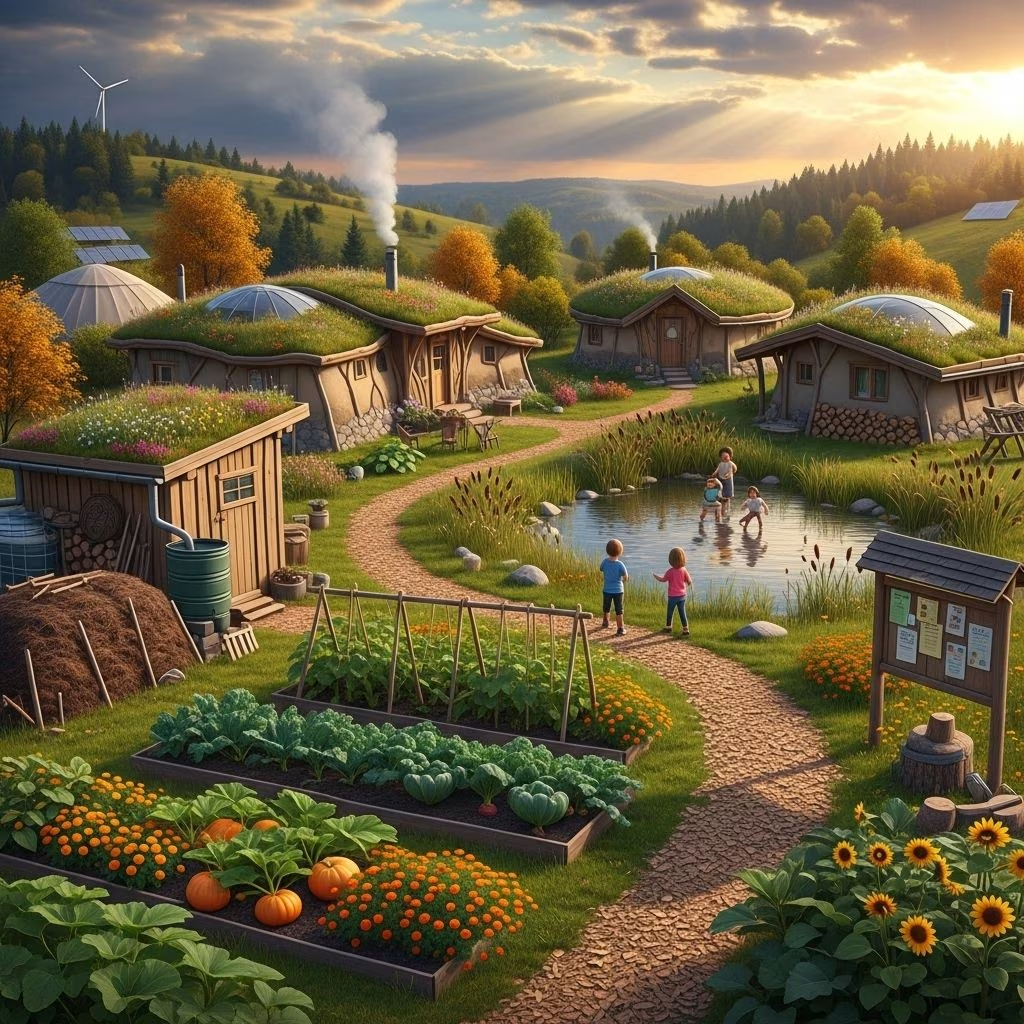
The sudden influx of newcomers transformed the everyday reality of established ecovillage residents. Small homes that once sheltered single families were now buzzing with multigenerational households. Community kitchens, gardens, and communal spaces became centers of activity and connection.
One ecovillage resident, Anastasiya Volkova, described how her small home, which she had built with her family years before, expanded to shelter relatives fleeing Kyiv. She is also the head of Permaculture in Ukraine—a grassroots NGO established in 2012—which now found its mission shifting from education and advocacy to emergency relief and network support.
Everyday life in the communities adapted with:
- Space sharing and the creation of communal living arrangements
- Collaborative cooking and pooled food supplies
- Organized childcare to support traumatized children and working parents
- Gardening and construction projects providing both sustenance and therapeutic routine
Strengthening Food Production and Resource Sharing
As it became clear the conflict would persist, the focus shifted from short-term aid to sustainable community living. Food security was a central goal:
- Expansion of gardens and orchards to feed both existing residents and newcomers
- 23 new greenhouses constructed across communities, funded by donations
- Distribution of food not just within ecovillages, but also to families in nearby needy regions
These efforts ensured both physical nourishment and a sense of agency as communities reclaimed control over a destabilized food system.
Aiding from Afar: International Support and Partnerships
The reach of the Green Road went beyond Ukraine’s borders. Solidarity from the Permaculture Association (UK), Permaculture Magazine, GEN Europe, and grassroots donors worldwide enabled vital crowdfunding campaigns. Initial priorities included:
- Medical aid: Purchasing and distributing over 270 first aid kits for defenders and communities at risk
- Logistics: Finding suppliers with available stock, navigating price surges, and ensuring rapid, secure delivery to Ukraine
- Safe haven mapping: Expanding the Green Road database to include hundreds of eco-communities across Europe, welcoming refugees with similar values and support systems
Ongoing Challenges: Utilities, Security, and Mental Health
The war’s impact deeply affected daily life within ecovillages. Power outages, fuel shortages, and constant uncertainty required swift adaptation:
- Energy blackouts prompted solar panel installations and reliance on wood stoves for heat
- Community-wide efforts to harvest and store water in anticipation of utility disruptions
- Collaborative crisis planning to manage sudden attacks or evacuation needs
- Mental health initiatives: peer support circles, counseling, and wellness activities to address trauma and stress
From Survival to Transformation: Growing a Movement
As months passed, the character of the Green Road network evolved. What began as emergency relief expanded into a robust model for resilient community-building. Newcomers became active members, learning permaculture, contributing their labor and expertise, and, in some cases, dreaming of starting their own ecological communities in the future.
Key ingredients in this transformation included:
- Skill-building workshops in gardening, construction, renewable energy, and conflict resolution
- Integration projects pairing long-time residents with newcomers to foster mutual learning and belonging
- Children’s education: Home-schooling cooperatives and trauma-informed learning groups
- Income generation: Selling surplus produce and crafts to support community financial resilience
Permaculture Principles in Wartime
Permaculture’s foundational principles—caring for the earth, caring for people, and fair share—proved vital in the crisis. The movement’s pre-war investments in biodiversity, soil health, renewable energy, and social capital made it possible to withstand and adapt to extraordinary disruption.
Some key lessons from the Ukrainian experience include:
- Systems thinking: Integrating food, water, shelter, and energy solutions for comprehensive security
- Strengthening local networks and interdependence to address large-scale shocks
- Centering compassion, active listening, and trauma-awareness within collaborative work
- Viewing crisis not just as disaster, but also as an opportunity to create better ways of living together
Impact Stories: Lives Changed on the Green Road
The real impact of the Green Road is found in the stories of resilience and adaptation:
- A multigenerational family from Kyiv settling and thriving in a sustainable cob home, sharing gardening duties and rediscovering a sense of belonging
- A group of activists fleeing bombed cities, now helping to build greenhouses and teach organic gardening to children and adults alike
- Displaced persons becoming community members, active in ecological project planning, and leading cultural exchanges that enliven village life
One resident summarized the transformation: “Many things we dreamed of before the war came true through crisis. Our network is stronger—more people, more resources, a deeper sense of mutual trust.”
The Broader Significance: Lessons for a Turbulent World
Ukraine’s permaculture and ecovillage response to war offers crucial lessons globally. As climate instability, political upheaval, and displacement challenge communities worldwide, the network demonstrates:
- The power of organized grassroots action to save lives and nurture resilience
- The effectiveness of food sovereignty and sustainable infrastructure in crisis
- The importance of anticipatory planning, social cohesion, and compassion for neighbors
Within crisis lies opportunity: for reimagining communal life, strengthening local systems, and fostering hope even in the darkest times. As the Ukrainian ecovillage movement declared, “We dreamed of resilient, living communities. Now, together, we are building them.”
Frequently Asked Questions (FAQs)
Q: What is permaculture, and how is it applied in Ukrainian ecovillages?
A: Permaculture is a design system for sustainable living and agriculture, emphasizing care for the earth, care for people, and fair share. In Ukrainian ecovillages, it is practiced through natural building, community food production, biodiversity preservation, and mutual aid.
Q: How many people found refuge in Ukrainian ecovillages during the invasion?
A: At least 3,000 people passed through the Green Road network’s locations during the first months of the war, with several hundred continuing to live more permanently in these communities as of 2023.
Q: What were the main challenges faced by these communities?
A: The most significant challenges included managing the influx of newcomers, coping with energy blackouts and resource shortages, scaling up food production, and supporting the mental health of traumatized residents.
Q: How can the lessons from Ukraine’s ecovillage response be applied elsewhere?
A: The experience underscores the value of strong local networks, diverse skills, food sovereignty, and adaptability. Communities everywhere can prepare for crisis by investing in resilience, social ties, and sustainable infrastructure now.
Additional Resources
- Permaculture in Ukraine: Educational projects, design support, and advocacy for sustainable living
- Global Ecovillage Network Ukraine: A growing network of ecological communities across Ukraine
- Permaculture Association (UK), GEN Europe: International solidarity and practical collaboration in support of Ukraine
References
- https://www.motherjones.com/politics/2023/02/the-surprising-communities-thriving-in-the-time-of-war/
- https://www.permaculture.in.ua/index.php/en/projects-and-events-en/ecovillages-host-relocated-people
- https://www.resilience.org/stories/2022-05-27/ukraine-the-green-road-of-ecovillages-communities-that-protect/