


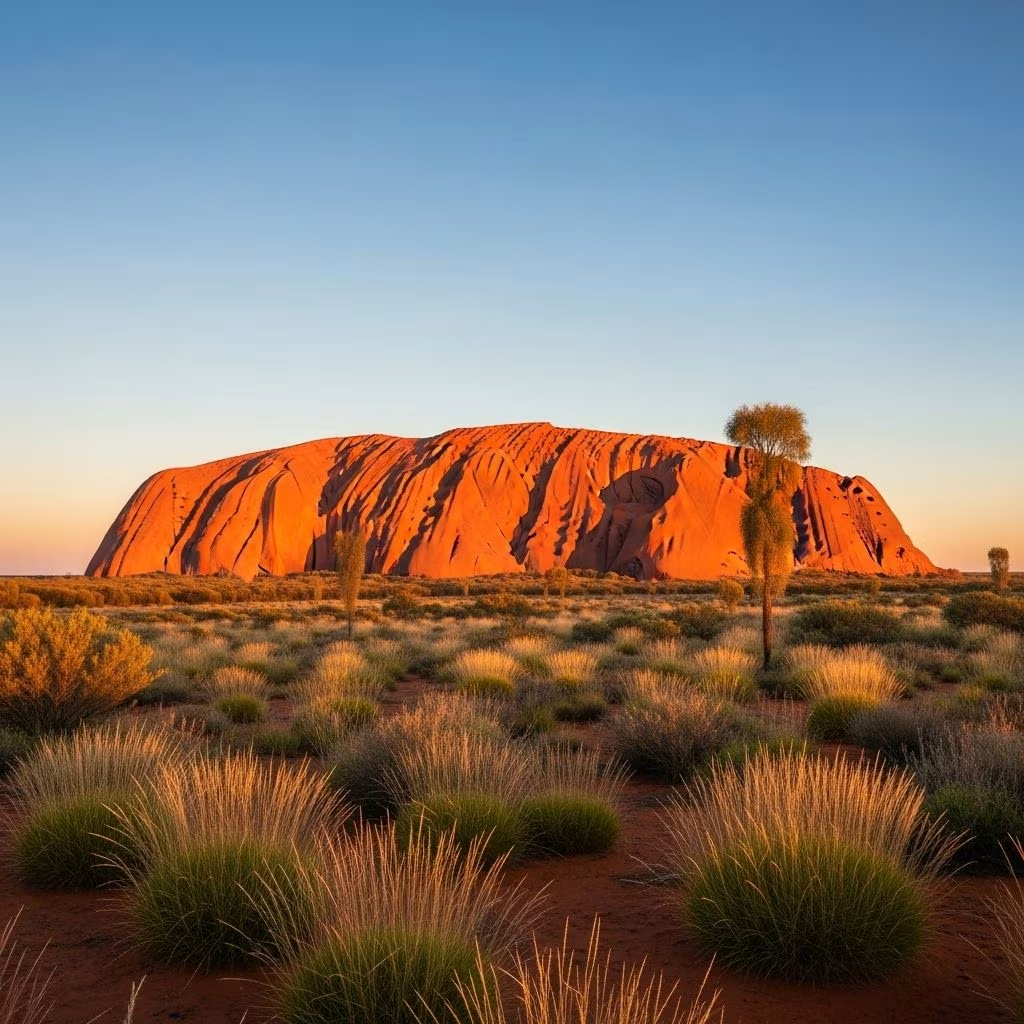
Uluru, also recognized by its European name, Ayers Rock, is a massive sandstone monolith rising dramatically from the Central Australian desert. Renowned for its deep spiritual significance, ancient geology, and an extraordinary tapestry of cultural stories, Uluru remains a World Heritage site and an iconic symbol for both Indigenous Australians and visitors worldwide.
What Is Uluru?
Uluru is one of the world’s largest and most impressive monoliths. It stands 348 meters (1,142 feet) high, more than 9.4 kilometers (5.8 miles) in circumference, and stretches deep into the earth like an iceberg. Uluru is an inselberg, meaning “island mountain,” and is composed primarily of arkose sandstone, which gives it the famous red hue that glows spectacularly at sunrise and sunset.
- Named Ayers Rock in 1873 by explorer William Gosse, after Sir Henry Ayers.
- ‘Uluru’ is the original Anangu name. In 1993, the site adopted dual naming: Uluru/Ayers Rock.
- Uluru, alongside nearby Kata Tjuta (The Olgas), forms part of the Uluru-Kata Tjuta National Park.
Where Is Uluru?
Uluru rises from the Red Centre of Australia, specifically located in the southern part of the Northern Territory. It is approximately 335 kilometers (about 208 miles) southwest of Alice Springs, on the edge of the Simpson Desert. The region is remote, arid, and offers sweeping vistas of ochre earth, sparse vegetation, and endless sky.
- By road, the closest major settlement is Yulara, which serves as the gateway to Uluru and Kata Tjuta.
- Uluru is located west of the Simpson Desert, within the bounds of Uluru-Kata Tjuta National Park, spanning 1,326 square kilometers (512 square miles).
Geological History of Uluru
The origins of Uluru are both ancient and complex, shaped through hundreds of millions of years of geological activity.
- Estimated age: About 500 million years old, making it roughly twice as ancient as the first dinosaurs.
- Formation began when the now-eroded Petermann Ranges to the west were high and their rocks were washed into giant alluvial fans.
- About 500 million years ago, the area was underwater. The sediments were buried, cemented, and eventually compressed into hard sandstone (Uluru) and conglomerate (Kata Tjuta).
- Tectonic plate movement and uplifting over millions of years tilted and exposed Uluru’s signature layers.
- Uluru projects 348 meters above the ground but extends several kilometers below the surface, visible today as a standalone structure due to erosion of the softer surroundings.
A fun fact: At one time, Uluru was at the bottom of the sea. Today, its iron-rich minerals give it a brilliant red color as the surface oxidizes (“rusts”) in the arid desert air.
Why Is Uluru Significant to the Anangu?
For the Anangu people—the Traditional Custodians—Uluru is far more than a geological marvel; it is a sacred place deeply woven into their cultural, spiritual, and social identity.
- Continuous habitation: The Anangu have lived around Uluru for at least 30,000 years.
- Uluru and the surrounding landscape are central to the Tjukurpa (also known as Dreamtime), which recounts the journeys and deeds of Ancestral Beings who created and imbued the landscape with meaning.
- Numerous sacred sites dot Uluru, each associated with songs, stories, taboos, and traditional practices known only to initiated community members.
- The Anangu are directly responsible for protecting and sustaining Uluru’s landscape, spiritual health, and cultural teachings.
Visitors are welcomed to learn about this living culture through guided walks, interpretive centers, and respectful engagement.
European Exploration and Colonial Impact
The 19th and 20th centuries marked a period of profound change as European explorers, settlers, and eventually tourists arrived in the region.
- First European sightings: Ernest Giles (1872) first saw nearby Kata Tjuta and named the largest dome ‘Mount Olga’.
- In 1873, William Gosse was the first non-Indigenous visitor to Uluru, naming it “Ayers Rock” after Sir Henry Ayers.
- The 1894 Horn Expedition conducted the first scientific survey of the region, documenting geology, plant and animal life, and Aboriginal culture.
- Colonial expansion led to pastoralism on the land and increasing conflict with the Anangu people. Over-hunting, introduced livestock, and environmental change disrupted traditional lifeways, leading to food scarcity and confrontation.
- The building of roads in the late 1940s and further infrastructure in the 1950s brought miners, more tourists, and significant changes for the local population.
Uluru Today: UNESCO Recognition and the Anangu Handback
The latter half of the 20th century brought renewed appreciation for Uluru’s unique heritage and the importance of Indigenous stewardship.
- 1958: The area around Uluru was officially declared a national park.
- 1985: A historic agreement (commonly known as the ‘handback’) returned legal ownership of Uluru and its surrounding area to the Anangu people, who then leased it back for joint management as part of Uluru-Kata Tjuta National Park.
- UNESCO World Heritage: Uluru-Kata Tjuta National Park is listed for both its outstanding natural and cultural values.
- The Park is now jointly managed by the Anangu traditional owners and Parks Australia, with a focus on conservation, cultural education, and respectful tourism.
Visiting Uluru: Guidelines and Experiences
Uluru welcomes hundreds of thousands of visitors annually, offering an opportunity to experience its beauty, scale, and living culture—so long as respectful guidelines are carefully observed.
- Respect sacred sites: Certain parts of Uluru hold intense spiritual importance and may be off-limits for photography or visitation.
- Guided walks, led by Anangu guides, provide insight into traditional knowledge, bush tucker, local wildlife, and Anangu heritage.
- Interpretive centers: The Cultural Centre in the National Park offers exhibitions, stories, and art from Anangu communities.
- Popular activities include hiking the base, stargazing, photographing Uluru’s color changes, and learning about the flora and fauna.
- Accommodation and tourist services are centered in Yulara, the nearby resort community.
| Activity | Description | Respectful Practices |
|---|---|---|
| Guided Walks | Walk the base with Indigenous guides for interpretive lore and nature. | Don’t stray from marked paths; listen and ask questions with humility. |
| Sunrise/Sunset Viewing | Experience Uluru glowing red and purple at golden hour. | Remain at designated viewing platforms; photography is sometimes restricted. |
| Cultural Centre | Interactive displays, Indigenous art, and shop for authentic crafts. | Participate in cultural programs with attention and respect. |
| Field of Light | After-dark art installation by Bruce Munro. | Follow event-specific rules and photography policies. |
Why Is Climbing Uluru Not Allowed?
Climbing Uluru is strictly prohibited. Historically, visitors often attempted the climb, but this is strongly discouraged and now officially banned, out of respect for the Anangu and for safety reasons.
- For the Anangu, the climb is a deeply sacred path followed by ancestral beings during creation stories. Using this route for recreation is a profound cultural disrespect.
- The sheer cliffs and unpredictable weather led to numerous accidents and fatalities over the years.
- Climbing damages the fragile rock, disturbs rare species, and pollutes nearby sacred waterholes.
- Since October 2019, climbing has been permanently closed. Instead, visitors are encouraged to engage with Uluru’s significance through respectful, educational experiences on the ground.
Essential Tips When Visiting Uluru
- Plan ahead: Book park passes, accommodation, tours, and any cultural experiences in advance—especially during high season.
- Obey all signage and rules, especially regarding photography and closed areas.
- Respect the environment: Stay on paths, leave no trace, and avoid removing rocks or plants.
- Temperatures can be extreme: Wear sun protection, carry water, and avoid strenuous activities during midday heat.
- Engage respectfully with Anangu hosts, asking questions thoughtfully and listening to their guidance.
- Purchase only authentic, ethically sourced Indigenous art and souvenirs.
Frequently Asked Questions (FAQs)
Q: Can you climb Uluru?
A: No, climbing Uluru is permanently banned due to its sacred status to the Anangu and safety concerns.
Q: How old is Uluru?
A: Uluru is roughly 500 million years old—about twice as ancient as the earliest dinosaurs.
Q: Is Uluru the only significant rock formation in the area?
A: No, Kata Tjuta (The Olgas), another remarkable set of rock domes, lies about 25 kilometers to the west and is part of the same national park.
Q: When is the best time to visit Uluru?
A: The most comfortable weather occurs between May and September when days are mild and nights are cool. Summer months can be intensely hot.
Q: Do I need a permit to visit Uluru?
A: Yes, a park entry pass is required for all visitors to Uluru-Kata Tjuta National Park.
Q: What is the spiritual meaning of Uluru?
A: Uluru is a powerful sacred site for the Anangu, associated with creation-time stories (Tjukurpa), ancestral beings, and ceremonial traditions.
Q: Are there animals around Uluru?
A: Yes, many unique species inhabit the area, including dingoes, perentie lizards, marsupials, and over 170 bird species. Guided walks often highlight wildlife and desert ecology.
More to Explore
- Uluru is a powerful symbol for reconciliation and recognition of Indigenous history in Australia.
- The park’s joint management is a landmark example of Indigenous co-governance of national heritage sites.
- The local art centers and community-led tours offer economic opportunities for the Anangu and authentic cultural exchanges for visitors.
Uluru is more than a place to see; it is an opportunity to listen, learn, and honor a living cultural landscape. By treading lightly and with respect, every visitor can help ensure that Uluru remains protected and powerful for future generations.
References
- https://wildlifetours.com.au/blog/ayers-rock-uluru/what-is-the-history-of-uluru/
- https://uluru-australia.com/about-uluru/uluru-facts/
- https://uluru.gov.au/discover/history/
- https://en.wikipedia.org/wiki/Uluru
- https://whc.unesco.org/en/list/447/
- https://www.nma.gov.au/defining-moments/resources/uluru-handback-anangu
- https://www.britannica.com/place/Uluru-Ayers-Rock
- https://www.britannica.com/video/Overview-Uluru-Ayers-Rock-Australia-Northern-Territory/-191775
- https://uluru.gov.au/discover/highlights/amazing-facts/


