


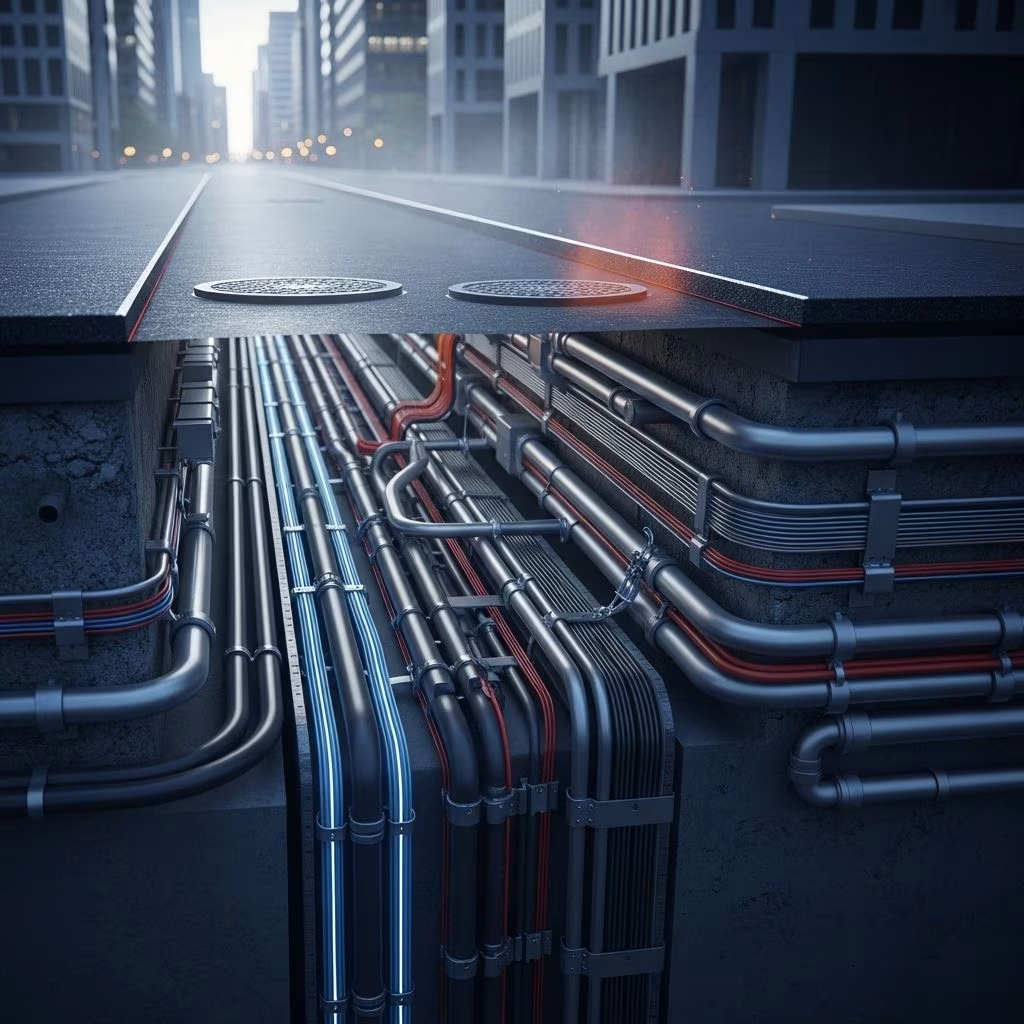
Is Underground Wiring the Future of Urban Power Grids?
As power outages from storms, fires, and extreme weather events become more frequent, city residents and urban planners are increasingly asking: Should we move our power lines underground? While advocates cite safety, reduced outages, and urban beautification, critics point to the immense costs and logistical challenges. This article explores the arguments, the details of what undergrounding entails, key technical considerations, policy debates, and the real-world impacts on communities across North America.
Why Is There a Push for Underground Wiring?
Overhead power lines have long been a common sight in cities worldwide. However, several forces have converged to make underground wiring an urgent topic:
- Increasing threat of wildfires and severe storms: Overhead lines are a major ignition source for catastrophic wildfires, especially during high wind events in the western United States and other dry, urbanized regions.
- Reliability and resilience: Burying power lines protects them from falling trees, wind, ice, and lightning, thereby reducing outages and maintenance needs.
- Urban aesthetics: Residents, especially in cities undergoing redevelopment, want unobstructed views and less visual clutter from poles and wires crisscrossing streets.
These drivers have made undergrounding both a public safety demand and an urban quality of life issue.
The Reliability Advantage: How Much More Resilient?
Studies show that underground power lines are significantly more reliable than overhead ones:
- Fewer outages: Underground lines can result in up to 78% fewer power outages compared to overhead systems.
- Shorter downtime: Outages, when they occur, last about 69% less time with underground wiring.
- Protection from fire hazards: In fire-prone zones, burying lines is one of the most effective ways to prevent electrical equipment from sparking disastrous wildfires.
For example, a Massachusetts Department of Energy Resources study found that a $3 billion state investment in targeted undergrounding could reduce outages by 97%—especially critical during severe weather events when falling trees and high winds make above-ground lines vulnerable.
Technical Challenges: Why Isn’t Everything Underground?
Despite the benefits, the technical challenges of moving power lines below ground are significant. Here are the primary obstacles:
| Challenge | Description | Impact |
|---|---|---|
| Cost | Underground installation is 4–10 times more expensive than overhead. | Limits feasibility for large-scale, fast deployment; raises utility bills. |
| Urban Density | Narrow streets and existing below-ground utilities (water, gas, telecom) complicate new trenching. | Increases project duration and risk of service disruptions. |
| Maintenance | Underground faults are harder to locate and repair. | Can lead to longer outages when repairs are needed. |
| Coordination with Urban Infrastructure | Requires extensive planning to avoid damage to trees, roads, and buildings. | Necessitates integration with city development and utility upgrades. |
Because of these complexities, most cities prioritize undergrounding where the risks and benefits are highest, such as in Very High Fire Hazard Severity Zones or new subdivisions planned for resilience and aesthetics.
How Does Underground Wiring Actually Work?
The process of putting wires underground typically involves several key steps and installation methods:
- Trenching: The traditional and most common approach, especially for new development. Trenches are dug along the planned route, cables are laid on beds of insulating material, and then the path is refilled.
- Horizontal Directional Drilling (HDD): Used to install cables under established landscapes, roads, or obstacles without open trenching, minimizing surface disruption.
- Vibratory Plowing: Occasionally used for smaller conductors (like streetlight wires), but not recommended for higher voltage cables due to risks of damaging insulation.
Once installed, underground wires are shielded from weather, fire, and most forms of physical interference. They require less routine maintenance like tree trimming or pole inspection, but are more difficult to access for repairs.
Fire Safety: Undergrounding as a Wildfire Prevention Tool
Many of the recent pushes for underground wiring in cities stem from catastrophic fires linked to overhead equipment. In California and Oregon, for example, major wildfires in the last decade were traced back to power lines blown into trees during windstorms. The devastation triggered demand for safer alternatives:
- Reduced ignition sources: Underground networks remove one of the biggest external causes for starting and spreading fires in urban-wildland interfaces.
- More reliable evacuations: Without downed live wires, cities experience fewer blocked roads and safer emergency escapes.
- Proactive utility policy: Utilities like SoCal Edison are prioritizing at-risk zones for undergrounding, integrating grid upgrades and community fire resilience programs.
The Economics of Underground Wiring
Cost is where most debates about underground wiring begin and end. Overhead lines are much cheaper to deploy, and utility companies often cite the following when asked about immediate conversion:
- Initial installation cost: Underground lines can cost $1 million to $5 million per mile or more, compared to as little as $200,000 per mile for overhead lines.
- Who pays?: Utilities may pass these costs to ratepayers or require neighborhood buy-in; in some U.S. cities, property owners must grant easements or pay surcharges for the change.
- Long-term savings: Fewer outages, lower maintenance, and less tree-trimming result in offsetting savings, but the payback period can be several decades.
Some studies suggest that targeting high-risk areas first—where outage and fire costs would otherwise be extreme—returns greater value for every dollar invested. Integrating wire burial with other city works projects helps reduce total costs and logistical headaches.
Urban Planning and Community Buy-In
Changing an entire city’s infrastructure is a massive collaborative effort. Utilities face logistical, legal, and social challenges, such as:
- Securing easements: Every property potentially affected by trenching or new substations must grant legal access.
- Minimizing neighborhood disruption: Construction can bring months of noise, road closures, and dust.
- Balancing private vs. public benefit: Not all blocks see the same risks and rewards; city-wide or targeted approaches may spark equity debates.
- Integrating with other utilities: Aging water, gas, and telecom networks often share the same limited space under busy streets.
Public forums, city council actions, and neighborhood referenda sometimes shape the speed and scope of these projects.
Case Studies: Where Is Undergrounding Happening Now?
- California and the West Coast: Utilities are expediting line burial in Very High Fire Hazard Severity Zones. In places like Altadena, SoCal Edison is negotiating with dozens of homeowners to complete projects spanning many miles, often following devastating fires.
- Berkeley, California: The city is studying city-wide undergrounding to address both fire risk and urban renewal, focusing on corridors that run east-west and serve as evacuation routes.
- New residential neighborhoods: Across North America, new subdivisions are frequently designed with underground utilities from the start. Older cities prioritize conversion in phases, targeting lines that are aging or in danger zones.
Maintenance and Long-Term Performance
While less frequent maintenance is needed for buried cables, repairs present their own challenges:
- Locating faults: Pinpointing broken connections underground is complex; special equipment and trained crews are required.
- Longer repairs: Access means digging and careful excavation, versus an aerial bucket truck fix for overhead lines.
- Fewer disruptions day-to-day: Despite harder fixes, total downtime is often lower because failures are much less frequent.
Well-managed urban grids integrate modern sensors and diagnostics to help spot trouble before outages occur, ensuring resilience.
Urban Beauty: The Visual Case for Buried Cables
Beyond functional arguments, many advocates point to:
- Cleaner cityscapes: No more leaning poles, tangled wires, or looming transformers.
- Better street tree health: Removal of overhead lines makes it easier for urban trees to grow without aggressive pruning, contributing to greener, healthier neighborhoods.
- Elevated property values: Many realtors note a premium for homes on streets without visible wires or poles obstructing views.
Why Aren’t All Power Lines Underground?
Despite the clear benefits, cities face significant hurdles to universal undergrounding. The most commonly cited reasons:
- Cost remains prohibitive for city-wide quick transformation.
- Older cities have dense, confusing underground networks already, making additional wiring difficult without major disruption.
- Short-term political and public appetite for higher utility rates or taxes is limited, even if long-run benefits are compelling.
- Climate adaptation is urgent but slow, and policy changes rarely result in overnight transformations.
While change is happening, it tends to be incremental, focused on high-impact areas, and closely tied to redevelopment or disaster recovery initiatives.
Frequently Asked Questions (FAQs)
Q: Does undergrounding always prevent power outages?
A: No system is failure-proof, but underground lines dramatically reduce outages caused by storms, falling branches, and wind. Issues like flooding or cable degradation can still cause problems, but these occurrences are far less common.
Q: How much more expensive is burying power lines?
A: Undergrounding can cost four to ten times as much as overhead lines per mile, depending on urban density and soil conditions. However, targeted investment in high-risk or high-value corridors can make costs more manageable over the long term.
Q: Who decides if a neighborhood gets underground wiring?
A: Usually this decision is a mix of utility company planning, city council policies, public safety priorities (like fire risk), and community engagement. Homeowners may be asked to provide easements or share costs.
Q: What are the main benefits of underground utilities besides reliability?
A: Other major benefits include fire prevention, improved urban aesthetics, reduced need for tree trimming near power lines, and possible property value increases.
Q: Will moving lines underground fix grid modernization issues?
A: Not entirely. Undergrounding is most effective when combined with broader grid upgrades, smart sensors, distributed generation, and improved city infrastructure planning.
Looking Forward: Will Cities Eventually Make the Move?
The trend toward underground wiring is growing, especially in cities recently scarred by fires and storms or undergoing major renovations. Large-scale conversion is likely to continue at a measured pace, shaped by disaster recovery, neighborhood activism, and evolving urban priorities. As demands for safety, climate resilience, and greener cities increase, the debate over undergrounding power lines will remain central to the conversation about the future of urban infrastructure.
References
- https://www.scenic.org/wp-content/uploads/2024/02/ClearSkiesAhead82580.pdf
- https://berkeleyca.gov/sites/default/files/2022-02/Conceptual-Study-for-Undergrounding%20(1).pdf
- https://laist.com/news/climate-environment/as-utilities-start-to-bury-power-lines-homeowners-are-increasingly-worried-about-the-cost
- https://www.ecmag.com/magazine/articles/article-detail/your-business-ground-beneath-your-feet-common-underground-cabling-methods-and-how-three
- https://www.tdworld.com/smart-utility/article/21253499/distribution-goal-50-underground-by-2040
- https://dps.ny.gov/system/files/documents/2023/09/final-report-ny-undergrounding-2023-06-27.pdf
- https://lowellcorp.com/why-dont-we-use-more-underground-power-lines/
- https://www.exponent.com/article/when-should-electric-utilities-go-underground


