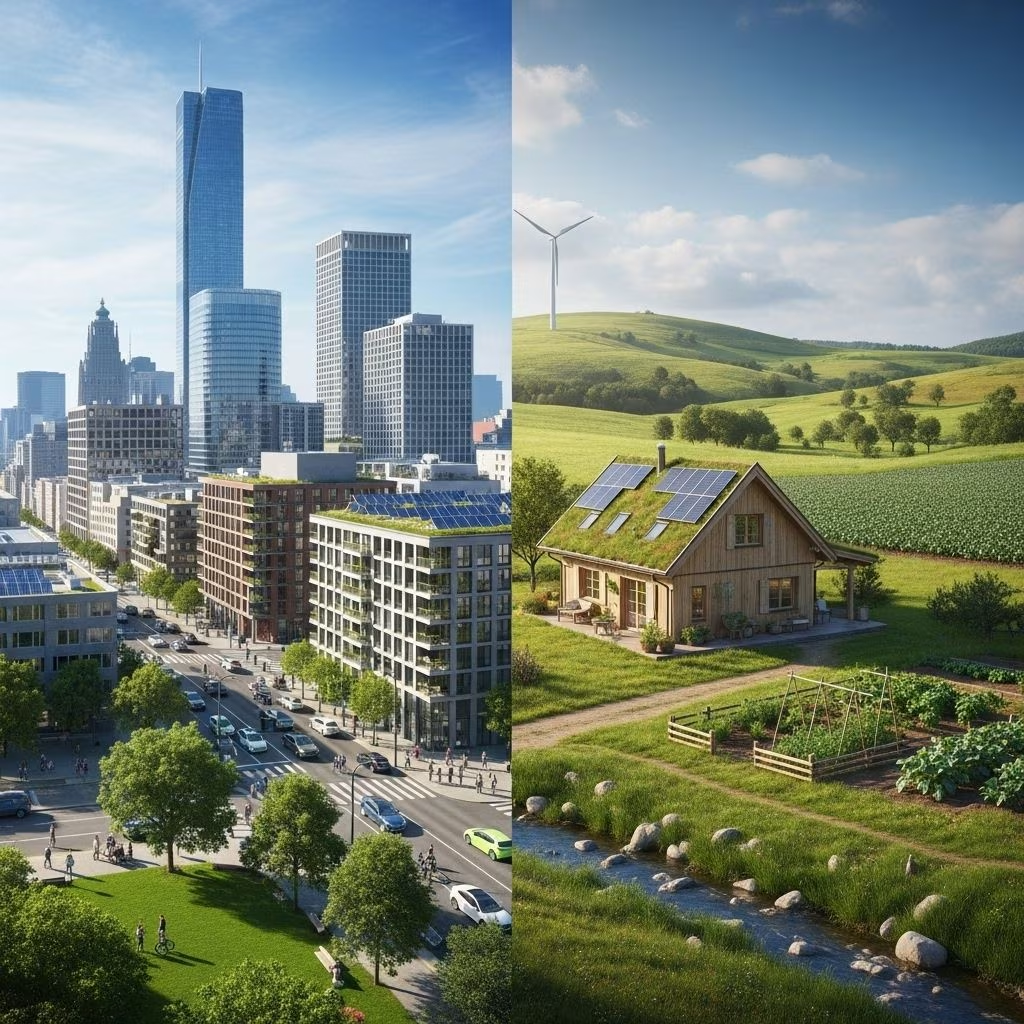
Urban vs. Rural: Which Lifestyle Is More Environmentally Responsible?
If you care deeply about your environmental impact, you may find yourself torn between the allure of living close to nature in the countryside and the practical, resource-efficient promise of urban life. The urban–rural debate around environmental responsibility is filled with widely held beliefs, but the reality is much more nuanced and complex. This article critically explores both lifestyles, assesses their ecological footprints, and identifies what truly makes a difference for the planet.
Introduction: The Urban–Rural Sustainability Debate
The debate over whether living in a city or in the countryside is more environmentally friendly is as old as the environmental movement itself. Many people assume that rural life, being closer to nature, must be greener. Yet, others argue that the efficiency of urban living makes it the true path to minimizing resource consumption and environmental degradation. To answer this question responsibly, we must dig deeper into how each lifestyle affects energy use, transportation, land, waste, and—perhaps most importantly—how individual behavior within these settings shapes ecological outcomes.
Environmental Pros and Cons of Urban Living
Cities have become central to any discussion about sustainable development. According to the United Nations, more than half the global population now lives in cities, a number that is expected to rise with ongoing urbanization. Here are key points to consider about the urban lifestyle:
Advantages of Urban Living
- Higher Density = Lower Per Capita Resource Use: High population density allows for more efficient public transit, smaller living spaces, and shared infrastructure, significantly reducing energy use per person.
- Efficient Public Transportation: Robust mass transit systems, walking, and cycling are far more feasible and convenient in cities, leading to lower carbon emissions from personal vehicles.
- Smaller Homes, Lower Energy Bills: Apartment and condo dwellers typically live in smaller homes that share walls and require less energy to heat, cool, and maintain.
- Shared Resources and Amenities: Urban residents benefit from community resources and shared amenities, reducing the need for redundant consumption (for example, not everyone needs their own tools or lawnmowers).
Disadvantages of Urban Living
- Urban Heat Island Effect: Cities absorb and retain heat, making them hotter and often requiring more air conditioning.
- Pollution Concentration: Higher densities can lead to concentrated air and water pollution, with real health effects on residents.
- Disconnection from Food Sources: City dwellers may be farther removed from how their food is grown or produced.
- Reduced Green Space: Access to nature can be more limited in high-density urban environments.
Environmental Pros and Cons of Rural Living
Living in the countryside is often seen as a return to nature, but rural life brings its own environmental implications. Here’s how rural living stacks up in environmental terms:
Advantages of Rural Living
- Direct Access to Nature: Immediate proximity to forests, fields, water sources, and wildlife often means a greater appreciation for natural systems.
- Potential for Local Food: Rural residents can grow their own food or source directly from local producers, reducing food miles and increasing food transparency.
- Possibility for Renewable Energy: Larger plots of land make solar panels, small-scale wind turbines, and other renewable systems more accessible.
- More Space for Ecological Restoration: There is greater potential for actions like reforestation, habitat protection, and regenerative agriculture.
Disadvantages of Rural Living
- Transportation Dependency: Most rural areas lack public transportation, making cars essential and increasing fossil fuel use.
- Larger Homes, More Land to Maintain: Rural houses tend to be larger and less efficiently built or heated, which usually means higher per-person energy consumption.
- Potential for Sprawl: Low-density living requires more land per person, fragmenting habitats and encroaching on ecosystems.
- Septic and Well Water Systems: Individual water and waste systems can contaminate local environments if not managed carefully.
Key Factors Affecting Environmental Impact
The environmental impact of any living situation is not determined solely by geography. Several key variables have a much larger effect than ‘urban’ or ‘rural’ can describe:
- Home Size and Construction: Energy needs are largely determined by the size and efficiency of the home, regardless of location.
- Transportation Choices: The largest share of fossil fuel emissions for most people comes from how they travel, not where they live.
- Energy Sources and Efficiency: Whether you draw power from renewable or fossil fuel sources makes a significant difference.
- Land Use and Habitat Encroachment: The more land per person, the greater the threat to biodiversity and local ecosystems.
- Consumption Habits: Diet, buying habits, and waste generation all weigh heavily on total impact, regardless of zip code.
- Community Infrastructure: The availability of shared resources, recycling, water, and energy systems dramatically shapes ecological effects.
The Crucial Role of Individual Behavior
Perhaps the simplest yet most profound truth is this: personal choices matter more than location. Whether in a city or on a farm, the way you live—what you buy, eat, drive, consume, waste, and conserve—dwarfs the influence of your address on your ecological footprint.
- Carfree Urban Dwelling: Someone who lives centrally and cycles everywhere may have a lower impact than a suburban commuter with a hybrid vehicle.
- Eco-Rural Living: A rural family using solar panels, growing organic crops, and minimizing travel can outperform city dwellers on many environmental metrics.
- Waste and Water Thrift: Conscious consumption and conservation of water, food, and products are possible anywhere, but individuals must make the effort.
- Dietary Choices: Shifting to more plant-based, locally sourced foods has a substantial positive effect, whether in a metropolis or in the countryside.
Urban vs. Rural Environmental Impact: A Direct Comparison
| Aspect | Urban Living | Rural Living |
|---|---|---|
| Housing Energy Use | Lower per capita due to shared walls, smaller spaces | Higher per capita if larger homes, detached buildings |
| Transportation | Access to mass transit, walking, cycling | Greater reliance on cars, longer commutes |
| Access to Green Space | Limited; mostly parks or designed green areas | Abundant natural areas, private land |
| Food Sourcing | Supermarket- and supply-chain-dependent | Opportunity for local, homegrown food |
| Land Use | High efficiency, less land per person | Low density, more habitat disruption per capita |
| Waste Management | Municipal systems, curbside recycling | Septic systems, personal composting required |
| Carbon Footprint Potential | Lower on average, especially for car-free residents | Higher on average, mainly due to transport and energy |
Summary: Ecological Responsibility Is Mostly About Choices
The ideal of a “perfectly green” city or a “perfectly green” rural retreat is an illusion. Both urban and rural environments present hurdles and opportunities for sustainability. Public policy, infrastructure, and culture are key influences—but, ultimately, your daily decisions matter most:
- Choose energy-efficient homes of an appropriate size
- Minimize car travel and adopt walking, biking, or public transit wherever possible
- Eat more plant-based, locally grown foods
- Reduce, reuse, recycle, and compost to limit waste
- Support or create community sharing initiatives
- Advocate for sustainable infrastructure in any community
- Engage in conservation and stewardship of local ecosystems
Whether you thrive amid the vibrancy of a city or the tranquility of open fields, you hold the power to tread lightly on the earth. Your conscious, informed actions are what will help shape a more sustainable world for all.
Frequently Asked Questions (FAQs)
Q: Do city dwellers have a smaller carbon footprint than rural residents?
A: On average, yes. Urban residents tend to have smaller carbon footprints due to smaller homes, better access to public transportation, and shared infrastructure. However, lifestyle choices (car ownership, diet, energy use) remain the most decisive factors.
Q: Is growing your own food always more sustainable?
A: Not necessarily. Growing your own food can cut emissions from transportation and packaging, but if large machinery, fertilizers, or excess water are required, the benefits may be diminished. The net impact depends on methods and scale.
Q: Can you live sustainably in a big city?
A: Absolutely. Urban living offers numerous opportunities for sustainable behavior—from using minimal energy and water in high-efficiency apartments to participating in community gardens and food co-ops. The biggest challenge is resisting overconsumption and connecting with nature.
Q: Does rural life inherently protect the environment?
A: Not by default. While rural living can allow for habitat restoration and lower population densities, it can also lead to excessive land use, greater car dependency, and inadequate waste systems if not managed sustainably.
Q: What is the single most important action for environmental responsibility?
A: There is no single silver bullet. The most critical action is to make conscious, informed choices—regardless of where you live—about energy, transportation, food, waste, and land use.
References
- https://shortyawards.com/5th-socialgood/treehugger
- https://ecoboo.net/blogs/sustainability-spotlight/treehugger
- https://content.time.com/time/specials/2007/article/0,28804,1730759_1731034_1732025,00.html
- https://trellis.net/article/evolution-tree-hugger/
- https://www.sei.org/about-sei/press-room/op-ed-treehugger-nature-based-curricula-stockholm50-report/
- https://www.sawyer.com/authors/treehugger
- https://successfullysustainable.com/eco-friendly-gifts-for-the-tree-hugger-in-your-life/