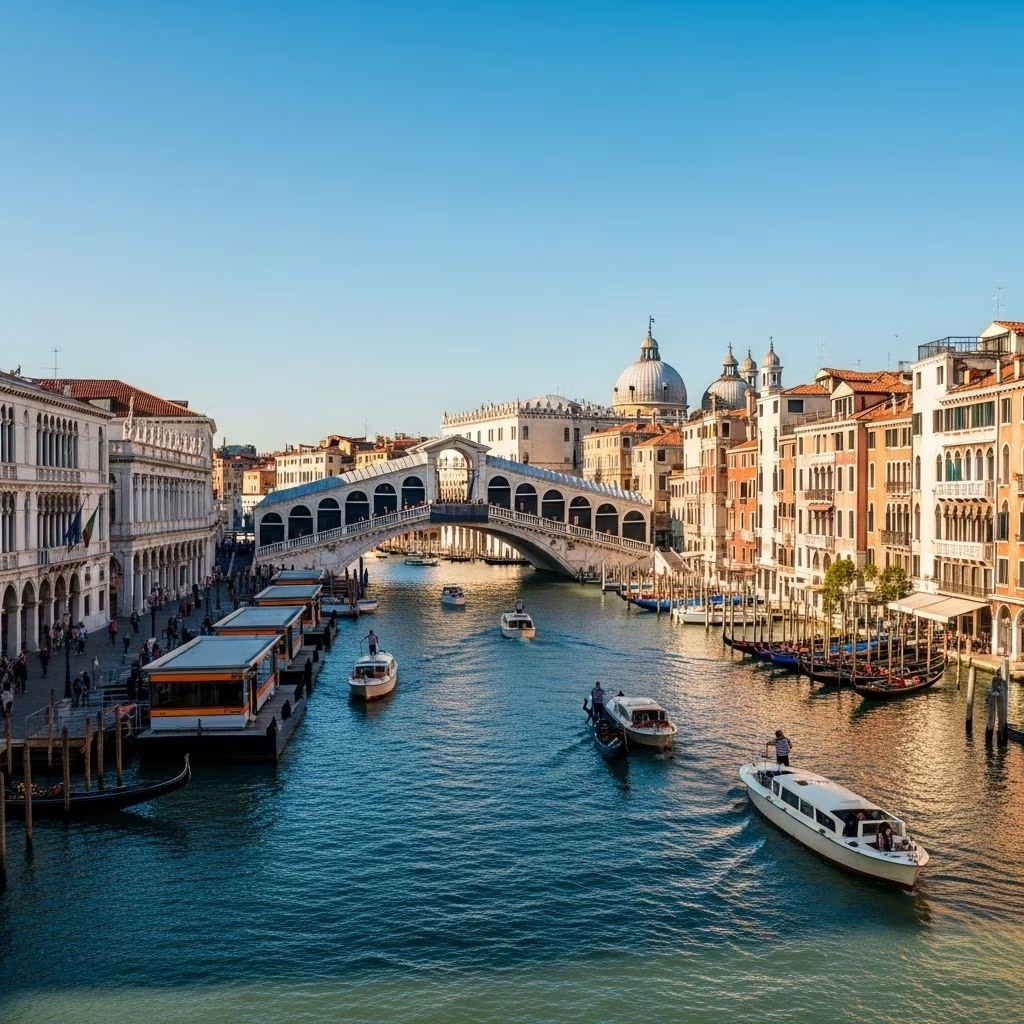
Venice Bans Cruise Ships from Its Historic Center
In a move that marks a turning point for one of the world’s most iconic cities, Venice has enacted a robust ban on large cruise ships entering its historic center. After years of growing concern about over-tourism, environmental damage, and the preservation of its unique cultural heritage, the Italian government has set in motion a series of measures aiming to protect the city’s fragile lagoon and ancient structures. This decision, effective from August 2021, follows mounting pressure from UNESCO and local activist groups, highlighting an enduring struggle between modern tourism and the safeguarding of invaluable heritage sites.
Background: Venice’s Turbulent Relationship with Cruise Tourism
Venice, a UNESCO World Heritage Site and a maritime powerhouse since medieval times, has long been a coveted stop for Mediterranean cruises. Until recently, the city regularly welcomed vast cruise liners, some weighing over 100,000 gross tons, right up to the banks of its historic canals. Each year, up to 1.6 million cruise passengers were funneled into the compact heart of Venice, intensifying the challenges of overtourism and urban stress.
The intense traffic of such immense vessels has raised alarms for years, as the wakes from ships eroded canal banks and pounded delicate foundations. The stark sight of massive ships towering above Renaissance palazzos struck many as a symbol of unchecked tourism overwhelming local culture and infrastructure. UNESCO had repeatedly warned that unless Venice took urgent action, it risked being placed on the “Heritage in Danger” list, an unprecedented censure for such a celebrated city.
Timeline of Cruise Ship Policy Changes in Venice
| Year | Policy / Event | Impact |
|---|---|---|
| 2012 | Costa Concordia disaster prompts Italy to ban some large ships (over 40,000 tons) from fragile waters | Partial, later exceptions and adjustments |
| 2014 | UNESCO requests ban for large cruise ships and oil tankers | Consultations, but limited implementation |
| 2015-2019 | Limits fluctuate; voluntary restrictions for ships over 96,000 tons | Continued cruise operations with mounting controversy |
| 2021 | Permanent ban on vessels over 25,000 gross tons from the Giudecca Canal and historic center | Large ships redirected to alternative ports |
Reasons for the Ban: Preservation Over Profit
UNESCO’s Intervention and the Threat of Losing World Heritage Status
The escalation to a formal ban was in large part driven by international pressure. UNESCO has, for years, voiced doubts about Venice’s ability to withstand heavy ship traffic without lasting damage to its historic and ecological fabric. By 2021, the city faced the looming threat of being de-listed as a World Heritage Site—a move that would have deeply impacted Italy’s cultural pride and economic interests.
Environmental and Structural Concerns
- Ecosystem Damage: The immense wakes generated by cruise ships disrupt the lagoon’s delicate sediment balance, threaten aquatic life, and accelerate erosion of the city’s foundations.
- Infrastructure Strain: With more than 700 cruise ship arrivals annually before the ban, the influx of day-trippers swelled the city’s population far beyond sustainable limits.
- Air and Water Pollution: Ships emit substantial pollution, compounding air quality issues and contaminating water with heavy metals and waste.
- Visual Intrusion: The spectacle of enormous vessels looming over medieval streets and squares has shifted perceptions of Venice as a city under siege, rather than a cherished historic sanctuary.
The Details of the Ban and Its Implementation
The landmark decree, enacted in August 2021, prohibits vessels over 25,000 gross tons from traversing the San Marco Basin and the Giudecca Canal, the traditional gateway for ships entering the heart of Venice. Instead, cruise ships must dock at the Port of Marghera on the mainland, pending development of permanent alternatives.
Smaller vessels and cargo ships under the threshold can still access the historic port, but the era of mega-ships gracing St. Mark’s Square from a water’s edge is effectively over. The temporary rerouting to Marghera, despite not being fully equipped for cruise traffic, is viewed as an urgent stopgap while long-term solutions are explored.
- Ships affected: All cruise liners and other large vessels over 25,000 gross tons
- Waterways protected: San Marco Basin, Giudecca Canal, and surrounding main historic areas
- Interim docking: Marghera commercial port (industrial mainland Veneto)
- Long-term prospects: International design competition for a sustainable terminal outside the lagoon, with results expected in the coming years
A Community Decisively Pushes Back
This ban represents a decisive victory for grassroots activism. For over a decade, citizen collectives like the No Grandi Navi Committee (“No to Big Ships”) have campaigned to free Venice’s lagoon from the burden of cruise liners. Citing not just environmental concerns but also the impact on quality of life, residents rallied under the slogan that their city must survive not at the mercy of global tourism giants, but for future generations.
“It is a very important victory, which demonstrates how the strength of the community is capable of determining government choices and forcing giants such as cruise multinationals to submit to the rules,” stated the committee in July 2021.
The movement insists that the battle is not over—the ultimate goal is to shelter the entire lagoon from large-scale shipping, not just leapfrog the problem from one area to another.
Economic and Cultural Impacts: A Double-Edged Sword
The cruise ban has sparked robust debate among stakeholders:
- For Tourism Revenue: Venice’s economy is inextricably tied to visitors; many local jobs depend on the cruise and hospitality industry. The abrupt halt to cruise traffic, especially following the pandemic shutdowns, raises fears for businesses reliant on a steady flow of tourists.
- For Tradition and Livability: Critics of mass tourism argue that Venice’s unique culture, traditions, and sense of place are compromised when visitor numbers far exceed those of permanent residents. The ban offers a chance to rebalance the city’s priorities, encouraging higher-value, longer-stay tourism over fleeting mass arrivals.
- Wider Ripple Effects: Cruise operators have already rerouted ships to distant ports, sometimes substituting Venice with stops in other northern Adriatic or Dalmatian towns. This has broader regional implications for travel patterns and economic flows.
Tourist Numbers: Will the Ban Change the Equation?
While the ban removes a significant source of day-trippers, experts debate how much it will reduce overall tourism. Venice’s allure remains undiminished, and cruise passengers may now arrive by alternative means. During the pandemic interlude, the city experienced a temporary peace—canals cleared of both crowds and pollution—but also stinging economic loss. Finding a sustainable middle path is a central challenge for city planners and residents alike.
What Comes Next: Searching for Sustainable Solutions
The current arrangement with cruise ships docked in Marghera is not seen as the final answer. Italian authorities have announced an international competition to design new infrastructure outside the lagoon, intended to support tourism without endangering Venice’s historic core. Proposals under study include a dedicated terminal at Chioggia—a distant port that could be linked by road or ferry to the city.
Key questions remain:
- How can Venice accommodate tourism while preserving its unique urban and ecological character?
- What are the best models for managing visitor flows and distributing economic benefits more broadly?
- Will investment in new environmentally sensitive infrastructure, such as electric ferries or offshore cruise terminals, set a precedent for other historic port cities struggling with similar dilemmas?
Comparing Cruise Arrivals: The Venice Model vs. Other Historic Ports
| Port | Restrictions on Cruise Ships | Environmental Safeguards | Tourism Management |
|---|---|---|---|
| Venice | Ban on ships over 25,000 GT in the historic center; rerouting to mainland | Monitoring lagoon ecology; UNESCO oversight | Entry fees, visitor limits under consideration |
| Barcelona | Limits on cruise berths near city center | Green port policies; emissions controls | Timed entry, expanded city tours |
| Athens (Piraeus) | No size limits, but port expansion plans prompt debate | Air quality measures under review | Seasonal visitor management plans |
| Dubrovnik | Caps on daily disembarkation numbers | UNESCO guidance; local monitoring | Advance reservations, city pass system |
Frequently Asked Questions (FAQs)
Q: Are all cruise ships banned from Venice?
A: Only large cruise ships over 25,000 gross tons are banned from entering Venice’s historic center and main waterways. Smaller ships and some cargo vessels can still access designated areas, but the iconic megaships now dock outside at the industrial port of Marghera or do not visit at all.
Q: Why was the ban on cruise ships introduced?
A: The ban was put in place to protect Venice’s fragile environment, historic architecture, and to respond to UNESCO’s concerns over the threat posed by large vessels, which contribute to erosion, pollution, and crowding.
Q: How does the ban affect tourists arriving by cruise?
A: Cruise passengers now disembark at Marghera or alternative ports, often requiring shuttle transfers to reach the center. Some cruise itineraries have dropped Venice entirely, affecting convenience and the overall visitor experience.
Q: What are Venice’s long-term plans for cruise tourism?
A: Italy has launched an international competition to develop sustainable cruise infrastructure outside the lagoon, with the goal of permanently diverting large vessels away from sensitive historic sites. Final plans and construction timelines are still in progress.
Q: Does the ban reduce overtourism in Venice?
A: The ban targets the most visible form of mass tourism but may not fully resolve crowding, as Venice remains popular with visitors arriving by other means. Sustainable tourism strategies include entry fees, limits, and campaign for more responsible travel.
Conclusion: Venice Redefines Its Future
The ban on large cruise ships sailing into Venice’s historic core is more than a regulatory measure; it is a statement of intent. By asserting boundaries, the city is attempting to reconcile its vital tourist economy with the imperative to safeguard its irreplaceable heritage for generations to come. The path forward will inevitably require compromise, investment, and a new vision for what sustainable tourism means in the 21st century.
- Cultural preservation is now at the forefront of civic priorities.
- Environmental health has prompted transformative shifts in city policy.
- Community activism has proven pivotal in shaping official decisions.
Venice’s actions set a precedent watched closely by other cities grappling with similar threats. Whether this balance can be maintained remains a question for future generations—one that depends on continued vigilance, creative planning, and the shared responsibility of those who love and visit this singular city.
References
- https://italianismo.com.br/en/navios-de-cruzeiro-estao-banidos-do-centro-historico-de-veneza/
- https://www.cruisecritic.com/articles/are-cruise-ships-allowed-in-venice
- https://bewitchedbyitaly.com/venice-cruise-ship-ban.html
- https://www.euronews.com/travel/2024/02/14/norwegian-cruise-line-quits-venice-where-will-ships-stop-instead
- https://www.worldsgreatestcruises.com/blog/another-beloved-major-port-on-the-med-banning-cruise-ships-beginning-summer-2025
- https://www.mundycruising.co.uk/cruise-news/cruise-advice/cruise-ships-in-venice-which-ships-are-not-banned-from-venice
- https://boards.cruisecritic.com/topic/3050653-two-european-ports-ban-900-pax-ships-from-1-july-2025/page/2/
- https://cruisepassenger.com.au/news/europe-cruise-fees-and-bans/
- https://www.euronews.com/travel/2025/07/03/venice-dubrovnik-the-balearic-islands-how-to-cruise-responsibly-in-overtouristed-destinati