What Are Those Blue Blobs on the Beach?
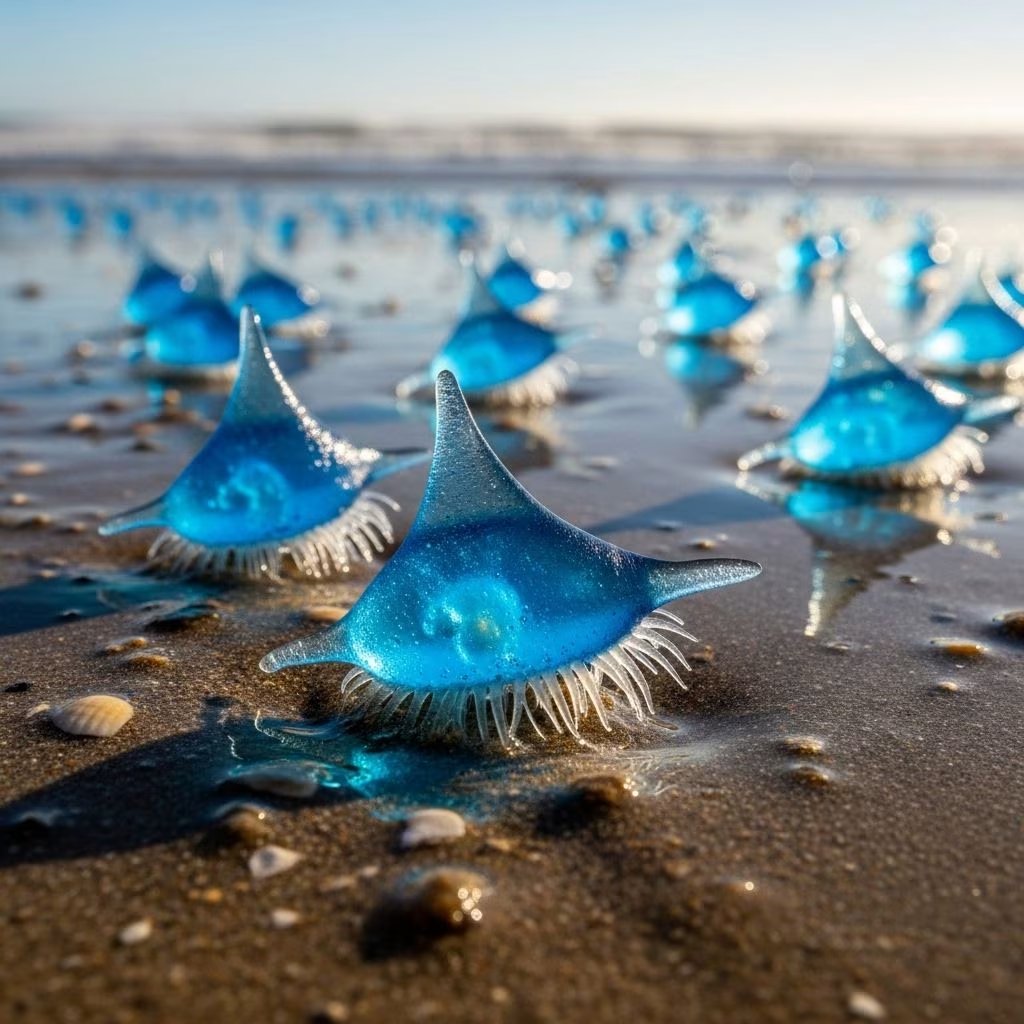
Strolling along California’s beloved beaches during spring or early summer, beachgoers often encounter a spectacular—but puzzling—sight: thousands of vibrant blue, bubbly creatures scattered across the sand, like spilled sapphire marbles. These are Velella velella, better known as by-the-wind sailors, mesmerizing visitors, inspiring curiosity—and occasionally concern—about what they are, and what their sudden appearance means for marine ecosystems.
Identifying By-the-Wind Sailors: Not Jellyfish, but Colonial Marvels
Though sometimes mistaken for jellyfish, these blue blobs are technically hydrozoans—distant cousins to jellyfish—with a unique life strategy. Each apparent individual is actually a colony made up of multiple, highly-specialized polyps that work together as a single organism. A flexible, oval, blueish float supports a transparent sail, which catches the wind and allows Velella to drift across vast ocean surfaces.
- Scientific name: Velella velella
- Common name: By-the-wind sailor
- Group: Hydrozoans (related to jellyfish and Portuguese man o’ war)
- Appearance: Bright cobalt-blue oval with a triangular, clear sail on top
- Size: Up to 10 cm (4 inches) long, but often smaller
What you see is not a single animal, but a collaborative mini-society—polyps for feeding, reproducing, defending—working in unison beneath a wind-harnessing sail (vēlum) that inspired its Latin name.
Anatomy and Adaptations for Life at Sea
Velella’s defining feature is its sail, angled either left or right to catch global wind patterns differently depending on hemisphere—a clever adaptation for maximizing dispersal and avoiding mass strandings (though still not always successfully).
- Sail Orientation: ‘Left-handed’ (Northern Hemisphere) vs. ‘right-handed’ (Southern)
- Float Structure: Contains gases for buoyancy, tough chitin for strength
- Tentacles: Dangle beneath, equipped with stinging cells called cnidocysts to capture plankton, copepods, fish eggs, and larvae
Are By-the-Wind Sailors Dangerous?
The striking blue coloration is a warning in the animal kingdom—and though Velella’s sting is far weaker than a jellyfish’s, its tentacles still possess nematocysts (stinging cells).
- To most humans: Touching can cause mild skin irritation or a rash for sensitive people
- Advice: Avoid touching your face, mouth, or eyes after contact; always wash hands
- Pets and wildlife: Typically not a threat, but ingestion by pets can cause digestive upset
Unlike their infamous relatives the Portuguese man o’ war, by-the-wind sailors pose little risk to humans. However, it is wise to avoid unnecessary handling.
Why Do Velella veella Wash Ashore?
Every spring, mass strandings of Velella become a visible reminder of oceanic processes. Their numbers swell when specific environmental factors coincide:
- Upwelling: Strong winds drive cold, nutrient-rich deep water to the surface, supporting abundant plankton—Velella’s food source
- Onshore winds: Drift vast colonies toward land
- Seasonality: Mass appearances are most common during spring and early summer
- Warming Oceans: Research suggests that rising sea surface temperatures can increase the frequency and scale of strandings (‘the rise of slime’ phenomenon)
Once stranded, the wind sailors quickly dry in the sun. Their living tissues decay, leaving behind transparent, chitinous sails that can linger for weeks on sand.
Life Cycle and Mysterious Reproduction
Velella’s colony is a marvel of specialization, but its reproductive cycle is especially curious—splitting between an asexual stage on the surface and a presumed sexual stage in the deep ocean.
- Asexual Colonies: The familiar blue sailing structures are themselves asexual
- Budding Medusae: Colonies release thousands of tiny, transparent medusae that drift into deeper waters
- Sexual Reproduction: Medusae are thought to reproduce sexually in the deep, giving rise to new colonies
This dual-phase lifecycle is not fully understood. Tracking the elusive medusae—as well as understanding population swings—remains a challenge for marine biologists.
Ecological Role: Why Are Velella Important?
Velella plays a significant—if ephemeral—role in ocean food webs:
- Predator: Consumes plankton, copepods, fish eggs, and larvae
- Prey: Eaten by specialist predators like the ocean sunfish (Mola mola), certain nudibranchs (sea slugs), and seabirds
- Stranding Effects: Provides food pulses to scavengers (birds, crabs) on beaches
Mass stranding events can support large numbers of coastal scavengers—helping transfer nutrients from ocean to shore—while being an iconic visual cue of broader ocean health.
What Triggers the Blue Blob Blooms?
Despite centuries of observations, many mysteries about Velella’s appearance remain. Scientists note several triggering factors:
- Upwelling and Winds: Annual cycles of nutrient upwelling draw masses of Velella closer to shore, and sustained onshore winds ultimately push them onto beaches
- Ocean Temperature: Warmer seas appear to support blooms of gelatinous plankton, including jellyfish and by-the-wind sailors
- Climate Change: There is some evidence that increased ocean warming may make such strandings more common and more intense
Researchers have even coined the term ‘rise of slime’ to reflect the growing dominance of gelatinous animals in changing oceans.
Where and When Can You Spot Velella?
Velella are globally distributed but unique in their mass coastal strandings. In the U.S., large numbers most often wash up along the Pacific Coast—California, Oregon, and Washington—typically from March through June.
| Region | Typical Season | Appearance Notes |
|---|---|---|
| California Coast | Spring–early summer | Most frequent and visible strandings |
| Oregon/Washington | Late spring | Occasional large events |
| Northern Hemisphere (other coasts) | Seasonal | Sporadic, depends on wind and current |
| Southern Hemisphere | Mirror events, different sail orientation | Less common but occur during local spring |
Strandings may last days to weeks, vanishing as quickly as they arrive—leaving only transparent, plastic-like sails as reminders.
What to Do If You Find Blue Blobs on the Beach
- Do not touch: Although generally harmless, stinging cells can still irritate skin, especially for sensitive individuals and children
- Don’t take them home: As they decay, they lose color and begin to smell unpleasant
- Observe and explore safely: Use the opportunity to learn and share curiosity about marine life, but keep hands clean and avoid eyes/mouth
- Report sightings: Community science platforms like iNaturalist help researchers track occurrences and trends
Blue Blobs and Beach Myths: Common Questions Answered
- Are they all dead when washed up?
Most stranded Velella are dead or dying. The sun quickly dries and destroys their tissues, though the sails linger.
- Are mass stranding events increasing?
Some scientists believe warming oceans and altered currents may increase blooms and strandings, but long-term trends need more study.
- Is it safe for dogs or birds to eat them?
Eating Velella may cause upset stomach in dogs; coastal scavengers like gulls and crabs often feed on them without issue.
- Are they related to jellyfish?
Yes, both jellyfish and Velella belong to the phylum Cnidaria, but differ in structure and lifestyle.
- How long do they live?
The lifespan of a single colony isn’t known—it is variable and dependent on conditions; the medusae phase is poorly understood.
Fun Facts About By-the-Wind Sailors
- Documented since 1758: Early naturalists described Velella more than 250 years ago.
- Notorious mimic: Often mistaken for man o’ war but far less dangerous.
- Nature’s navigators: Their genetic adaptation for sail orientation helps spread colonies globally.
- Ephemeral beauty: Their stunning blue vanishes soon after death, leaving only ghostly transparent remnants.
Frequently Asked Questions (FAQs)
Q: Can I safely pick up a Velella velella?
A: It is best to avoid handling. While the sting is mild, sensitive skin may develop irritation. Always wash hands after beachcombing.
Q: Is Velella velella harmful to humans or pets?
A: Generally not dangerous, but it is unwise to touch your face, eyes, or let pets eat them due to possible mild toxins.
Q: Why do some years have more strandings than others?
A: Cycles of upwelling, wind patterns, and ocean temperature (potentially linked to climate change) can greatly affect bloom size and location.
Q: What are those clear, plastic-like things left on the beach?
A: After sun exposure and drying, the blue color fades and only the tough, chitinous sails remain—often mistaken for plastic debris.
Q: How can I help scientists learn more about Velella?
A: Submit your sightings and photographs to community science projects like iNaturalist to aid research and track their global occurrence.
References
- https://www.mentalfloss.com/blue-blobs-wash-up-california-beaches
- https://nhm.org/stories/what-are-those-blue-blobs-beach
- https://malibutimes.com/mysterious-blue-creatures-wash-up-on-california-beaches
- https://www.latimes.com/environment/story/2024-05-03/blue-blobs-washing-up-on-california-beaches-velella-velella
- https://www.youtube.com/watch?v=hC0FTSt-VEE