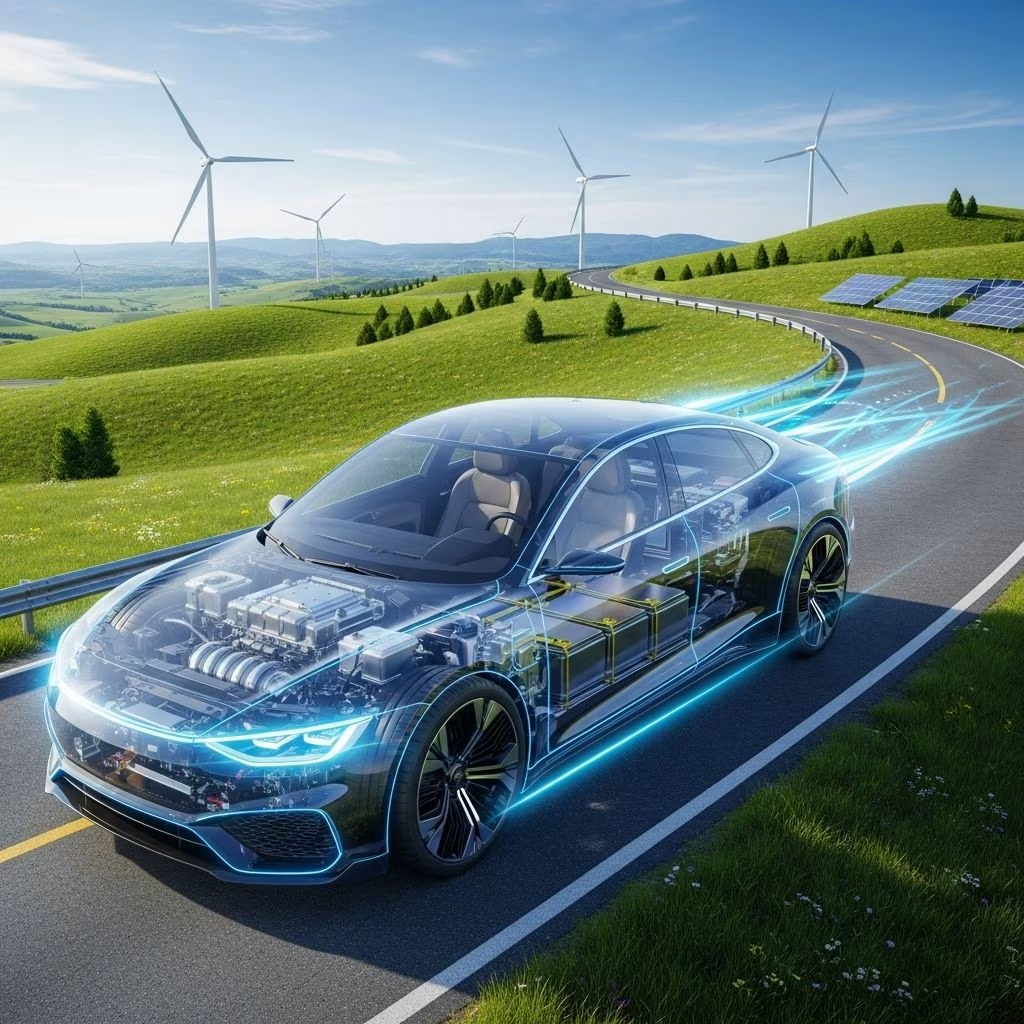
What Is a SULEV (Super Ultra-Low Emission Vehicle)?
SULEV, short for Super Ultra-Low Emission Vehicle, is a vehicle classification used chiefly in the United States to designate cars and trucks that produce 90% fewer emissions than the average gasoline-powered vehicle from the same era. Originating from EPA and state-level initiatives to combat air pollution, SULEVs represent a step above Ultra-Low Emission Vehicles (ULEVs) and below Partial Zero Emissions Vehicles (PZEVs) in terms of strict emissions requirements.
- SULEVs produce dramatically less tailpipe pollution than their conventional counterparts.
- California and other states have adopted SULEV standards as part of their comprehensive Low-Emission Vehicle (LEV) programs.
- SULEV technology is now found in hybrids, electric vehicles, and some advanced gasoline cars.
The Evolution of Emissions Standards
Automotive emissions standards in the U.S. began tightening in the late 20th century, first introducing LEV, then progressing to ULEV, SULEV, and PZEV. These acronyms denote increasingly strict controls over pollutants such as nitrogen oxides (NOx), non-methane organic gases (NMOGs), and particulates:
| Standard | Reduction vs. Typical New Car | Key Feature | Common Vehicle Types |
|---|---|---|---|
| LEV (Low Emission Vehicle) | Baseline | Cleaner than conventional vehicles | Various gasoline cars |
| ULEV (Ultra-Low Emission Vehicle) | ~50% | Half the emissions of average cars | Compacts, some sedans |
| SULEV (Super Ultra-Low Emission Vehicle) | ~90% | Major tailpipe emission reductions | Hybrids, advanced gasoline, electrics |
| PZEV (Partial Zero Emission Vehicle) | SULEV tailpipe + zero evaporative emissions | No fuel system vapor leakage | Hybrids, select gasoline models |
Technologies Behind SULEVs
Achieving SULEV status requires a complex combination of vehicle engineering, fuel quality, and emissions control hardware. The following are vital technological pillars:
- Low-Sulfur Gasoline: Essential for reducing tailpipe emissions. SULEV certification may vary by state due to differences in fuel quality.
- Advanced Engine Management: Highly efficient combustion processes minimize waste gases.
- Catalytic Converter Design: Specialized catalysts with fast light-off times and higher precious metal content break down harmful substances like NOx and hydrocarbons.
- Hybrid/Electric Integration: Supplemental electric drive systems reduce reliance on combustion engines, lowering overall emissions.
A SULEV platform must also pass rigorous tests simulating years of use, ensuring that emissions stay low as parts age.
Examples of SULEV-Certified Vehicles
Many manufacturers offer models designated as SULEVs, a list that includes both gasoline and hybrid vehicles. Notable examples include:
- Honda Accord (since 2000)
- Toyota Prius
- Ford Focus SULEV
- BMW 328i, i3 REx, 230i
- Subaru Forester, Outback, Legacy (PZEV variants are SULEV compliant)
- Hyundai Elantra
- Chevrolet Volt
- Lexus CT200h
- Toyota RAV4 Hybrid
- Chrysler Pacifica Hybrid
These vehicles typically combine modern fuel injection, exhaust after-treatment, and computer-controlled combustion for maximum efficiency.
How SULEVs Compare to Other Green Vehicle Categories
To clarify how SULEVs stand among environmentally friendly vehicle options, consider the following distinctions:
- SULEV vs. ULEV: SULEVs deliver roughly 90% lower emissions, while ULEVs only achieve about 50%.
- SULEV vs. LEV: LEVs must simply be cleaner than standard cars; SULEVs are far stricter.
- SULEV vs. PZEV: PZEVs meet SULEV tailpipe requirements and must eliminate evaporative emissions by using special fuel-system linings and vapor controls.
- SULEV vs. Zero Emission Vehicles (ZEV): ZEVs, like pure battery-electric or hydrogen fuel cell vehicles, emit no tailpipe pollutants at all, while SULEVs have minimal but nonzero outputs.
SULEVs Around the World: U.S. and Japan
While SULEV is primarily an American standard, similar programs exist elsewhere. Japan, for instance, uses the SU-LEV designation, indicating a 75% reduction in emissions compared to its 2005 standards.
- U.S. SULEV: Defined by regulatory agencies like the EPA and California Air Resources Board (CARB).
- Japan SU-LEV: Recognizes vehicles that offer significant reductions in emissions and awards certification stickers to qualifying models.
The Road to SULEV Standards: Regulatory and Technical Challenges
Bringing a SULEV to market involves overcoming several hurdles:
- Catalyst Aging: Engineers must develop aging tests to ensure catalytic converters remain effective after years of use.
- System Calibration: Sophisticated computer management systems fine-tune fuel delivery and combustion parameters to keep emissions ultra-low.
- Component Quality: Using robust sensors, injectors, and exhaust hardware is crucial for durability and emissions consistency.
The Impact of SULEV Vehicles on Air Quality
Transitioning to SULEVs has direct benefits for public health and the environment:
- Lower NOx and Hydrocarbon Pollution: SULEVs significantly reduce smog-forming compounds, benefiting urban air quality.
- Less Carbon Monoxide: Advanced emissions systems cut down on CO, reducing risks associated with congested roadways.
- Supports Regulatory Goals: SULEVs help cities and states meet EPA ozone and particulate reduction targets.
- Contribution to Climate Targets: Although tailpipe CO2 is not directly regulated by SULEV standards, more efficient combustion indirectly lessens greenhouse gas output.
Potential Drawbacks and Limitations
Despite their advantages, SULEVs come with certain trade-offs:
- Maintenance Costs: Some advanced emissions components can be expensive to repair or replace if they fail.
- Regional Fuel Quality Needs: Vehicles designed for SULEV operation may require low-sulfur fuel, which is not universally available.
- Technological Complexity: Sophisticated emissions controls can make diagnostics and repairs more complex than on older vehicles.
Frequently Asked Questions (FAQs) About SULEVs
What exactly does SULEV mean for the buyer?
SULEV stands for Super Ultra-Low Emission Vehicle, indicating a car or truck that emits 90% less pollution than a typical new vehicle. It’s a sign that the vehicle is among the cleanest available for its type.
Can any vehicle qualify as a SULEV?
No, only vehicles designed with specialized emissions controls and running on suitable fuel can meet SULEV standards. Hybrids and advanced gasoline models are most commonly certified.
Are SULEVs available everywhere?
SULEVs are widely sold but may only be certified in certain states due to fuel quality differences, especially for low-sulfur gasoline.
How do SULEVs compare to electric vehicles?
Electric vehicles are classified as Zero Emission Vehicles (ZEVs), meaning they have no tailpipe emissions, while SULEVs have minimal but nonzero emissions output.
Why do automakers offer SULEVs?
Manufacturers provide SULEVs to comply with state and federal emissions regulations, to attract environmentally conscious consumers, and to contribute to cleaner air in urban environments.
Conclusion: The Role of SULEV in the Future of Clean Transportation
SULEV vehicles exemplify the ongoing evolution of automotive engineering toward cleaner, more sustainable travel. By minimizing harmful tailpipe emissions through advanced technology and smart system design, SULEVs help bridge the gap between traditional gasoline cars and fully electric options. Their proliferation is a key factor in reducing urban air pollution, supporting compliance with regulatory requirements, and promoting healthier communities in the face of growing environmental challenges.
References
- https://en.wikipedia.org/wiki/Super_ultra-low_emission_vehicle
- https://knowhow.napaonline.com/sulev-mean-understanding-low-emissions-vehicles/
- https://www.jalopnik.com/1930174/emissions-acronyms-ulev-sulev-pzev/
- https://www.sae.org/publications/technical-papers/content/2003-26-0021/
- https://ww2.arb.ca.gov/sites/default/files/2019-07/cleancomplete%20lev-ghg%20regs%2010-19.pdf
- https://eeuroparts.com/blog/the-bmw-sulev-chronicals
- https://www.driveaccord.net/threads/what-is-sulev-engine.44680/
- https://www.bimmerforums.com/forum/showthread.php?1590974-Ulev
- https://support.lexus.com/s/article/Emissions-Classifications?nocache=https%3A%2F%2Fsupport.lexus.com%2Fs%2Farticle%2FEmissions-Classifications