What Is Ballast Water?
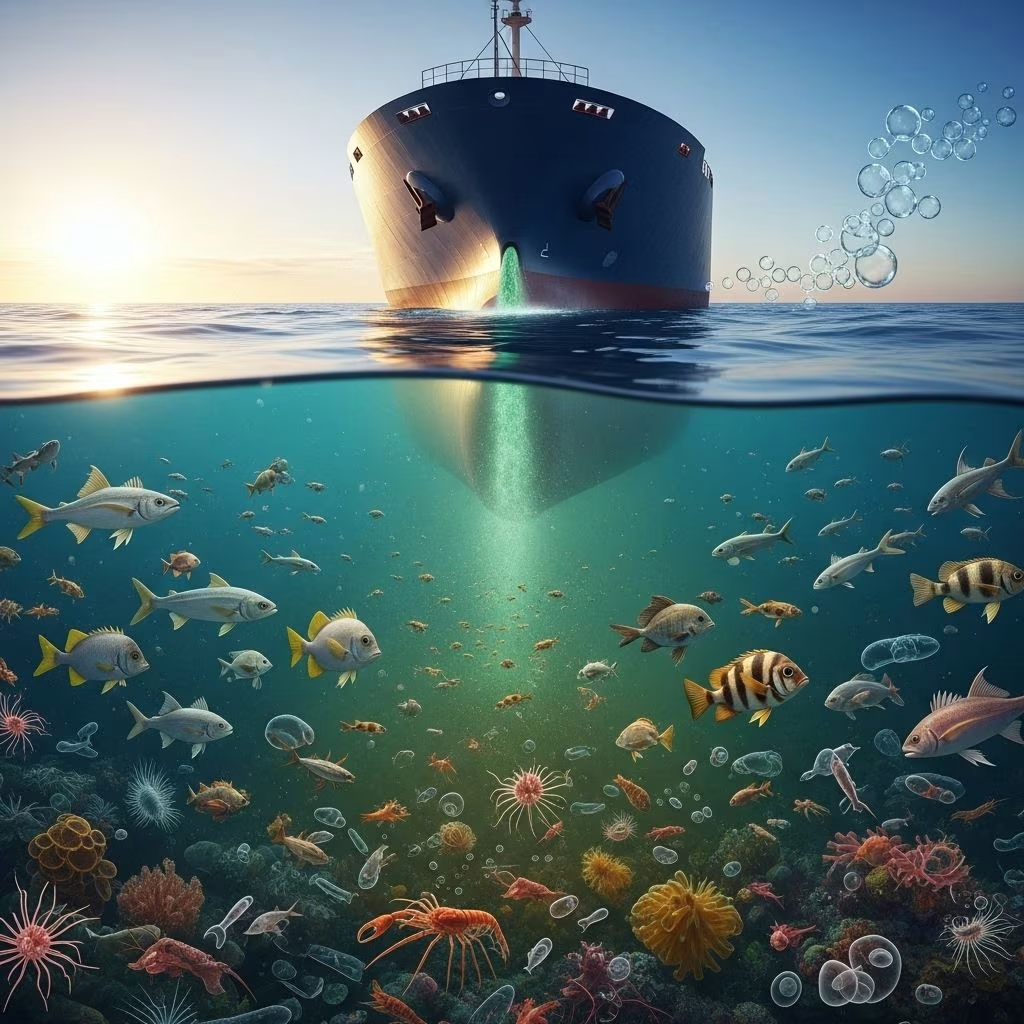
Ballast water refers to water carried in ships’ ballast tanks to improve stability, balance, and structural integrity during transit. While essential for safe and efficient shipping, the global transfer of ballast water poses significant risks to marine environments through the unintentional movement of aquatic organisms and pollutants.
- Ships take in ballast water at ports of origin to maintain stability when not fully loaded.
- This water—often sourced from coastal or harbor areas—includes a blend of local marine life, sediments, and microorganisms.
- At the destination, ships discharge this ballast water, unknowingly releasing non-native species and sediments into new ecosystems.
Historical Context: Why Ships Use Ballast Water
The practice of using ballast is centuries old. Initially, ships stabilized themselves with solid materials such as stones or sand. With the advent of steel hulls and larger vessels in the 19th and 20th centuries, water became the preferred ballast due to its ease of movement and ability to quickly adjust a ship’s balance.
- Ballast water allows ships to travel safely when empty or partially loaded.
- It helps maintain proper draft, preventing the ship from riding too high and improving maneuverability.
- The flexibility allows for efficient cargo operations and port entry regardless of load.
How Ballast Water Works
The process of managing ballast water is closely linked to cargo operations and ship stability.
- Loading Ballast: When cargo is unloaded, ships intake water into their ballast tanks from the local port environment to maintain balance and stability.
- Transit: Ships may adjust ballast water to cope with changes in weather, sea state, and weight distribution.
- Discharge: At the next port, ships discharge all or some of this ballast water to compensate for loading new cargo or changes in stability requirements.
This process results in the global relocation of millions of tons of water—and any living organisms or pollutants contained within it—every day.
The Environmental Impact of Ballast Water
While vital for shipping operations, ballast water has unexpected and severe ecological consequences. The discharge of untreated ballast water is a leading pathway for the spread of invasive aquatic species, as well as the introduction of pathogens and pollutants into new environments.
- Transfer of Non-native Organisms: Ballast water can contain thousands of microscopic and macroscopic organisms—including bacteria, viruses, plankton, larvae, and juvenile fish—which may survive long journeys.
- Introduction of Invasive Species: When released, these species can thrive in the new environment, disrupting existing food webs, outcompeting or preying on natives, and leading to biodiversity loss.
- Habitat Degradation: Some species, such as zebra mussels or green crabs, alter local habitats by changing water chemistry, increasing turbidity, or damaging infrastructure.
- Spread of Disease: Pathogenic microorganisms and harmful algae can be transferred via ballast water, posing risks to both local marine life and public health through contamination of fisheries and shellfish beds.
- Pollution: Ballast water may also contain oil, heavy metals, and other pollutants, further stressing aquatic ecosystems and affecting human uses of water bodies.
Key Examples of Invasive Species Spread Through Ballast Water
- Zebra Mussel (Dreissena polymorpha): Native to the Caspian and Black Sea region, this mollusk has invaded North American and European freshwater systems, clogging water intake structures and outcompeting local mussels.
- Asian Kelp (Undaria pinnatifida): First reported in ballast tanks, this invasive seaweed has spread to Australia, Europe, and New Zealand, threatening native kelp forests and fisheries.
- North American Comb Jelly (Mnemiopsis leidyi): Introduced to the Black Sea, this predator decimated native fish larvae, resulting in ecosystem collapse and fishery losses.
- Cholera Bacteria (Vibrio cholerae): Ballast water has been implicated in spreading cholera outbreaks in regions around the globe due to the release of contaminated water.
Economic and Social Impacts
The introduction of invasive species and pollution through ballast water results in substantial economic and social costs worldwide.
- Fishery and Aquaculture Damage: Invasive predators, competitors, and diseases decrease yields and necessitate costly mitigation.
- Infrastructure Impact: Species such as zebra mussels clog water pipes and power generation facilities, resulting in extensive maintenance expenses.
- Tourism Losses: Ecosystem degradation, fish kills, and algal blooms deter recreational and tourism activities.
- Health Costs: The spread of pathogens can increase health expenditures and threaten drinking water supplies.
The Science: How Ballast Water Transfers Harmful Species
The journey of organisms in ballast water typically involves the following steps:
- Uptake: Ships fill their ballast tanks in coastal, estuarine, or port waters, entraining a diverse range of organisms and sediments.
- Transit Survival: Many species, including resilient microorganisms and larvae, survive in the dark, low-oxygen, nutrient-rich environment of ballast tanks.
- Discharge: At the destination, water is released—sometimes thousands of miles from the origin—introducing new species to unfamiliar ecosystems.
Given the enormous volume of ballast water transported (upwards of 10 billion tons globally each year), the risk and scale of ecological disruption are vast.
Ballast Water and Global Biodiversity
Ballast water-mediated invasions are recognized as one of the top threats to marine and freshwater biodiversity. The expansion of international trade, shipping volumes, and globalized economies has intensified the problem in recent decades.
- The rapid increase in global shipping has coincided with a rise in invasive species reports.
- Many aquatic invasions are irreversible, as eradication is often impossible once an alien species is established.
- Both marine and freshwater systems are vulnerable.
- Loss of biodiversity undermines ecosystem services such as fisheries, purification of water, and coastline protection.
Ballast Water Management: Regulation and Solutions
The threat posed by ballast water led to the emergence of international and national policies designed to prevent or mitigate its environmental impact.
- The International Maritime Organization (IMO) adopted the Ballast Water Management Convention (BWMC) in 2004, which came into force in 2017.
- The Convention outlines global standards for the management and treatment of ballast water to limit the spread of harmful aquatic organisms.
- Many countries have complementary regulations requiring ships to document ballast operations and install approved ballast water treatment systems.
Ballast Water Management Strategies
- Ballast Water Exchange: Replacing coastal ballast water with mid-ocean water (generally less likely to contain invasive species); however, this approach poses safety and effectiveness concerns.
- Onboard Treatment Systems:
- Mechanical Filtration: Removes larger organisms and sediments using strainers or filters.
- Disinfection: Includes use of UV radiation, ozone, or chemical biocides to deactivate or kill organisms.
- Physical Separation: Techniques such as cyclonic separation to remove particles.
- Minimizing Uptake in Polluted Areas: Ships are encouraged to refrain from taking ballast in locations prone to harmful organisms or pollutants.
Advances in technology are making ballast water treatment more efficient and less environmentally risky, though the financial burden on the shipping industry remains significant.
Challenges and Limitations in Ballast Water Management
Despite regulatory progress, several ongoing challenges complicate ballast water management:
- Enforcement and Compliance: Monitoring millions of ship movements and ensuring the correct operation of treatment systems is complex and resource-intensive.
- Treatment System Effectiveness: Not all organisms or pathogens are removed by current technologies, and treatment efficacy varies by ship design and operating conditions.
- Costs: Retrofitting vessels with treatment systems and maintaining compliance can be expensive, especially for older ships.
- Environmental Trade-offs: Some chemical-based treatments may produce environmentally hazardous byproducts or require the use of additional energy.
Ballast Water Awareness: What You Can Do
While ballast water management is primarily a regulatory and industry concern, individuals and organizations can play a role by supporting sustainable shipping and healthy oceans:
- Promote and support legislation that strengthens ballast water management and environmental protection.
- Engage with shipping companies about their environmental performance and encourage use of best practices.
- Advocate for greater research and development into greener ballast water treatment technologies.
- Stay informed and help raise public awareness about the link between shipping activities and ecosystem health.
Frequently Asked Questions (FAQs)
Q: What exactly is in ballast water?
A: Ballast water contains not just water but also a variety of microscopic and macroscopic organisms (such as bacteria, viruses, plankton, larvae, and small fish), along with sediments, pollutants, and sometimes disease-causing pathogens.
Q: Why is ballast water a major environmental concern?
A: It is a primary vector for transferring invasive species and contaminants across regions, often resulting in ecosystem disruption, biodiversity loss, and economic damages—many of which are irreversible.
Q: How big is the ballast water problem globally?
A: Annually, ships transport up to 10 billion tons of ballast water worldwide, affecting countless ports and coastal ecosystems, with over 7,000 species moved globally in ballast tanks each day.
Q: How are governments addressing ballast water problems?
A: Through international agreements like the IMO’s Ballast Water Management Convention and national laws requiring on-board treatment systems, documentation, and compliance with stringent standards.
Q: Can invasive species from ballast water be removed once established?
A: In most cases, eradication is extremely difficult or impossible; management focuses on prevention, monitoring, and mitigation. The best hope is to stop the initial introduction.
Conclusion
Ballast water is a vital component of global shipping, yet it comes with significant ecological risks. Effective management is crucial to safeguard the world’s aquatic ecosystems against the continuing threat of invasive species and pollution. As technology, policy, and public awareness advance, there is hope for a better balance between shipping needs and planetary health.
References
- https://www.ballast-water-treatment.com/blog/what-are-the-environmental-issues-with-ballast-water/
- https://sensorex.com/how-does-ballast-water-affect-environment/
- https://pmc.ncbi.nlm.nih.gov/articles/PMC8927920/
- https://sensorex.com/environmental-concerns-ballast-water-treatment-systems/
- https://en.wikipedia.org/wiki/Ballast_water_discharge_and_the_environment
- https://www.invasivespeciesinfo.gov/subject/ballast-water
- https://www.imo.org/en/ourwork/environment/pages/ballastwatermanagement.aspx
- https://www3.epa.gov/npdes/pubs/vgp_ballast_water.pdf