Why the World Needs Carbon Literacy
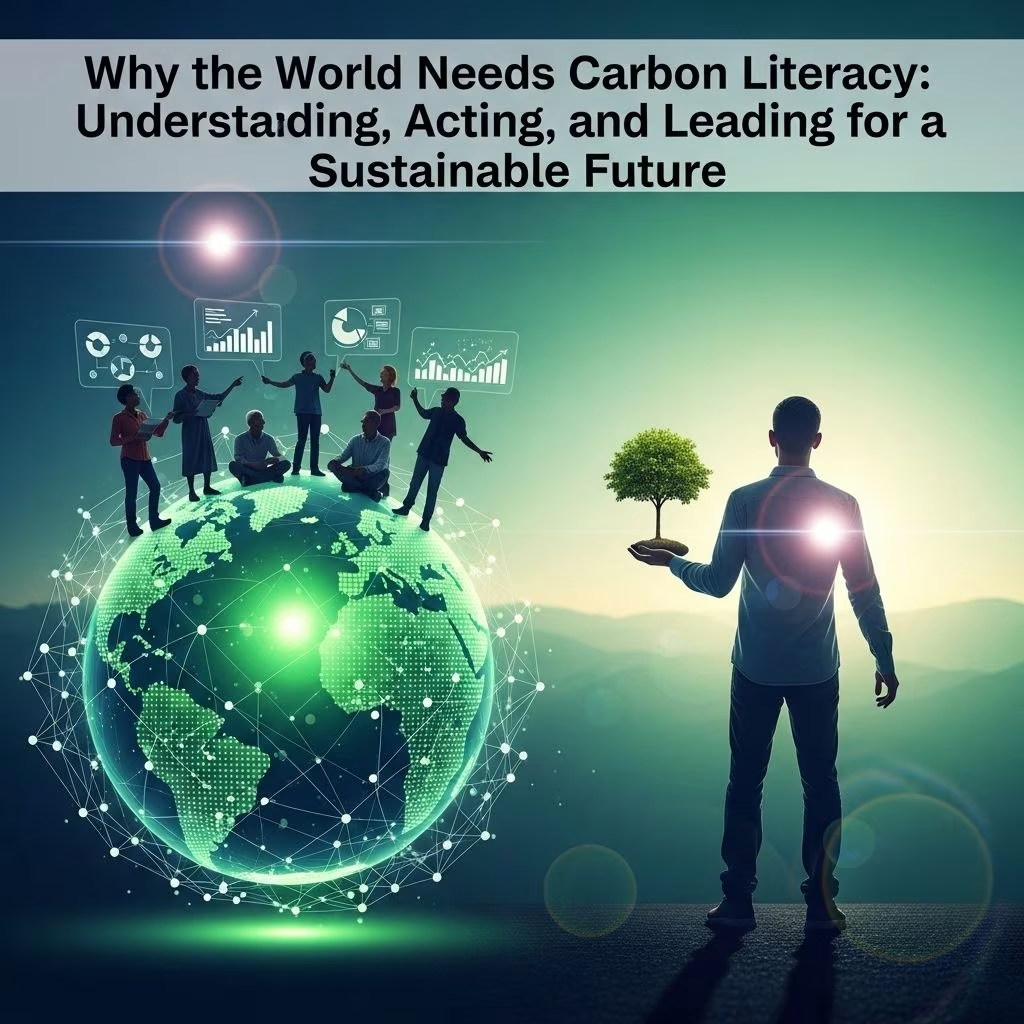
As the impacts of climate change intensify globally, from rising temperatures to extreme weather events, the world faces an urgent need to reduce greenhouse gas emissions and move toward a sustainable future. But tackling climate change requires more than science and technology: it demands a deep, widespread understanding of the carbon impacts of everyday actions—this is carbon literacy. Developing a carbon literate population empowers individuals, organizations, and communities to make informed decisions, take meaningful action, and accelerate the transition to a low-carbon society.
What Is Carbon Literacy?
Carbon literacy refers to an awareness of the carbon costs and impacts of everyday activities and the ability—and motivation—to reduce emissions at individual, community, and organizational levels. It encompasses understanding the science of climate change, the sources of emissions, and the relationship between human behavior and environmental outcomes.
- Recognizing the links between energy use, resource consumption, and carbon emissions.
- Understanding how daily routines—like travel, diet, consumption, and waste—contribute to climate change.
- Developing the skills and confidence to communicate climate impacts and advocate for change.
Being carbon literate means being equipped not only with knowledge but also with the motivation and practical tools for reducing one’s carbon footprint and influencing others to act.
Origins of the Concept
The term was popularized by the UK-based Carbon Literacy Project, which defines carbon literacy as “an awareness of the carbon costs and impacts of everyday activities, and the ability and motivation to reduce emissions, on an individual, community and organisational basis.”
Why Carbon Literacy Matters Now
Without a solid understanding of carbon impacts, society’s efforts to reduce emissions may fall short or lack the necessary scale and urgency. Carbon literacy is fundamental for several reasons:
- Global emergency: Carbon emissions have reached levels that pose a significant threat to environmental, social, and economic systems.
- Widespread effects: Climate change leads to catastrophic events, from floods, droughts, and heatwaves to food insecurity and loss of biodiversity.
- Behavioral change: Two-thirds of the necessary emissions reductions require changes in how individuals and organizations operate and make decisions.
- Empowerment: Carbon literacy provides the knowledge and confidence needed to participate in and advocate for climate action, from choosing what to buy, to influencing policy.
The Core Components of Carbon Literacy
True carbon literacy goes beyond general environmental awareness. It blends science, practical action, and social engagement. A robust carbon literacy curriculum encompasses:
1. The Science of Climate Change
- Understanding greenhouse gases (GHGs), especially carbon dioxide, and their causes.
- Exploring the greenhouse effect and how human activities—fossil fuel burning, land use, agriculture—amplify global warming.
- Connecting emissions with observed climate impacts: rising sea levels, melting ice caps, shifting weather patterns.
2. Environmental and Social Justice
- Recognizing that climate impacts are unevenly distributed—some communities and countries contribute less but suffer more.
- Examining issues of fairness, equity, and climate justice, both locally and globally.
3. Policies, Law, and Governance
- Understanding international efforts (like the Paris Agreement) and their goals for reducing emissions.
- Learning about national laws, regional programs, and grassroots governance structures aimed at achieving net-zero targets.
4. Personal and Collective Action
- Identifying practical steps individuals can take—reduced energy use, dietary changes, transport choices.
- Appreciating the role of communities, civil society, and organizations in driving larger-scale change.
- Developing action plans to reduce carbon footprints and supporting others to do the same.
Benefits of Carbon Literacy
Becoming carbon literate offers tangible benefits for people, businesses, and society as a whole.
For Individuals
- Empowerment: Confidence to make low-carbon choices and advocate for change.
- Informed decision-making: Better understanding of product and lifestyle impacts, leading to more sustainable living.
- Community engagement: Ability to educate, inspire, and influence family, friends, and the wider community.
For Businesses and Organizations
- Cost savings: Behavioral changes, like reducing energy waste, can lower expenses by 5–20% and improve operational efficiency.
- Reputation and competitiveness: Recognition as a responsible, future-ready entity that values sustainability.
- Compliance: Better alignment with regulations and green standards.
- Innovation: New approaches and technologies for resource management.
- Workforce engagement: Staff become ambassadors for sustainability, fueling workplace culture and collaboration.
For Society at Large
- Reduced emissions: Broad public understanding accelerates progress toward climate targets.
- Resilience: Communities gain the knowledge to adapt to and mitigate climate impacts.
- Equity: Supports more inclusive solutions that consider vulnerable populations.
How Carbon Literacy Leads to Climate Action
Knowledge is only powerful when it’s put into practice. Carbon literacy serves as a catalyst for meaningful change in three primary ways:
- It motivates behavior change. People who understand the direct links between their actions and climate outcomes are more likely to adjust their lifestyles, reduce waste, and support green alternatives.
- It equips leaders and change-makers. Managers, educators, and policymakers who are carbon literate can make better decisions that ripple across organizations, supply chains, and communities.
- It fosters innovation. Carbon literate environments encourage the development of clean technologies, efficient systems, and creative solutions to sustainability challenges.
The Structure of Carbon Literacy Training
Becoming carbon literate often involves a structured learning process. Carbon Literacy Project accredited programs and similar initiatives typically include:
- Introductory sessions: Covering climate science and the basics of carbon emissions.
- Interactive workshops: Group discussions, case studies, and real-world problem solving.
- Local and global perspectives: Exploring climate justice and the varied impacts of climate change across different societies.
- Action planning: Participants draft personal and collective commitments to reduce carbon footprints.
- Assessment: Pre- and post-course surveys, reflection forms, and certification review ensure participants understand and can apply their knowledge.
Making an Impact Beyond the Classroom
Certification programs aim not only to impart knowledge but also to help participants think critically about how to influence others and create positive change in their areas of influence.
- Certified carbon literate individuals often lead by example and spark conversations in their workplaces, schools, and communities.
- Businesses with a high proportion of carbon literate staff are better equipped to achieve and promote sustainability goals.
Challenges to Widespread Carbon Literacy
While the need for carbon literacy is clear, several challenges hinder its widespread adoption:
- Access to education: Not everyone has equal opportunity for formal training, especially in marginalized communities or developing countries.
- Overcoming skepticism: Climate denial and misinformation remain obstacles for some audiences.
- Turning knowledge into action: Bridging the gap between awareness and behavior change can be difficult without sufficient support and incentives.
- Keeping information current: Climate science and policy are rapidly evolving, requiring ongoing learning and adaptation.
Growing Momentum: The Global Push for Carbon Literacy
Despite the challenges, significant progress is being made to mainstream carbon literacy:
- Universities, corporations, NGOs, and local governments are integrating carbon literacy into training and leadership programs.
- The Carbon Literacy Project and similar initiatives have certified thousands of individuals, with a growing network of trainers worldwide.
- Businesses report improved employee morale, reputation, and innovation after rolling out carbon literacy training.
This momentum is creating a ripple effect: as more people become carbon literate, they multiply the impact by educating others and pushing for ambitious climate solutions in every sector.
How to Get Started with Carbon Literacy
Anyone can begin their journey towards greater carbon literacy.
- Seek out accredited programs: The Carbon Literacy Project and other organizations offer in-person and online courses designed for different roles and sectors.
- Read widely: Stay informed through credible climate science sources, news, and reports.
- Engage with others: Join or start local sustainability groups, share resources, and discuss climate topics with friends and colleagues.
- Commit to action: Identify one or two lifestyle changes you can make today—whether it’s reducing energy usage, changing transportation habits, or cutting food waste—and inspire others to join you.
Table: Individual Actions and Their Carbon Impact
| Action | Potential Emissions Reduction | Additional Benefits |
|---|---|---|
| Switching to renewable energy | Up to 1.5 tons CO2/year | Reduces air pollution, supports green jobs |
| Eating a plant-based diet | Up to 0.8 tons CO2/year | Improves health, lower food costs |
| Reducing car use by 50% | Up to 1.2 tons CO2/year | Saves money, boosts fitness |
| Minimizing air travel | 0.5–2.0 tons CO2/flight | Supports local tourism, reduces travel stress |
| Cutting household energy waste | 0.3–0.5 tons CO2/year | Lower utility bills, greater comfort |
Frequently Asked Questions (FAQs)
Q: What is the difference between carbon literacy and general environmental education?
A: Carbon literacy specifically focuses on understanding the carbon footprint of everyday actions and how to reduce emissions, whereas environmental education encompasses a wider range of ecological topics, from biodiversity to resource conservation.
Q: Who should become carbon literate?
A: Everyone can benefit—from students and employees to policymakers and business leaders. Carbon literacy is valuable across all ages, professions, and cultural backgrounds.
Q: How can organizations implement carbon literacy training?
A: Many organizations partner with initiatives like the Carbon Literacy Project to deliver accredited training. Internal programs, workshops, and peer-led learning can also be customized for different departments or sectors.
Q: Is carbon literacy relevant outside of the workplace?
A: Yes. Carbon literacy is highly applicable in the home, in schools, and within communities. Changing everyday behaviors collectively amplifies positive climate impact.
Q: Can carbon literacy make a difference to global emissions?
A: Research shows that informed behavioral changes are essential for meeting emissions reduction targets. Widespread carbon literacy multiplies impact, leading to substantial global emissions cuts when combined with strong policies and innovations.
Conclusion: The Power of Carbon Literacy
Carbon literacy is more than a buzzword—it’s an essential skill for the 21st century. By understanding the true impacts of our choices and actions, every individual and organization can become an agent of change. As the world accelerates its pursuit of a just, net-zero future, building and spreading carbon literacy will remain at the heart of meaningful climate action.
References
- https://imveloltd.co.uk/carbon-literacy-how-essential-is-it/
- https://www.qub.ac.uk/directorates/EstatesDirectorate/SustainabilityatQueens/TheCarbonLiteracyProject/
- https://litmussustainability.com/what-is-carbon-literacy/
- https://www.ipsflowsystems.com/role-of-carbon-literacy-in-corporate-sustainability
- https://playitgreen.com/what-is-carbon-literacy-why-is-it-important/
- https://carboncharter.org/blog-5-good-reasons-to-become-carbon-literate/
- https://carbonliteracy.com/being-a-carbon-literate-student/
- https://cura-terrae.com/carbon-literacy-a-staple-for-business/
- https://ukhealthalliance.org/resource/carbon-literacy-guide/