


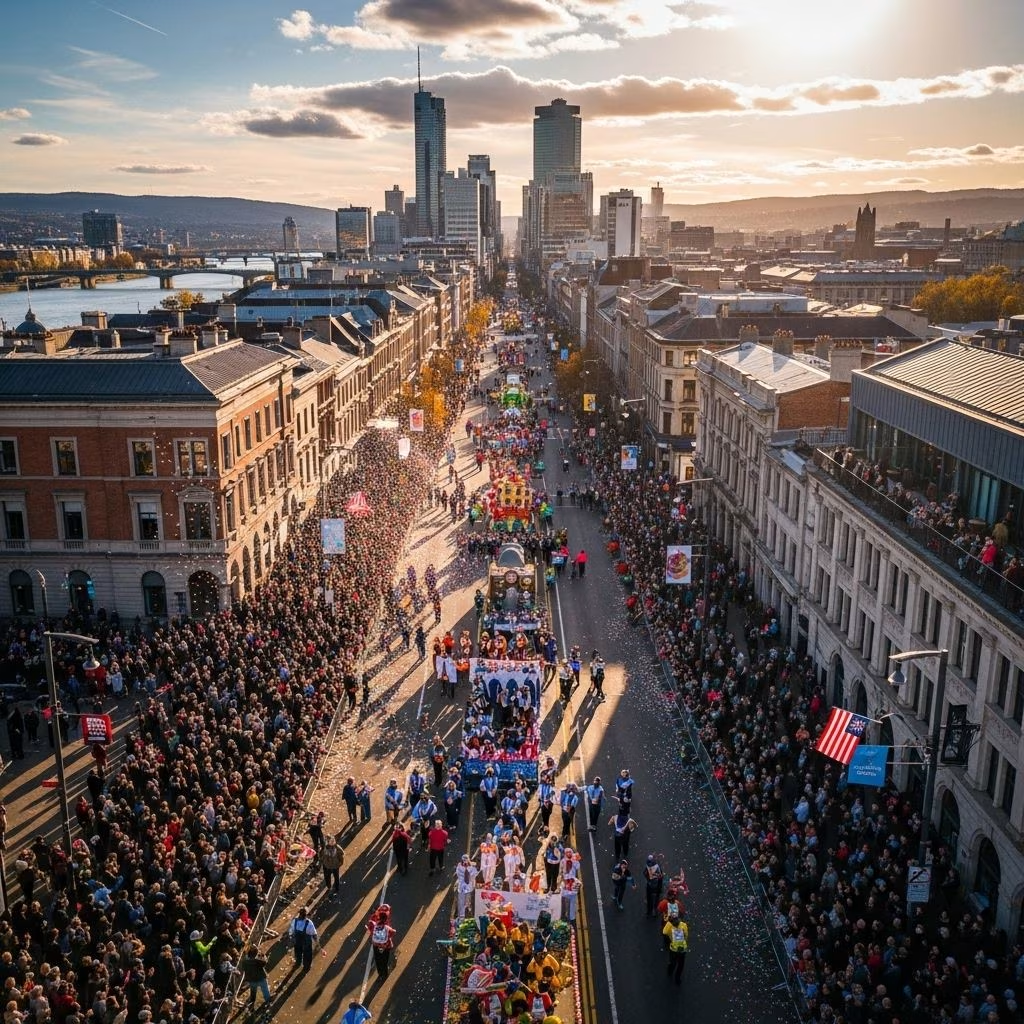
Where Should a City Host Its Parade? Urbanists Weigh the Options
Whether celebrating national holidays, sporting triumphs, political moments, or cultural traditions, parades are a signature marker of civic pride and collective identity. Yet, behind the fanfare, floats, and confetti, a critical urbanist question endures: Where is the best place for a city to host its parade?
This question isn’t merely logistical. The choice of location speaks volumes about a city’s design priorities, sense of place, and its values regarding public life and streetscape. By contemplating the parade’s route, urban planners and civic leaders reveal much about how they want their cities to be used—and experienced.
The Birth of the American Parade Route
From New York’s famous Fifth Avenue to Chicago’s wide State Street and Philadelphia’s Benjamin Franklin Parkway, most North American cities boast a designated parade route that is emblematic of civic life. These iconic streets feature prominently during moments that demand public assembly, protest, or celebration.
- Historic tradition: Early parade routes followed major commercial corridors and symbolic boulevards, linking city landmarks and serving as stages for major civic events.
- Central function: Parade routes double as connectors for transportation, commerce, and daily gathering, making their selection both practical and symbolic.
- Debate begins: Increasingly, urban designers and planners question whether these traditional choices still best serve 21st-century parade and civic needs.
Main Street or Boulevard? Competing Urbanist Visions
When it comes to major gatherings, the choice for parade routes usually comes down to two types of civic space:
| Feature | Main Street | Boulevard |
|---|---|---|
| Traditional Use | Daily commerce, high foot traffic | Scenic promenades, monumental spaces |
| Urban Form | Narrower, dense, human-scaled buildings | Wide lanes, landscaped medians, open sightlines |
| Symbolic Value | Heart of neighborhood identity | Showcase for city’s grand ambitions |
| Challenges | Obstructs everyday life, limits crowd control | Risk of feeling impersonal, less connected to urban life |
Deciding between these options forces cities to ask: Should a parade disrupt the heartbeat of daily life for maximum joy and visibility? Or should it unfold on an avenue built to impress, allowing for easier management and drama?
Parades as Expressions of Urban Ideals
For urbanists, the debate over parade location is less trivial than it might seem. It touches on deep-rooted theories about the function and soul of a city:
- Main streets are cherished for their sudden transformation during parades, turning the every day into the extraordinary—and proving the street’s flexibility as social infrastructure.
- Boulevards and parkways communicate the city’s authority, signaling grandeur and civic unity but sometimes at the expense of the intimate, human-scaled connections found on main streets.
- Streets as social platforms: The physical design of a parade route shapes how communities gather, who feels welcome, and how city space is perceived during and after celebrations.
What Makes a Good Parade Route?
Urban designers agree that certain qualities make for successful, memorable parade spaces:
- Accessibility: Easy access by foot and transit enables all city residents to participate, not just those with cars.
- Visibility: Landmark buildings, open spaces, and clear sight lines augment excitement and safety.
- Flexibility: A truly great parade route can lend itself to many types of events, not just annual processions.
- Symbolic resonance: The route should connect meaningful places and tell the story of the city and its people.
When Design Disrupts Tradition
Urban planners often inherit the parade routes designed by prior generations—sometimes built for streetcars or horse-drawn carriages—yet cities are changing rapidly. Street redesigns focused on bike lanes, medians, and transit infrastructure can conflict with traditional parade logistics.
- Traffic-calming obstacles: Modern features that slow cars, like bulb-outs and narrowed intersections, can hamper large floats and marching bands.
- Street furniture: Trees, planters, and public art may add daily value but become obstacles during parades.
- Security: Terror attacks in recent years push officials to install more barriers and security checkpoints, complicating old-fashioned open parades.
The result: Some cities debate whether it’s time to designate alternate parade spaces, like parkways or newly created civic plazas—spaces that can better handle crowds and today’s safety demands.
Rethinking the Civic Stage: Case Studies and Expert Views
Several cities have tried diverging from tradition to find ideal parade locations. Urban experts offer contrasting takes based on these experiments:
- Philadelphia: Its Benjamin Franklin Parkway was designed as a ceremonial boulevard, modeled after grand European avenues, specifically to host public gatherings and parades. While it offers stunning vistas, critics argue it can lack the community warmth of a true main street.
- New York City: Fifth Avenue remains the site of most major parades, dividing the heart of Manhattan and maximizing exposure. However, its closure for events can disrupt millions, and the city has explored smaller alternative spaces for less central events.
- Chicago: State Street and Michigan Avenue have alternated as primary parade sites, with the former prized for its closeness to daily life and the latter for its grandeur.
- New Orleans: Parades wind through neighborhoods as well as main boulevards during Mardi Gras, giving residents across the socio-economic spectrum a role in the celebration.
An emerging trend is for cities to adopt flexible, “event-ready” streets that can shift functions as needed: catering to transit and commerce daily, but quickly transforming for parades, festivals, or marches.
Equity, Inclusion, and the Right to Celebrate
Urbanists underscore that parades are not just entertainment; they express shared experiences and, at times, contestations of belonging. Where a parade is held sends signals about who is invited and whose stories are central.
Key points for equitable urban celebration:
- Geographic inclusivity: Rotating or expanding parade routes can reach under-represented neighborhoods.
- Accessibility for all: Routes should accommodate people with disabilities, children, and elders—not just the able-bodied or affluent.
- Local business: Main street parades can provide a commerce boost to neighborhood shops; boulevards and plazas often do not.
- Community ownership: Involving local groups in planning fosters pride and ensures events reflect diverse traditions.
Logistical Challenges in Parade Planning
Beyond the romance of waving flags and city pride, parades represent major logistical puzzles for civic staff. The ideal route must balance urban planning theory with hard practical concerns.
- Crowd control: Wide boulevards ease movement but can dilute participation; dense streets heighten spirit but risk congestion.
- Emergency access: Clear routes for ambulances and fire trucks must be maintained.
- Transit disruption: Shutting down main arteries may impede thousands of commuters; planners seek to minimize disruption while maximizing joy.
- Clean-up and restoration: Streets and plazas must return swiftly to daily life, requiring coordinated clean-up crews and resilient infrastructure.
These considerations intensify in large, dense cities and explain why some metropolises now designate multiple, tiered parade zones based on parade size, audience, and potential impact on the rest of city life.
The Future of the Parade in Urban Design
As cities evolve, the future of parades—and the places that host them—remains under active debate. New paradigms in urban planning push toward multi-functional streets, a blending of the old and new, and the reimagining of civic space for an ever-more diverse populace.
- Temporary pedestrian zones: More cities are testing flexible, “event-only” street closures, designed for festivals and parades but reverting to normal function after.
- Pop-up plazas: Underused parking lots and transit hubs are being converted into seasonal celebration spaces as part of urban placemaking programs.
- Innovative logistics: Smart technology, like crowd sensors and temporary navigation apps, support real-time route adjustments and safety monitoring.
- Inclusivity measures: Broader community engagement ensures parades remain accessible celebrations—reflecting the diversity and collective spirit of modern cities.
If a city’s parade route is a barometer of its civic soul, then the ongoing dialogue among urbanists, designers, and civic leaders suggests that these traditions, though old, are far from stale. The best place for a parade today is where public life, safety, history, equity, and the joy of gathering all find their crossroads.
Frequently Asked Questions (FAQs)
Q: Why do cities debate parade locations?
A: Cities debate parade locations because parade routes reflect priorities in public space usage, impact daily city life, affect who can participate, and offer differing levels of safety, accessibility, and symbolism.
Q: What makes a main street or boulevard better for parades?
A: Main streets connect to neighborhood life and local businesses, creating vibrant, close-knit celebrations. Boulevards offer space, safety, and iconic visuals suitable for large crowds and significant events.
Q: How do modern street designs affect parade planning?
A: Street modifications such as bicycle lanes, busways, bulb-outs, and permanent security barriers can complicate or even preclude their use as flexible parade routes, prompting cities to reconsider locations or redesigns.
Q: How can parade planning promote equity?
A: By involving diverse communities in route selection and design, making routes accessible for all abilities, and choosing locations that are reachable by various modes of transport, cities can make parades inclusive and representative.
Q: What are some creative solutions cities use?
A: Cities use pop-up pedestrian plazas, modular event spaces, flexible street closures, technology-supported crowd management, and rotating routes to balance tradition with modern needs.
References
- https://www.lincolninst.edu/app/uploads/legacy-files/pubfiles/the-new-urbanism-full.pdf
- https://archinect.com/forum/thread/150435938/y-all-really-hate-new-urbanism
- https://en.wikipedia.org/wiki/New_Urbanism
- https://progameguides.com/goat-simulator-3/all-treehuggers-locations-in-goat-simulator-3-treehuggers-quest-guide/
- https://thefoxandthecity.com/articles/urbanism-as-a-field-of-study
- https://www.cnu.org/publicsquare/2017/10/31/25-great-ideas-new-urbanism
- https://www.youtube.com/watch?v=Em9z2F_Lx3E


