


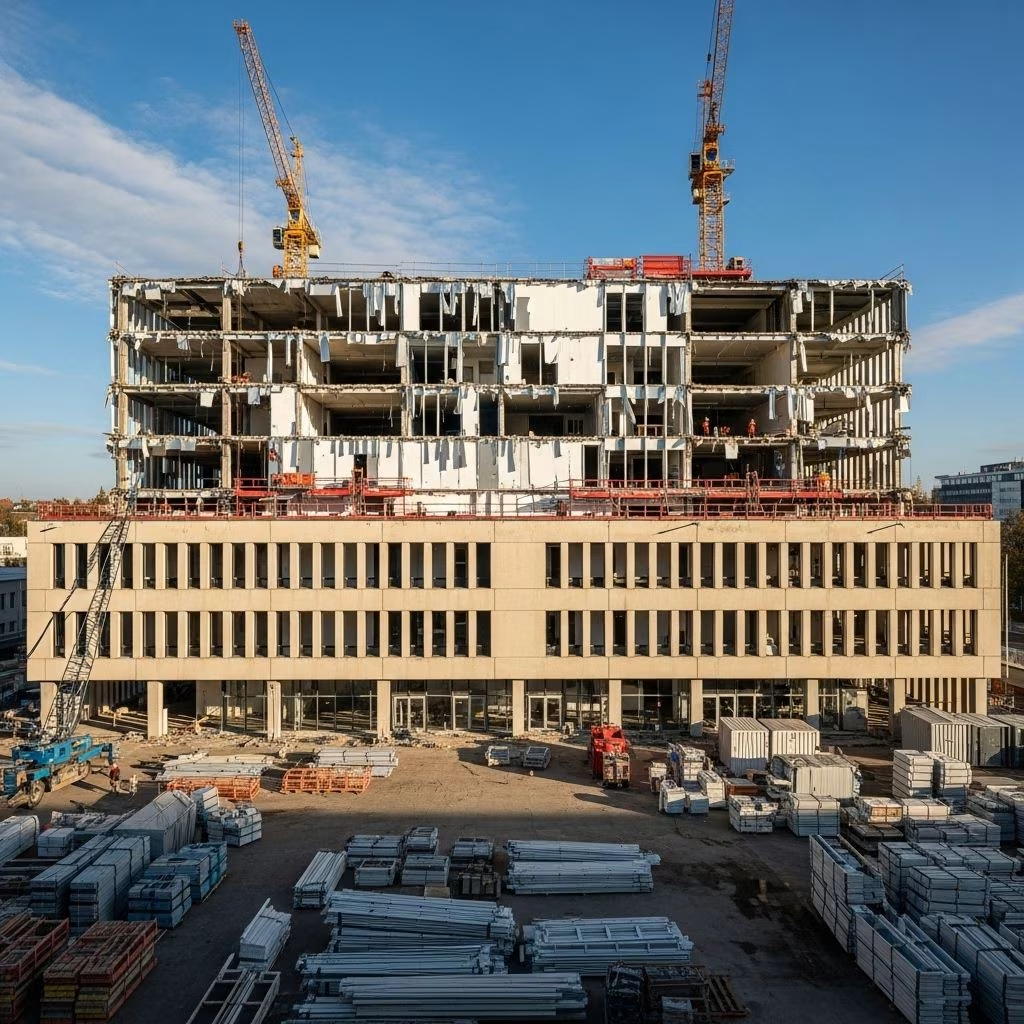
Why Ban Demolition?
Demolition of buildings has long been the default practice for the end-of-life phase of structures across the globe. Yet, this approach is increasingly unsustainable, both environmentally and economically. By smashing structures into rubble and sending the debris to landfill, we squander valuable resources, accelerate raw material extraction, and generate significant greenhouse gas emissions. This article explores the urgent case for banning demolition and moving toward a future built on deconstruction and designing for reuse.
The Environmental Toll of Demolition
- Waste Generation: Roughly 90% of demolition debris ends up in landfills, according to the U.S. Environmental Protection Agency (EPA). Materials discarded include concrete, wood, drywall, insulation, and metals—many of which could be reused or recycled if handled more carefully.
- Resource Loss: The practice of demolition discards tons of reusable timber, bricks, and architectural elements. This loss is compounded by the energy and emissions incurred in extracting, manufacturing, and transporting brand new materials to replace those destroyed.
- Carbon Emissions: Modern buildings contain vast stores of carbon in their physical structure. Demolishing them releases that carbon, while rebuilding with new materials increases the overall carbon footprint of the built environment.
- Hazardous Materials: Older structures may contain toxins such as asbestos or lead paint, posing health risks when demolished rather than carefully dismantled.
Deconstruction: The Sustainable Alternative
In contrast to demolition, deconstruction involves meticulously dismantling buildings in order to salvage the maximum amount of reusable and recyclable material. Every nail, beam, brick, and fixture gets a second life, drastically reducing waste and environmental impact.
What Is Deconstruction?
Deconstruction is the process of taking apart a building piece by piece rather than crushing it with heavy machinery. Skilled laborers recover doors, windows, flooring, timber framing, insulation, hardware, and architectural details. Instead of loading dumpsters with debris, materials are sorted for sale, donation, or direct reuse in new projects.
Key Benefits of Deconstruction
- Resource Reuse: Salvaged materials—including hardwoods, bricks, and fixtures—are reused in new construction, restoration, or upcycled products. This reduces demand for new resources and embodied energy.
- Waste Reduction: Deconstruction diverts the majority of materials from the landfill, cutting disposal costs, and extending the lifecycle of building products.
- Carbon Storage: Reusing wood retains sequestered carbon, and using reclaimed materials reduces emissions from raw material extraction and manufacturing.
- Economic Opportunities: Deconstruction provides jobs in sorting, cleaning, and reselling reclaimed materials. Specialized contractors and salvage shops benefit from the growing market in reused building materials.
Deconstruction in Action: Examples and Progress
- Portland, Oregon: The city requires residential homes built before 1940 to undergo deconstruction rather than mechanical demolition. Contractors are trained in salvage techniques, creating jobs and a steady flow of high-quality materials for resale.
- Boulder, Colorado & Palo Alto, California: Ordinances mandate deconstruction for projects beyond just old homes—extending to commercial and residential projects alike. The cities require material recovery and reuse for any removal above certain square footage thresholds.
- San Antonio, Texas: Introduced a deconstruction ordinance requiring certain projects to be fully dismantled rather than torn down mechanically.
- Case Study: In Ithaca, New York, a 4,500-square-foot home was fully deconstructed in five days. Labor costs were higher, but revenue from salvaged materials nearly offset the difference, demonstrating that, with adequate markets, deconstruction can be both environmentally and economically viable.
Barriers to Deconstruction Adoption
- Market Development: In some regions, the market for resale of salvaged materials remains immature, stalling further expansion of deconstruction practices.
- Specialized Workforce: Contractors and laborers need training in deconstruction, and a sufficient network of companies must exist to handle demand.
- Regulatory Support: Building codes must allow for use of reclaimed materials, and clear standards for grading and certifying salvaged material are required.
- Economic Incentives: Upfront labor costs for deconstruction are higher, though long-term benefits—including job creation and revenue from materials—often outweigh them, especially where dump fees and landfill bans are in place.
Designing Buildings for Deconstruction
To scale deconstruction from exception to norm, buildings must be designed for future disassembly from the outset. This approach is known as Design for Deconstruction (DfD) or Design for Disassembly.
Principles of Design for Deconstruction
- Accessibility: Structures should be assembled with reversible connections and accessible components to maximize ease of future removal and salvage.
- Material Separation: Use fewer types of materials, and avoid composites (e.g., glued laminates) that are difficult to separate at end of life.
- Fasteners: Prioritize screws and bolts—rather than adhesives or welds—enabling easy disassembly without damaging materials.
- Documentation: Maintain digital “material passports” outlining for future teams exactly what materials are present and how they are assembled.
- Durability and Modularity: Materials and components are selected for durability and sized for easy reuse, adaptation, or upgrade in other contexts.
Case Studies: DfD in Practice
- Switzerland: Architects such as Barbara Buser advocate for viewing buildings as “material banks”—sources for future construction rather than disposable products.
- Boulder Hospital: Steel from the demolition of a hospital was reused in the construction of a new fire station, demonstrating material circularity at scale.
- European Initiatives: Working groups in France’s Auvergne-Rhône-Alpes region are developing material inventories and protocols for deconstruction at the municipal level.
Economic and Social Impacts of Banning Demolition
Banning demolition in favor of deconstruction promises both economic and societal benefits in addition to environmental gains.
- Job Creation: Deconstruction is more labor-intensive than demolition, creating employment for skilled workers, contractors, and salvage businesses.
- Workforce Training: Cities and housing authorities have succeeded in training local residents—including disadvantaged groups—in deconstruction skills, leading to union-wage employment and stable career paths.
- Community Revitalization: Salvaged materials support local construction and restoration, helping preserve architectural heritage and reduce building costs.
- Social Resilience: By treating the built environment as a circular system, communities strengthen their resource security and reduce reliance on global supply chains.
The Circular Economy in Architecture
Shifting toward deconstruction is part of a larger movement toward the circular economy in building. As practiced, circular architecture focuses on designing, constructing, maintaining, and ultimately deconstructing buildings so that every element remains within a closed loop of reuse and recycling.
| Linear Building Economy | Circular Building Economy |
|---|---|
| Extract raw materials | Use and reuse existing materials |
| Build new structures | Design for adaptation and disassembly |
| Demolish when obsolete | Deconstruct, salvage, repurpose |
| Send debris to landfill | Divert materials from landfill |
Innovations and Future Directions in Deconstruction
The future of sustainable building lies in integrating technology, policy, and market forces in favor of deconstruction and material reuse.
- Robotics: Companies are developing robotic systems to automate removal of fasteners from reclaimed lumber, streamlining salvage work and reducing manual labor costs.
- Material Passporting: Digital inventories of building components allow for real-time tracking of materials available for reuse, facilitating marketplaces and exchanges.
- Regulations & Incentives: Municipal ordinances, landfill surcharges, and financial incentives can make deconstruction more economically attractive than demolition.
- Consumer Behavior: A growing culture around “buying less new” and prioritizing salvage reflects changing attitudes toward material consumption.
- Industry Standards: Organizations are developing grading systems and certifications for reclaimed materials to ensure quality and safety in building code compliance.
Frequently Asked Questions (FAQs)
Q: How is deconstruction different from demolition?
A: Deconstruction uses skilled labor to dismantle structures, salvaging materials for reuse and recycling. Demolition crushes buildings with machinery, resulting in mixed waste usually sent to landfill.
Q: Is deconstruction more expensive than demolition?
A: The upfront costs of deconstruction are typically higher due to labor, but revenues from salvaged materials, savings in landfill fees, and long-term environmental benefits can outweigh these costs if strong markets and policies are in place.
Q: What happens to hazardous materials in deconstruction?
A: Materials like asbestos and lead-based paint are identified and removed with care, often requiring specialized handling to mitigate health and environmental risks.
Q: Are there cities that require deconstruction instead of demolition?
A: Yes. Portland, Boulder, Palo Alto, San Antonio, and others have ordinances that require deconstruction for certain projects, often based on age, size, or location of the building.
Q: What barriers exist to wider adoption of deconstruction?
A: Key challenges include market development for salvaged materials, training and certifying a skilled workforce, evolving building codes, and securing economic incentives for owners.
Conclusion: Toward a No-Demolition Future
Banning demolition and embracing deconstruction is vital for the future health of our cities, our environment, and our economy. By treating buildings as sources of reusable materials, designing for circularity, and investing in policy and workforce development, we can drastically reduce waste, protect critical resources, and create a more resilient built environment for generations to come.
References
- https://e360.yale.edu/features/reclaimed-wood-deconstruction-cities
- https://www.ecohome.net/en/guides/3930/deconstructing-homes-a-sustainable-approach-to-reusing-and-recycling-building-materials/
- https://ilsr.org/articles/deconstruction-shifts-from-philosophy-to-business/
- https://reasonstobecheerful.world/by-deconstructing-buildings-with-care-materials-get-a-second-life/
- https://www.iip.kit.edu/downloads/CIBpublication252.pdf


