


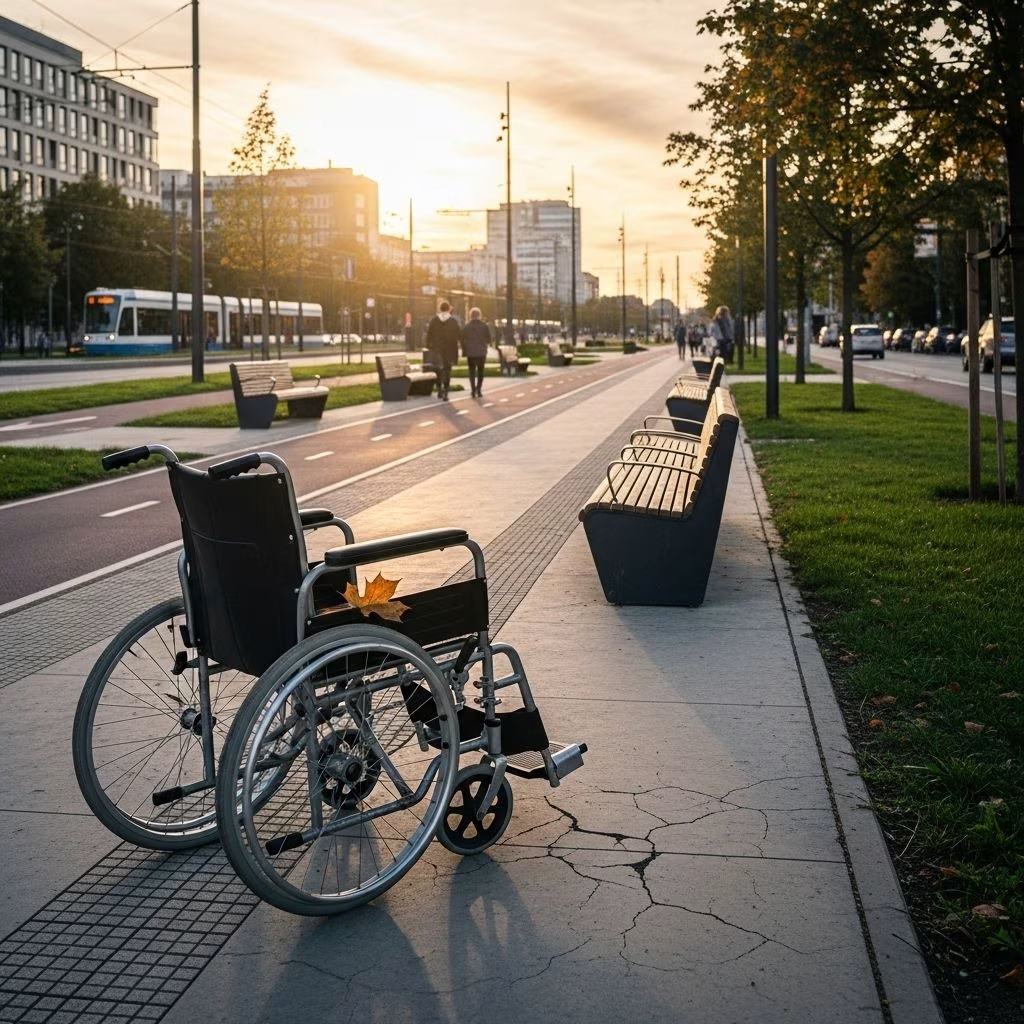
Urban planning efforts to reduce the use of private automobiles have grown more urgent as cities seek to cut emissions and build a sustainable future. Proposals for car bans—ranging from city center restrictions to outright banishment of private vehicles—are often championed as quick wins for climate, air quality, and livability. However, while a world free of cars appeals to many environmentalists and advocates for walkable cities, blanket bans risk perpetuating a subtle but pervasive form of ableism: the exclusion of disabled voices and needs from mainstream green policy.
Efforts to Diminish Cars: Rationale and Risks
Transportation accounts for a significant share of urban greenhouse gas emissions. Accordingly, cities across the world are implementing measures to restrict cars:
- Congestion pricing in major city centers
- Pedestrianization of historic downtowns
- Creation of low-emission or zero-emission zones
- Bans on internal combustion engines by certain future deadlines
The rationale—improving air quality, supporting walkability, and combatting climate change—has broad ecological and public health appeal. Yet few of these initiatives fully grapple with profound questions of accessibility and social justice. Cars are commonly criticized for facilitating urban sprawl, road violence, and carbon pollution, but less attention is paid to the vital role private vehicles play for those unable to walk, bike, or use public transit independently.
Why Car-Free Utopias Overlook Disability
The vision of a car-free city is powerful: it conjures streets reclaimed for people, quieter neighborhoods, cleaner air, and surging rates of walking and cycling. But these visions frequently rest on able-bodied assumptions, including:
- Mobility as a matter of choice, not necessity
- Universal ability to walk, cycle, or use public transport comfortably
- The feasibility of carrying groceries, children, or daily essentials without vehicle support
For disabled people, older adults, those with chronic illnesses, and caregivers of all kinds, these assumptions often do not match reality. Accessible, inclusive mobility is a precondition for civic participation, employment, healthcare access, and autonomy. For many, cars are not a luxury but a lifeline.
The Spectrum of Disability and Mobility Needs
Disability is not a monolith. People with mobility impairments, chronic pain, neurodivergence, sensory conditions, and ‘invisible disabilities’ each experience the built environment differently. Blanket restrictions can cut off access to essential activities:
- People who need door-to-door transit for work, medical appointments, or daily errands
- Those whose energy, pain, or sensory processing makes walking and public transport inaccessible
- Caregivers and families who depend on vehicle access for complex routines
Ignoring these complexities perpetuates ableism—discrimination or social prejudice against people with disabilities—by designing the future city for a hypothetical, able-bodied everyperson.
The History and Real-World Impact of Car Restrictions
Some cities have already experimented with partial or full car bans. While bringing benefits, these schemes often have unintended consequences for those with accessibility needs.
Case Study: Mackinac Island
Mackinac Island in the U.S. has banned most motor vehicles since 1898, making it a longstanding example of a car-free community. While cherished by many visitors for its tranquility, the island relies on horse-drawn taxis and bicycles—solutions that are not universally accessible to those with limited mobility or respiratory conditions affected by animal dander or droppings.
European Urban Centers
Major European cities like London, Madrid, and Paris:
- Have established congestion charges and low emission zones
- Expand pedestrian-only zones in city centers
- Offer exemptions or special permits for disabled drivers, but access is often bureaucratic and incomplete
Disabled travelers and residents often report inconsistent enforcement, confusing exemptions, and lack of information—leading to physical and psychological barriers to participation in urban life.
What Is Ableism—and How Does It Manifest in Urban Policy?
Ableism is the structural discrimination that prioritizes able-bodied norms and marginalizes those whose bodies or minds differ from this standard. In the context of transport and city design, ableism appears both in overt ways (failure to provide wheelchair ramps, inaccessible transit vehicles) and subtle forms (planning as though everyone can walk long distances or navigate complex environments unaided).
Common manifestations of ableist urban planning include:
- Lack of accessible drop-off and pickup zones near entrances
- Public transit stations with broken elevators or long walking links
- Streetscapes “reclaimed” for pedestrians, but with inadequate benches, shade, or resting points
Policy that seeks to reduce cars but fails to offer meaningful, accessible alternatives does not functionally serve disabled people; it restricts their movement and independence.
Alternatives: What Does a Truly Inclusive Low-Carbon City Look Like?
Building a sustainable, low-carbon city requires that all residents—not just the able-bodied majority—benefit from improved air quality, safety, and urban experience. An inclusive model centers disabled voices in every stage of planning and prioritizes universal design in mobility solutions. This means:
- Consultation and co-design with disabled people from multiple backgrounds and impairment types
- Accessible transportation infrastructure that goes far beyond legal minimums
- Priority for door-to-door service options, paratransit, affordable taxis, or accessible ride-hailing
- Clear, reliable exemptions for disabled drivers and caregivers, with processes that are fast, simple, and dignified
Inclusivity is not simply a moral add-on but a central test of policy effectiveness. Truly green cities measure progress by the opportunities expanded for all, not just for the majority.
The Intersection of Disability, Climate Action, and Urban Equity
Climate policies that ignore disability can unintentionally deepen existing inequalities. People with disabilities already face barriers to employment, healthcare, and social participation. When car bans make it harder to access essential services or opportunities, these inequities grow.
Additionally, climate impacts themselves—extreme heat, air pollution, flooding—disproportionately harm disabled people. For example:
- Exposure to heat waves is more dangerous for people with certain medical conditions
- Power outages can strand wheelchair users whose devices depend on charged batteries
- Evacuation plans often overlook accessible transport, leaving disabled people at risk during emergencies
Integrating accessibility into climate action is not only just but necessary for effective urban resilience.
Reimagining Urban Mobility: Principles for a Just Transition
| Principle | Policy Implication |
|---|---|
| Universal Design | Ensure that transit, streetscapes, and new micro-mobility options (like e-bikes or scooters) are available in formats accessible for all impairments. |
| Meaningful Engagement | Prioritize co-creation with disability advocates in all stages, from concept to evaluation. |
| Flexibility and Choice | Preserve or expand flexible accessible options—such as accessible taxis and personal vehicles with exemptions—in tandem with public investment in infrastructure. |
| Information and Communication | Ensure wayfinding, policies, and exceptions are clearly communicated and easy to navigate for diverse cognitive, sensory, and language needs. |
| Equity Assessment | Continuously evaluate mobility plans for disproportionate impacts on disabled, elderly, and low-income populations—and adapt as needed. |
Countering Myths: Do Cars Only Benefit the Able-Bodied?
Advocates for car-free cities sometimes frame cars as inherently harmful, used mainly by privileged or able-bodied individuals. This overlooks key realities for many disabled people and their families:
- Public transit is not universally accessible or reliable
- Biking is not an option for many types of disability or chronic illness
- Ride-hailing services and taxis can be expensive or lack proper accommodations
- Retrofitting cities takes time—alternative transport options must be in place before restrictions on cars
Passive exclusion (not planning for accessibility) and active exclusion (denying exemptions or support) both reinforce ableism in urban mobility.
Intersectionality: Disability, Race, and Transport Justice
Disability is further complicated by race, class, gender, and geography. For example, disabled people of color may live farther from accessible public transit or face compounded barriers due to discrimination. A just transition to low-carbon cities demands a thorough, intersectional approach that recognizes and repairs these legacy inequities.
Elevating Disabled Voices: From Token Consultation to Leadership
Too often, policy processes consult disabled people late, or treat accessibility as a secondary requirement. Instead, cities preparing for deep climate action should:
- Proactively invite disabled advocates to participate on equal terms
- Budget for accessibility from the outset, not as an afterthought
- Hold regular reviews and publish accessibility audits of policies and infrastructure
- Appoint disabled people to leadership roles in planning and implementation
Looking Forward: Reconciling Environmental and Disability Goals
Achieving net-zero carbon emissions and designing cities for thriving, healthy communities remain vital. Yet no transition can succeed unless it delivers for those traditionally left out of urban planning. Disability inclusion is not a constraint on sustainability; it is the metric by which sustainable policy must be judged.
Cities should move beyond “car or no car” dichotomies and build in flexibility, creativity, and a robust, accessible toolkit for mobility, ensuring that all residents can enjoy—rather than be excluded from—the benefits of reclaiming the streets for people and the planet.
Frequently Asked Questions (FAQs)
Why do some cities want to ban private cars?
Many cities are considering car bans to reduce greenhouse gas emissions, ease traffic congestion, improve air quality, and make urban spaces safer and more pleasant for pedestrians and cyclists.
How do car bans affect disabled people?
If not implemented with care, car bans can make cities far less accessible for disabled people who rely on private vehicles for essential tasks, often compounding social exclusion.
Are there accessible alternatives to cars in car-free zones?
Some cities offer paratransit, accessible taxis, or exemptions for disabled drivers, but coverage, reliability, and eligibility processes can be inconsistent. True inclusion requires robust, user-informed alternatives.
Can car bans and accessibility coexist?
Yes, but only if disabled voices are central to decision-making and policy ensures that every resident—regardless of ability—has access to convenient, dignified transportation.
What are examples of inclusive mobility policies?
Best practices include universal exemptions for accessible vehicles, on-demand accessible taxis, co-designed public transit improvements, and clear information on rights and options for disabled travelers.
References
- https://www.greencarreports.com/news/1091625_tree-huggers-dont-buy-luxury-cars-says-cadillac-exec-on-electric-cars
- https://www.icma.org/documents/meet-one-city-america-where-cars-have-been-banned-1898
- https://www.baronpa.com/library/autonomous-vehicles-confront-a-political-viability-crisis
- https://ecooptimism.com/?tag=treehugger
- https://subscriber.politicopro.com/article/eenews/2023/12/22/tree-hugging-dam-fighting-green-legend-dies-at-80-00133087
- https://classicroverforum.net/index.php?threads%2Fwhen-the-tree-huggers-ban-the-use-of-petrol-cars-due-to-emissions.42824%2Flatest
- https://www.youtube.com/watch?v=FegPOXPc6cI


