


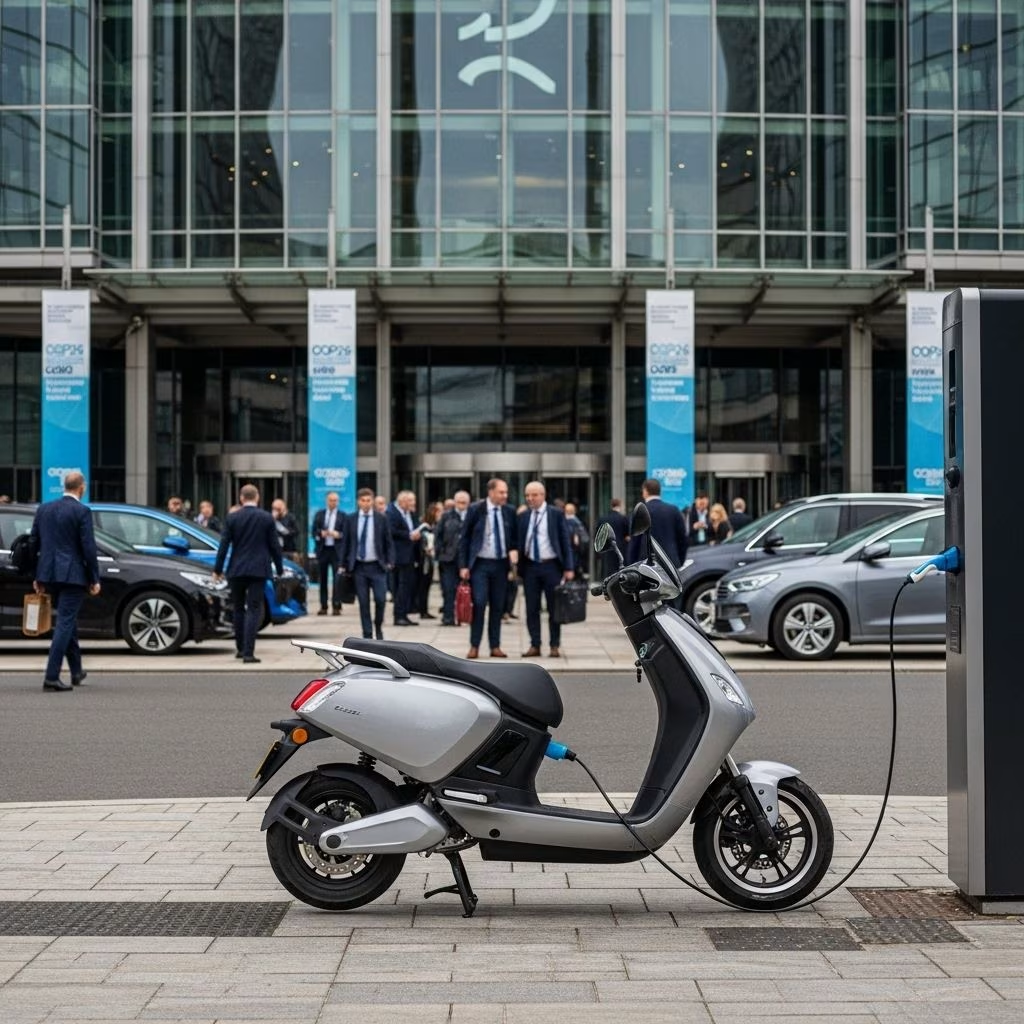
Why COP26 Missed the Mark: The Case of Two-Wheeled Electric Vehicles
At the pivotal 2021 COP26 climate summit in Glasgow, electric vehicles (EVs) commanded attention—yet almost exclusively in the form of cars, vans, and trucks. Two-wheeled EVs such as electric bikes and scooters, despite their widespread impact and sustainable profile, were conspicuously absent from major policy debates and official declarations.
The Official Focus: Cars, Vans, and Heavy-Duty Vehicles
Over 100 governments, cities, and corporations signed the Glasgow Declaration on Zero-Emission Cars and Vans to phase out combustion engine vehicles by 2035 in leading markets and by 2040 globally. More ambitious electrification targets emerged for passenger vehicles, explicitly naming cars and vans. Yet even at the highest policy levels, two-wheeled vehicles were not part of these agreements.
- Zero-Emission Car Sales: 100% by 2035 in leading markets
- CO₂ Reduction Targets: 55% from new cars, 50% from new vans by 2030 (relative to 2021)
- No Mention of E-Bikes or E-Scooters: Omission from targets and official language
Transportation’s Role in Climate Pollution
The transport sector produces about one quarter of global greenhouse gas emissions—predominantly from road vehicles. Efforts prioritized the biggest sources: passenger cars, trucks, and buses. However, smaller-scale transport—including micro-mobility options like e-bikes and scooters—can be crucial to solving urban congestion, reducing emissions, and democratizing access to clean mobility.
The Potential of Two-Wheeled Electric Vehicles
E-bikes, e-scooters, and other two-wheeled EVs have seen exponential growth worldwide. Unlike electric cars, they offer:
- Lower emissions per passenger kilometer
- Reduced traffic congestion
- Ultra-low manufacturing carbon footprint
- Increased accessibility for less affluent communities
- Easier integration into existing infrastructure
High Adoption, Low Recognition
Globally, millions of two-wheeled EVs are already in use, especially in Asia. Cities like Amsterdam and Copenhagen boast legendary cycling cultures with rising e-bike numbers, while China leads the world in electric scooter deployment. These vehicles enable short- to medium-distance travel for work, errands, and leisure—all with a fraction of the energy consumption of cars.
The Climate Impact of Micro-Mobility
Switching car trips to e-bikes or scooters slashes operational emissions and reduces energy demand on grids. Studies indicate that a significant portion of urban trips—often more than half—could feasibly be shifted to two-wheeled vehicles, amplifying climate benefits. This approach supports broader urban goals, including cleaner air, quieter streets, and safer active transport options.
Why Were Two-Wheelers Omitted from COP26 Transport Agenda?
The near-exclusive focus on cars and heavy vehicles suggests underlying assumptions in climate policy-making:
- Automotive Industry Dominance: Major automakers and lobbies hold sway, directing attention to passenger cars and commercial fleets.
- Infrastructure Investments: Existing strategies typically favor large-scale highway charging, sidelining micro-mobility needs.
- Perceived Urban Use: Policymakers may underestimate the role of two-wheelers outside pedestrianized city centers.
- Equity Blindspots: Electric cars remain unaffordable for most global citizens, while e-bikes and scooters offer true mass market access.
Comparing Vehicle Electrification Strategies
| Category | Main Policy Focus | Potential for Emissions Reduction | Accessibility |
|---|---|---|---|
| Cars & Vans | Fleet electrification, infrastructure (charging networks) | High impact (due to fleet size and use) | Medium to Low (due to cost) |
| Heavy-Duty Vehicles | Zero-emission technology development | Moderate to High (freight & transit) | Low (primarily commercial operators) |
| Two-Wheeled EVs | Not on official COP26 agenda | Moderate to High (for urban short trips) | High (affordable, widely available) |
What Would Inclusion of Two-Wheelers Mean?
Integrating two-wheeled EVs into climate policy could accelerate emissions reductions, make transport more equitable, and require far less public investment per user. Key benefits include:
- Mass Adoption Potential: E-bikes and scooters have lower up-front and running costs than cars, making the technology accessible internationally.
- Infrastructure Leverage: Bike lanes and scooter networks are faster and cheaper to build than new grid upgrades for cars.
- Urban Transformation: Prioritizing micro-mobility could create safer, cleaner, more liveable cities.
Barriers to Adoption
- Lack of Incentives: Many governments offer tax credits for electric cars, but not for e-bikes or scooters.
- Regulatory Hurdles: Ambiguity over where and how two-wheeled EVs can be ridden slows uptake.
- Visibility: Absence from both international and national policy discussions leaves a gap in public awareness and support.
The Equity Argument: Who Gets to Go Electric?
The price of a new electric car in Europe or North America remains out of reach for many citizens. In contrast, electric bikes and scooters are affordable to a far broader population. They democratize access to zero-emissions travel, benefiting not just wealthier urbanites but residents of developing cities and rural areas.
- Global South Impact: For many in Africa, Asia, and South America, two-wheelers are already the dominant form of transport. Electrifying this fleet could yield dramatic climate and health dividends.
- Social Inclusion: Micro-mobility supports mobility for groups underserved by car-centric systems—those who can’t drive due to age, income, or ability.
Missed Opportunities at COP26
COP26 marked progress for zero-emission road transport, but the continued neglect of micro-mobility leaves climate action incomplete. Neglecting e-bikes and scooters means overlooking:
- Rapid, large-scale emission cuts that require less infrastructural change
- Immediate health improvements through reduced air pollution and increased physical activity
- Wider public buy-in for climate measures when clean options are accessible at lower cost
Moving Beyond COP26: Integrating Micro-Mobility into Climate Policy
For future climate meetings and national strategies, experts urge a broader lens:
- Explicit inclusion of two- and three-wheeled EVs in zero-emission targets
- Funding for inclusive infrastructure: bike lanes, charging stations, safe storage
- Policy harmonization: Treat e-bikes and scooters as essential tools, not niche novelties
- Public awareness campaigns that highlight sustainable options besides cars
Frequently Asked Questions (FAQs)
Q: Why were e-bikes and e-scooters left out of COP26?
A: COP26 focused on large-scale transport solutions and automotive industry agreements, overlooking micro-mobility—even though two-wheeled EVs can accelerate the shift to sustainable transport.
Q: Can two-wheeled EVs significantly reduce climate emissions?
A: Yes. They offer substantial emissions reductions for urban travel, when replacing car trips with zero-emission personal vehicles.
Q: Are two-wheeled EVs accessible in developing countries?
A: Absolutely. E-bikes and scooters are more affordable and easier to deploy than electric cars, and already constitute the bulk of daily transport in many cities.
Q: What changes are needed for greater adoption?
A: Incentives, smart regulation, built infrastructure, and inclusion in global and national climate targets would boost two-wheeled EV uptake.
Conclusion
The focus on electric cars and vans at COP26 reflects a narrow view of clean transport. By omitting two-wheeled EVs from official policy discussions and declarations, world leaders missed vital climate, equity, and urban health opportunities. For a rapid and just transition toward zero-emission mobility, future climate actions must embrace the sweeping potential of micro-mobility—including electric bikes and scooters—as central pillars of sustainable transport.
References
- https://theicct.org/wp-content/uploads/2022/06/global-ev-update-2021-jun22.pdf
- https://www.driveelectriccampaign.org/wp-content/uploads/2022/05/Driving-Progress_2021-Update-1.pdf
- https://news.un.org/en/story/2021/11/1105462
- https://www.itf-oecd.org/sites/default/files/docs/cop26-transport-policy-brief.pdf
- https://www.evaengland.org.uk/our-work/the-electric-road-to-cop26/
- https://globaldrivetozero.org/2021/11/09/landmark-commitment-at-cop26-countries-subnational-governments-vehicle-manufacturers-and-fleets-target-100-zero-emission-new-truck-and-bus-sales-by-2040-10-nov-2021/
- https://www.energypolicy.columbia.edu/publications/qa-evaluating-electric-vehicle-and-transport-sector-decarbonization-commitments-cop26/


