Why the World Needs to Criminalize Ecocide
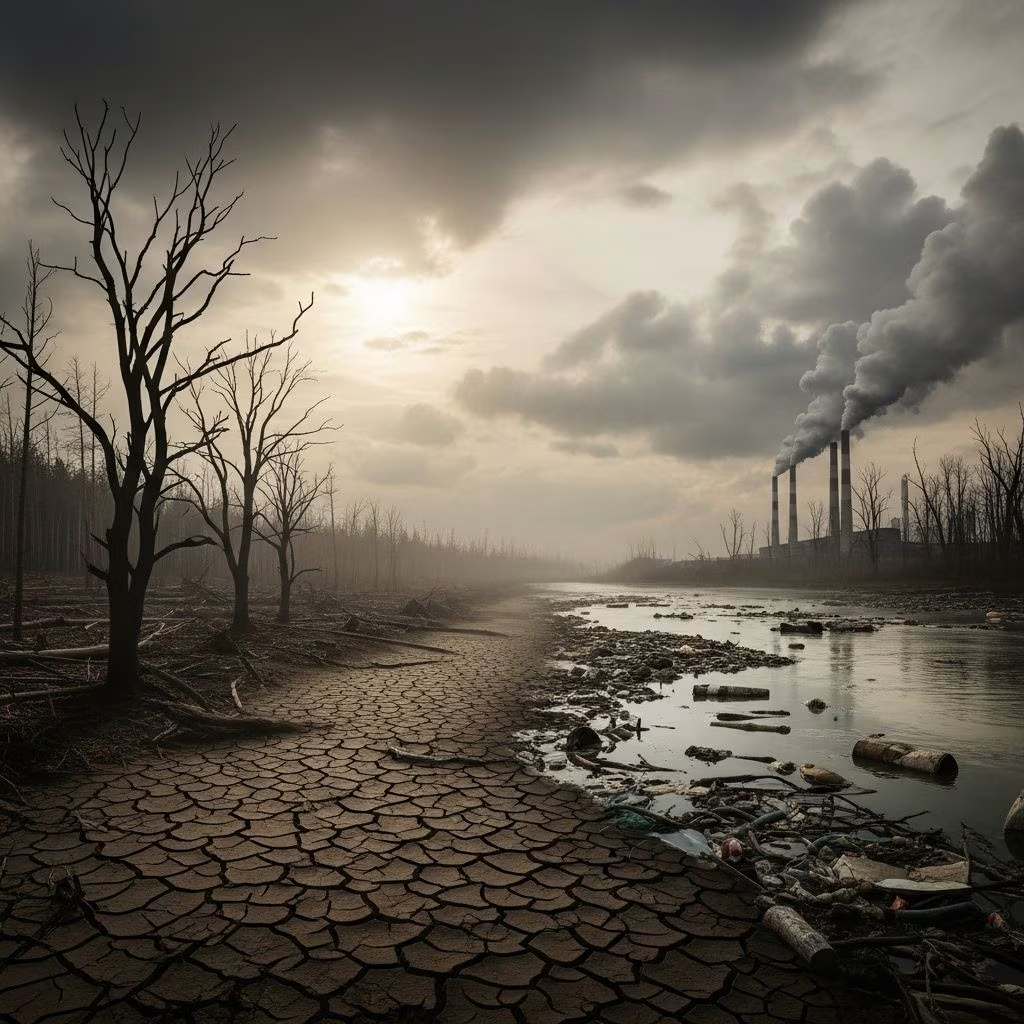
Throughout modern history, humans have perpetuated large-scale destruction of nature—from toxic chemical spills and industrial pollution to deforestation and ecosystem collapse. Despite the severe consequences for both people and the planet, legal accountability for these acts remains weak. The movement to recognize ecocide as an international crime seeks to fill this gap in global justice, aiming not only to punish egregious acts of environmental harm but also to deter them from happening in the first place.
What Is Ecocide?
The term ecocide literally means “killing the environment.” It combines the Greek word oikos (house, home) with the suffix -cide (to kill). Criminalizing ecocide would elevate the gravest acts of environmental destruction to the level of the world’s most serious crimes—like genocide and crimes against humanity—under international law.
Legal Definitions: The Core Elements of Ecocide
- Unlawful or Wanton Acts: Deliberate actions taken with knowledge that there is a substantial likelihood of causing severe and either widespread or long-term environmental damage.
- Severe Damage: Adverse changes, disruption, or harm to any element of the environment—with serious impacts on human life, natural, cultural, or economic resources.
- Widespread Damage: Harm extending beyond a limited area or impacting an entire ecosystem, species, or large human population, sometimes crossing state borders.
- Long-term Damage: Damage that is irreversible or cannot be naturally remedied within a reasonable timeframe—often years, decades, or longer.
As with other international crimes, core elements include intent, knowledge, and impact. Recklessness or “reckless disregard” for environmental damage may also qualify as wanton acts.
The Independent Expert Panel’s Definition
In June 2021, the Independent Expert Panel for the Legal Definition of Ecocide proposed the following language for the Rome Statute (the treaty behind the International Criminal Court, or ICC):
“Ecocide means unlawful or wanton acts committed with knowledge that there is a substantial likelihood of severe and either widespread or long-term damage to the environment being caused by those acts.”
Why Criminalizing Ecocide Matters
The scale and impact of unchecked environmental destruction threaten the stability of natural systems, human societies, and future generations. Criminalizing ecocide addresses multiple urgent issues:
- Accountability for Corporate and State Offenders: Many of the worst cases of environmental devastation are caused by multinational corporations or state actors whose power often shields them from meaningful consequences.
- Protection for Vulnerable Populations: Communities living downstream of oil spills, exposed to toxic waste, or displaced by forest loss suffer disproportionately and often have little legal recourse.
- Precedent in International Law: Other grave crimes—like genocide and crimes against humanity—underscore the importance of protecting fundamental values, including the environment.
- Deterrence: Legal recognition creates a strong incentive for individuals, corporations, and governments to avoid or rethink destructive activities.
- Setting a Global Standard: Enshrining ecocide as a crime lays the foundation for a universal approach, transcending national interests.
How Is Ecocide Treated in Current Law?
Despite growing recognition of ecocide’s harm, it is not yet recognized as a specific international crime. Major treaties like the Rome Statute focus on four international crimes: genocide, crimes against humanity, war crimes, and crime of aggression. However, environmental severity often falls outside their scope unless connected to armed conflict.
Limited Domestic Legislation
Some countries—such as Vietnam, Ukraine, France, Georgia, and Kazakhstan—have national laws criminalizing forms of ecocide or environmental devastation. These domestic statutes often follow broad definitions and are rarely enforced at scale. A truly global legal framework is lacking.
Milestones in the Movement
- 2010: UK barrister Polly Higgins submitted a proposal to the United Nations International Law Commission to recognize ecocide as a “crime against peace” in the Rome Statute.
- 2013: The European Citizens’ Initiative gathered signatures to support adding ecocide as a European crime, opening legislative debates—even if the required threshold for action was not met.
- 2019–2021: The island nations of Vanuatu and Maldives called for ecocide to be added to the ICC’s jurisdiction, followed by the expert panel’s consensus definition submitted in 2021.
High-Profile Cases: When Environmental Destruction Sparks Calls for Justice
- The Ukraine Dam Collapse (2023): The destruction of the Nova Kakhovka dam in Ukraine resulted in catastrophic flooding, ecosystem collapse, destruction of homes, and long-term contamination. International observers labeled it a potential act of ecocide because of the deliberate, large-scale impact on the environment and human life.
- Vietnam War–Agent Orange: The U.S. military’s use of chemicals to destroy vast tracts of Vietnamese jungle caused lasting harm to both ecosystems and generations of residents—an early example fueling the concept of ecocide.
- Deepwater Horizon Oil Spill (2010): The massive oil release impacted marine life, fisheries, and coastal communities along the Gulf of Mexico, demonstrating the global scale of negligent industrial disasters.
Arguments for and Against Making Ecocide an International Crime
| Arguments For | Arguments Against |
|---|---|
|
|
Paths Toward Criminalizing Ecocide Internationally
Introducing ecocide as an international crime requires an amendment to the Rome Statute. Such an amendment needs two-thirds of ICC member states to vote in favor, and then ratification by individual member nations.
Advocates propose a phased approach:
- Build consensus around a clear and practical legal definition.
- Grow support among governments, international organizations, civil society, and indigenous groups.
- Showcase and learn from existing domestic (national) ecocide laws to inform global frameworks.
- Advance model statutes, guidance for prosecutors, and educational campaigns.
- Confront obstacles in international relations, political will, and enforcement capacity.
The Broader Impact of Recognizing Ecocide
Designating ecocide as a crime would send a resounding signal that the planet is not merely a resource to be exploited, but a legal subject worthy of protection. It aligns with the growing concept of “rights of nature,” in which ecosystems or species themselves can be legal persons, deserving defense.
Potential benefits include:
- Preventing future harm by increasing the risks for would-be polluters.
- Increasing public awareness of the gravity of environmental crimes.
- Fostering international cooperation on restorative and preventive justice.
- Empowering affected communities to pursue legal justice at the global level.
Frequently Asked Questions (FAQs)
Q: What specific acts could be prosecuted as ecocide?
A: Examples include large-scale oil spills, deliberate deforestation, destruction of river systems by dams or pollution, chemical contamination, or actions during military conflict that cause lasting environmental devastation.
Q: Why isn’t ecocide already an international crime?
A: Although the concept has existed for decades, political, legal, and economic resistance—along with challenges in global consensus—have slowed its adoption. Only recently has widespread support among legal experts and some governments renewed momentum for legal change.
Q: How is ecocide different from existing environmental regulations?
A: Most national and international regulations address environmental harm through fines or administrative penalties. Ecocide would be on par with crimes like genocide, prosecutable in the International Criminal Court and targeting those responsible for the very worst, most intentional, or reckless acts.
Q: What is the status of the campaign to include ecocide in the Rome Statute?
A: As of 2025, the proposal is gaining attention, with support from multiple countries, NGOs, activists, indigenous peoples, and legal scholars, but formal adoption would require substantial political negotiation and ratification by ICC member states.
Q: What practical impact would this have on corporations?
A: Senior corporate leaders and policymakers could potentially face criminal charges for greenlighting or failing to prevent acts of ecocide, rather than simply paying fines or settlements.
Conclusion: A Pivotal Test for International Justice
From melting glaciers and extinguished species to poisoned rivers and collapsing food systems, unchecked environmental destruction is rapidly reshaping our world. Ecocide is not an abstract or distant risk—it is unfolding in real time. Criminalizing ecocide at the global level could become one of the 21st century’s most important legal reforms, sending a clear signal that the violent destruction of nature is a crime against peace itself.
References
- https://promiseinstitute.law.ucla.edu/project/the-crime-of-ecocide/
- https://my.willamette.edu/site/law-journals/pdf/6/alexandria.pdf
- https://www.stopecocide.earth/legal-definition
- https://en.wikipedia.org/wiki/Ecocide
- https://earth.org/explainer-what-is-ecocide-and-how-is-it-treated-in-international-and-domestic-law/
- https://voelkerrechtsblog.org/ecocide-as-the-fifth-international-crime/
- https://www.humanrightscentre.org/blog/ecocide-fifth-international-crime
- https://climate.law.columbia.edu/events/ecocide-discussion-law-and-ethics
- https://ecocidelaw.com