


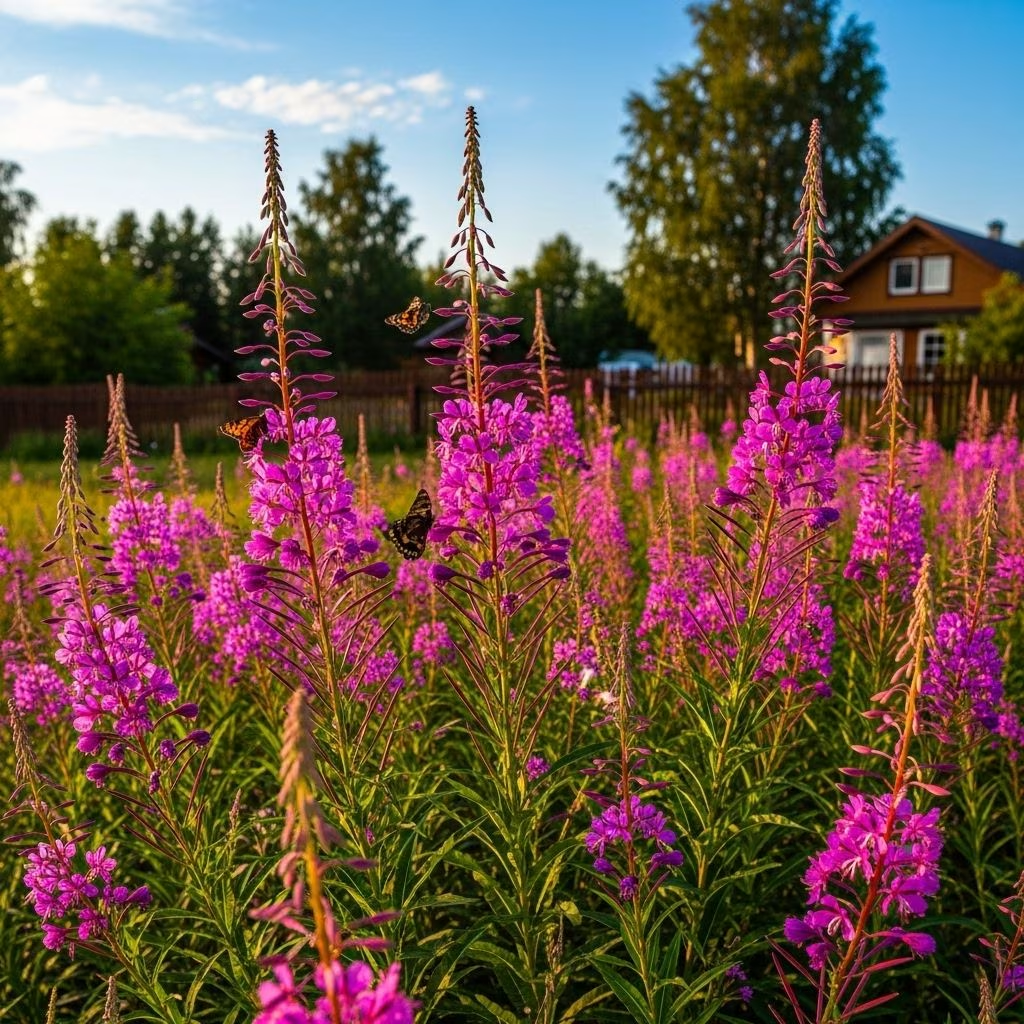
Why You Should Welcome Fireweed to Your Property
Fireweed (Chamerion angustifolium) is more than just a strikingly beautiful wildflower. With brilliant purple-pink blooms and a pioneering spirit, fireweed quickly colonizes disturbed land and plays an essential role in ecosystem recovery. For property owners, gardeners, and anyone with an interest in native plants and conservation, understanding the many benefits of fireweed can help foster healthier, more resilient landscapes.
What Is Fireweed?
Fireweed is a tall, perennial herb native to boreal and temperate regions of the Northern Hemisphere. Renowned for its ability to rapidly reclaim areas disturbed by fire, logging, or other events, fireweed can transform a barren landscape into a vibrant habitat teeming with life. Its name comes from its propensity to thrive after wildfires, but this plant can establish itself in any situation where soil is bare or disrupted.
- Botanical Family: Onagraceae (evening primrose family)
- Growth Habit: Upright, fast-growing perennial
- Height: Commonly 2 to 5 feet, but can exceed 6 feet
- Flowers: Showy, pink to magenta, four-petaled blooms in tall, spiky clusters
Life Cycle and Growth Conditions
Fireweed is a pioneer species, meaning it is among the first plants to grow in an area following a disturbance. Its seeds are highly mobile, equipped with silky hairs that allow them to travel long distances on the wind. These seeds germinate quickly in bare or lightly vegetated soil, while its roots efficiently spread via rhizomes, forming dense colonies that can stabilize erosion-prone land within just a few seasons.
The Ecological Importance of Fireweed
Fireweed delivers a range of environmental benefits that extend well beyond its visual appeal:
- Soil Stabilization: The extensive root network of fireweed binds soil, preventing erosion and helping to restore ecosystem structure after disturbances like fire, logging, or construction.
- Biodiversity Support: Its mass flowering provides a crucial nectar source for bees, butterflies, and other pollinators at times when few other flowers are blooming.
- Wildlife Forage: Young shoots and leaves offer valuable browse for deer, moose, and other mammals, while seeds and foliage feed birds and insects.
- Succession Facilitation: Fireweed’s presence helps prepare the ground for slower-growing shrubs and trees, jump-starting natural succession and the return of a healthy, functioning ecosystem.
Fireweed: A Post-Fire Superstar
Wildfires have shaped ecosystems for millennia, and fireweed has adapted perfectly to seize these opportunities. In the aftermath of a fire, fireweed seeds rain down in large numbers, germinate within days, and quickly blanket the ground. This protects exposed soil, creates habitat, and beckons pollinators, birds, and mammals back to a recovering landscape. Fireweed’s rapid growth in burned areas often paves the way for regrowth of native shrubs and trees, setting the stage for a resilient ecosystem comeback.
Fireweed’s Role in Wildlife Habitat
By welcoming fireweed, property owners and land managers offer direct benefits to wildlife across multiple levels of the food web.
- Pollinators: Fireweed’s abundant nectar is a lifeline for native bees, honeybees, bumblebees, and butterflies, especially in late summer when other sources may be scarce.
- Birds: Several bird species rely on fireweed for seeds and cover. Hummingbirds visit for nectar, and finches and sparrows feed on seeds in fall and winter.
- Mammals: Deer and moose browse young shoots and leaves, while rodents may collect seeds.
Its early presence after a disturbance means that while other food sources are still scarce, fireweed provides critical nourishment to keystone species, helping an entire ecosystem begin to recover.
Fireweed and Land Recovery: How It Heals Disturbed Sites
When land is left disturbed—whether from natural causes like wildfire, human activities such as logging, or even construction—there is an urgent need for plants that can stabilize soil and kick-start recovery. Fireweed excels at this task and is often one of the first plants to appear in the following scenarios:
- After Wildfire: Fireweed colonizes burned ground almost immediately, preventing erosion and providing cover within the first growing season.
- On Cleared Land: Areas cleared for agriculture, roads, or forestry often see fireweed as one of the earliest regrowth species.
- Construction and Urban Edges: It stabilizes disturbed soil along roadsides, construction sites, and vacant urban lots, encouraging native plant succession.
Fireweed’s hearty underground rhizomes enable it to thrive in poor, degraded soils, helping to rebuild organic matter and soil structure from the ground up.
The Floral Display: Attracting Humans and Wildlife Alike
Fireweed is not just a boon for wildlife; it’s an asset to the human eye. Its tall, spiky clusters of purple-pink flowers are recognizable from great distances and can transform an otherwise barren landscape into a sea of color. This eye-catching display also brings people into closer contact with recovering ecosystems, fostering a greater appreciation for nature’s resilience and beauty.
- Blooms appear from late spring through late summer, often persisting well into fall depending on the climate.
- Fireweed stands out against charred or bare earth, symbolizing hope and renewal in landscapes that have recently undergone change or trauma.
Managing Fireweed on Your Property
Many property owners might mistake fireweed’s robust growth habit for that of an aggressive weed. While it can spread rapidly in disturbed sites, fireweed’s ecological benefits far outweigh any concerns about its vigor. In most settings, it does not persist once shade returns, instead gracefully yielding to shrubs and trees as succession progresses.
Benefits of Allowing Fireweed:
- Requires Minimal Maintenance: Fireweed grows without the need for fertilizers, irrigation, or pesticides, thriving in areas where many garden plants would struggle.
- Improves Soil: Its deep roots help break up compacted soils and add organic matter as plants die back each year.
- Outcompetes Problematic Invasives: Swiftly colonizing bare soil, fireweed can help block the establishment of more harmful invasive species.
If you wish to establish fireweed, sow seeds directly onto bare or lightly disturbed soil in fall or early spring. For areas where natural succession is advancing or where shade increases, fireweed will typically decline on its own, requiring no special controls.
Human Uses of Fireweed
For centuries, people have appreciated and made use of fireweed:
- Traditional Food: Young shoots and leaves are edible and have been foraged by Indigenous peoples for generations, though they should be cooked to remove bitterness.
- Herbal Remedies: Fireweed tea is made from the leaves, traditionally used to soothe digestive ailments.
- Honey Production: Fireweed nectar yields high-quality honey, sought after by beekeepers for its flavor and color.
- Craft and Fiber: Older stems can be processed for fiber, and the flowers are sometimes used in natural dyes.
While fireweed is not a staple crop or major commercial product, its contributions to food security, traditional medicine, and land management are recognized in communities across its range.
Fireweed Compared to Common Invasive Weeds
| Aspect | Fireweed | Typical Invasive Weeds (e.g., Canada thistle) |
|---|---|---|
| Origin | Native to North America and Eurasia | Non-native, introduced from other continents |
| Ecological Role | Pioneer, assists native plants, improves soil | Displaces native plants, degrades habitat |
| Benefit to Wildlife | High – feeds pollinators, birds, mammals | Low – few native species benefit |
| Persistence | Declines as shade returns, gives way to succession | Often dominates, resists natural succession |
| Management | Generally self-limiting; little concern | Can require intensive, ongoing management |
Unlike aggressive invasives, fireweed harmonizes with native plant communities and supports ecosystem restoration.
How to Encourage Fireweed on Your Land
- Disturb Soil Lightly: If seeking to encourage fireweed, lightly disturb soil in late fall or early spring to mimic natural conditions.
- Avoid Aggressive Mowing: Fireweed requires time to flower and set seed—avoid mowing during its blooming period (late spring to early fall).
- Refrain from Herbicides: These can hinder establishment and harm pollinators.
- Allow Natural Succession: Let fireweed coexist with other native plants. It will not outcompete mature shrubs or trees and declines as they shade the ground.
By understanding and working with fireweed’s life cycle, landowners can foster greater biological diversity and improve land resilience after disturbance, all with minimal intervention.
Common Misconceptions About Fireweed
- Misconception: Fireweed is a pesky weed that should be removed.
Reality: Unlike many problematic weeds, fireweed improves soil, aids succession, and supports wildlife; it is not invasive and will naturally diminish as tree cover returns. - Misconception: Fireweed spreads forever and takes over.
Reality: Fireweed aggressively fills open, disturbed land but relinquishes its hold as shrubs and trees return, disappearing naturally as the ecosystem matures. - Misconception: It harms gardens or crops.
Reality: In cultivated settings, fireweed is rarely persistent or problematic, as it has little tolerance for tillage and competition with more established perennials.
Benefits for Gardeners and Landowners
- Low-maintenance beauty for wildflower gardens, meadows, and naturalized areas
- Natural pollinator support when few other flowers are blooming
- Wildlife habitat and food source, especially in disturbed corners or wild properties
- Erosion control and fast soil stabilization following construction, fire, or timber harvest
Embracing fireweed means adopting a more sustainable, biodiverse approach to property management, welcoming nature’s own restoration experts to work for you.
Frequently Asked Questions (FAQs)
Q: Does fireweed become invasive like other weedy plants?
A: No, while fireweed rapidly colonizes disturbed ground, it is a native species and yields territory to shrubs and trees as the ecosystem recovers. It does not exhibit the damaging persistence of many invasive weeds.
Q: Will fireweed dominate my garden forever if I let it seed?
A: Fireweed flourishes where soil is bare or disturbed but generally disappears as grass, shrubs, or tree cover closes in. It will not outcompete established perennial beds or mature forest settings.
Q: Is fireweed safe and beneficial for native pollinators?
A: Yes, fireweed is an outstanding nectar source for many native bees, butterflies, and other pollinators at key times of year when alternatives are scarce.
Q: How can I encourage fireweed for soil restoration or pollinator support?
A: Allow some light soil disturbance, avoid mowing during its bloom cycle, and forgo herbicides. Fireweed is hardy, self-seeding, and needs little care once established.
Q: Can fireweed improve the speed of ecosystem recovery after major disturbances?
A: Absolutely. As a true pioneer species, fireweed stabilizes exposed earth, encourages wildlife return, and fosters the succession of more permanent native vegetation after fire, clearing, or construction.


