Introduction: The Curious Sight of Goats in Trees
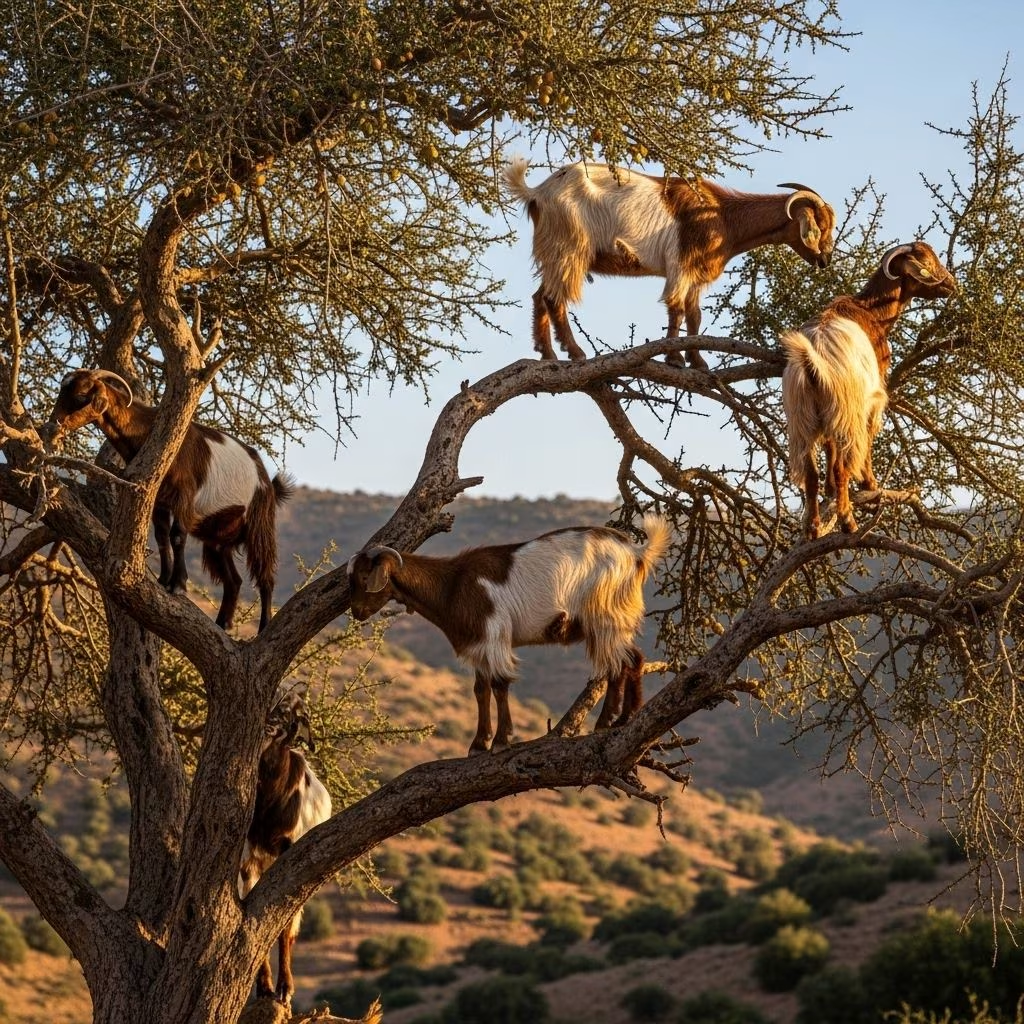
In the heart of southwestern Morocco, a surreal and enchanting scene unfolds each year: dozens of goats perched on the branches of thorny argan trees (Argania spinosa), sometimes standing high above the ground. At first glance, these nimble climbers seem more like creatures of myth than reality. Yet this behavior, honed by generations of survival in harsh environments, reveals a rich and complex relationship between animal, plant, and people.
Argan Trees: The Life Source of the Region
The argan tree is endemic to Morocco and a lifeline for both the landscape and its inhabitants. These gnarled trees withstand blistering heat and arid conditions, forming dense forests that help prevent desertification and sustain rural economies. Their most famous product is argan oil, a golden liquid prized for culinary uses and celebrated worldwide for its nourishing qualities in cosmetics.
- Location: Argan trees are native exclusively to southwestern Morocco, forming what UNESCO has declared a biosphere reserve.
- Uses: The wood is valuable as fuel and building material, while the leaves, fruit pulp, and seeds support livestock and commerce.
- Ecological importance: Argan forests create a buffer against the encroaching Sahara Desert, stabilizing local soils and providing shelter for wildlife.
Goats and Argan Trees: A Symbiotic Dance
While goats have a reputation for exploring any landscape, their relationship with the argan tree is uniquely intimate. When ground forage becomes scarce—especially during the dry summer and autumn months—Moroccan goats adapt by leaping, scrambling, and even balancing on the narrowest branches in search of ripe argan fruit. This dietary flexibility is key to their survival.
- Goats climb up to 30 feet (9 meters) high into the trees.
- They spend up to 74% of their foraging time in the treetops during autumn when other food sources diminish.
- Local herders sometimes train goat kids to climb and prune trees to make climbing easier.
How—and Why—Do Goats Climb Trees?
The answer rests in both necessity and remarkable anatomy. Goats in drought-stricken or grass-poor areas, like southern Morocco, must innovate to survive.
- Selective foraging: Goats are agile, natural climbers, using strong hind legs and flexible hooves to navigate uneven terrain and even tree branches.
- Argan fruit attraction: The fruit of the argan tree—a pulpy, olive-like treat—becomes irresistible when greener forage disappears.
- Training by herders: Herders sometimes prune trees and encourage kids to climb, carrying young goats into the branches to help them learn early.
According to firsthand accounts and ecological studies, the spectacle is both a quirky adaptation and a carefully managed practice. Farmers entice goats with fruit and grain and, over months of repetition, condition them to stay put for longer periods—creating not only a novel foraging method but also a reliable tourist attraction.
The Goats’ Climbing Season and Behavior
Observations reveal that the most intense tree-climbing activity occurs during periods of drought and food scarcity—typically late summer through autumn. During these lean months:
- Goats climb and feed in trees for hours, sometimes in large groups, stripping leaves and fruit from the branches.
- Some goats become so practiced that they appear completely at ease even among precarious, thorny limbs.
- After gorging themselves, goats often rest among the branches, occasionally even ruminating while perched high above the ground.
Seed Spitting: A Unique Role in Argan Tree Reproduction
Beyond their athletic antics, Morocco’s tree-climbing goats play a surprising role in sustaining the argan forests. Traditionally, ecologists believed ruminants like cows and goats dispersed seeds via defecation. However, research on the Moroccan herds discovered an even more direct method: seed spitting.
How the Seed-Spitting Works
- Goats eat the fruit, not the seed: The goats are drawn to the sweet, pulpy flesh but ignore the hard inner seed (the future tree nut).
- Ruminant digestion: Goats have a complex four-chambered stomach. Food is fermented and regurgitated as cud, then chewed again, which allows goats to spit out the tough argan seeds during rumination—sometimes hours or days after ingesting the fruit.
- Wider dispersal: By the time the goat spits the seed back to the ground, it is often some distance away from the parent tree, spreading argan seeds to new locations where they are more likely to germinate.
- Cleaner seeds: Unlike seeds passed through the digestive tract, spit-out nuts are stripped of their pulp, making them less susceptible to mold and ready for germination.
Table: Goat Seed Dispersal vs. Traditional Seed Dispersal
| Method | Description | Key Advantages |
|---|---|---|
| Goat Seed Spitting | Seeds are spit out after cud-chewing |
|
| Standard Animal Defecation | Seeds excreted after full digestion |
|
The Cultural and Economic Ripple Effects
In recent decades, the interplay between goats, trees, and people has grown even more significant. The worldwide surge in demand for argan oil—often promoted as ‘liquid gold’—fuels livelihoods and empowers rural Moroccan women who often run argan oil cooperatives. At the same time, the sight of tree-climbing goats has become a cherished feature for eco-tourists, photographers, and travelers seeking the extraordinary.
- Enterprising farmers have crafted new tourism experiences, charging for photo opportunities with goats in trees.
- Argan oil: Extracted from the seeds, this oil is vital for local economies, supporting cooperative networks and providing sustainable work.
- Because goats help spread argan seeds, they are indirectly supporting the long-term production of both oil and wood.
The Environmental Cost: A Delicate Balance
For all their benefits, Morocco’s goat herds present challenges as well. Overgrazing, when uncontrolled, can threaten argan saplings and prevent forest regeneration. There’s a fine line between beneficial seed dispersal and excessive browsing that damages young trees. Responsible management and rotational grazing practices are critical for balancing ecological health and economic need.
- Rural communities must find ways to limit goat densities and seasonally restrict grazing areas to prevent long-term damage.
- Tourism-driven goat displays occasionally prompt ethical concerns regarding animal welfare and sustainability.
- Conservation projects increasingly focus on educating herders, promoting sustainable goat management, and replanting argan forests through community-driven projects.
Frequently Asked Questions (FAQs)
Q: Why do goats climb argan trees in Morocco?
A: Goats climb argan trees mainly to access the savory fruit, especially during dry periods when grass and other forage are in short supply. Over generations, they have developed impressive climbing skills and can reach fruit as high as 30 feet above the ground.
Q: How do goats contribute to argan tree reproduction?
A: As goats consume the argan fruit, they spit out the hard seeds after cud-chewing, dispersing them over a wide area. This seed-spitting activity helps argan trees colonize new ground and improves seedling survival by moving them away from the parent tree.
Q: Is goat tree climbing unique to Morocco?
A: While goats are versatile climbers, the large-scale, communal tree climbing seen in southwestern Morocco’s argan forests is a rare and iconic phenomenon, largely due to the landscape and the value of the argan tree’s fruit.
Q: Do farmers train their goats to climb trees?
A: Yes, in many cases herders actively encourage and train goats to climb trees by pruning branches, placing young kids on lower limbs, or building small platforms. Over months of repetition, goats learn to associate the trees with food and photo opportunities.
Q: Does goat climbing harm the argan trees?
A: When carefully managed, goat foraging can benefit argan forests by aiding seed dispersal. However, overgrazing and excessive climbing can damage young trees or reduce forest regeneration, so sustainable herd management is essential.
Conclusion: More than Just a Quirk
The story of Morocco’s tree-climbing goats is one of adaptability, resilience, and unexpected interdependence. From satisfying their hunger to dispersing seeds vital for the health of the argan forests, goats have stepped into a unique ecological niche. As the world looks on in awe, scientists, conservationists, and local communities continue to explore how best to preserve this remarkable partnership between animal and tree, ensuring that Morocco’s sky-bound goats and golden argan forests endure for future generations.
References
- https://www.mentalfloss.com/article/501268/tree-climbing-seed-spitting-goats-help-trees-grow-new-places
- https://esa.org/esablog/2017/05/24/tree-climbing-goats-disperse-seeds-by-spitting/
- https://www.discovermagazine.com/tree-climbing-goats-keep-the-desert-gold-growing-297
- https://bylandersea.com/2022/10/seeing-goats-in-argan-trees-in-morocco/
- https://www.atlasobscura.com/articles/morocco-argan-oil-trees-spitting-goats