Introduction
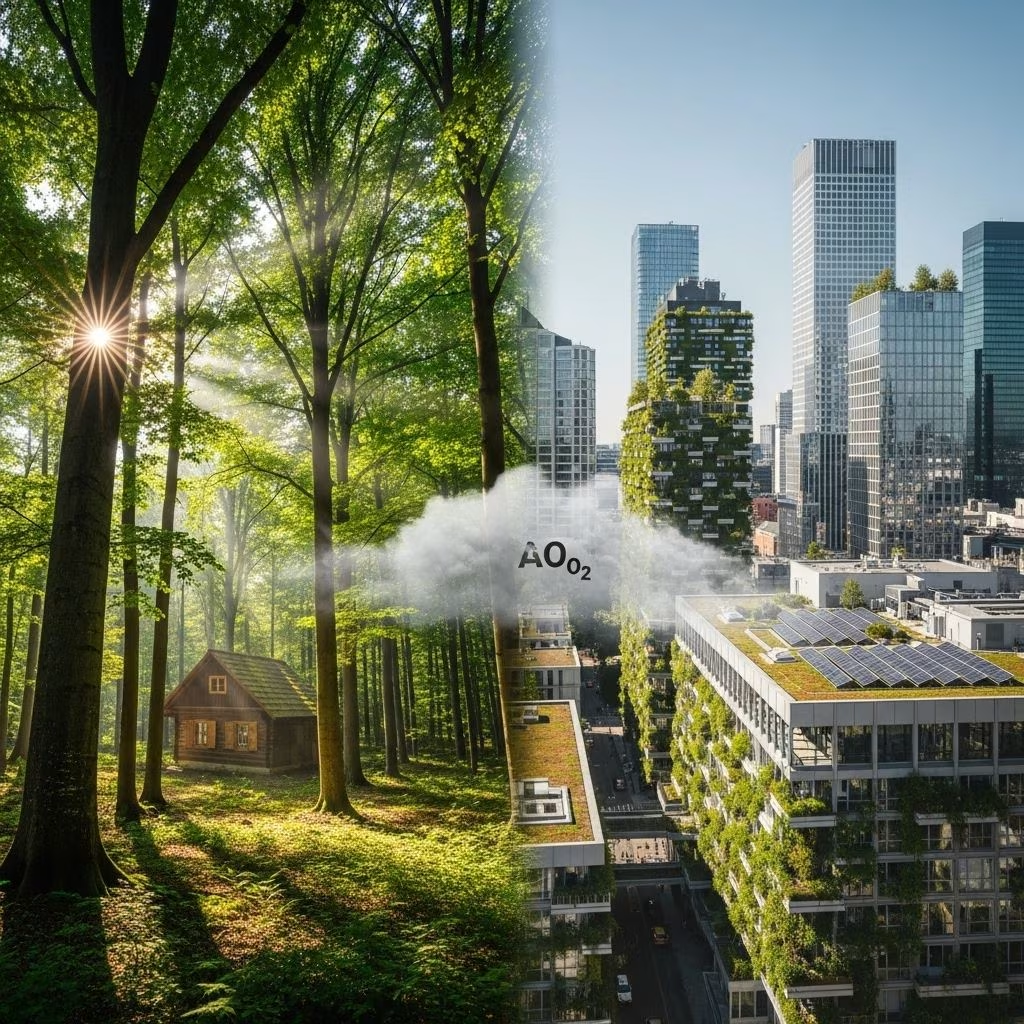
For years, conventional wisdom has held that building with wood, expanding forests, and investing in carbon offsets were straightforward ways to fight climate change. Trees absorb CO₂, wood construction stores carbon, and reforestation projects promise to undo past damage. But mounting research and evolving carbon accounting standards are turning these assumptions on their head—revealing that not all carbon is equal, and not all strategies are effective.
The Changing Landscape of Carbon Accounting
Climate policy has long relied on oversimplified carbon math. The idea that a ton of carbon sequestered equals a ton of emissions avoided is increasingly challenged. The latest thinking emphasizes that the timing, location, and permanence of carbon storage matter just as much as the quantity. This shift has profound implications for how we design buildings, manage forests, and invest in climate solutions.
Why Mass Timber Isn’t the Silver Bullet We Hoped
Mass timber has been hailed as a sustainable alternative to steel and concrete, with claims that it stores carbon for the life of the building. However, critics argue this view is overly optimistic:
- Carbon Loss in Processing: Only about half the carbon in a harvested tree ends up in mass timber; the rest is lost to branches, roots, sawdust, and waste, much of which is burned or decomposes, releasing CO₂ back into the atmosphere.
- No Net New Storage: Trees in the forest are already storing carbon. Harvesting them halts further sequestration, and the carbon stored in wood products is merely a transfer, not a net increase.
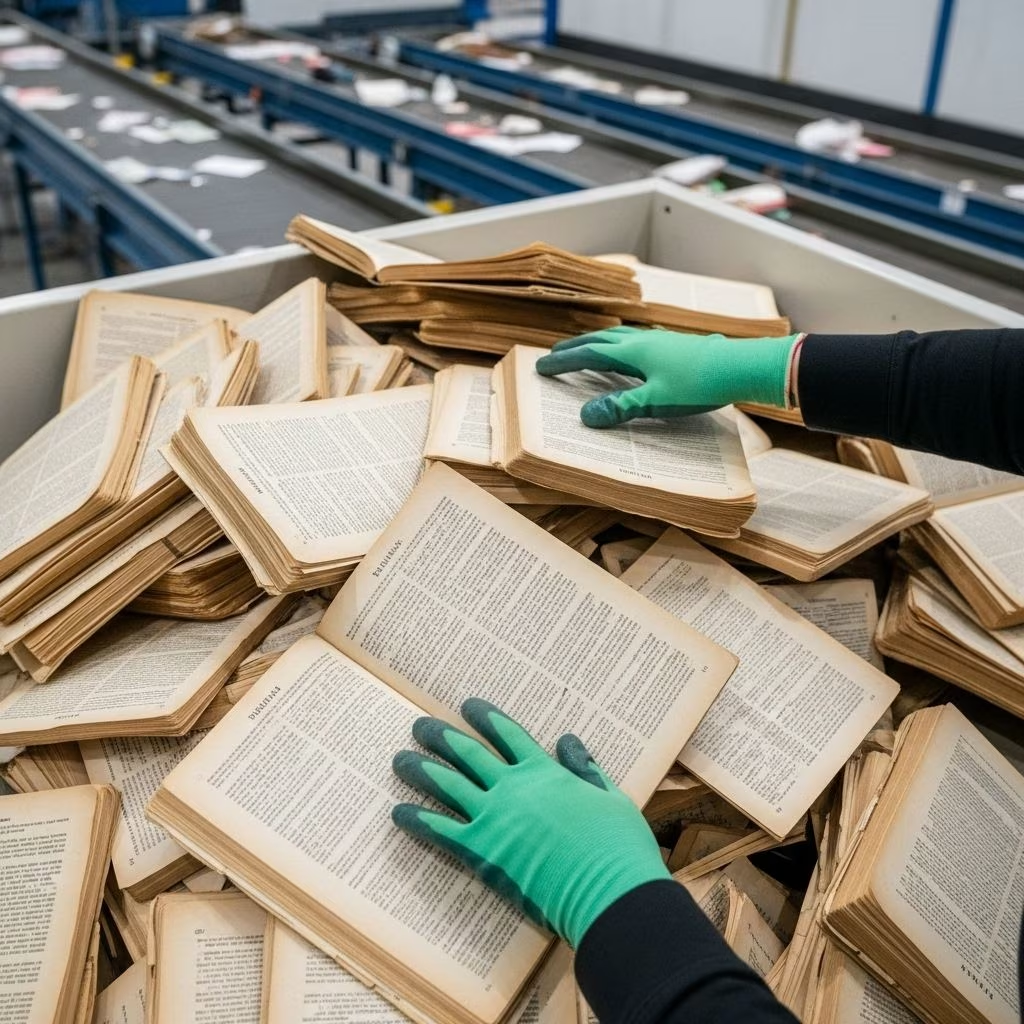
- Short Lifespan of Wood Products: Much harvested wood becomes paper, furniture, or other goods with short lifecycles. When these products are discarded, their carbon is released relatively quickly.
Forest Dynamics: The Reality of Carbon Sequestration
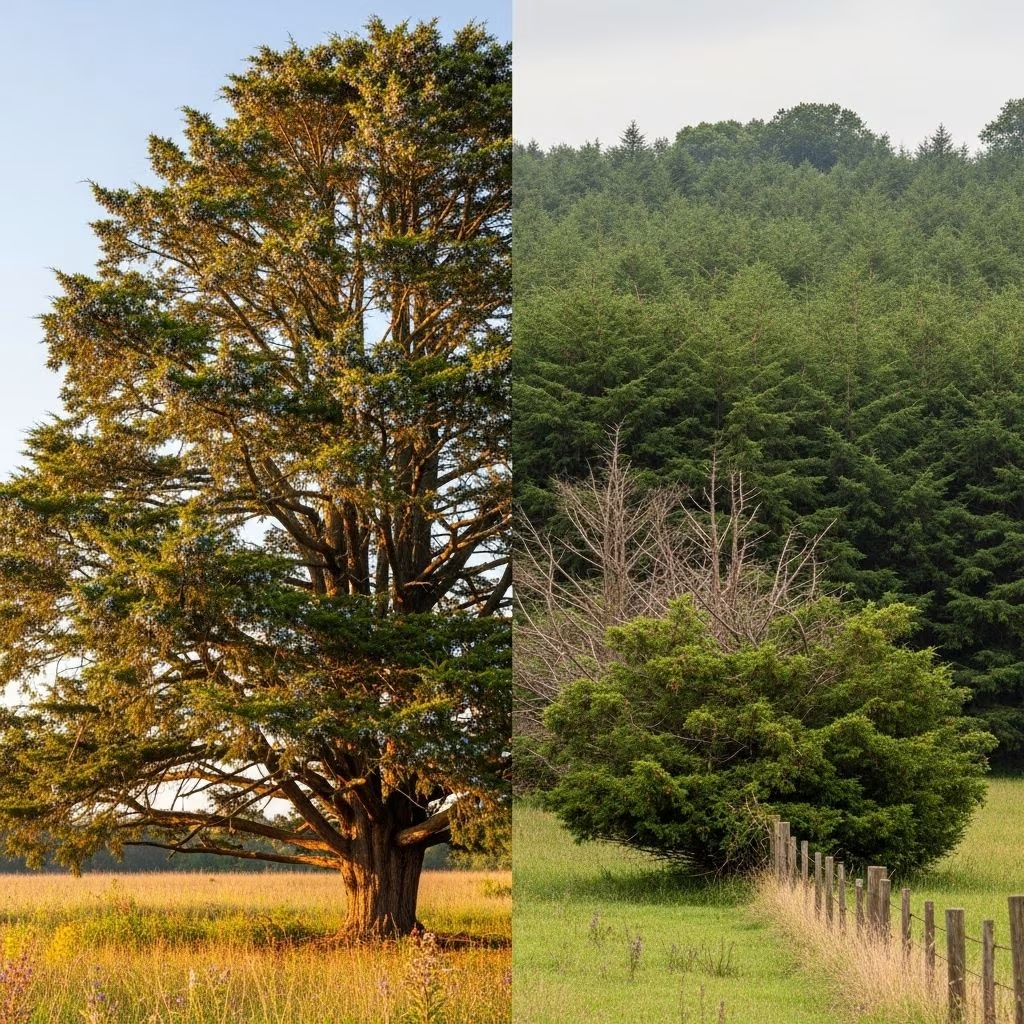
Forests are complex, living systems. Their ability to sequester carbon depends on species, age, climate, and management—not just on the number of trees planted.
- Growth Rates Matter: Fast-growing species may absorb carbon quickly but store less over the long term compared to slower-growing, longer-lived trees.
- Maturity and Saturation: Young forests sequester carbon rapidly, but mature forests reach a point where growth and decay balance out, resulting in little net additional sequestration.
- Risk of Loss: Forests face threats from fire, disease, and logging. Carbon stored in trees can be released suddenly and unpredictably, undermining the stability of forest-based carbon offsets.
The Problem With Carbon Offsets
Carbon offset projects—especially those based on tree planting or avoided deforestation—are under increasing scrutiny:
- Permanence Issues: Trees can be cut down, burned, or die, negating the supposed carbon benefit. There’s no guarantee that a forest planted today will still be standing in 50 years.
- Additionality Challenges: Many offset projects claim to prevent deforestation that wasn’t actually going to happen, or to plant trees that would have grown anyway.
- Leakage: Protecting one forest may simply shift deforestation to another location, with no net decrease in emissions.
Revisiting the “Planting Trees Will Save Us” Narrative
The idea that mass tree-planting can offset our carbon emissions is appealing, but the reality is more complex:
- Scale and Feasibility: While studies suggest planting billions of trees could theoretically capture significant carbon, the logistics—land availability, cost, maintenance, and land rights—are daunting.
- Time Lag: It takes decades for trees to reach maturity and achieve meaningful carbon sequestration. In the meantime, emissions continue to rise.
- Ecosystem Trade-Offs: Not all land is suitable for forests. Planting trees in grasslands or peatlands can actually reduce carbon storage and harm biodiversity.
Building Materials: A Deeper Look
Choosing between wood, steel, and concrete is not as simple as comparing their upfront carbon footprints:
| Material | Carbon Storage | Emissions in Production | Lifespan | End-of-Life |
|---|---|---|---|---|
| Mass Timber | Moderate (transient) | Low | Decades | Carbon released if burned or decomposed |
| Steel | None | High | Centuries | Recyclable |
| Concrete | None | Very High | Centuries | Landfill or downcycling |
The real challenge is to reduce emissions across all materials, improve recycling, and extend the lifespan of buildings.
Carbon in the Atmosphere: It’s All the Same, Right?
Climate models often treat all carbon dioxide molecules as equal, whether from burning fossil fuels or burning wood. But in practice, the timing and origin matter:
- Biogenic vs. Fossil Carbon: Carbon from recently grown biomass (“biogenic”) is part of a cyclical, short-term loop. Fossil carbon, once released, adds to the total pool for millennia.
- Atmospheric Impact: The atmosphere doesn’t distinguish between sources of CO₂—but the speed and permanence of release do affect the climate over different timescales.
Discounting the Future: The Ethics and Economics of Carbon Storage
Climate economics often apply a “discount rate” to future carbon storage—valuing emissions reductions today more than those promised in the future. This has important implications for forestry and offset projects:
- Present vs. Future Benefits: A ton of carbon stored in a tree planted today is worth less, in economic terms, than a ton of emissions avoided right now.
- Policy Implications: This discounting can make forest-based solutions seem less attractive compared to direct emissions cuts.
Frequently Asked Questions (FAQs)
Q: Is building with wood better for the climate than using steel or concrete?
It’s complicated. Wood can store some carbon, but only if forests are managed sustainably and wood products have long lifespans. Much of the carbon in harvested trees is lost during processing. Real benefits depend on the full lifecycle and what happens to the wood at the end.
Q: Can planting trees really offset my carbon footprint?
Tree planting can help, but it’s not a silver bullet. It takes decades for trees to absorb significant carbon, and there’s no guarantee the carbon will stay stored. Reducing emissions directly is always more effective in the short term.
Q: Are carbon offsets based on forests reliable?
Many forest offset projects suffer from issues of additionality, permanence, and leakage. While they can play a role, they should not be a substitute for reducing emissions at the source.
Q: Why does the origin of carbon matter if the atmosphere can’t tell the difference?
While the atmosphere sees all CO₂ as the same, the timing and permanence of release matter for climate impact. Fossil carbon adds to the total carbon pool, while biogenic carbon is part of a shorter cycle—though both contribute to warming while in the air.
Toward a More Nuanced Carbon Strategy
The lesson is clear: there are no easy answers in carbon management. Relying on mass timber, reforestation, or offsets alone is insufficient. Effective climate action requires:
- Reduce emissions first: Prioritize direct reductions in fossil fuel use across all sectors.
- Improve material efficiency: Design buildings to last longer, use less material, and enable recycling.
- Protect existing ecosystems: Old-growth forests, peatlands, and wetlands are irreplaceable carbon sinks—avoid converting them to other uses.
- Invest in innovation: Support research into low-carbon concrete, green steel, and genuinely carbon-negative technologies.
Conclusion
Conventional wisdom on carbon is no longer enough. As our understanding grows, so must our strategies. The carbon cycle is not a simple ledger—it’s a dynamic, interconnected system with no quick fixes. Climate action demands a nuanced, multi-faceted approach that looks beyond easy answers to the deeper, systemic changes society must make.
References
- https://www.greenbuildingadvisor.com/article/how-good-is-wood
- https://stonepierpress.org/goodfoodnews/plantatree
- https://lloydalter.substack.com/p/architects-and-engineers-like-steve
- https://sloclimatecoalition.org/tech-guys-are-tree-huggers-too/
- https://www.iiisci.org/journal/PDV/sci/pdfs/IP173LL23.pdf