


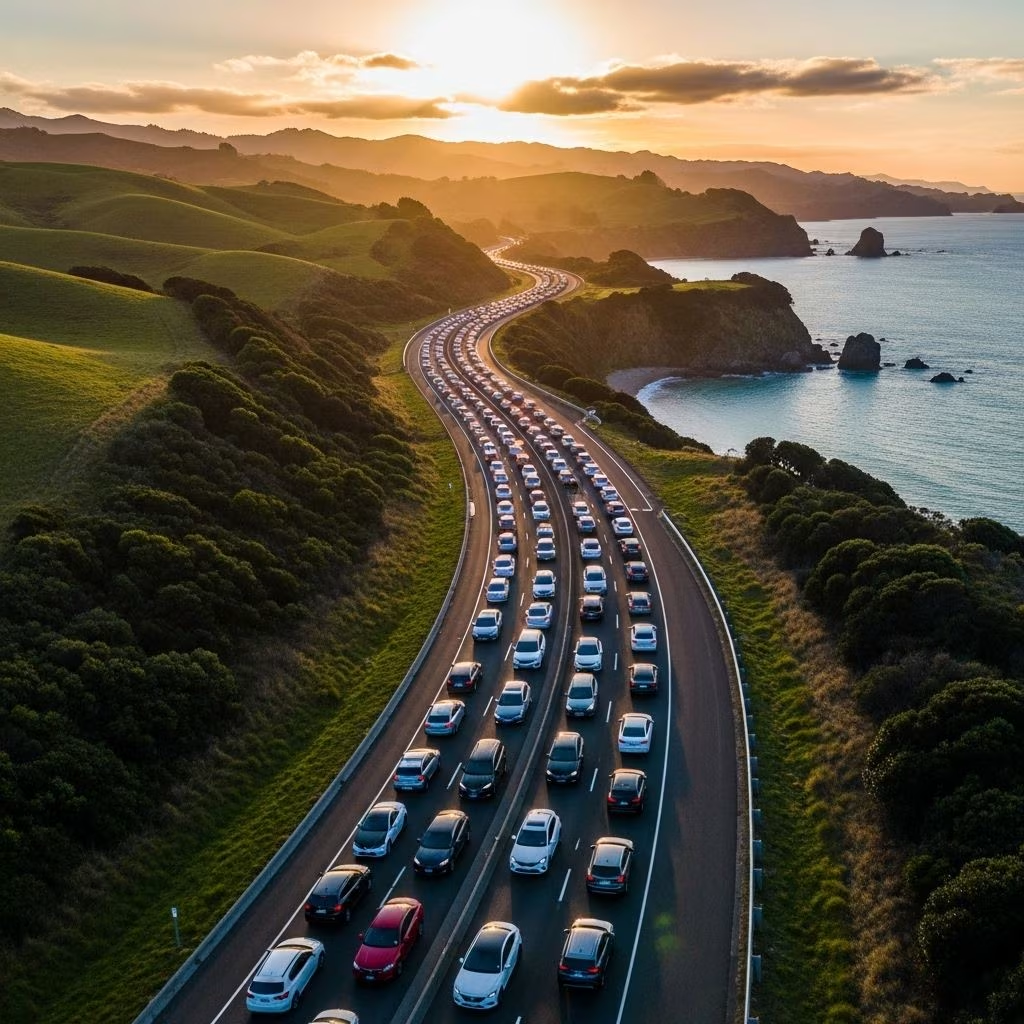
Why New Zealand Leads the World in Car Ownership
Among the world’s nations, one stands out with a truly unique distinction: New Zealand boasts more cars than people. With nearly nine vehicles for every ten residents, this small island nation has surpassed all others in per capita car ownership, even outpacing automotive juggernauts like the United States. In this article, we explore why New Zealand has achieved this unusual status, what it reflects about transportation worldwide, and the broad implications for its society and environment.
New Zealand’s Surprising Statistic: More Cars Than People
According to the most recent data, New Zealand is the only country in the world where the average is more than one car per person. In practical terms, this equates to more registered vehicles than there are inhabitants—an automotive milestone no other nation has matched.
In statistical terms, recent figures report over 869 registered cars per 1,000 individuals in New Zealand, exceeding the population by a notable margin. This measure includes both privately owned and commercial vehicles, reflecting the country’s strong cultural connection to cars2.
The Global View: How Does New Zealand Compare?
New Zealand’s achievement is especially remarkable given global vehicle ownership patterns. Most developed nations—such as the United States, Canada, and many European countries—have high car ownership rates, but none breach the threshold of more cars than people. For context:
- United States: Approximately 860 cars per 1,000 people (0.86 cars per person)
- Canada: 707 cars per 1,000 people
- Poland: Highest in Europe at 761 cars per 1,000 people
- Australia: 737 cars per 1,000 people
- Japan: 612 cars per 1,000 people
- India: Far lower, with only 33 cars per 1,000 people
| Country | Cars per 1,000 People | Cars per Person |
|---|---|---|
| New Zealand | ~869 | 0.87 |
| United States | ~860 | 0.86 |
| Poland | 761 | 0.76 |
| Australia | 737 | 0.74 |
| Japan | 612 | 0.61 |
| India | 33 | 0.03 |
These figures highlight how unusual New Zealand’s car ownership truly is1.
Why Does New Zealand Have So Many Cars?
Several factors have combined to make New Zealand the world’s car ownership leader:
- Low Population Density and Rural Geography: As an island nation with vast rural areas and sparse population outside its cities, public transportation is rarely practical, making personal vehicles almost indispensable.
- Economic Preferences and Deregulation: A wave of deregulation in the 1980s allowed for a flood of used car imports from Japan. This not only kept vehicle prices low but also made a diversified, affordable used car market available to nearly everyone.
- Car Culture: Owning a car is a deeply embedded aspect of New Zealand’s lifestyle, reflecting historic ties to outdoor recreation and freedom of movement.
- Limited Public Transportation Options: Outside of Auckland, Wellington, and Christchurch, public transit coverage and frequency are limited, making car ownership almost a necessity.
- Household Car Multiplicity: It’s common for New Zealand families to own two or even three cars, especially where parents and children commute separately or live semi-rural lifestyles.
All these factors have created an environment where the average household owns more than one vehicle, even among young people and retirees. Notably, a significant portion of cars on the road are used imports, mainly from Japan, reflecting a national preference for affordability and choice2.
New Zealand’s Vehicle Mix: Old, New, and Imported
New Zealand’s automotive landscape is defined by a dynamic blend of new and secondhand cars, with a strong emphasis on imports:
- High Proportion of Used Imports: Due to relaxed import laws and proximity to Japan—a major producer of right-hand drive cars—most of New Zealand’s vehicles are secondhand imports. Japanese cars dominate, with brands like Toyota and Nissan making up a large share of the national fleet.
- Aging Car Fleet: The ubiquity of inexpensive used cars has also led to an older average vehicle age compared to other developed nations. Many New Zealand cars remain in service well beyond the global average lifespan for personal vehicles.
- Lag in Electric Vehicle Adoption: While countries like Norway lead the world in electric vehicle uptake, New Zealand’s EV fleet remains relatively small. Nevertheless, recent policy changes and consumer incentives are expected to boost EV adoption in the coming years.
The Global Context: Vehicle Ownership Trends Around the World
Globally, car ownership is shaped by economic status, infrastructure, regulation, and culture. Global vehicle density averages around 203 cars per 1,000 people, varying greatly between continents and countries:
- North America: Leads regions with high ownership, especially in the U.S. and Canada.
- Europe: Boasts strong ownership rates, particularly in Italy, Poland, and Luxembourg. Microstates such as San Marino and Andorra exhibit even higher ratios, though with much smaller populations.
- Oceania: New Zealand and Australia are regional leaders, with New Zealand unique in surpassing the one-car-per-person mark.
- Asia: Varied ownership—high in Japan and South Korea, much lower in populous nations like China and India, though these are experiencing rapid growth.
- Africa: The lowest region for car ownership, with many countries below 50 cars per 1,000 people.
Among rapidly developing nations, vehicle ownership is growing quickly as economic prosperity increases. Vietnam, for example, has seen car ownership rise by as much as 17% annually since 2015.2
Implications for Society: The Cost of Car Dependency
New Zealand’s distinction comes with a series of social, economic, and environmental consequences. Both positive and negative impacts are visible across the country:
- Mobility and Economic Accessibility: High car ownership grants individuals great flexibility and autonomy, crucial in areas poorly served by transit.
- Congestion in Urban Centers: In growing cities like Auckland and Wellington, high car density translates directly to traffic congestion, commuting delays, and increased stress for drivers.
- Financial Burden for Families: Multi-car households bear significant costs for fuel, insurance, registration, maintenance, and parking.
- Public Health Concerns: Urban air pollution, traffic accidents, and the discouragement of walking and cycling are associated health risks of excessive vehicle use.
Environmental Considerations: Challenges for a Green Nation
New Zealand is globally renowned for its natural beauty and environmental consciousness, yet its high car ownership rate poses several challenges:
- Greenhouse Gas Emissions: The transport sector is a major contributor to New Zealand’s carbon footprint. Most cars run on petrol or diesel, generating substantial CO2 emissions.
- Urban Air Quality: Car exhaust is a key driver of air pollution, particularly in growing urban areas.
- Resource Consumption: Manufacturing and maintaining so many vehicles is resource intensive, contributing to waste and environmental degradation.
- Policy Response: The New Zealand government has launched a range of policies to foster cleaner, greener transport, including subsidies for electric vehicles, higher emissions standards for new imports, and incentives for scrapping older cars.
Can Car Ownership Continue to Grow?
Current projections suggest that, barring major changes in policy or technology, New Zealand’s high car ownership rate is likely to persist into the foreseeable future. However, rising interest in sustainable transportation, coupled with government action, may gradually bend the curve. If electric and hybrid vehicles gain ground, and if high-quality public and active transportation improve, we could see future shifts in personal vehicle reliance.
Frequently Asked Questions (FAQs)
Q: Is New Zealand really the only country with more cars than people?
A: Yes—New Zealand is unique in having over one registered vehicle for every one of its residents, setting it apart from all other countries where the vehicle-to-population ratio remains below one.
Q: Why does New Zealand have so many cars compared to other developed nations?
A: Contributing factors include its rural geography, a culture that prizes vehicle ownership, relaxed vehicle import laws, and limited alternate transport options, especially outside major cities.
Q: How does New Zealand’s car fleet compare to those in the U.S. or Europe?
A: New Zealand’s fleet is generally older, with a higher share of used and imported vehicles, especially from Japan. Its car ownership per capita exceeds that of the U.S. or any European nation.
Q: Are electric vehicles common in New Zealand?
A: Adoption has been slow compared to leading countries like Norway, but interest and uptake are growing, aided by government incentives and increased consumer awareness.
Q: What steps is New Zealand taking to address the environmental impact of so many cars?
A: The government is implementing policies such as EV subsidies, emissions standards, and support for public transportation to mitigate CO2 emissions and pollution arising from car use.
Key Takeaways: Lessons from New Zealand’s Example
- Unique Status: New Zealand is currently the only nation with an average exceeding one car per person.
- Structural Drivers: Geography, economics, policy, and culture have all contributed to this high car-to-person ratio.
- Wide-Ranging Impacts: While car ownership offers mobility, it also brings social, financial, and environmental trade-offs.
- Global Mirror: New Zealand’s example spotlights both the benefits and perils of widespread car dependency in a changing world.
Understanding how and why New Zealand stands alone in car ownership is not just an interesting statistical oddity—it’s a window into the nation’s identity and an important case study for any country grappling with the broader implications of global mobility.
References
- https://electroiq.com/stats/car-ownership-statistics/
- https://www.voronoiapp.com/automotive/Who-Owns-the-Most-Vehicles-per-Capita-by-Country-701
- https://autokunbo.com/number-of-cars-in-the-world-2025-key-stats-figures/
- https://www.visualcapitalist.com/vehicles-per-capita-by-country/
- https://en.wikipedia.org/wiki/List_of_countries_and_territories_by_motor_vehicles_per_capita
- https://worldpopulationreview.com/country-rankings/cars-by-country
- https://www.statista.com/forecasts/1452573/share-of-car-owners-in-selected-countries-worldwide
- https://www.threads.com/@marcelale13/post/DIqrOzLNazj/top-10-countries-with-the-most-cars-per-capita-2025vehicles-per-1000-people1-san
- https://www.autoinsurance.com/research/car-ownership-statistics/


