


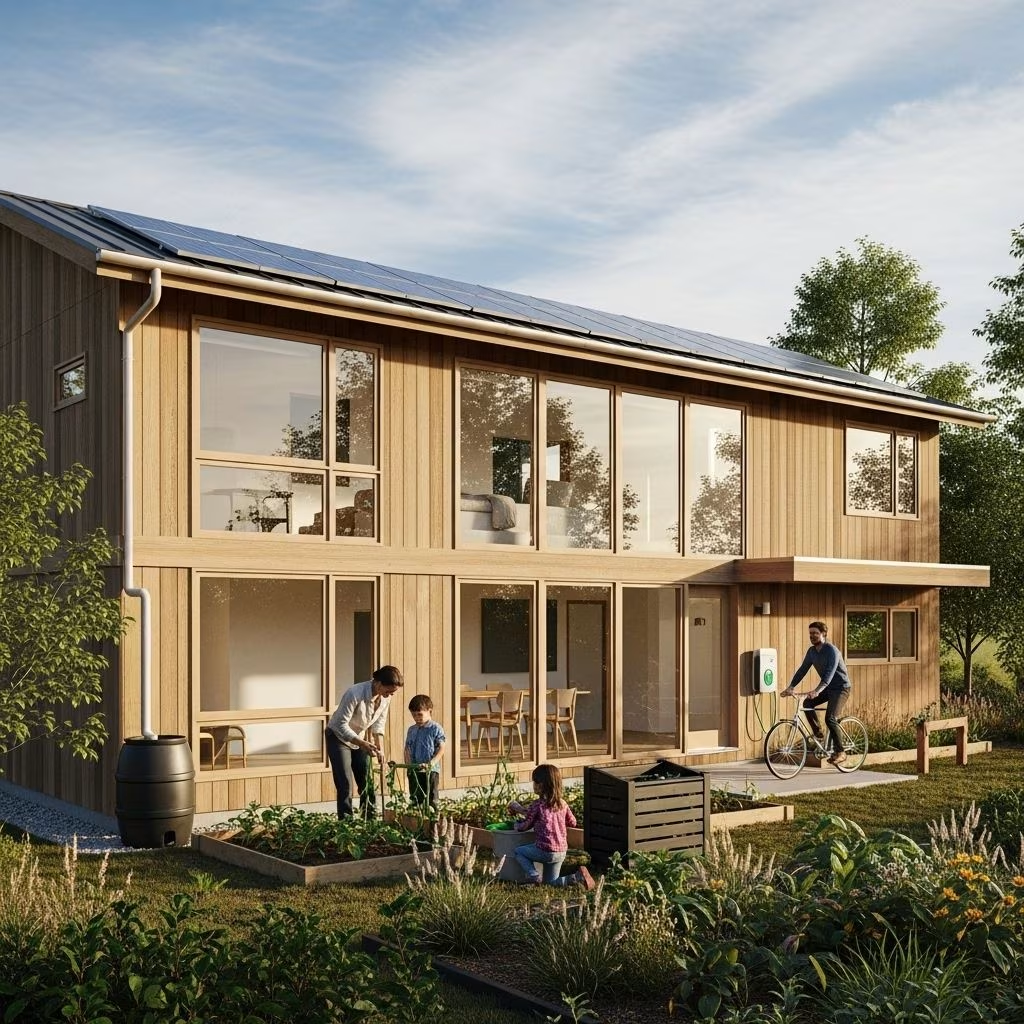
Why the One Tonne Lifestyle is Easier in a Passivhaus
Living within a one-tonne CO2e lifestyle is an audacious climate goal. For most people, especially in the Global North, meeting such a target demands radical transformation of housing, transport, diet, consumption, and leisure. But some homes—like those built to Passivhaus standards—make this lifestyle shift significantly more achievable. This article explores the day-to-day and systemic challenges of a one-tonne life, and why a Passivhaus can make the difference between struggle and possibility.
Understanding the One Tonne Lifestyle
The “one-tonne lifestyle” refers to living so that your personal carbon footprint—across all direct and indirect consumption—emits less than one metric tonne of CO2 equivalent (CO2e) per year. For reference, the average person in developed nations like the UK, US, or Canada emits 8 to 16 tonnes per year. Current global targets suggest humanity must average 2.5 tonnes per person by 2030 to keep below 1.5°C warming, with one tonne per year as the eventual safe individual threshold.
- Baseline: UK average: 11–13 tonnes CO2e/person/year. US/Canada: 15–20 tonnes.
- Target: One tonne CO2e/person is a stretch goal for planetary stability.
- “CO2e” includes CO2, methane, nitrous oxide, and other greenhouse gases, adjusted for their global warming potential.
Emissions under your control are divided into categories—known as “lifestyle domains”:
| Lifestyle Domain | Share of Footprint | Examples |
|---|---|---|
| Nutrition | ~25% | Food production, transport, refrigeration |
| Housing | ~30% | Heating, cooling, electricity, construction |
| Mobility | ~30% | Private vehicles, public transport, flights |
| Consumer Goods | ~7% | Clothing, electronics, furnishings |
| Leisure & Services | ~8% | Hotels, recreation, digital services |
The Seasonal Challenge of Net Zero Living
Embarking on a one-tonne journey means contending with the seasons. Heating can be the largest source of personal emissions in cold months, even in temperate regions. Winter demands more energy for warmth and often a greater caloric intake for nutrition. Summer can ease energy use but raise challenges around travelling for well-being or to escape heatwaves.
Key observations:
- Living without gas or fossil fuel heating in non-efficient homes can be deeply uncomfortable.
- Maintaining a nutritious diet in winter, with a heavy reliance on local and seasonal food, is harder but crucial.
- Low-carbon mobility options for vacations (e.g., trains, buses, cycling) remain limited and sometimes still relatively high-emitting.
- Passivhaus buildings dramatically reduce the need for active heating/cooling, delivering comfortable indoor climates year-round with minimal emissions.
What is a Passivhaus?
Passivhaus, or Passive House, is a rigorous building standard focused on energy efficiency, airtightness, and thermal comfort. Certified Passivhaus buildings use up to 90% less heating energy than conventional homes, thanks to:
- Superinsulation and high-performance windows
- Airtight construction eliminates drafts
- Heat recovery ventilation delivers fresh air with minimal heat loss
- Orientation and design that leverage passive solar heating
Consequences for one-tonne living:
- Radical reduction in operational emissions: Heating and cooling needs are minimized regardless of season.
- Comfort: Residents enjoy stable, healthy indoor temperatures all year.
- Ease of budgeting: A large chunk of annual carbon allocation is freed up for nutrition, mobility, or fun.
Case Study: Living One Tonne in a Conventional Home
Attempts to hit a one-tonne target in typical housing highlight the obstacle:
- Most existing homes are leaky and poorly insulated, pushing winter heating loads (and emissions) through the roof.
- Gas or oil boilers are the norm; electricity is often carbon-intensive unless 100% renewable.
- Even heroic efforts—lowering thermostat, wearing layers, insulation upgrades—can only go so far before comfort and health are compromised.
- Residents often must cut back dramatically on nutrition, mobility, and leisure to balance the carbon budget.
For example, a family in a UK Victorian terrace house could find that 80% of their carbon allocation is spent merely on keeping warm through winter.
Why Passivhaus Changes the Equation
- Minimal heating/cooling needed—mechanical ventilation with heat recovery, superinsulation, and airtight walls eliminate draughts.
- Huge savings: In some climates, annual space heating emissions can drop from over one tonne to 100kg per person.
- Holistic design supports renewable energy integration—solar panels, on-site battery storage, and heat pumps work optimally in a tight, efficient enclosure.
- Better air quality and health for residents.
- Predictable running costs and carbon budgeting year-over-year.
Living in a Passivhaus frees up vital space in the personal carbon budget for other domains:
- More nutritious, local, or imported food choices
- Greater flexibility for essential or enriching travel
- Opportunities to consume cultural goods, digital services, or invest in community activities
Carbon Freebies: The Art of Zero-Emission Living
Regardless of your housing, certain activities emit almost no carbon—or even offer net benefits. These are the “carbon freebies” that underpin a one-tonne lifestyle:
- Walking and cycling—minimal or zero emissions per mile
- Gardening and growing your own food
- Upcycling, repairing, restoring, and sharing goods
- Locally sourced, seasonal cooking
- Socializing, meditation, and enjoying nature
- Creative pursuits: music, poetry, dance
- Community sport and recreation
Passivhaus residents can make these activities central to life, with the added bonus of a healthy, comfortable indoor/outdoor environment year-round.
Mobility and the Passivhaus Advantage
Mobility remains a stubborn portion of the personal carbon footprint, but Passivhaus can help indirectly:
- Electric vehicle (EV) charging at home is more practical, since demand for space heating is low and on-site solar is often easier to accommodate.
- Strong location choices: Many Passivhaus projects are in dense, walkable or transit-accessible neighborhoods, making car-free living easier.
- A reduced need to “escape” poor housing conditions or urban pollution can mean less travel overall.
Systemic Change vs. Individual Action
While the story of one-tonne living often focuses on individual sacrifices, experts increasingly argue that systemic solutions—like building better homes—are a higher leverage point:
- It is easier to live low-carbon lifestyles in high-performance buildings; not everyone has access, and policy must ensure broad adoption.
- As more homes reach Passivhaus or equivalent standards, the climate “floor” gets easier for all. Even average families can thrive within the carbon budget.
- Innovative financing, regulation, and retrofits are crucial to make this shift mainstream and inclusive.
Passivhaus shows that a comfortable, dignified, and sustainable one-tonne lifestyle is not only possible but scalable.
Transitioning to Passivhaus: What’s Involved?
- Building new: Adhering to Passivhaus criteria from the ground up is often most economical and effective.
- Retrofitting existing homes: More complex and sometimes costly, but possible with external insulation, triple glazing, ventilation upgrades, and airtightness improvements.
- Certification: Passivhaus has globally recognized standards and third-party verification.
Frequently Asked Questions (FAQs)
Q: What is the single biggest barrier to living a one-tonne lifestyle?
A: For most people in the developed world, housing-related emissions—especially from heating—form the single largest chunk of annual carbon output. Retrofitting homes or moving to high-performance buildings is often necessary to reach the strictest targets.
Q: How much does it cost to build or retrofit to Passivhaus standards?
A: Costs vary by country, size, and local labor market, but new Passivhaus homes generally cost 5–15% more upfront than conventional builds. Efficient retrofits can be more expensive short-term, but often pay off in comfort and running cost savings over time.
Q: Is a vegan or plant-based diet essential for a one-tonne lifestyle?
A: Diet is a key factor—typical Western omnivorous diets have 2–3x the carbon intensity of plant-based diets. However, nutrition, seasonality, and food sourcing also matter. Many individuals find a fully plant-based diet difficult year-round; prioritizing local, organic, low-impact foods is crucial.
Q: Doesn’t individual action matter less than government policy?
A: Both are crucial. Individual and household action can dramatically curb emissions when matched by systemic reforms—like better building codes, clean power, and sustainable transit.
Q: Where can I learn more about one-tonne living or Passivhaus?
A: See resources from the Passivhaus Trust, local green building organizations, and first-person accounts of low-carbon living such as ‘Living the 1.5 Degree Lifestyle’ by Lloyd Alter.
Summary Table: Conventional Home vs Passivhaus for One Tonne Living
| Feature | Conventional Home | Passivhaus |
|---|---|---|
| Annual heating emissions | ~1.5–4 tonnes CO2e (per home) | <0.2 tonnes CO2e (per home) |
| Thermal comfort year-round | Varies, often poor in winter/summer | High comfort, stable temperatures |
| Air quality | Highly variable, often stuffy or drafty | Consistently fresh, filtered |
| Flexibility in carbon budget | Very limited, especially in winter | Significant, more choices for food/travel |
| Resilience to climate extremes | Poor | Excellent |
Conclusion
Committing to a one-tonne lifestyle is an act of climate leadership—but living it in a conventional home can be a daily challenge. Passivhaus design flips the equation: it unlocks a low-carbon life that feels not like deprivation but dignified, healthy, and even enjoyable. The real challenge now is systemic—how to make Passivhaus, or equivalent ultra-low carbon housing, the norm for all.
References
- https://rosalindreadhead.wordpress.com/journal/
- https://newsociety.com/book/living-the-1-5-degree-lifestyle/
- https://rosalindreadhead.wordpress.com/2021/10/10/invitation-to-a-citizens-science-project/
- https://www.greenbuildingadvisor.com/article/lloyd-alter-is-living-the-1-5-degree-lifestyle
- https://newsociety.com/blog/2025/09/23/carbon-math-made-simple-why-2-5-tonnes-is-the-magic-number/
- https://lloydalter.substack.com/p/does-tracking-your-carbon-footprint


