


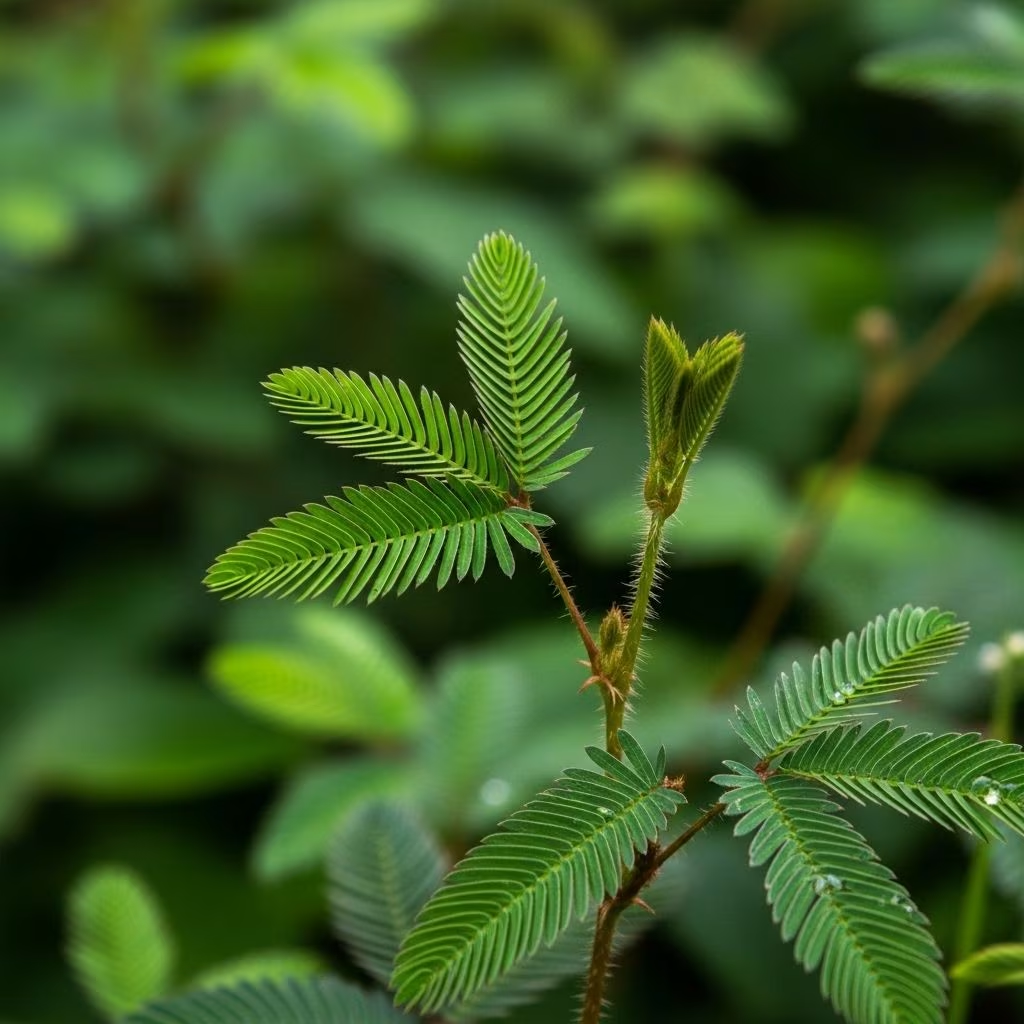
Why Plants Really Don’t Like To Be Touched
It might seem harmless—and sometimes even loving—to gently touch the leaves, stems, or flowers of your houseplants or garden specimens. Many people intuitively reach out to poke, pet, or reposition plants, believing this physical interaction helps or at least does not harm. Yet science increasingly shows that for many plants, even mild physical contact registers as a potential threat, disrupting growth and health in significant ways.
Touch Means Threat: How Plants Respond to Contact
Plants exist in a world of constant risk: herbivores, trampling feet, rivals, and often unpredictable weather. Since they cannot flee, their only option is to detect threats and trigger protective responses as soon as they sense danger. Touch is one of the primary signals of possible harm, whether it’s caused by animals, humans, or neighboring plants.
- Immediate chemical alarm: Even the gentlest brush can activate a surge of stress hormones throughout the plant.
- Gene expression changes: Studies reveal that thousands of genes may react within minutes of contact, preparing defenses as if under attack.
- Defense mechanisms: These can include toughening leaves, producing bitter or toxic compounds, and—even in touch-sensitive species—visible movements or leaf closing.
Plants are so touch-sensitive that repeated handling or crowding can reduce growth by as much as 30%. This evolutionary adaptation makes sense: in the wild, repeated contacts often predict damage or predation, so rapid defensive action is crucial.
Why Houseplants Shouldn’t Touch Each Other
Many plant fans like the lush, tightly packed look of a ‘plant shelfie,’ but it turns out that crowding plants is detrimental. When houseplants touch each other, they interpret the proximity—and any regular brushing—as a signal of potential competition or physical threat. This can provoke their stress response systems, diverting energy from growth and healthy functioning to defense, even though their neighbors are harmless.
- Stunted growth: Crowded plants make thicker, sturdier tissues but at the expense of overall growth.
- Disease risk: Touching can transfer pathogens, mites, or fungal spores quickly between plants.
- Leaf damage: Frequently touched leaves may show blemishes, tears, or slowed unfurling, especially in sensitive species.
Tip: Whenever possible, arrange indoor plants so their leaves and stems do not continuously touch. This supports optimal growth and minimizes stress-induced responses.
Plant Memory: How Long Do Touch Effects Last?
Unlike animals, plants have no nervous system but they do “remember” being touched—through changes in their biochemical and genetic activity. The defensive posture may persist for hours or days before returning to baseline, meaning repeated contact has cumulative effects.
- Touch responses can make plants sturdier and more drought-tolerant but also smaller and less lush.
- Some plants integrate frequent touch into long-term growth changes—”expecting” continued disturbance.
Plants That Really Hate Touch: Sensitive Species
- Mimosa pudica: The famous “shy plant” rapidly closes its leaves when touched. This movement takes energy and repeated triggering can damage the plant.
- Carnivorous plants: Species like Venus flytrap and Drosera activate complex movements and digestive enzyme cascades in response to contact, wasting valuable resources if triggered unnecessarily.
- Orchids and ferns: New shoots and delicate leaves are easily bruised, slowing their growth if handled often.
There are, however, some tough plants that tolerate touch better, especially those adapted to wind, abrasion, or regular grazing. Still, most house and garden plants benefit most from gentle visual appreciation rather than physical handling.
Natural Ecological Examples: “Hugging” in the Wild
The “Unwanted Hug” of Strangler Figs
In the forests of the tropics, some plants—especially certain fig species—seem to embrace their neighbors tightly. Strangler figs (Ficus spp.) germinate on a host tree and gradually send roots downward and shoots upward, surrounding the host’s trunk and competing fiercely for light, water, and nutrients.
| Strangler Fig | Host Tree |
|---|---|
| Germinates in canopy or on trunk | Provides support and nutrients |
| Roots envelop trunk, absorb water and minerals | Slowly loses resources, can eventually die |
| Blocks sunlight needed by host | Leaves become shaded, less photosynthesis |
Though commonly called “strangler figs,” these plants do not truly strangle the tree; rather, they outcompete their hosts for resources, which can ultimately lead to the host’s demise.
- Ecological importance: Fig fruits feed numerous birds, bats, and mammals, vital for food webs.
- Seed dispersal: Animals (especially bats) eat the figs, disperse seeds via droppings, allowing figs to claim new hosts.
Other “embracing” plants, such as vining species or epiphytes, have less negative impact on their hosts, but crowding and long-term contact almost always turn competitive.
Plants That Are Dangerous to Touch: Toxic or Irritating Species
Not all touch is just stressful—in some cases, physical contact is truly harmful to humans. A number of plants produce chemicals that can irritate, inflame, or even poison when handled.
- Stinging nettle (Urtica dioica): Tiny hairs inject irritants, causing burning or itching
- Poison ivy (Toxicodendron radicans): Causes painful allergic rash in most people
- Manchineel tree: Sap can cause burn-like blisters and temporary blindness if it enters the eyes
- Cape Leadwort (Plumbago auriculata): Contains plumbagin which can blister skin
- Annual Ragweed (Ambrosia artemisiifolia): Can cause skin irritation and allergy reactions
Plants may produce these defenders as a direct result of evolutionary pressure from animals—humans included! Even seemingly innocuous ornamental or edible plants sometimes cause discomfort if handled roughly or without protection. Always use gloves when in doubt.
Common Plant Myths: Do Plants Like to Be Talked to or Touched?
The idea that plants appreciate conversation or gentle caresses is rooted partly in wishful thinking. Some studies show that mild movement (like simulating wind) can strengthen stems and roots, but repeated direct touching is more stressful than beneficial. Plants do not have emotional responses, but their biochemical defenses interpret contact as a probable threat rather than affection.
- Sound and vibration: Some studies suggest plants respond to music or sound waves, but physical touch remains a stressor.
- Gentle handling: Use the least possible contact when repotting or pruning to minimize damage.
- Visual attention only: Observe your plants’ health and growth rather than touching them frequently.
Plant Touch Do’s and Don’ts
- Do: Use gloves and clean tools when handling or maintaining plants.
- Do: Space plants so their leaves do not touch each other.
- Do: Teach children to admire but not prod or pull at plants.
- Don’t: Regularly brush, pet, or poke leaves—especially delicate species.
- Don’t: Help new leaves or blooms unfurl; they can tear easily with minimal force.
- Don’t: Assume all plants like to be handled—when in doubt, observe and respect their responses.
FAQs: Frequently Asked Questions About Plant Touch Sensitivity
Q: Why do some plants, like Mimosa, fold up when touched?
A: Mimosa pudica and similar sensitive species rapidly fold their leaves as a defense mechanism, using energy to deter predators or physical threats. Repeated stimulation can exhaust or harm the plant.
Q: Can touching houseplants really stunt their growth?
A: Yes, research shows that regular contact leads to a significant reduction in growth—sometimes up to 30%—as defense mechanisms are constantly activated.
Q: Are there any plants that enjoy touch or benefit from handling?
A: While some tough outdoor species withstand touch, almost all plants prefer to grow undisturbed. Simulated wind can benefit some young seedlings, but direct touching is best avoided.
Q: How can I keep my plants healthy if I can’t touch them?
A: Provide adequate space, light, water, and nutrients. Prune, repot, or inspect only as needed—and always gently—with clean hands or sanitized tools.
Q: Why is crowding plants unhealthy?
A: Plants interpret contact with neighbors as competition or danger, activating stress responses and reducing their energy for growth and flowering.
Conclusion: Let Plants Be—Space and Respect Lead to Better Growth
The impulse to touch, arrange, or crowd plants is natural for gardeners and indoor plant fans alike, but the best support we can give our green companions is often space, gentle care, and hands-off appreciation. Plants have highly sensitive defense systems that are triggered—sometimes for days or even weeks—by touch. Next time you admire your houseplants, trees, or garden flowers, remember: a little distance fosters the healthiest, happiest growth.
References
- https://planethouseplant.com/should-my-house-plants-touch-each-other/
- https://www.nybg.org/blogs/science-talk/2014/01/an-unwanted-hug/
- https://www.epicgardening.com/plants-you-shouldnt-touch/
- https://botany.one/2018/03/the-delights-and-dangers-of-tree-hugging/
- https://holdenma.wordpress.com/2008/02/25/tree-huggers-in-the-city/
- https://www.bbg.org/article/to_touch_or_not_to_touch


