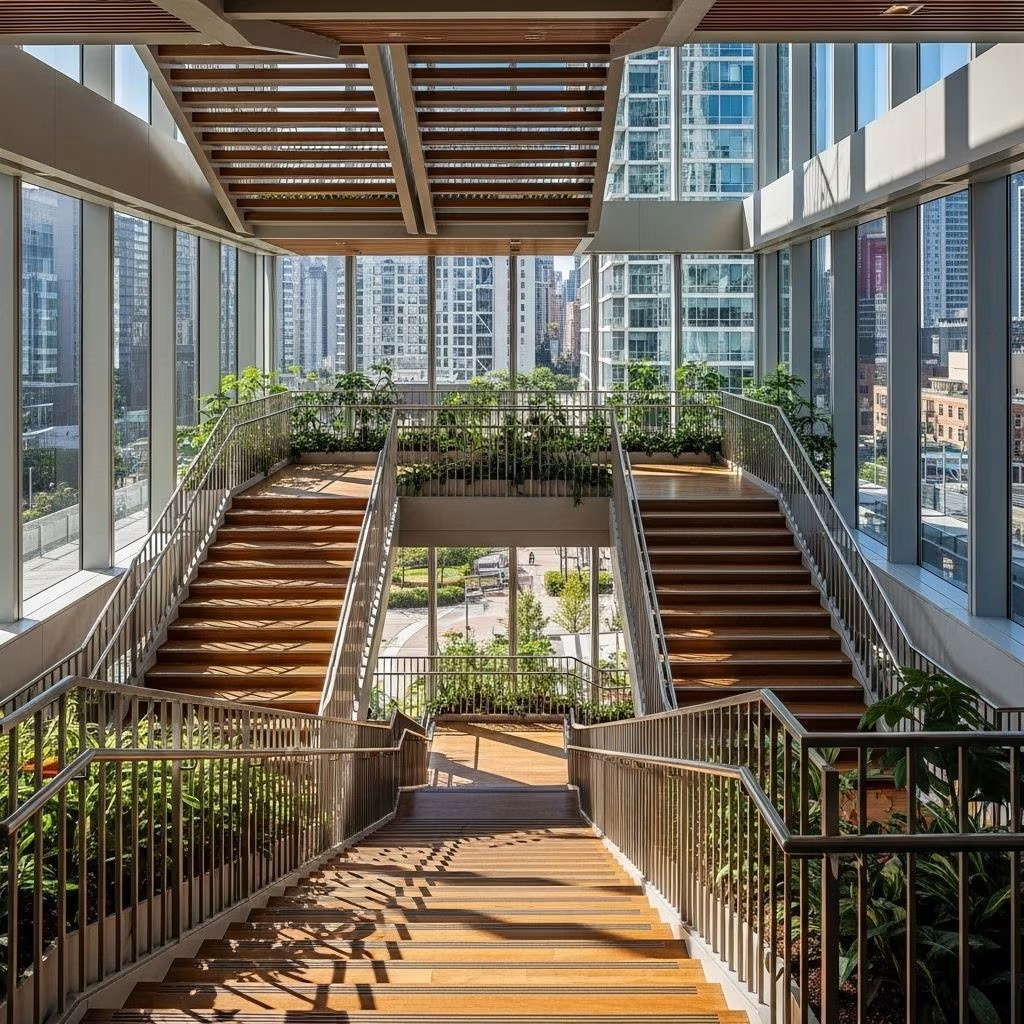
Stairs are everywhere, an unassuming feature in our daily landscape. Yet, their impact stretches far beyond merely connecting floors. When prioritized in design and daily life, stairs nurture our bodies, reduce our environmental footprint, and shape the spirit of our buildings and cities. As cities struggle with rising energy demands and communities seek healthier, more connected ways to live, the humble staircase emerges as both a symbol and tool of progress. In this comprehensive look, we celebrate stairs—not just as a means of vertical travel, but as a cornerstone for healthier, more sustainable, more joyful communities.
Why Stairs Matter More Than You Think
Stairs have often been treated as an afterthought in modern buildings, hidden behind heavy doors or set aside as mere emergency exits. But this underestimation ignores the many ways that making stairs prominent and inviting can:
- Promote everyday physical activity in an age of sedentary lifestyles.
- Reduce energy consumption by shifting some reliance away from elevators and escalators.
- Improve social connections by encouraging chance encounters and communal movement.
- Shape resilient, inclusive communities through accessible and thoughtful design.
What would it look like to put stairs at the forefront of design, policy, and daily life? The answer reverberates through health, sustainability, and the very way we inhabit our cities.
The Health Case for Stairs: Fighting Inactivity
In a world of cars, elevators, and screens, daily movement has become optional—a design flaw with serious health implications. The World Health Organization (WHO) identifies physical inactivity as a leading risk factor for global mortality. Just a few extra flights of stairs per day can have measurable effects, decreasing the risk of diseases linked to sedentary habits such as:
- Heart disease
- Type 2 diabetes
- Obesity
- Some cancers
Stair-climbing is uniquely valuable as a form of “incidental exercise”—activity that fits seamlessly into everyday routines without demanding extra time, gear, or motivation. Unlike gym routines, stair use:
- Burns more calories per minute than jogging
- Builds lower body strength and bone density
- Improves cardiovascular fitness
- Can be done in small doses throughout the day
It’s also accessible to nearly everyone and can be adapted for different abilities and needs, especially when paired with good lighting, handrails, and non-slip surfaces.
The Evidence Base: Health Benefits in Numbers
| Type of Benefit | Impact of Climbing Stairs |
|---|---|
| Calories burned | About 7-10 calories/minute, 2x that of walking |
| Risk of heart disease | Can reduce risk by up to 20% |
| Mental health | Regular stair use correlates with improved mood |
Stairs as a Climate Solution
Buildings are responsible for roughly 28% of global carbon emissions, a significant portion of which comes from mechanical systems like elevators and escalators. Re-imagining stairs as the default, rather than emergency or secondary, mode of vertical movement offers concrete climate benefits:
- Lower energy consumption: Elevators and escalators are major energy users, especially in high-traffic commercial and residential buildings.
- Reduced maintenance and operation emissions: Fewer rides mean longer elevator lifespans and less frequent repairs.
- Space reclamation: Stairs often require less mechanical infrastructure and can be designed to fit naturally into building cores, freeing up valuable space for other uses.
When used regularly, stairs offset a portion of a building’s total operational energy, helping cities and organizations meet climate targets while instilling sustainable habits in building occupants. Some sustainability certifications, such as LEED, award points for design strategies that promote active stair use and reduce dependency on elevators.
Quantifying the Energy Savings
Consider these typical figures for elevator energy use:
- Average passenger elevator: 2,500–5,000 kWh/year
- Elevator energy intensity can exceed that of all lighting in a mid-sized building
- One skipped ride saves about 0.3 to 0.5 kWh
While elevators and escalators remain necessary for accessibility and tall buildings, redistributing even a fraction of trips to stairs produces meaningful savings over time.
The Social and Psychological Value of Stairs
Stairs do more than move people; they create places for gathering, encountering neighbors, and enjoying moments between destinations. Well-designed staircases can:
- Create visual anchors in buildings and public spaces
- Encourage brief social interactions, fostering trust and community
- Promote wayfinding and orientation, reducing stress
- Offer moments for reflection, pause, or enjoyment of views
Unlike isolated elevator rides, stairs bring people together—even if only in passing—reinforcing a sense of shared experience. Architectural masterpieces throughout history, from grand museum staircases to public plazas, have recognized this power. Contemporary research connects such “social infrastructure” to greater well-being and democratic participation.
The Design Imperative: Making Stairs Inviting
The benefits of stairs hinge on their visibility and attractiveness. Many buildings, particularly from the late 20th century onward, have relegated stairs to unattractive, windowless fire escapes. Yet, behavioral studies show that people are far more likely to take the stairs when:
- Stairs are easily visible from the entrance or main circulation zone
- Design is open, well-lit, and aesthetically pleasing
- Stairs are not behind heavy doors or far from high-traffic zones
- Informational signs promote stair use and highlight benefits
For designers and policymakers, this is a clear mandate: prioritize staircases early in planning, not just as safety features, but as celebrated features of the built environment. Techniques for doing so include:
- Placing stairs at the heart of lobbies or communal spaces
- Incorporating natural light, art, and inviting materials
- Providing seating niches along landings to encourage pauses
- Integrating clear, navigable signage and wayfinding
Case Study: Rethinking Stairs in Public Buildings
A growing number of architects and urban planners are reimagining how stairs can serve as connections, not just escape routes. Notable examples include:
- Open, sculptural staircases in libraries and civic centers
- Stairs doubling as informal seating and gathering spots in plazas
- Mixed-use buildings where stairs frame shared atriums and gardens
Stairs, Accessibility, and Universal Design
While championing stairs is important, true sustainability and inclusivity demand that everyone can access every level of a building. Universal design principles insist that stairs:
- Are always paired with elevators for those with limited mobility
- Include handrails, tactile warnings, and visibility features
- Are designed to be wide enough for safe passage and comfort
- Feature non-slip treads and consistent rises and runs
Inclusion means recognizing that stairs are valuable precisely when available as one option among several—not as an exclusive path. Good design leverages the strengths of stairs while ensuring seamless alternatives for everyone.
Historical and Cultural Perspectives
Stairs hold a deep historical and cultural resonance across societies. Grand staircases in palaces and temples were designed both for function and as expressions of civic identity, aspiration, and ceremony. Streetscapes in ancient cities such as Rome and Machu Picchu were shaped by stairs, adapting the landscape to human use.
In contemporary urbanism, “stair streets” and public staircases remain places where daily routines and civic rituals intersect—providing shaded rest stops, viewpoints, or meeting points within dense city grids.
Challenges to Reclaiming Stairs
Despite their benefits, several factors often stand in the way of wider stair use:
- Building codes and fire regulations: Classification of stairs as fire escapes leads to restrictive design defaulting to elevators for everyday use.
- Security concerns: Some buildings lock stairwells for safety, limiting access.
- Cultural norms: Elevator-centric habits in tall buildings can be hard to disrupt.
- Physical barriers: Poorly maintained or poorly designed stairs can be off-putting or unsafe, especially for older adults and children.
Movement toward “active design” principles is addressing these barriers, advocating for both regulatory change and a culture shift in how buildings are planned.
Stairs as a Symbol of Sustainable Futures
More than an energy-saving feature or health tool, stairs represent a mindset: one of incremental progress, resilience, and intentional effort. Embracing stairs is a metaphor for choosing the path that may be harder in the short-term but yields long-term rewards—for individuals, communities, and the planet.
Summary: The Case for Stairs
- Health: Easy, low-barrier exercise for people of all ages and abilities
- Climate: Significant potential to reduce building operational energy
- Community: Supports interaction, wayfinding, and sense of place
- Equity: Integral to universal, accessible environments
Frequently Asked Questions (FAQs)
Are stairs accessible to everyone?
Stairs alone are not accessible to all, especially people with mobility impairments or some health conditions. Truly inclusive buildings pair inviting stairs with high-quality, reliable elevators or ramps, adhering to universal design standards to ensure equitable access for every user.
How can building designers encourage stair use?
Encourage use by making stairs visible and attractive in major circulation zones, providing natural light, open sightlines, comfortable treads and risers, and integrating signage or motivational prompts. Avoid tucking stairs behind fire doors or relegating them to remote corners.
Do stairs really save that much energy compared to elevators?
Yes. While individual elevator rides may consume a small amount of energy, the aggregate use in busy buildings adds up fast. Shifting some daily trips to stairs can reduce a building’s total operational energy use and lower associated emissions significantly over time.
What if I work or live in a tall building?
For very tall structures, stairs may not be practical for travel between distant floors. Even so, using the stairs for a few flights daily—such as between nearby floors or during emergencies—supports physical health and energy conservation.
Is it safe to use stairs, especially in emergencies?
Stairs are specifically designed to serve as primary evacuation routes in case of fire or power failure. Regular maintenance, clear signage, and adherence to safety codes (including fireproof construction and ventilation) are essential for safety. In all cases, elevators should never be used in case of fire unless specifically designed for emergency evacuation.
Can public staircases play a role in community life?
Absolutely. Well-integrated public staircases—especially outdoors—enhance walkability, connect neighborhoods, and offer spaces for gathering, art, and nature. Examples range from grand urban stairways to modest community steps.
Take the First Step: Reclaiming Stairs in Modern Life
As we grapple with the twin challenges of sedentary living and climate change, the case for stairs is compelling. Choosing to climb, making stairs inviting and accessible, and celebrating stairways in our cities and buildings together represent a small but powerful act of transformation—for ourselves, our communities, and generations to come.
References
- https://rga.lis.virginia.gov/Published/2024/RD845/PDF
- https://www.archdaily.com/904092/tree-hugger-4site-architecture
- https://pmc.ncbi.nlm.nih.gov/articles/PMC9496270/
- https://papers.cumincad.org/cgi-bin/works/Search?search=%2B2004+Virtual+building+environments++VBE++++Applying+information+modelling+to+buildings&first=380&format=LONG&frames=NONE
- https://www.aa.org/sites/default/files/literature/2025-general-service-conference-final-report-en.pdf