


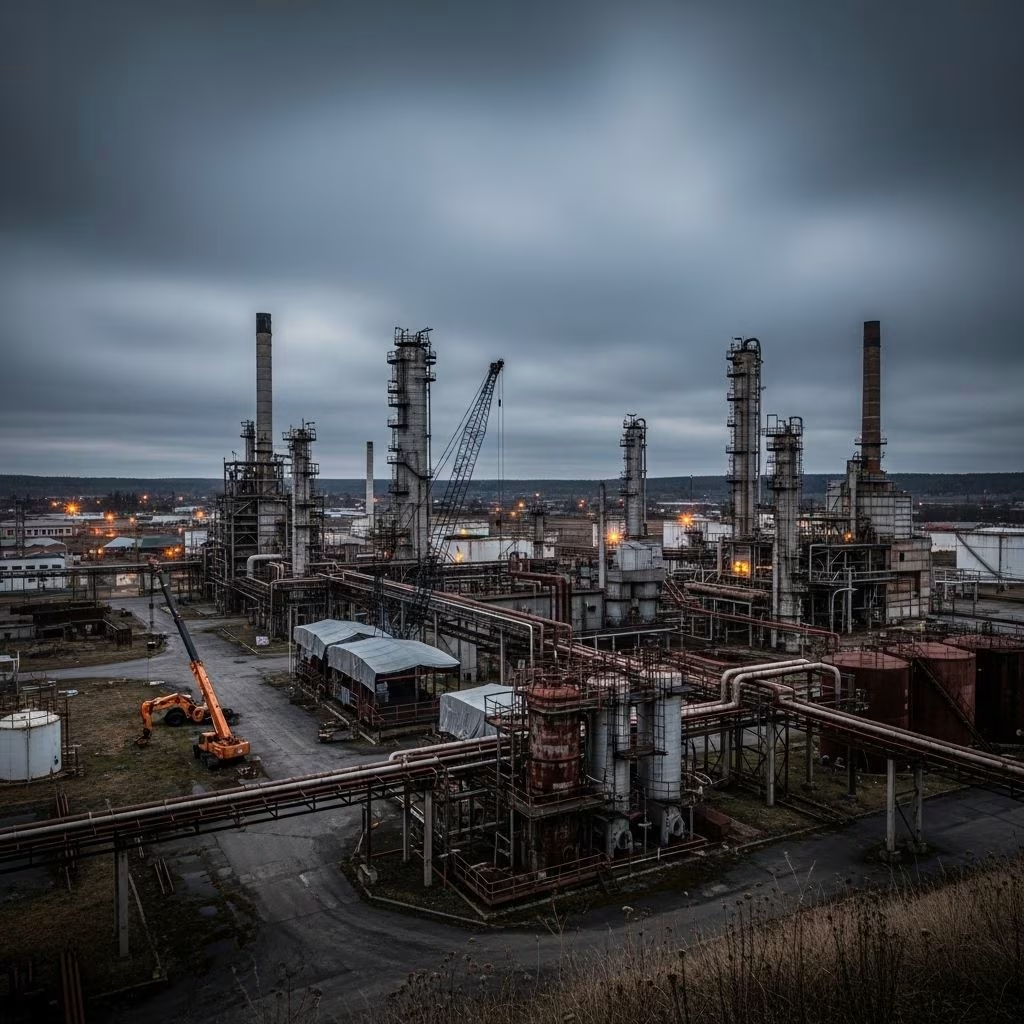
Why Are State-Owned Oil Companies Shutting Down Refineries?
The oil industry is in a state of flux as state-run and private oil companies around the world increasingly announce refinery closures. Nowhere is this more apparent than in California, where once-mighty refineries are shutting down operations in response to evolving market conditions, stricter environmental policies, and the accelerating energy transition. These changes are having far-reaching impacts on local economies, workers, and the broader global energy landscape.
The Wave of Refinery Closures: A Global and Local Perspective
Over the past decade, the refining sector has seen a steady decline in capacity, with closures occurring both in the United States and globally. California, previously home to dozens of refineries, now faces a shrinking sector with just a handful of major plants in operation.
- Valero Energy announced the closure of its Benicia refinery by April 2026. Once shuttered, California will lose nearly 9% of its gasoline production capacity and hundreds of jobs, hitting local economies hard.
- Phillips 66 has already announced the shutdown of its Los Angeles-area refinery. The loss, combined with Valero’s closure, represents a drop of 309,000 barrels per day in the state’s refining capacity, reducing the number of California refineries to just seven.
- Internationally, other refineries in regions from Louisiana and Wyoming to Europe and Asia have also faced closures or conversions—from petroleum refining to the production of renewable diesel or other fuels.
While reducing capacity reflects market realities, the abrupt nature of many closures has left communities and workers scrambling to adjust, raising urgent concerns about economic security and just transition.
Why Are Refiners Shutting Down?
The forces behind recent closures are multi-faceted, but several major drivers stand out:
1. Policy and Regulatory Pressure
- Strict environmental policies, such as California’s goals to slash gasoline consumption by 90% by 2045 and to ban sales of new internal combustion vehicles by 2035, have made continued refinery operations less attractive and sustainable for many companies.
- New state laws require refineries to maintain large stockpiles of fuel to prevent price spikes, further increasing costs and operational risks for refinery operators.
- Federal waivers and state-specific rules contribute to creating unique market conditions, like California’s “boutique blends” for gasoline, which raise operating costs and complicate logistics.
2. Market and Demand Shifts
- Long-term decline in gasoline demand due to improved fuel economy, adoption of electric vehicles, and shifting consumer preferences.
- Local consumption patterns now require less refined product, putting continued pressure on margins for operating refineries.
3. Economic Viability and Financial Pressure
- Refiners face mounting operational and compliance costs, while profit incentives narrow, especially when cheaper imported refined products are available or demand wanes at home.
- Closure and conversion to alternative fuels, like renewable diesel, can unlock substantial subsidies (up to $3.70 per gallon in California), making closures a financially attractive solution compared to business-as-usual.
- Several companies, including Valero, have reported billions in impairment charges and anticipated asset retirement obligations tied to downsizing or closure decisions.
California’s Unique Role: Leading or Isolating?
California’s aggressive climate goals and environmental regulations make the state both a leader in sustainable energy policy and a challenging place for fossil fuel operators. With drivers already paying about 50% more than the U.S. average for gasoline—partly due to taxes and fuel blend regulations—the state’s policies set a national precedent, but also raise tough questions about affordability and supply reliability.
Key Challenges Facing California:
- Maintaining fuel supply in the face of shrinking in-state refining capacity.
- Managing price volatility and the risk of spikes due to external shocks or supply shortfalls.
- Ensuring a fair job transition and sustainable economic alternatives for displaced refinery workers and affected communities.
- Addressing legacy pollution and environmental cleanup of idled or decommissioned refinery sites.
Economic and Social Impacts
The impact of refinery shutdowns extends far beyond the oil industry, severely affecting local economies, tax revenues, and working families. In Contra Costa County—home to some of the largest Bay Area refineries—the loss of refining jobs and the associated local tax base could undermine funding for essential services, such as schools and public health programs.
| Impact Area | Description | Details |
|---|---|---|
| Jobs | Direct layoffs and indirect employment loss in supply chains | Hundreds of refinery jobs lost per closure; thousands affected when considering suppliers/contractors |
| Tax Revenue | Loss of property, income, and sales tax base | Millions less per year for local governments; threatens schools & social services |
| Community Stability | Ripple effects in housing markets, schools, and retail | Job losses erode demand for local businesses, risking decline in community well-being |
| Environmental Justice | Contaminated sites, ongoing public health risks | Ambiguity over if/when companies will invest in site remediation |
Furthermore, a 2022 Sightline Institute report on recent refinery closures found abrupt shutdowns can result in thousands of lost jobs and millions in forfeited local revenue. Often, owners delay costly cleanups by “idling” sites rather than fully closing and remediating them.
What Comes Next for Workers and Communities?
With more closures anticipated, California and other affected areas face a pressing need to plan proactively for economic and workforce transitions. A study by the UC Berkeley Labor Center urges policymakers and industry leaders to:
- Protect workers through retraining, income support, and targeted economic diversification initiatives.
- Ensure environmental responsibility by mandating timely and thorough site cleanups.
- Engage local communities and workers transparently in decision-making about transitions and redevelopment.
Failing to do so risks repeating the mistakes observed in past refinery closures, where abrupt decisions and lack of transition support led to lasting economic hardship and community decline.
Is This the End of Oil Refineries in America?
While no new crude oil refineries have been built in the U.S. for decades, the recent series of closures and conversions signals the sector’s diminishing role in a carbon-constrained future. Chevron’s CEO Mike Wirth bluntly stated in 2022: “there will never be another new refinery built in the United States”.
Nationally, refineries are not just closing in California. Plants in Louisiana, Wyoming, and North Dakota have also shuttered, reflecting a nationwide—indeed, global—migration toward renewable fuels and lower-carbon infrastructures.
Transitioning to New Energy Models
Some decommissioned petroleum refineries have found new life as renewable diesel plants, buoyed by generous state and federal incentives. This shift aligns with policy goals but presents new challenges regarding job quality, economic returns, and environmental benefits.
Yet, not all sites can or will be repurposed so seamlessly. Unresolved questions remain about the fate of idled facilities, the timeline and funding for site remediation, and the adequacy of new jobs created in the clean energy sector.
Frequently Asked Questions (FAQs)
Q: Why are so many oil refineries closing now?
A: A combination of declining demand for gasoline, aggressive environmental policies, and rising operating costs are making refinery operations less profitable and less compatible with long-term policy goals, especially in regions like California where climate targets are most stringent.
Q: How are workers affected by refinery closures?
A: Workers often face abrupt layoffs with limited options for comparable employment. Studies indicate thousands of lost jobs from recent closures, with retraining and transition support programs only recently being discussed as part of the policy response.
Q: What does this mean for gasoline prices and supply?
A: Decreased refining capacity can make regions vulnerable to price spikes and supply shortages, especially if external disruptions (like natural disasters or global conflicts) occur. California’s unique fuels and regulations increase this risk, as it cannot easily source substitutes from outside the region.
Q: Will closed refineries be converted to renewable energy production?
A: Some will, particularly to produce renewable diesel, thanks to powerful financial incentives and growing demand for low-carbon fuels. However, conversions often employ fewer workers than traditional operations and may not always be economically viable or environmentally preferable for every site.
Q: What are the biggest challenges in the transition away from oil refining?
A: The main obstacles include protecting workers’ livelihoods, ensuring sustainable economic alternatives for impacted communities, maintaining fuel affordability and supply reliability, and guaranteeing thorough environmental remediation of former refinery sites.
The Broader Implications for the Energy Transition
The trend of refinery closures—driven by declining fossil fuel demand, stringent policy mandates, and broader economic realities—illustrates the real-world challenges of implementing a just and orderly transition to a low-carbon future. While these changes signal progress in climate mitigation and energy innovation, their uneven impacts require deliberate planning, investment, and political will to ensure that communities and workers do not fall through the cracks.
Key Takeaways
- California’s refinery sector is shrinking rapidly due to tough climate policies, declining oil demand, and high regulatory costs.
- Closures risk job loss, reduced tax revenue, and community instability unless managed with just transition principles and proactive economic diversification.
- Long-term, the shift away from refining petroleum fuels is expected to accelerate globally as renewable energy becomes increasingly affordable and policy-driven emissions targets become more stringent.
- State governments, industry, and civil society must collaborate to ensure a just, equitable transition, supporting workers, cleaning up legacy pollution, and creating sustainable pathways to the future of energy.
References
- https://kmph.com/news/local/why-are-all-the-oil-refineries-leaving-california-and-is-it-time-to-do-something-about-it
- https://www.instituteforenergyresearch.org/fossil-fuels/gas-and-oil/californias-refinery-situation-looks-like-it-will-get-worse/
- https://richmondside.org/2025/04/01/california-oil-refineries-closing-chevon-richmond-just-transition/
- https://energyathaas.wordpress.com/2025/08/18/californias-refinery-closure-drama/
- https://www.corporateknights.com/energy/oil-refineries-close-in-california-without-an-energy-plan/
- https://www.bizjournals.com/sacramento/news/2025/07/14/sustainability-oil-refineries-closing-california.html
- https://blog.ucs.org/jeremy-martin/whats-happening-with-californias-gasoline-supply/
- https://www.eia.gov/todayinenergy/detail.php?id=63944


