


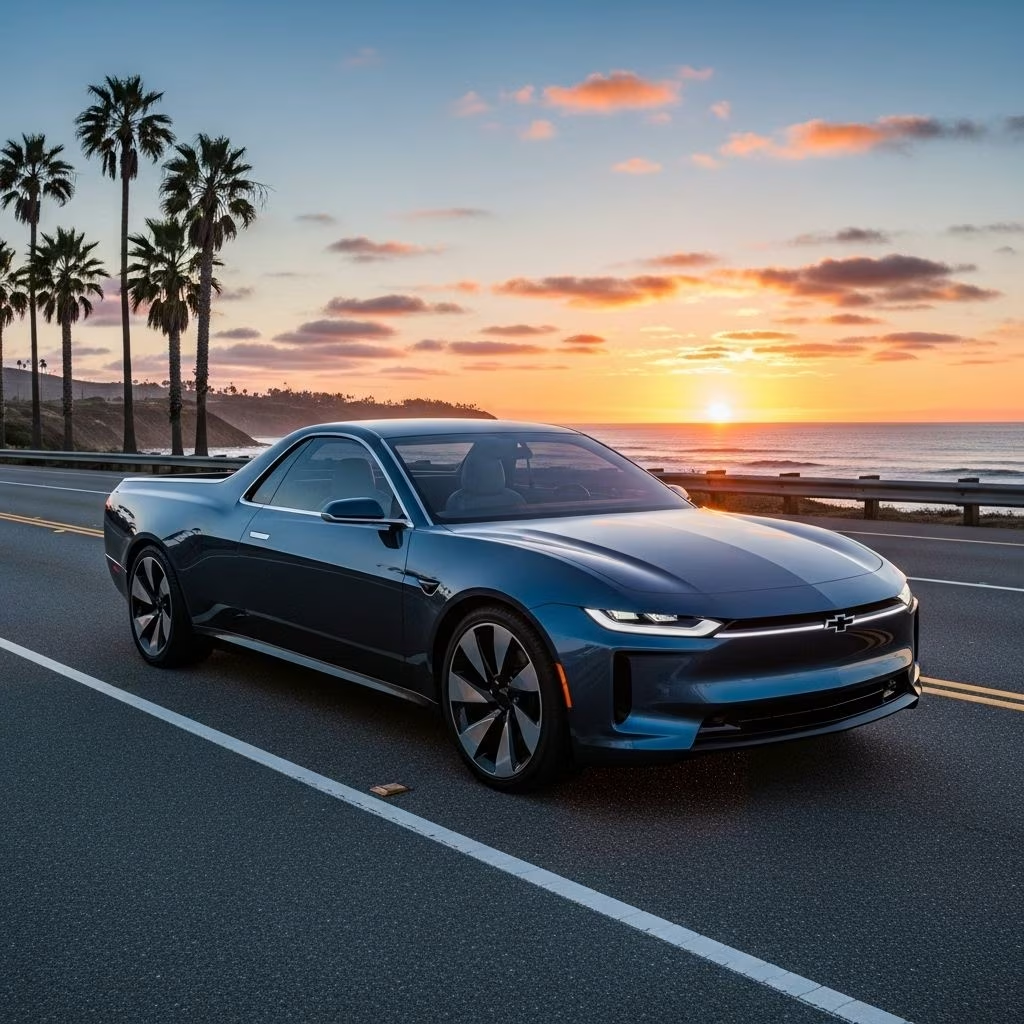
Why the World Needs an Electric El Camino
From classic car enthusiasts to sustainable transportation advocates, the notion of an electric El Camino—a hybrid vehicle combining pickup utility with car-like design—has ignited lively discussion. This article explores how a Tesla-branded electric El Camino could revive a beloved legacy and serve untapped market niches, blending nostalgia, utility, and sustainability in a single EV platform.
The El Camino: A Brief History of Form Meets Function
First launched in 1959, the Chevrolet El Camino defied automotive convention by merging the passenger comfort of a sedan with the cargo capacity of a pickup truck. Marketed as a “gentleman’s pickup,” it became an icon in the American automotive landscape—especially among those seeking practicality without abandoning style. Over generations, the El Camino resonated with a cult audience—from car collectors loving its muscle-car variants to everyday users needing light-duty hauling with car-like driveability.
- Car-Truck Hybrid: The El Camino’s unique blend offered versatility unattainable by typical sedans or pickups.
- Cultural Symbol: It became synonymous with a ‘cool’ utility, especially in regions favoring multi-purpose vehicles.
- Enduring Popularity: Despite ceasing production, it continues to inspire artists, customizers, and movies.
Elon Musk and Tesla: Disrupting the EV Market
Tesla has upended expectations for electric vehicles, transforming them from fringe concepts to mainstream aspirations. Under the leadership of Elon Musk, Tesla vehicles emphasize performance, safety, and design, regularly defying preconceptions about what EVs can offer. The Model 3’s widespread acclaim, the technological innovations in manufacturing, and the recent expansion into trucks—most notably, the angular Cybertruck—demonstrate Tesla’s penchant for challenging convention.
- Design Philosophy: Tesla often embarks on radical departures from tradition (e.g., Model S, Roadster, Cybertruck).
- Technological Edge: Proprietary battery systems, advanced software, and over-the-air updates set the brand apart.
- Sustainability: Focus is placed on reducing lifecycle emissions and pioneering closed-loop battery recycling.
The Case for an Electric El Camino
Why propose an electric El Camino in a market roiling with crossover SUVs, large pickups, and futuristic trucks? The answer lies in a convergence of trends—practicality, nostalgia, and sustainability.
- Utility With Personality: Many buyers want a vehicle capable of hauling and towing, yet manageable for daily urban driving. Full-size pickups are often too large for practical urban use.
- Missed Niche: Modern offerings overlook consumers who want the flexibility of an open cargo bed that doesn’t compromise handling, comfort, or style.
- Retro Appeal: Enthusiasts crave a nod to the classic design—especially one updated with modern engineering and environmental responsibility.
Design Inspirations: What Would an Electric El Camino Look Like?
If Tesla tackled this project, the electric El Camino would need to elegantly merge form and function. Design cues would likely echo the original’s smooth, integrated appearance but be updated for aerodynamic efficiency, crash safety, and battery integration.
- Battery Placement: Flat-floor battery packs under the cab and bed, as with other Tesla vehicles.
- Cab-to-Bed Integration: Streamlined transition with enhanced rigidity, plus a modern take on classic ‘flying buttress’ pillars.
- Interior Tech: Minimalist cockpit, touchscreen controls, and advanced driver assists.
- Material Choices: Lightweight, corrosion-resistant materials (e.g., aluminum, composites) for better range and efficiency.
Cybertruck vs Electric El Camino: A Comparative Table
| Feature | Cybertruck | Electric El Camino (Hypothetical) |
|---|---|---|
| Bed Length | 6.5 ft | ~5-6 ft (more urban-friendly) |
| Seating | 5-6 (Crew cab only) | 2-4 (Bench/coupe options) |
| Payload | 3,500 lbs | ~1,500-2,500 lbs |
| Style | Angular, bold, polarizing | Sleek, retro-modern, understated |
| Target Market | Traditional truck buyers, futurists | Enthusiasts, urban drivers, light haulers |
Environmental Advantages
The drive for an electric El Camino dovetails with sustainability priorities. Compact EVs require fewer raw materials, exhibit greater energy efficiency, and can appeal to green-conscious buyers wary of oversized trucks. Additionally, Tesla’s battery technologies and planned gigafactories promise lower emissions across the supply chain.
- Lower Resource Footprint: Smaller vehicles use fewer materials, less energy per mile, and should theoretically offer better battery recycling opportunities.
- Urban Suitability: Reduced dimensions make them more practical for congested urban environments, decreasing road wear and parking demand.
- Appeal to Next-Gen Drivers: Younger buyers often prioritize both environmental impact and unique style; an electric El Camino serves both.
Tapping the Multi-Purpose EV Market
Other automakers have dipped their toes into car-based trucks—the Subaru Baja and Honda Ridgeline, for example. However, these models have failed to seize broad appeal, often due to limited capability or uninspiring design. By leveraging Tesla’s advanced electric architecture and distinct styling, a modern El Camino could finally perfect this underappreciated recipe.
- Status Symbol: Tesla’s brand cachet could reignite interest among nostalgic buyers and curious new drivers alike.
- Fleet Potential: Compact yet capable pickups could serve urban delivery fleets, tradespeople, and local governments desiring sustainable utility vehicles.
- Customization: Tesla’s modular design could allow for upfit packages—camper shells, tool racks, tailgate accessories—tailored to different professions and lifestyles.
Obstacles to Electrifying the El Camino
Implementing such a unique niche vehicle is fraught with challenges, both technical and market-driven. The primary hurdles lie in cost, production priorities, and proving broad enough demand to justify the investment.
- Manufacturing Complexity: Integrating large battery packs into a low-slung, open-bed design requires careful engineering to maintain rigidity and safety.
- Market Risk: Past attempts (by Honda, Subaru, even partial entrants like Ford Maverick) show the car-truck hybrid market is unpredictable.
- Profitability Concerns: Tesla must weigh this niche vehicle against mainstream efforts like Model 3, Model Y, and Cybertruck.
- Emissions Regulation: Although an EV by definition, balancing performance, price, and regulation remains a challenge.
What Do EV Fans Really Want?
Gauging the pulse of EV enthusiasts and truck buyers reveals a range of expectations. While some demand a full-size, uncompromising workhorse, others yearn for manageable, stylish vehicles that don’t sacrifice comfort or green credentials.
- Performance: Tesla fans expect industry-leading acceleration, handling, and driving range.
- Flexibility: Features like lockable beds, useful towing capacity, flat loading decks, and robust electronics top the wishlists.
- Connectivity: Advanced driver aids, infotainment, and smart home integration resonate with modern buyers.
How the Electric El Camino Supports Tesla’s Mission
Tesla’s stated mission is to accelerate the world’s transition to sustainable energy. While premium sedans and luxury crossovers appeal to affluent buyers, the electric El Camino could reach a new demographic—one interested in utility, style, and sustainability, without needing traditional truck dimensions or features.
- Accessible Pricing: The El Camino’s simpler, lighter build could enable lower entry costs.
- Market Diversification: Expands Tesla’s reach beyond luxury segments into commercial, enthusiast, and practical daily driver territory.
- Community Impact: Designed with renewable energy use, locally-sourced materials, and recycled content, it could support community-based sustainability efforts.
FAQs: Electric El Camino and EV Market Trends
Q: Why hasn’t Tesla built an electric El Camino yet?
A: Tesla has prioritized mass-market vehicles such as the Model 3, Model Y, and Cybertruck. Niche vehicles like an El Camino require additional engineering, market research, and allocation of resources that may not fit near-term goals.
Q: What makes the El Camino concept unique for electric vehicles?
A: Its hybrid car-pickup design is ideal for urban drivers who require light hauling, prefer easier parking, and want a stylish yet practical vehicle not served by current truck or crossover models.
Q: How would an electric El Camino improve sustainability compared to traditional trucks?
A: By using fewer materials, offering greater efficiency, and integrating renewable manufacturing practices, an electric El Camino would reduce lifecycle emissions and support the transition to more sustainable urban transport.
Q: What challenges does Tesla face with new niche models?
A: Aside from engineering and production complexity, niche EVs risk limited market appeal, making profitability difficult without broader adoption. Tesla must also balance resources among its more mainstream models.
Q: How could Tesla ensure the electric El Camino succeeds?
A: By leveraging modular platforms, technological innovation, and tailored marketing, Tesla can reach both nostalgic buyers and future-oriented urban drivers—the key is finding the sweet spot between capability, cost, and design.
Final Thoughts: The Road Ahead
An electric El Camino stands at the intersection of retro appeal, practical engineering, and modern sustainability. Tesla is best positioned to engineer such a vehicle, bridging the gap between classic automobile culture and advanced electric mobility. The challenge lies not only in technical innovation but in charting new territory for utility, style, and green commitment. As the EV market evolves, such hybrid concepts could redefine what it means to drive, haul, and live sustainably.


