Why the Tasmanian Devil Is Endangered
The Tasmanian devil is an iconic Australian marsupial famous for its powerful jaws, haunting screeches, and crucial role as a scavenger in Tasmania’s ecosystems. Despite its historical abundance, the species now faces extinction threats that have forced global attention on its survival.
Overview: Endangered Status
The Tasmanian devil (Sarcophilus harrisii) is currently classified as Endangered by the International Union for Conservation of Nature (IUCN). In just a few decades, wild populations have plummeted by more than 80% in some regions. The species’ decline is largely attributed to disease, but other factors like habitat loss and introduced predators have exacerbated its precarious position.
- IUCN Status: Endangered since 2009
- Estimated Wild Population: Fewer than 25,000 individuals as of 2020
- Historic Numbers: Approximately 130,000–150,000 in the mid-1990s
What Is the Tasmanian Devil?
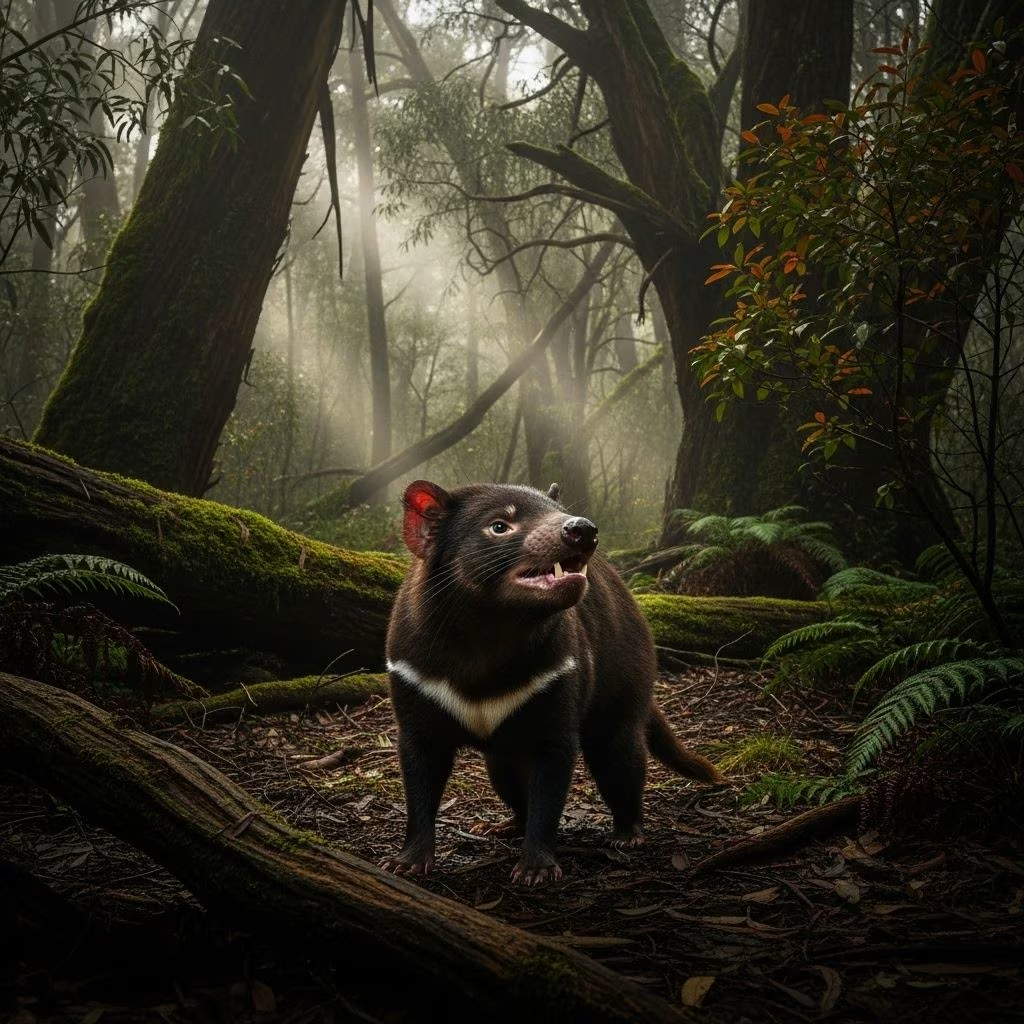
The Tasmanian devil is the world’s largest carnivorous marsupial. Endemic to the island of Tasmania, it plays a vital role in the ecosystem as nature’s cleanup crew, consuming carcasses and helping limit disease spread. Despite their small stature, devils are fierce—capable of eating almost every part of their prey, including bones, thanks to their robust jaws and teeth.
- Physical Features: Stocky, muscular build, dark fur, large head, keen senses
- Role in Ecosystem: Apex scavenger, disease control, seed dispersal
- Habitat: Forests, woodlands, coastal scrublands across Tasmania
Main Threats to the Tasmanian Devil
The path to endangerment for the Tasmanian devil is primarily paved by disease but compounded by other environmental pressures. Below are the main threats facing the species:
1. Devil Facial Tumour Disease (DFTD)
The most significant threat to the Tasmanian devil is Devil Facial Tumour Disease (DFTD)—a contagious form of cancer that first emerged in 1996 and has since swept through the population.
- Nature of Disease: Infectious cancer causing large, fatal facial tumors
- Transmission: Spread through biting, a common devil behavior during feeding or mating disputes
- Mortality: Untreated individuals generally die within months once tumors become visible
- Impact: Population declines of up to 90% in some regions
While DFTD remains the greatest threat, some devils show early signs of resistance, offering hope for the future.
2. Competition from Introduced Predators
The introduction of the European red fox to Tasmania, beginning in 2000, added a direct competitor for food sources, increasing pressure on the already weakened devil populations.
- Foxes compete for carcasses and may prey on young devils
- Foxes can disrupt the delicate balance of Tasmania’s ecosystem
3. Road Mortality
Modern infrastructure has inadvertently put devils in danger. Vehicle strikes are a leading cause of injury and death. Devils are often attracted to roads by roadkill, inadvertently placing themselves in peril.
- Devils feeding on roadkill are at higher risk of being struck
- Nighttime activity patterns and poor visibility exacerbate the issue
4. Habitat Loss and Fragmentation
Human land development continues to shrink and fragment the devil’s natural habitat.
- Logging, agriculture, and urban expansion limit den sites and food availability
- Disturbance of maternal dens increases pup vulnerability
5. Environmental Contamination
Studies have detected potentially harmful chemicals in devil populations—specifically, flame retardants and other pollutants that may weaken immune systems and reproductive success.
Summary Table: Threats to the Tasmanian Devil
| Threat | Description | Impact |
|---|---|---|
| Devil Facial Tumour Disease (DFTD) | Highly contagious cancer spread through biting | Greatest single cause of decline, killing individuals swiftly |
| Introduced Predators (Foxes) | Competition for food, predation on young devils | Increased pressure on resources, lowered survival |
| Road Mortality | Vehicle collisions, especially when devils feed on roadkill | Significant cause of injury and death |
| Habitat Loss | Deforestation, urbanization, den disturbance | Reduced suitable habitat, increased exposure to other risks |
| Environmental Contaminants | Chemical pollutants in the environment | Poorer health, reduced immunity |
Historical Perspective: Population Decline
The decline of the Tasmanian devil is not a recent phenomenon. At least two major population crashes—possibly due to disease—were recorded in the 19th and 20th centuries. Over the past three decades, the scale and speed of decline has been unprecedented, with DFTD as the main catalyst.
- Pre-European Settlement: Once found on mainland Australia, the devil disappeared from the mainland over 3,000 years ago, likely due to a combination of climate change, hunting, and competition from dingoes.
- 2000s: Decline of 80% or more in most areas since mid-1990s
- Now: Fewer than 25,000 individuals remain in the wild
Conservation Efforts
Various programs and organizations have mobilized to combat the threats faced by the Tasmanian devil, resulting in a multipronged approach to conservation.
1. Disease Research, Treatment, and Vaccine Development
- Extensive research into DFTD biology and epidemiology by Australian universities and governement bodies
- Breeding of devils that demonstrate resistance to DFTD in captivity and in the wild
- Development of oral vaccines, including bait-based solutions to immunize wild devils—field trials for these are ongoing
2. Insurance Populations and Disease-Free Enclosures
- Establishment of disease-free populations in secure locations (“insurance populations”) both in Tasmania and on the Australian mainland
- Release of healthy devils into the wild to strengthen gene pools and population numbers
- More than 600 devils currently managed as insurance populations outside affected areas
3. Conservation Breeding and Reintroduction
- Breeding programs in zoos and reserves focus on genetic diversity and disease resistance
- Devils raised in captivity are released into disease-free wild havens where they are monitored for adaptation and health
4. Habitat Protection and Road Safety Measures
- Conservation areas such as Friendly Beaches, Liffey Valley, and Midlands Conservation Partnership properties serve as critical habitats
- Feral cat and fox population control to limit competition and predation
- Public education campaigns and speed reduction initiatives around reserves to reduce road mortality
5. Community Involvement and Education
- Programs engage local stakeholders, schools, and tourists to raise awareness
- Key initiatives include the Tasmanian Devil Ambassador Program and Save the Tasmanian Devil Program
What You Can Do to Help
Conservation of the Tasmanian devil depends on collaborative action. Anyone can contribute to their survival in several ways:
- Report sightings of sick or dead Tasmanian devils promptly to wildlife authorities
- Support organizations involved in research, public education, and direct conservation work (e.g., through donations)
- Drive cautiously in areas known to be devil habitats, especially at night
- Spread the word through social media and community events about the threats facing devils
Frequently Asked Questions (FAQs)
Q: What is Devil Facial Tumour Disease and why is it so dangerous?
A: Devil Facial Tumour Disease (DFTD) is a rare transmissible cancer that causes large facial tumors in Tasmanian devils. It spreads primarily through biting and leads to death by starvation or organ failure within several months.
Q: How many Tasmanian devils are left in the wild?
A: As of 2020, fewer than 25,000 devils remain in the wild, a drastic decline from historical populations.
Q: Does the Tasmanian devil exist outside Tasmania?
A: The species is currently found only on the island of Tasmania, though it once existed on mainland Australia thousands of years ago.
Q: Is extinction inevitable for the Tasmanian devil?
A: Although DFTD has decimated populations, ongoing research, captive breeding, vaccination, and disease resistance offer real hope that devils can survive in the wild.
Q: How can the public contribute to devil conservation?
A: People can help by reporting sightings of sick or dead animals, supporting conservation organizations, driving carefully near devil habitats, and educating others.
Conclusion
The Tasmanian devil is a remarkable survivor facing extraordinary threats, primarily from a devastating cancer and compounded by habitat pressures and introduced predators. Intensive conservation efforts, emerging disease resistance, and global attention offer cautious optimism. The fate of the species ultimately depends on continued research, public support, and coordinated action to ensure Tasmanian devils remain an enduring part of Australia’s wild heritage.
References
- https://www.bushheritage.org.au/species/tassie-devils
- https://en.wikipedia.org/wiki/Tasmanian_devil
- https://australianwildlifejourneys.com/blog/2024/10/22/231/species-feature-tasmanian-devil
- https://www.aucklandzoo.co.nz/animals/tasmanian-devil
- https://www.cpsg.org/success-stories/tasmanian-devils
- https://www.iucnredlist.org/fr/search/map?query=tasmanian+devil&searchType=species
- https://www.ifaw.org/international/journal/10-most-endangered-animals-australia
- https://lazoo.org/2025/07/the-la-zoo-welcomes-two-tasmanian-devils-from-down-under/