Why Are West African Cocoa Farmers So Poor?
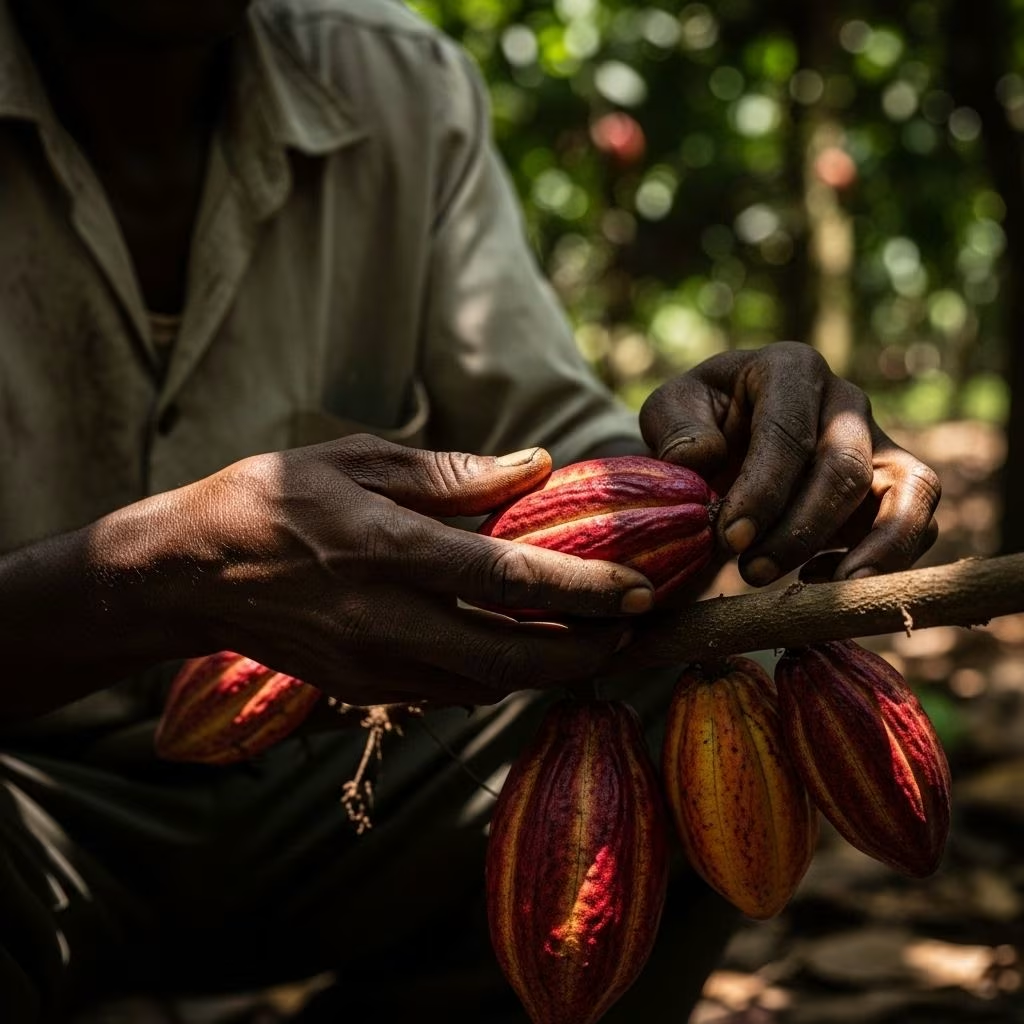
Millions of people around the world enjoy chocolate daily, but few stop to consider the livelihoods of the farmers who grow its key ingredient: cocoa. West Africa—especially Côte d’Ivoire and Ghana—supplies over 60% of the world’s cocoa. Yet, the average cocoa farmer in this region earns less than a dollar a day, far below the international poverty line and dramatically less than what is needed for a living income.
This article explores the reasons behind this persistent poverty, the impact on farming communities, and why the chocolate industry’s record profits rarely trickle down to the people growing its essential crop.
The Global Cocoa Supply Chain at a Glance
- West Africa supplies ~60% of global cocoa, with Côte d’Ivoire and Ghana being the top producers.
- About 2 million smallholder families in the region cultivate cocoa—often with little land and few resources.
- Despite their central role, cocoa farmers receive just a fraction of the final chocolate price—often less than 7%.
Value Distribution in a Chocolate Bar
| Stakeholder | Share of Retail Price |
|---|---|
| Cocoa Farmer | <7% |
| Traders/Exporters | 5-8% |
| Processors | 7-10% |
| Chocolate Manufacturers | 35-40% |
| Retailers | ~44% |
While a $2 chocolate bar may yield just 10-14 cents for a West African farmer, manufacturers and retailers typically take most of the value.
The Harsh Realities: Income and Poverty Among Cocoa Farmers
- Average daily income: $1.23 (Côte d’Ivoire), $1.42 (Ghana)
- Living income benchmark: $1.96–$2.15 per person per day
- Percentage of farmers below living income: 73–90% in Côte d’Ivoire and Ghana
- The World Bank’s extreme poverty line is $2.15/day, yet many cocoa farmers earn much less.
- On a typical five-person farm household, total earnings per family member often fall to $0.60–$0.80 per day.
This chronic income deficit means many cocoa-growing families meet only their most basic survival needs, with little left for education, healthcare, or future investments.
Root Causes: Why Are Farmers Paid So Little?
Cocoa’s poverty trap is driven by a web of global and local factors:
- Oversupply and Low Farm Gate Prices
Cocoa is grown by millions of small farmers, creating a supply surplus that depresses prices. Per government policy, farm gate prices (the price paid to farmers) are set annually by state marketing boards, which are designed to stabilize income but often leave farmers vulnerable to market downturns. - Imbalanced Market Power
A handful of international chocolate manufacturers and traders control most of the global cocoa trade, meaning farmers have little bargaining leverage. They sell raw beans rather than processed products, missing out on the highest-value steps in the supply chain. - Rising Production Costs
Fertilizers, pesticides, and the labor required for cocoa farming are becoming increasingly expensive. Meanwhile, product prices aren’t rising at the farm level to match these higher costs, squeezing margins for smallholders. - Climate Vulnerability and Disease
West African cocoa farmers face mounting threats from plant diseases (such as cacao swollen shoot disease, which devastated over 25% of Ghana’s cocoa land in 2023) and unpredictable weather due to climate change. Aging cocoa trees and soil depletion reduce yields over time, yet many farmers cannot afford to renew or diversify their farms. - Lack of Infrastructure and Support
Poor roads, limited access to credit, and weak agricultural extension services hamper both the productivity and incomes of cocoa farmers.
The Human Cost: Life on a Dollar a Day
The impact of low earnings ripples through cocoa-growing communities:
- Children may need to work on the farm instead of attending school, perpetuating cycles of poverty and missed opportunities.
- Healthcare is often unaffordable, leading to poor health outcomes and vulnerability during crises.
- Housing, nutrition, and overall quality of life are frequently substandard.
Stories like Emmanuel Ankoma’s, who farms 30 acres in Ghana yet earns less than $1 a day after subtracting production costs, highlight just how little profit is left for most farmers.
Environmental Challenges and the Sustainability Dilemma
The poverty of cocoa farmers is not just an economic issue—it directly influences global environmental outcomes:
- Deforestation: To boost meager incomes, some farmers clear new land—including protected forests—to plant cocoa, resulting in widespread deforestation in West Africa.
- Pesticide Use: Facing pests and diseases, farmers may overuse chemicals, harming soil and water supplies.
- Resilience to Climate Change: With little income to reinvest, farmers are less able to adapt new, climate-smart practices, making cocoa production highly vulnerable to changing weather patterns.
Do Certification Initiatives Make a Difference?
Many chocolate brands and NGOs push certification schemes such as Fairtrade, Rainforest Alliance, and UTZ Certified, aiming to improve conditions for cocoa farmers:
- Certified cocoa can earn a price premium, but the increase is often insufficient to bridge the gap to a living income.
- Programs may require farmers to adopt environmentally friendly or socially responsible practices, which can be costly and difficult to maintain without proper support.
- Inconsistent implementation and limited oversight mean only a fraction of certified product meets the intended standards. Only select farmers have access to these markets.
Studies show that while certification can provide moderate benefits, it is not a one-size-fits-all solution—and most West African cocoa remains uncertified.
Attempts to Boost Incomes: What’s Being Tried?
- Productivity Improvements: NGOs and companies support training, input subsidies, and technical assistance. These can increase yields by up to 32% with better farm management and rejuvenation.
- Diversification: Encouraging farmers to grow food or cash crops alongside cocoa, or raising livestock to reduce risk and supplement incomes.
- Direct Supply Chain Partnerships: Some chocolate brands buy beans directly from cooperatives, paying slightly higher prices and offering capacity-building programs.
- Income Floor Initiatives: New proposals advocate for a minimum price for cocoa, ensuring that farmgate prices never fall below a living income benchmark.
However, these efforts face obstacles: limited farm sizes, aging trees, and local market barriers limit how much income smallholders can realistically earn, even with intervention.
Where Does Chocolate’s Wealth Go?
Despite record profits among chocolate companies, very little wealth ends up in the pockets of West African producers. Major manufacturers and retailers capture the highest share of value, using their market dominance to keep bean prices low and profits high.
- Nestlé, the world’s largest chocolate company, reported over $5 billion in chocolate sales in a single year, but the farmers they source from earned just $1.23–$1.42/day.
- Many major brands boast of sustainability programs, yet few make a tangible difference in farm-level incomes or environmental outcomes.
The Way Forward: Toward Fairer Chocolate
Lasting solutions must go beyond charity and certification. To close the cocoa poverty gap, stakeholders recommend:
- Ensuring a living income for all cocoa farmers through minimum price interventions and income support mechanisms.
- Tackling imbalances of power in the supply chain, supporting farmer cooperatives, and increasing direct trade relationships.
- Investing in farm productivity with access to finance, new seedlings, technical training, and climate adaptation advice.
- Encouraging responsible land management to protect forests, reduce deforestation, and promote agroforestry.
- Improving transparency and demanding that manufacturers and retailers share more of the chocolate value chain with producers.
Consumers can also play a role—looking for chocolates that pay farmers fairly, support environmental protection, and investing in brands that demonstrate real commitment to change.
Frequently Asked Questions (FAQs)
Q: Why do West African cocoa farmers earn so little when chocolate is so profitable?
A: The global cocoa market structure heavily favors large chocolate companies and retailers, leaving farmers with limited bargaining power and only a small share of the final product’s value.
Q: What is a “living income” for a cocoa farmer?
A: A living income enables a family to afford basics: housing, food, health care, education, and emergency savings. For cocoa farmers in West Africa, this amount is about $1.96–$2.50 per person per day.
Q: Are certification schemes like Fairtrade helping?
A: Certification can provide modest price premiums and training, but has so far failed to reach most farmers or close the gap to a living income. It is one part of the solution, not a cure-all.
Q: How does climate change affect cocoa farmers?
A: Rising temperatures, erratic rainfall, and extreme weather increase pests and diseases, lower yields, and threaten the long-term viability of cocoa farming in West Africa.
Q: What can chocolate consumers do?
A: Look for brands that clearly report how much they pay farmers and support sustainable initiatives. Ethical consumer choices can help shift industry norms, but the biggest changes must come from policy and corporate reform.
References
- https://www.solidaridadnetwork.org/wp-content/uploads/2023/07/LIVING-INCOME-INVENTORY_COCOA-LATAM_FINAL_24042023.pdf
- https://edepot.wur.nl/674598
- https://pulitzercenter.org/stories/ghana-second-largest-cocoa-producer-why-are-its-farmers-still-poor
- https://cdn.walkfree.org/content/uploads/2023/05/23133525/GSI-2023-Cocoa-Spotlight.pdf
- https://www.undp.org/africa/waca/blog/crumbling-empire-chocolate
- https://www.fairtrade.net/content/dam/fairtrade/fairtrade-international/library/2024/fairtrade-west-africa-cocoa-programme-monitoring-report,-fourth-edition/Fairtrade-WACP-MR-4th-Ed-2024-EN.pdf
- https://apps.fas.usda.gov/newgainapi/api/Report/DownloadReportByFileName?fileName=Ghana+-+Cocoa+Sector+Overview+-+2025_Accra_Ghana_GH2025-0008.pdf
- https://www.ifpri.org/blog/soaring-cocoa-prices-diverse-impacts-and-implications-key-west-african-producers/
- https://fairtrade.net/us-en/why-fairtrade/impact/impact-stories/west-africa-cocoa-program-monitoring-report-4th-edition.html