


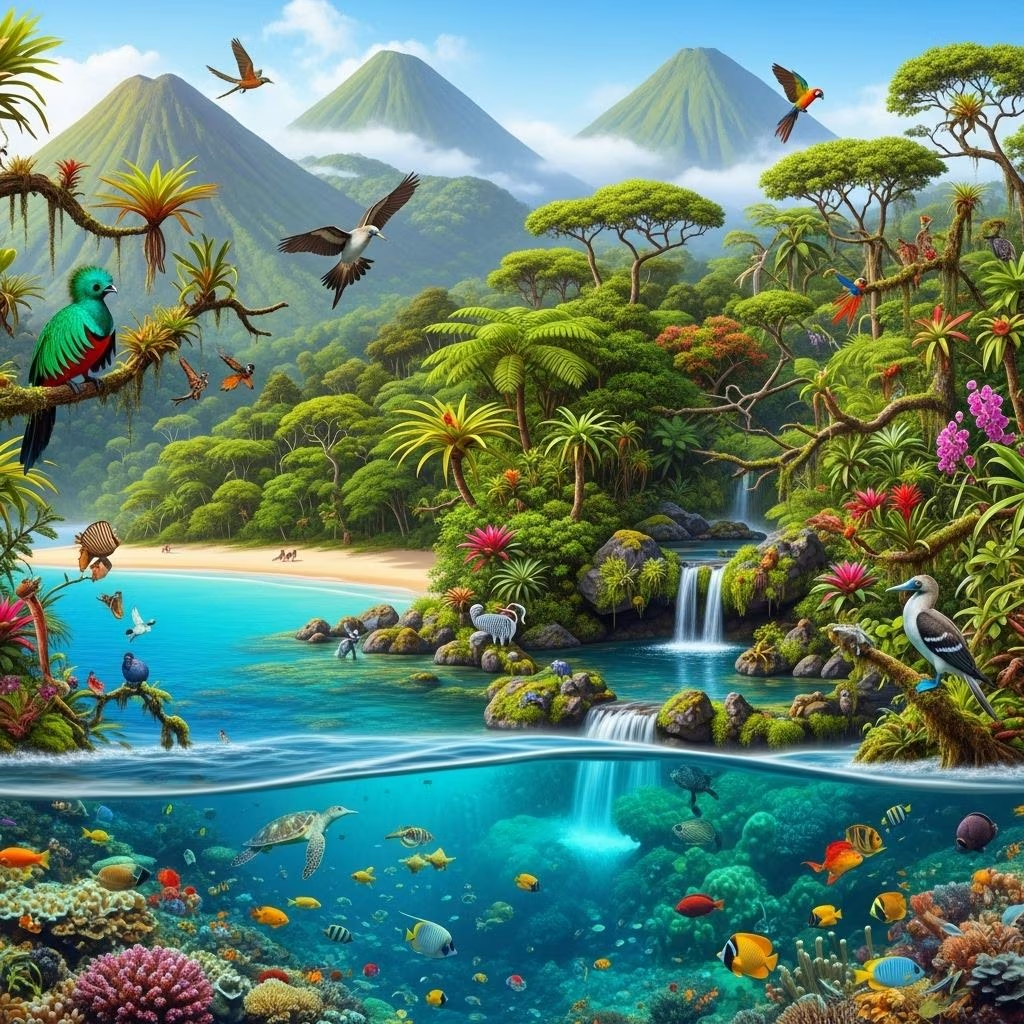
Islands with Extraordinary Biodiversity: Nature’s Living Laboratories
Islands are more than picturesque retreats surrounded by vast oceans—they are some of the most biodiverse and ecologically distinct places on Earth. Due to their isolation, islands harbor unique assemblages of plants and animals, many of which exist nowhere else. Through millions of years of separation, evolution has crafted new species, ecosystems, and natural wonders on these remote landmasses. This article highlights several of the world’s most biodiverse islands, explaining why they are so special, the evolutionary processes at play, and the conservational challenges they face.
Why Are Islands So Biodiverse?
Islands act as natural laboratories of evolution. Their separation from mainland continental influences means that new species can evolve in relative isolation, adapting to the unique conditions present. This process, called endemism, results in entire groups of species that are found exclusively on a single island or archipelago. However, their isolation also makes island species exceptionally vulnerable to outside threats, such as habitat loss, invasive species, and climate change.
- Evolutionary Isolation: Over long periods, isolation leads to the development of endemic species—species found only in one place.
- Unique Ecosystems: Island environments vary greatly, from volcanic peaks to coral atolls, each supporting different forms of life.
- Ecological Vulnerability: Islands are especially sensitive to environmental change and species invasions due to their small size and limited resources.
World’s Most Biodiverse Islands
Below is an exploration of some of the planet’s most extraordinary islands with remarkable biodiversity, the endemic species they protect, and the pressing conservation needs they represent.
1. Madagascar
Often called the “eighth continent,” Madagascar is one of the largest islands on the planet and hosts a staggering diversity of life. Its isolation for over 80 million years from Africa has allowed it to become a cradle of evolution, home to countless unique species.
- Endemic Species: Over 90% of Madagascar’s wildlife, including all lemurs and most baobab trees, are found nowhere else.
- Natural Wonders: Iconic species include the fossa (a cat-like predator), the aye-aye (a nocturnal lemur), and the radiated tortoise.
- Conservation Threats: Deforestation, illegal wildlife trade, habitat degradation, and poverty-driven subsistence activities put its unique biodiversity at serious risk.
2. New Guinea
The world’s second-largest island, New Guinea, is a biodiversity hotspot divided politically between Indonesia to the west and Papua New Guinea to the east. Rich in dense rainforests, alpine grasslands, and mangroves, its diversity rivals that of some entire continents.
- Stunning Diversity: Hosts more than 5% of the world’s plant and animal species—including an array of birds-of-paradise renowned for their exotic plumage and courtship dances.
- Unique Mammals and Reptiles: The island shelters marsupials, echidnas, tree kangaroos, and countless frogs and reptiles.
- Human-Cultural Diversity: Home to over 800 distinct languages, making it not just a biological but also a cultural treasure trove.
3. Borneo
Borneo, shared by Malaysia, Indonesia, and Brunei, boasts some of Earth’s oldest rainforests. This equatorial island is home to a trove of wildlife and plants, many of which are found nowhere else on the planet.
- Flagship Species: Orangutans, proboscis monkeys, pygmy elephants, and the Sumatran rhinoceros.
- Exceptional Flora: Includes the enormous rafflesia flower, the world’s largest single bloom.
- Conservation Battles: Logging, palm oil plantations, and forest fires severely threaten habitats and species survival.
4. Galápagos Islands
Situated in the Pacific Ocean, the Galápagos are an emblem of natural selection, made famous by Charles Darwin’s groundbreaking observations. These volcanic islands feature a menagerie of creatures that have evolved in near-total isolation.
- Endemic Wildlife: Marine iguanas (the world’s only swimming lizard), giant tortoises, flightless cormorants, and multiple finch species each adapted to specific island habitats.
- Conservation Legacy: Many species face threats from introduced animals, tourism impacts, and climate change, but the islands are now managed with strong conservation measures.
- Evolution in Action: The Galápagos continue to reveal insights on adaptation, survival, and speciation.
5. Sri Lanka
Sri Lanka, lying off the southern tip of India, is famed for its lush rainforests, highland plateaus, and arid coastal plains, all of which are teeming with life. Despite its modest size, the island harbors a notably high density of endemic species.
- Biodiversity Hotspot: Over 3,800 species of flowering plants, many frogs, reptiles, and a rich array of birds.
- Notable Residents: The Sri Lankan leopard, purple-faced langur, and dozens of unique amphibian species.
- Conservation Gaps: Habitat fragmentation, agricultural development, and poaching threaten local wildlife, making conservation efforts crucial.
6. Seychelles
Seychelles comprises 115 islands in the Indian Ocean, celebrated for their breathtaking beaches and coral reefs. This archipelago’s geographical isolation has led to a flourish of unique evolutionary adaptations.
- Unique Plant Life: Home to the legendary coco de mer palm, the only plant to produce the world’s largest (and heaviest) seed.
- Endemic Animals: The Seychelles black parrot, giant Aldabra tortoise, and a range of rare amphibians and reptiles.
- Conservation Success: Protected areas and nature reserves have helped revive certain species, though invasive species and climate risks persist.
7. Hawaii
The Hawaiian archipelago in the central Pacific is a showcase for adaptive radiation—the process by which species rapidly diversify to fill ecological niches. Hawaii’s distinct volcanic terrain has fostered extraordinary evolution but also underscores the perils of isolation.
- Extensive Endemism: Over 90% of Hawaii’s native species of land snails, birds, and plants occur nowhere else.
- Evolutionary Marvels: The honeycreepers (a group of birds) have evolved into dozens of different forms adapted to different feeding strategies.
- Threat Level: Invasive species and habitat loss have made Hawaii the extinction capital of the United States, with a high proportion of species already lost.
8. New Zealand
Separated from other landmasses for over 80 million years, New Zealand is renowned for its quirky, flightless birds and ancient plant life. The lack of land mammals until humans arrived allowed birds to evolve into the dominant group.
- Noteworthy Species: Kiwi, kakapo (the heaviest parrot), tuatara (a relic reptile), and weta insects.
- Unique Habitats: Alpine meadows, rainforests, and geothermal fields.
- Modern Challenges: Habitat destruction and introduced predators have made many species critically endangered.
The Importance of Island Biodiversity
Islands house more than 20% of the world’s plant, bird, and reptile species despite covering less than 5% of Earth’s land area. Their biological richness often outpaces continental regions, yet their ecosystems are fragile.
- Many species are highly specialized to their local habitats and cannot survive elsewhere.
- Their evolutionary novelty makes them invaluable for research on adaptation, speciation, and ecosystem function.
- Losses of island species represent disproportionate losses of global biodiversity and ecological history.
Major Threats to Island Ecosystems
| Threat | Description | Example |
|---|---|---|
| Habitat Loss | Deforestation, agriculture, and development destroy natural habitats. | Rainforest clearing in Borneo and Madagascar. |
| Invasive Species | Non-native plants and animals displace or prey on native species. | Rats, snakes, and goats in Hawaii and Galápagos. |
| Climate Change | Rising sea levels, altered rainfall patterns, and ocean warming impact island ecosystems. | Coral bleaching in Seychelles and Pacific islands. |
| Pollution | Chemicals and plastics degrade sensitive island environments. | Marine debris impacting seabird populations. |
| Overexploitation | Unsustainable hunting, fishing, and plant collection threaten endemic species. | Tortoise poaching in the Galápagos. |
Conserving Island Biodiversity
Saving island ecosystems requires determined action informed by conservation science and community engagement.
- Creation of protected areas on land and sea to shield vulnerable species.
- Eradication and control of invasive species.
- Supporting sustainable livelihoods that don’t destroy biodiversity.
- Environmental education and fostering local stewardship.
- International cooperation to fund and manage conservation efforts.
Frequently Asked Questions (FAQs)
Q: Why do islands have so many unique plant and animal species?
A: Geographic isolation causes populations to evolve independently from their mainland ancestors, resulting in high levels of endemism—species found nowhere else in the world.
Q: Are islands more vulnerable to extinctions?
A: Yes, island species often have small population sizes and limited ranges, making them highly susceptible to threats like habitat destruction, invasive species, and climate change.
Q: What are some of the most famous endemic animals found only on islands?
A: Lemurs of Madagascar, Galápagos giant tortoises, Hawaiian honeycreepers, and New Zealand’s kiwi are iconic examples of island endemism.
Q: How does climate change affect island biodiversity?
A: Rising sea levels can submerge low-lying islands, while ocean warming bleaches coral reefs and disrupts marine ecosystems. Many island species cannot migrate quickly enough to escape changing climates.
Q: Can islands recover lost biodiversity?
A: While some restoration is possible through habitat recovery and species reintroductions, extinct species cannot be revived. Prevention through strong conservation measures is key.
Key Takeaways
- Islands are evolutionary hotspots, harboring unmatched concentrations of unique species.
- Isolation spurs evolution but also increases vulnerability to extinction.
- Protecting island biodiversity protects the world’s natural heritage—urgent action is needed to safeguard these ecological treasures for future generations.
References
- https://www.nature.com/articles/s41586-023-06086-5
- https://www.scidev.net/global/news/tree-islands-restore-biodiversity-in-oil-palm-farms/
- https://news.mongabay.com/2023/06/tree-islands-boost-diversity-in-oil-palm-plantations-study-finds/
- https://www.caryinstitute.org/news-insights/press-release/why-oceanic-islands-buck-biodiversity-trends
- https://www.science.org/doi/10.1126/science.ado1629
- https://yff.yale.edu/sites/default/files/files/Calle_2022_BiodiversityIslands_Springer_Chapter11.pdf


