The bear crawl has gained momentum in the fitness world for its powerful ability to target multiple muscle groups, build total-body stability, and enhance athletic performance. This foundational move is popular in functional fitness, bootcamp, and CrossFit classes, but it’s simple enough for anyone to master—no equipment needed. Whether you’re an athlete or a beginner, bear crawls can elevate your workout routine, improve your movement quality, and build a stronger foundation for life.
What Is the Bear Crawl Exercise?
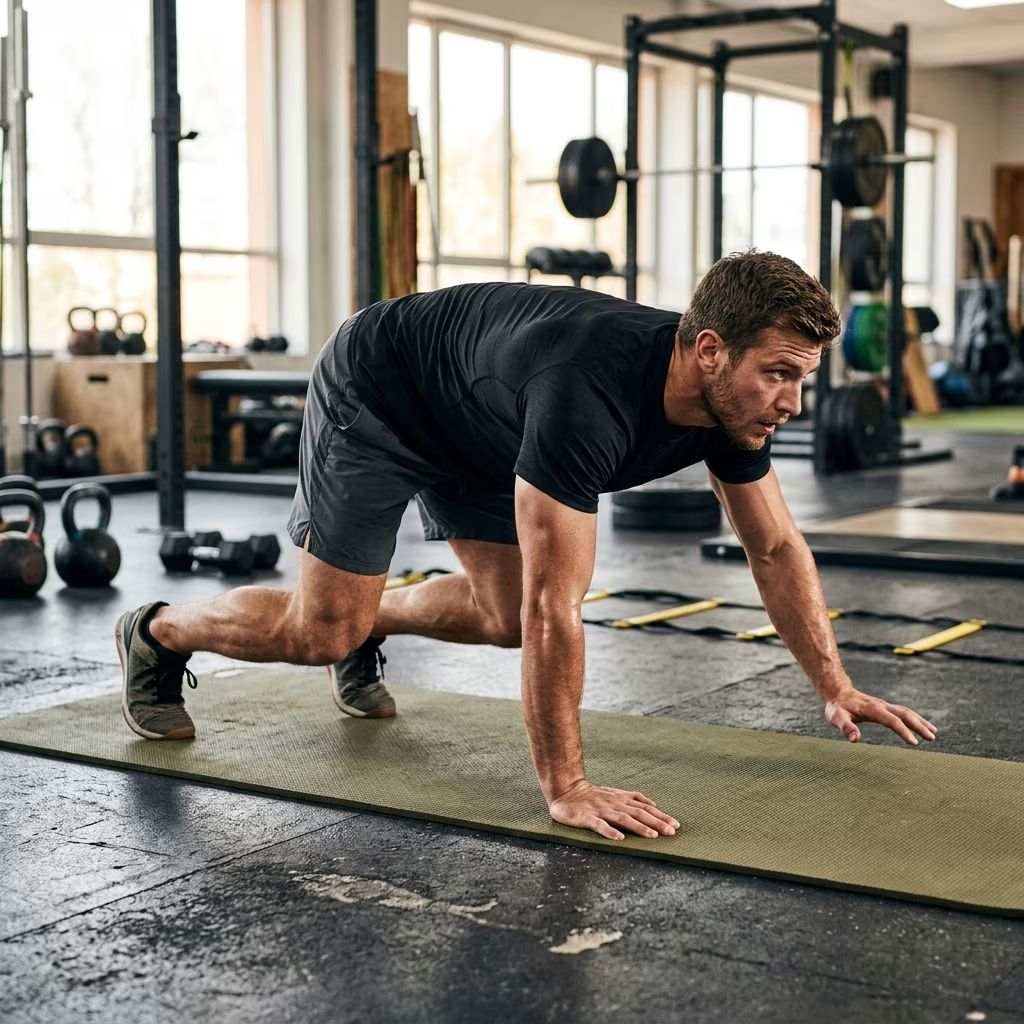
The bear crawl is a dynamic bodyweight movement that involves crawling on all fours with your knees hovering just above the ground. It mimics the natural quadrupedal movement of a bear, challenging your strength, coordination, and cardiovascular system all at once.
- Targets major muscle groups: Works the shoulders, chest, back, arms, quads, hamstrings, glutes, and core.
- Improves functional fitness: Develops stability and control crucial for daily activities.
- Boosts endurance: High-repetition crawls build cardiovascular and muscular stamina.
Muscles Worked During Bear Crawls
The beauty of the bear crawl lies in its full-body engagement. Each step forward coordinates upper and lower body muscles while maintaining core activation for stabilization. Here’s a breakdown of the main areas involved:
| Muscle Group | Role in Bear Crawl |
|---|---|
| Shoulders (Deltoids) | Stabilize and propel the body forward |
| Chest (Pectorals) | Assist in pushing off the ground |
| Arms (Triceps, Biceps) | Control movement and support weight |
| Back (Latissimus Dorsi, Trapezius) | Stabilize spine and provide movement control |
| Core (Abs, Obliques) | Maintain stability, prevent sagging |
| Glutes & Hamstrings | Mobilize hips and control leg extension |
| Quadriceps | Support knee flexion and leg drive |
| Calves & Ankles | Stabilize lower body as you move |
How to Do a Bear Crawl: Step-by-Step Instructions
Mastering the right form is crucial to get the most benefit and reduce your risk of injury. Here’s a stepwise guide:
- Begin on all fours, with your hands under your shoulders and knees under your hips.
- Tuck your toes under and lift your knees about an inch off the floor. Your back should remain flat and your core braced.
- With your abs engaged, step your right hand and left foot forward simultaneously, keeping knees close to the ground.
- Then step your left hand and right foot forward. Continue moving in a smooth, controlled fashion.
- Keep your neck neutral, gaze down, and hips level throughout.
Tip: Move slowly at first to master coordination, then increase speed for a greater challenge.
Bear Plank: The Foundational Variation
Before crawling, start with the bear plank position. Lift your knees off the ground as above, but hold the static position. This teaches core tension, glute activation, and shoulder stability—skills that transfer to the moving bear crawl.
- Hold for 30 seconds per round, rest, and accumulate 2–3 rounds.
The Top Benefits of Bear Crawls
The versatility of the bear crawl goes beyond “just another core move.” Here are its key scientifically-backed benefits:
1. Builds Full-Body Strength
- Simultaneous engagement of upper and lower body muscles leads to efficient strength gains.
- Especially challenges shoulders, arms, chest, back, glutes, legs, and core with every rep.
- Improves both pushing and pulling capabilities important for functional movements.
2. Boosts Core Stability and Strength
- Continuous core engagement supports the spine and helps prevent injuries.
- Improves deep abdominal muscle activation, supporting posture and athletic movement.
- Develops anti-rotational strength—essential for balance and agility in sports and daily life.
3. Enhances Cardiovascular and Muscular Endurance
- Bear crawls are metabolically intense, raising your heart rate with continuous movement.
- Muscles must sustain effort under tension, improving stamina for prolonged activity.
- Effective as a conditioning tool in HIIT circuits and athletic training.
4. Promotes Joint Mobility and Flexibility
- Dynamic movement pattern increases range of motion in shoulders, hips, ankles, and wrists.
- Improves mobility, which supports injury prevention and better exercise technique elsewhere.
- Regular practice can reduce stiffness and enhance daily movement quality.
5. Improves Coordination and Motor Control
- Crawling on all fours requires coordination between opposite limbs, boosting neuromuscular connections.
- Helps retrain movement patterns, benefitting those recovering from injury or looking to optimize athletic performance.
- Enhances movement efficiency and proprioception (awareness of body position in space).
6. Increases Athletic Performance
- Translates to better sprinting, jumping, and change-of-direction ability in sports.
- Builds a well-rounded fitness foundation for everything from running to team sports to obstacle racing.
7. Aids in Weight Management and Fat Loss
- Full-body, high-intensity movement burns calories quickly.
- Boosts metabolism during and after training, supporting weight-loss goals.
Bear Crawl Variations to Try
Once comfortable with the standard bear crawl, try these fun, challenging variations to increase difficulty and keep workouts interesting:
- Weighted Bear Crawl: Wear a weighted vest or backpack to increase loading and resistance.
- Reverse Bear Crawl: Move backward, challenging coordination and upper body strength in new ways.
- Circular Bear Crawl: Move in a circle rather than a straight line—great for core and hip mobility.
- Lateral Bear Crawl: Crawl side-to-side to target hip abductors and further improve lateral movement skill.
- Bear Crawl with Push-Up: Pause to perform a push-up every few steps for a combined upper-body blast.
Sample Bear Crawl Workouts
Here are some effective ways to add bear crawls into your training routine:
- Warm-up/Cooldown: 2–3 rounds of 30-60 seconds bear crawl, focusing on form and mobility.
- HIIT Circuit: 30 seconds bear crawl, 30 seconds rest, repeated for 4–6 rounds.
- Endurance Challenge: Cover a distance (such as 20 meters) as quickly as possible, rest, and repeat 4–5 times.
- Strength & Mobility Routine:
- 1 minute bear crawl forward
- 1 minute rest
- 1 minute bear crawl backward
- 1 minute rest
- Repeat 3 times
Expert Tips for Better Bear Crawls
- Keep knees low to the ground (just 1–2 inches up) for maximum core activation.
- Move with control—avoid wobbly hips and slouching shoulders.
- Keep your gaze slightly ahead on the floor to maintain a neutral spine.
- Start slow, master technique, and only then increase duration or speed.
- Listen to your body: Maintain good form even as you get tired.
Common Mistakes to Avoid
- Hips too high: This disengages the core and shifts work away from the legs and abs.
- Shoulders shrugged: Can lead to neck tension and poor movement.
- Losing neutral spine: Avoid arching or rounding your back; keep the torso steady.
- Moving too fast, too soon: Prioritize quality and control over speed.
Who Should Try Bear Crawls?
Bear crawls are suitable for nearly all fitness levels. Beginners should start with slow, short-distance crawls and static holds (bear plank). Advanced athletes can intensify the exercise with added resistance, longer distances, or challenging variations.
- If you’re recovering from injury, check with your healthcare or fitness professional first.
- If you have wrist, knee, or shoulder pain, modify by limiting range of motion or using padding.
Integrating Bear Crawls Into Your Fitness Routine
- Use bear crawls as a warm-up to activate core and stabilize joints before heavier lifts.
- Incorporate into circuit or HIIT workouts for metabolic conditioning.
- End workouts with slower, controlled bear crawls for stability and “burnout” effect.
- Progressively increase time, sets, or distance as you get stronger.
Bear Crawl Safety Tips
- Use a soft surface, such as an exercise mat or gym floor, to protect your hands and knees.
- Stop immediately if you feel pain (sharp or persistent) in wrists, knees, or back.
- Focus on controlled movements rather than maximum speed or distance.
Summary: Why Bear Crawls Deserve a Place in Your Training
The bear crawl is a deceptively simple yet powerfully effective move. By practicing regularly, you’ll see gains in strength, stability, mobility, and coordination—qualities foundational not only for fitness, but also for daily movement and long-term health. With its versatility and adaptability, the bear crawl is a true essential in your exercise arsenal.
Frequently Asked Questions (FAQs)
What makes the bear crawl so effective?
Bear crawls combine full-body strength, core activation, and cardiovascular challenge in a single movement, making them efficient for building functional fitness and burning calories.
How often should I include bear crawls in my workout?
2–3 sessions a week are sufficient for most people; advanced athletes can increase frequency as conditioning improves.
Are bear crawls good for beginners?
Yes! Start with basic form and short intervals. Hold the bear plank first to build foundational strength, then progress to crawling as control improves.
Can I use bear crawls for weight loss?
Bear crawls, as a high-intensity, full-body movement, burn calories and boost metabolism, supporting weight management when combined with healthy nutrition.
Do I need any equipment for bear crawls?
No equipment is necessary. For advanced variations, you may add a weighted vest or resistance bands, but the move is effective as a bodyweight exercise.
Is there a way to make bear crawls easier?
Absolutely—use a larger knee lift, move more slowly, or only hold the bear plank until you build the necessary strength and stability to crawl.
References
- https://www.americansportandfitness.com/blogs/fitness-blog/the-top-10-benefits-of-bear-crawls
- https://www.tomsguide.com/features/i-did-the-7-minute-bear-crawl-exercise-every-day-for-a-week-here-are-my-results
- https://www.menshealth.com/fitness/a19538969/bear-crawl/
- https://www.youtube.com/watch?v=vg5hegN6pk0
- https://gmb.io/bear/
- https://www.youtube.com/watch?v=t8XLor7unqU
- https://www.masterclass.com/articles/bear-crawl-exercise-guide