Whether you’re seeking stronger legs, bulletproof form, or a functional full-body movement, the goblet squat is one of the smartest additions you can make to your fitness routine. Simple yet powerful, this move offers scalable benefits for beginners and experienced lifters alike. This comprehensive guide covers everything you need to know to execute goblet squats for strength, longevity, and safe movement.
What Is a Goblet Squat?
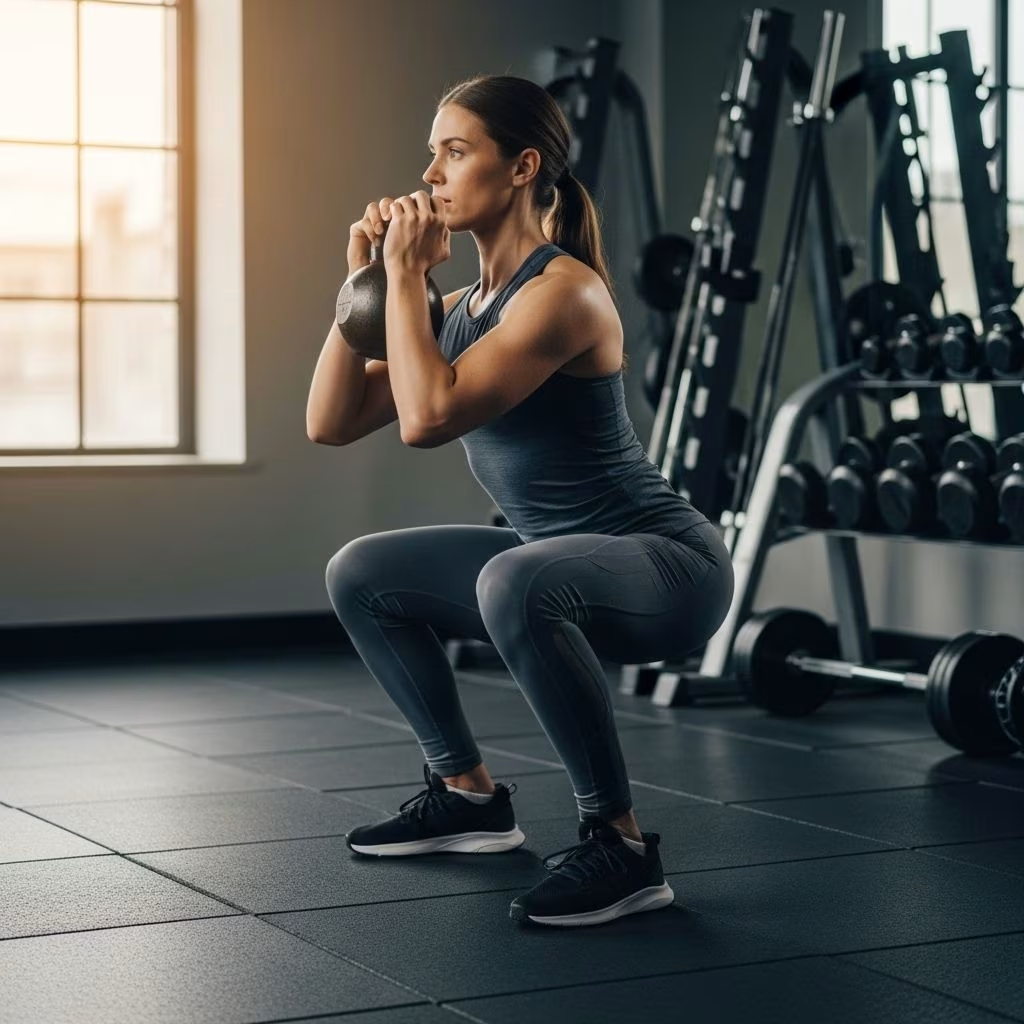
A goblet squat is a lower-body strength exercise performed by holding a single dumbbell or kettlebell with both hands close to your chest while squatting down. The position of the weight in front of the body helps you learn proper squat mechanics while keeping your chest upright and your core engaged. It’s an ideal move for beginners to learn safe squat patterning and for more advanced athletes to reinforce good habits.
- Equipment Needed: One dumbbell, kettlebell, or another weighted object
- Primary Muscles Targeted: Quadriceps, glutes, hamstrings, core, upper back
- Secondary Muscles: Forearms (grip), adductors, shoulders
- Skill Level: Beginner-friendly but effective for all levels
Goblet Squat Benefits
Goblet squats offer a wealth of fitness benefits that go beyond simply building stronger legs. Here are some of their major advantages:
- Teaches Proper Form: Holding the weight in front of the chest encourages an upright posture and correct torso angle. This helps you learn to keep your back neutral, chest up, and knees tracking over your toes during the squat.
- Builds Lower Body Strength: Mainly targets the quads and glutes, while also working the hamstrings and adductors. Strengthening these muscle groups improves everyday movement and athletic performance.
- Reinforces Core Stability: The anterior (front) weight load challenges your core and anti-flexion strength, making it a solid move for core training.
- Improves Grip Strength: You must actively squeeze the weight, which enhances grip and forearm strength.
- Safer on the Spine: Unlike barbell back squats, goblet squats place less direct load on the lower back, making them safer and more approachable — especially for beginners or those with back sensitivities.
- Versatility and Accessibility: You only need one weight (or a weighted object like a water jug or backpack), allowing you to do goblet squats almost anywhere, including at home.
- Corrective and Screening Tool: Useful for coaches to assess squat mechanics, mobility, and imbalances before progressing to heavy barbell squats.
- Conditioning: By increasing reps or reducing rest between sets, goblet squats can be used for cardiovascular and muscular endurance training as well.
How to Do the Goblet Squat: Step-by-Step Guide
Perfect squat form starts here. Here’s how to do a goblet squat with the safest and most effective technique:
- Start Position: Stand with feet shoulder-width apart, toes pointed slightly outward. Hold a dumbbell or kettlebell vertically by one end (for a dumbbell) or the horns (for a kettlebell), close to your chest with elbows pointing downward.
- Brace: Take a deep breath into your belly, tighten your core, and keep your chest tall and shoulders back. Imagine preparing your midsection as if for a punch.
- Initiate the Descent: Push your hips back and bend your knees, lowering your body into a deep squat. Keep the weight glued to your chest, elbows tracking inside your knees as you drop down.
- Full Depth: Go as low as your mobility allows while maintaining a neutral spine and upright chest. Ideally, your thighs should be parallel with the ground (or deeper), but depth depends on hip and ankle mobility.
- Return: Push through your heels to stand back up, maintaining core tension and an upright posture.
- Repeat: Perform the desired number of repetitions, keeping your form consistent throughout.
Key Goblet Squat Cues
- Keep the chest and head up
- Elbows track down and slightly forward (not flaring out)
- Push knees out (not caving in)
- Maintain flat feet — heels and toes firmly on the ground
- Keep weight close to your body for balance
Common Mistakes and Fixes
Even though goblet squats are beginner-friendly, certain mistakes can reduce their effectiveness or cause discomfort. Here are common errors and solutions:
- Heels Lifting Off the Floor: Tempted to rise onto your toes? This often signals tight ankles or leaning forward. Fix: Focus on sitting back with your hips, keep the weight pulled to your chest, and consider elevating your heels with a wedge if you lack ankle mobility.
- Chest Dropping Forward: Letting the weight pull your upper body down. Fix: Keep a ‘proud chest,’ brace your core, and maintain the weight tight against your chest throughout the movement. Also, work on breathing and bracing at the top.
- Butt Wink (Pelvis Tucking Under): Rounding the low back in the bottom position can stress your spine. Fix: Only squat as deep as you can while keeping a neutral spine. Work on hip and ankle mobility, and stop before excessive rounding begins.
- Knees Caving In: Can strain your knees and cause poor movement patterning. Fix: Focus on tracking your knees in the direction of your toes and maintain strong glutes throughout.
- Dropping the Weight: Forgetting about grip or losing focus, especially with heavy weights. Fix: Choose an appropriate weight you can hold securely and focus on squeezing the handles.
Muscles Worked by the Goblet Squat
| Muscle Group | Role in Movement |
|---|---|
| Quadriceps | Primary driver for straightening the knee |
| Glutes | Powerful hip extension at bottom and top |
| Hamstrings | Assists with hip extension and knee stabilization |
| Core (abs & lower back) | Stabilizes and resists flexion |
| Upper Back & Lats | Helps keep chest tall, supports weight position |
| Forearms & Grip | Controls and holds the weight securely |
How to Add Goblet Squats to Your Workout
Goblet squats combine well with virtually any fitness program, from basic strength routines and athletic training to high-intensity interval sessions. Here are some effective ways to incorporate them:
- Warm-Up: Use with bodyweight or light weights to rehearse squat patterns and improve mobility.
- Main Strength Movement: Go heavier for 3–4 sets of 8–12 reps focused on strength and form.
- Hypertrophy: Moderate-to-high reps (10–20) for muscle growth; add a tempo for more challenge.
- Conditioning: Short, timed sets or circuits like goblet squat ladders or paired with other moves (e.g., squat-to-press, lunge variations).
- Mobility: Pause in the bottom of the squat to enhance hip and ankle mobility.
Progressions, Variations, and Alternatives
As you grow stronger or want to challenge yourself in new ways, try these goblet squat variations:
- Heel-Elevated Goblet Squat: Place heels on a weight plate or wedge to reduce ankle mobility demands and emphasize quad recruitment.
- Goblet Squat with Pause: Pause at the bottom of each rep for 2–3 seconds to build stability and control.
- Goblet Squat to Box: Squatting to a box or bench can reinforce depth consistency and boost glute activation.
- Kettlebell Goblet Squat: Same mechanics, but holding a kettlebell by the horns for different grip and muscle engagement.
- Goblet Split Squat or Lunge: Adds balance and single-leg focus for advanced leg strength.
- Tempo Goblet Squat: Slow the descending (eccentric) phase to increase time under tension without increasing weight.
Once the goblet squat becomes easy with heavy weight and perfect form, you may be ready for further progressions:
- Double Dumbbell/Kettlebell Front Squat: Holding two weights ‘racked’ at shoulder level.
- Barbell Front Squat: For advanced lifters comfortable with heavy loading and upright posture.
- Bulgarian Split Squat: Single-leg focused and increases coordination challenge.
Who Should Do Goblet Squats?
The goblet squat is a truly universal exercise. It’s suitable for:
- Beginners mastering safe squat patterns and preparing for more advanced lifts.
- Home exercisers short on space and equipment.
- Older adults focusing on functional strength and balance.
- Athletes working on movement quality and mobility before heavier squats.
- Anyone needing a safer, more accessible squat option due to mobility or back concerns.
Expert Tips for Better Goblet Squats
- Never sacrifice form for depth — prioritize quality movement every rep.
- Breathe deeply and brace your core before each squat. Think, “big belly breath, then squeeze.”
- Keep the weight snug to your chest — don’t let it drift away.
- Use video or a mirror to check your posture, especially for butt wink or torso lean.
- Increase weight gradually as your form remains solid; rushing may lead to collapse or dropped weights.
FAQs About Goblet Squats
What weight should I start with for goblet squats?
Begin with a weight you can control for 10–15 reps with solid form — for most beginners, this is 10–20 lbs. Increase gradually as your strength and stability improve.
Can goblet squats build muscle mass?
Yes, when performed with enough challenge (sufficient weight, reps, or tempo), goblet squats stimulate muscle growth in the quads, glutes, and core. To keep progressing, increase the load or reps over time.
Are goblet squats safe for your back?
Yes — goblet squats are generally safer than barbell back squats due to the front-loaded position, which reduces direct spinal loading and promotes better posture. Always keep your core braced and avoid rounding your lower back.
What if I don’t have a dumbbell or kettlebell?
Use any securely held object — a filled water jug, backpack, or a heavy book. The loading principle matters more than the type of object.
How deep should I squat?
Go as deep as you can while maintaining a flat back and proper alignment. Depth is unique to your mobility and experience — lower is better if your form stays solid, but never sacrifice posture for more depth.
Final Thoughts
The goblet squat is a game-changing exercise for building strength, reinforcing movement mechanics, and supporting joint health. It belongs in nearly every training program due to its accessibility, effectiveness, and scalability. Focus on mastering your form, move with control, and enjoy stronger, more resilient legs, hips, and core for life!
References
- https://www.gymshark.com/blog/article/goblet-squats
- https://eliassportsperformance.com/goblet-squats-crush-that-next-set/
- https://www.strongfirst.com/community/threads/goblet-squat-wth-effect.12918/
- https://www.prevention.com/fitness/workouts/a20463844/the-goblet-squat/
- https://www.prevention.com/fitness/a64958944/strength-training-workouts-50-plus/