Mastering the Pull-Up: An 8-Week Roadmap
Pull-ups are widely recognized as one of the most effective exercises for building comprehensive upper body strength. Yet, for many, achieving even one proper pull-up can be daunting. This article outlines a research-backed eight-week plan, integrating six essential moves and a structured progression to help you master pull-ups. No matter your starting point, consistency with this plan will transform your strength, physique, and confidence at the pull-up bar.
Why Pull-Ups Matter for Upper Body Strength
Pull-ups are the gold standard for bodyweight strength and muscular endurance. They recruit a complex network of muscles including the latissimus dorsi (lats), trapezius, rhomboids, biceps, and core. Regular training of pull-ups enhances not just raw pulling strength, but also grip, shoulder stability, and posture. Alongside push-ups, which target the chest, shoulders, triceps, abs, and lower back, pull-ups help balance upper body strength and tone every major muscle group .
Overview: The 8-Week Pull-Up Progression Plan
This plan targets the specific muscle groups required for pull-ups. Progress is achieved by incremental increases in reps, load, and time under tension. Aim to perform these routines three days a week, allowing at least one day of rest between sessions for optimal recovery . Here’s the structure of your eight-week journey:
- Weeks 1-4: Focus on foundational strength and technique using the six moves.
- Weeks 5-8: Ramping up intensity and integrating full pull-ups as strength permits.
Essential tip: Maintain quality movement throughout; incorrect form leads to poor results and increased injury risk.
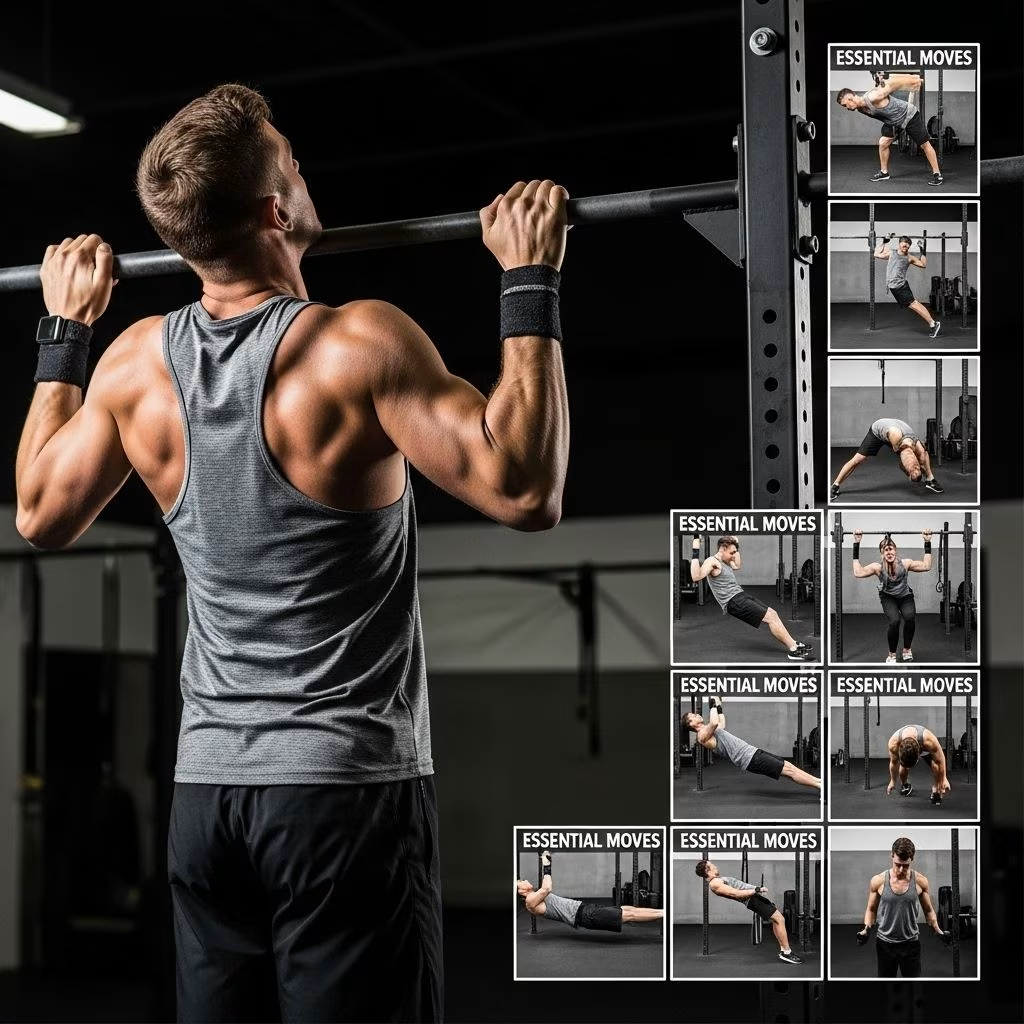
The Six Must-Do Moves
These exercises collectively strengthen all muscle groups involved in pull-ups. They are arranged to maximize development of the lats, traps, biceps, forearms, shoulders, and core stability.
1. Lat Pulldowns
- Target: Latissimus dorsi (lats), upper back.
- Equipment: Flat resistance band or tube.
- How to: Stand tall, grip ends of a flat band or resistance tube, and raise arms overhead so hands are slightly forward of the ears. Exhale, softly bend elbows, and pull arms out wide, spreading the band before your chest. Feel the engagement in your lats and hold briefly. Inhale, return to starting position .
- Benefit: Builds the primary strength required to initiate the pull-up.
2. Renegade Rows
- Target: Trapezius (traps), lats, abs, biceps, forearms.
- Equipment: Dumbbells.
- How to: Assume a high plank position holding dumbbells. Keeping your body stable, draw one dumbbell up to the ribcage, minimizing hip rotation. Briefly hold, then return to start. Repeat on the opposite side .
- Benefit: Develops back, grip, and core strength necessary for controlled pull-up movement.
3. Reverse Flys
- Target: Rear deltoids (shoulders), upper and mid-back.
- Equipment: Dumbbells.
- How to: Stand with a slight forward hinge at the hips, dumbbells in hand. With arms nearly straight, exhale and lift arms out to sides to shoulder height. Focus on squeezing shoulder blades together. Pause and slowly lower .
- Benefit: Strengthens the small stabilizers of the shoulder crucial for safe and efficient pull-ups.
4. Stiff Arm Pulldowns
- Target: Lats, triceps.
- Equipment: Resistance band or cable.
- How to: Stand upright, arms extended overhead. Keeping arms straight, pull the band downward to the hips, engaging the lats. Pause, then slowly return with control .
- Benefit: Isolates lat engagement to reinforce the movement pattern of pull-ups.
5. Inverted Rows
- Target: Lats, traps, biceps, mid-back.
- Equipment: Suspension trainer, barbell at hip-height, or sturdy table.
- How to: Lie under the anchor point with arms extended and heels on the ground. Grip the handles or bar, and pull your chest toward it, pausing at the top. Slowly lower with control .
- Benefit: Builds horizontal pulling strength and grip stamina, essential for progressing to vertical pull-ups.
6. Flexed Arm Hang
- Target: Biceps, forearms, lats, grip.
- Equipment: Pull-up bar.
- How to: Use an overhand grip to hold your chin above the bar. Engage the upper back and abs, maintaining tension as long as possible. Gradually increase your hold time each week .
- Benefit: Builds the static strength and grip crucial for completing full pull-ups.
Weekly Breakdown: Reps, Sets, and Progression
| Week | Main Moves & Progression |
|---|---|
| Week 6 |
|
| Week 7 |
|
| Week 8 |
|
Note: Adjust weights to your strength; focus on maintaining control through all repetitions. Rest as needed to preserve form.
Supporting Habits for Pull-Up Success
- Consistency: Complete the workout three times weekly, allowing for rest days between sessions .
- Progression: Gradually increase reps and sets as your strength improves. Track progress weekly.
- Recovery: Prioritize recovery days, ensuring muscle repair and growth .
- Holistic Approach: Consider integrating push-ups and other upper body moves for balanced muscle development .
Common Mistakes and How to Avoid Them
- Poor Form: Avoid swinging legs or arching the lower back. Engage the core for stability.
- Neglecting Smaller Muscles: Don’t skip accessory moves like reverse flys and stiff arm pulldowns.
- Insufficient Recovery: Overtraining can lead to fatigue and injury. Stick to planned rest days.
- Lack of Progress Tracking: Keep notes on your reps and sets to motivate improvement.
Frequently Asked Questions
Q: Can beginners follow this plan?
Absolutely. This plan is designed to progressively develop strength regardless of starting level. Beginners may start with lighter weights or reduced reps for each move and focus on quality of movement .
Q: What if I can’t do a pull-up at all?
Even if you can’t perform a pull-up yet, the combination of flexed arm hangs, inverted rows, and lat pulldowns builds necessary strength. Many find they achieve their first pull-up before week eight if they stay consistent .
Q: How can I integrate pull-ups into my overall fitness?
Blend the exercises from this program at the end of your regular workouts. Two to four sets of each move, two to four times per week, offers optimal stimulus for muscle gain. Recovery is essential—factor in rest days for best results .
Q: What alternative moves can I do if I lack equipment?
Resistance bands, sturdy tables, or suspension trainers can substitute for most moves. Use lighter dumbbells and bands for flys and pulldowns as needed .
Q: How does age affect pull-up progress?
Pull-ups benefit adults of any age, helping prevent muscle loss and bolster bone strength. Older adults may benefit from a slower progression and modified moves but should still target two to four sessions weekly .
Additional Tips for Success
- Warm Up: Always warm up before sessions with dynamic arm, shoulder, and core movements.
- Grip Variation: Experiment with overhand and underhand grips to challenge biceps and forearms differently.
- Mind-Muscle Connection: Focus on squeezing target muscles, especially lats and upper back, throughout each move.
- Track Recovery Nutrients: Prioritize adequate hydration and protein intake for muscle repair.
Summary Table: Moves & Target Muscles
| Move | Primary Muscles Targeted |
|---|---|
| Lat Pulldown | Lats, upper back |
| Renegade Row | Traps, lats, core, biceps |
| Reverse Fly | Rear deltoids, upper back |
| Stiff Arm Pulldown | Lats, triceps |
| Inverted Row | Lats, traps, biceps |
| Flexed Arm Hang | Biceps, forearms, grip |
Conclusion: Your Eight-Week Pull-Up Challenge Begins
Whether you are striving for your first pull-up or seeking to improve your overall upper body strength, this plan will get you there. Practice the six key moves, follow the progressive rep scheme, listen to your body, and celebrate your victories along the way. Remember, every rep builds strength and resilience. Commit to the process, and the pull-up bar will soon become a symbol of your hard-earned achievement.
References
- https://www.menshealth.com/fitness/a44795584/4-week-pull-up-challenge/
- https://www.youtube.com/watch?v=3YvfRx31xDE
- https://www.prevention.com/fitness/a20490754/6-moves-to-master-a-pull-up-in-8-weeks/
- https://www.prevention.com/fitness/a65819320/how-to-do-a-pull-up-age-50-plus/
- https://onlinelibrary.wiley.com/doi/full/10.1002/ejsc.12243
- https://www.prevention.com