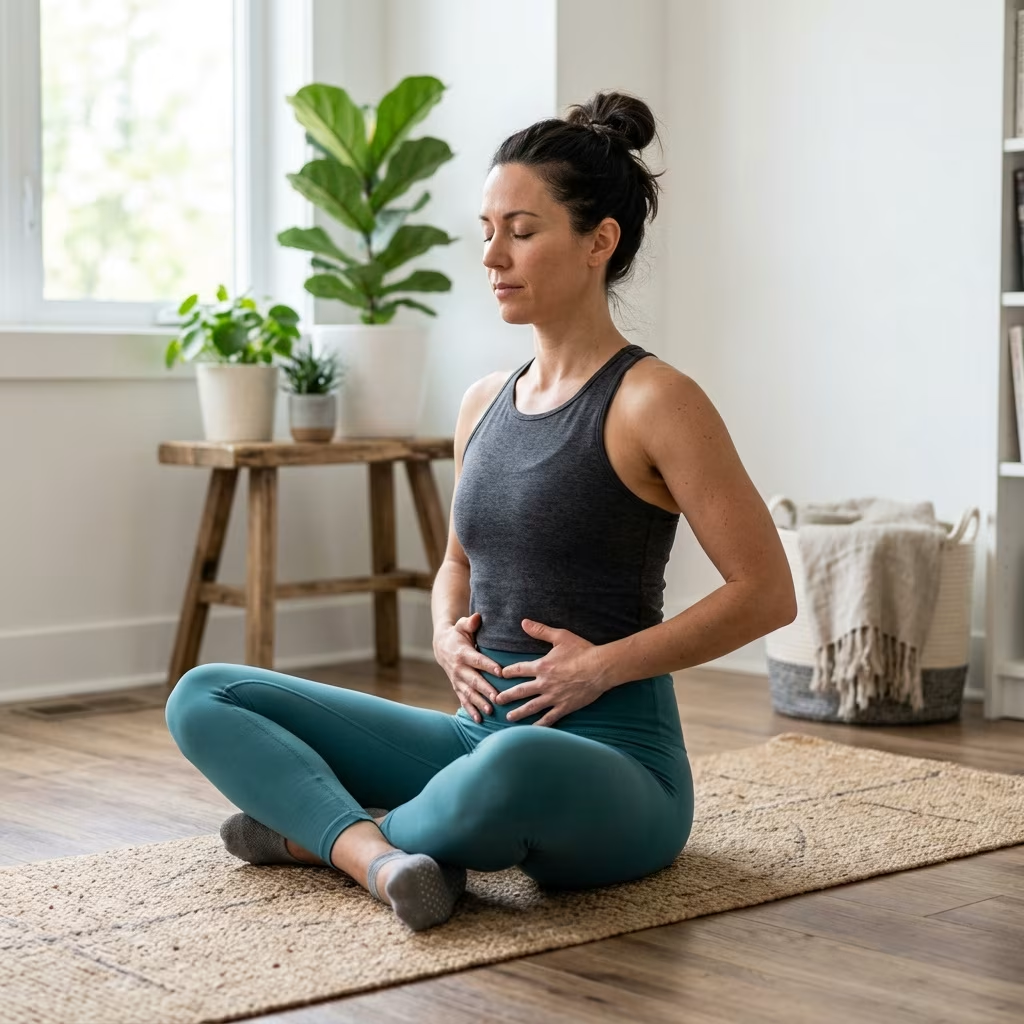
Pelvic Floor Exercises to Prevent Urinary Incontinence
Urinary incontinence is a common, often embarrassing condition that affects millions of people—especially women—across all ages. While aging, childbirth, or surgery may contribute to pelvic floor weakness, simple, regular exercises can dramatically improve control and prevent leaks. Understanding your pelvic floor and how to strengthen it is the key to regaining confidence and enjoying daily life free of worry about accidents.
Understanding Your Pelvic Floor
The pelvic floor is a group of muscles and ligaments that form a hammock-like support across the bottom of your pelvis. These muscles hold up your bladder, uterus, rectum, and other organs while helping control urination and bowel movements. When these muscles weaken or are damaged, you may experience leaks when coughing, sneezing, laughing, or exercising—a condition called urinary incontinence. Strengthening the pelvic floor offers preventative and therapeutic benefits for people of all ages and genders.
Who Should Do Pelvic Floor Exercises?
Anyone experiencing symptoms such as:
- Leaking urine during laughing, sneezing, or exercising (stress incontinence)
- A sudden, uncontrollable urge to urinate (urge incontinence)
- Leakage after childbirth or surgery
- Desiring to maintain core stability and bladder health as they age
Pregnant women, new mothers, those with a sedentary lifestyle, or anyone prone to chronic coughing or constipation can benefit from including pelvic floor exercises in their regular routine. However, always consult a healthcare provider if you have severe incontinence or other pelvic pain.
The Science: Why Strong Pelvic Floor Muscles Matter
Factors that commonly weaken pelvic floor muscles include:
- Pregnancy and childbirth
- Menopause
- Prostate surgery (for men)
- Aging
- Chronic constipation or coughing
- Being overweight
Maintaining strong pelvic muscles supports bladder and bowel function, sexual health, and core stability. For most people with urinary incontinence, especially stress incontinence, pelvic floor muscle training is the first and most effective step before considering medications or surgery.
How to Identify Your Pelvic Floor Muscles
Before beginning any exercise, it is essential to correctly locate the pelvic floor muscles:
- For women: Imagine you are trying to stop the flow of urine mid-stream or prevent passing gas.
- For men: Imagine you are tightening the muscles that stop you from urinating or passing gas.
These are the muscles you’ll be contracting during the exercises. Try not to squeeze your abdomen, thighs, or buttocks—focus only on the pelvic muscles.
5 Proven Exercises to Strengthen Your Pelvic Floor
The following are five effective exercises that, when practiced regularly, can help improve or prevent urinary incontinence by increasing pelvic floor strength and function.
1. Kegel Exercises
Kegels are the gold standard in pelvic floor strengthening. They can be done virtually anywhere and require no equipment.
- Sit or lie down comfortably with knees bent and feet flat.
- Contract your pelvic floor muscles (as if stopping the flow of urine).
- Hold the contraction for 5 seconds, then relax for 5 seconds.
- Repeat 10-15 times per set, performing 3 sets per day.
Tips: Do not hold your breath; breathe normally. Avoid squeezing your thighs, stomach, or buttocks. Gradually increase your hold time as your muscles get stronger.
2. Bridge Pose (Glute Bridge)
The bridge pose not only targets the glutes and hamstrings but also activates the pelvic floor.
- Lie on your back with knees bent, feet hip-width apart and flat on the floor.
- Press your feet into the floor while tightening your pelvic floor muscles.
- Slowly lift your hips to create a straight line from shoulders to knees.
- Hold for up to 10 seconds, tightening your pelvic floor as you do.
- Lower your hips and relax.
- Repeat for 10-15 reps.
This exercise is especially effective as it combines pelvic floor engagement with core and glute strengthening.
3. Squats
Squats are a functional, full-body exercise that can challenge and support the pelvic floor when executed correctly.
- Stand upright with feet shoulder-width apart.
- Slowly lower your body as if sitting back into a chair, keeping your back straight and chest up.
- Engage your pelvic floor and glutes as you lower down.
- Press through your heels to return to standing.
- Repeat 10-15 times.
Tip: Always maintain good form. If you experience knee pain, reduce the depth or consult with a professional.
4. Wall Sits
This simple but challenging exercise also strengthens core and pelvic floor muscles.
- Stand with your back against a wall, feet about two feet from the wall and hip-width apart.
- Slide down the wall until your knees are bent to about 90 degrees.
- Engage your pelvic floor and hold the position for 10-15 seconds, gradually increasing your hold over time.
- Slide back up to standing and repeat 5 times.
5. Bird Dog
This stabilizing core exercise improves balance and encourages deep pelvic floor muscle activity.
- Start on all fours with wrists under shoulders and knees under hips.
- Engage your core and pelvic floor muscles.
- Extend your right arm forward and left leg backward, keeping hips level.
- Hold for a few seconds, drop back, and switch sides.
- Perform 8-10 repetitions on each side.
How to Incorporate Pelvic Floor Exercises into Your Routine
Like any muscle group, the pelvic floor responds best to regular, consistent training. Follow these guidelines:
- Aim for at least one session daily, but preferably two (morning and evening).
- Alternate exercises to keep your routine interesting and effective.
- Start with short holds and few sets, and increase gradually as your strength improves.
- Combine pelvic floor exercises with deep breathing and relaxation for best results.
Tips for Success and Common Mistakes
- Be patient: It may take several weeks to notice significant improvement.
- Avoid overworking: More is not always better. Overexertion can lead to muscle fatigue.
- Don’t use pelvic floor muscles while urinating: Only use this test to find the right muscles, not as a regular exercise to avoid incomplete bladder emptying or infection risk.
- Consistency is key: Incorporate these exercises into daily activities—try Kegels while brushing your teeth or watching TV.
Progression: When to See a Specialist
- If you don’t notice improvement after 3-4 months of regular training.
- If incontinence symptoms worsen, or you experience pain during exercises.
- When you’re unsure if you’re targeting the correct muscles.
A pelvic health physical therapist can assess your muscle activation and provide guidance for tailored progress.
Frequently Asked Questions
What causes urinary incontinence?
Urinary incontinence can result from weakened pelvic floor muscles, nerve damage, hormonal changes, pregnancy, childbirth, surgery (such as prostate or pelvic surgery), aging, or chronic constipation and coughing.
How often should I do pelvic floor exercises?
For best results, aim for at least two sessions daily, with 10–15 repetitions of each exercise per session. Consistency is more important than intensity.
How soon will I see improvement?
Most people begin to notice improvement within 4–8 weeks with regular practice, though maximal benefit usually occurs after 3–6 months.
Can men benefit from pelvic floor exercises?
Yes, men can strengthen their pelvic floor to prevent urinary or fecal incontinence, improve recovery after prostate surgery, and support sexual health.
What if these exercises do not resolve my symptoms?
If you experience persistent or severe symptoms, consult a pelvic health professional. More advanced therapies, tools, or medications may be recommended if exercises alone are insufficient.
Sample Weekly Pelvic Floor Training Table
| Day | Exercise | Repetitions | Sets | Tips |
|---|---|---|---|---|
| Monday | Kegels, Bridge | 10–15 | 3 | Breathe evenly; don’t over-tighten other muscles |
| Tuesday | Squats, Wall Sits | 12–15 | 2 | Keep knees aligned with toes in squats |
| Wednesday | Kegels, Bird Dog | 10 | 3 | Focus on balance and stability |
| Thursday | Bridge, Wall Sits | 12 | 2 | Hold top position to engage pelvic floor |
| Friday | Squats, Kegels | 10–15 | 3 | Go slow; prioritize quality over speed |
| Saturday | Bridge, Bird Dog | 10 | 2 | Control movements for best results |
| Sunday | Rest or gentle stretching | – | – | Rest promotes muscle recovery |
Additional Resources and Support
- National Association for Continence (NAFC): Up-to-date resources and support for urinary incontinence.
- Pelvic health physical therapy: Personalized assessment and exercise instruction.
- Support groups: Talking with others facing similar challenges can be empowering.
Conclusion
Empowering yourself with pelvic floor exercises offers a noninvasive, effective strategy to prevent and manage urinary incontinence. With regular practice, patience, and the willingness to seek professional help if needed, you can regain bladder control and maintain your pelvic health for years to come.
References
- https://www.lompocvmc.com/blogs/2022/november/5-exercises-that-can-improve-urinary-incontinenc/
- https://cancer.uthscsa.edu/news-and-stories/five-exercises-strengthen-your-pelvic-floor
- https://www.mayoclinic.org/healthy-lifestyle/womens-health/in-depth/kegel-exercises/art-20045283
- https://pmc.ncbi.nlm.nih.gov/articles/PMC8743604/
- https://nafc.org/downloadable-pelvic-floor-exercises/
- https://medlineplus.gov/ency/patientinstructions/000141.htm
- https://www.youtube.com/watch?v=l_PM-wN116Q
- https://pubmed.ncbi.nlm.nih.gov/38556125/
- https://my.clevelandclinic.org/health/articles/14611-kegel-exercises