How to Thaw Turkey Safely: Essential Tips for Holiday Success
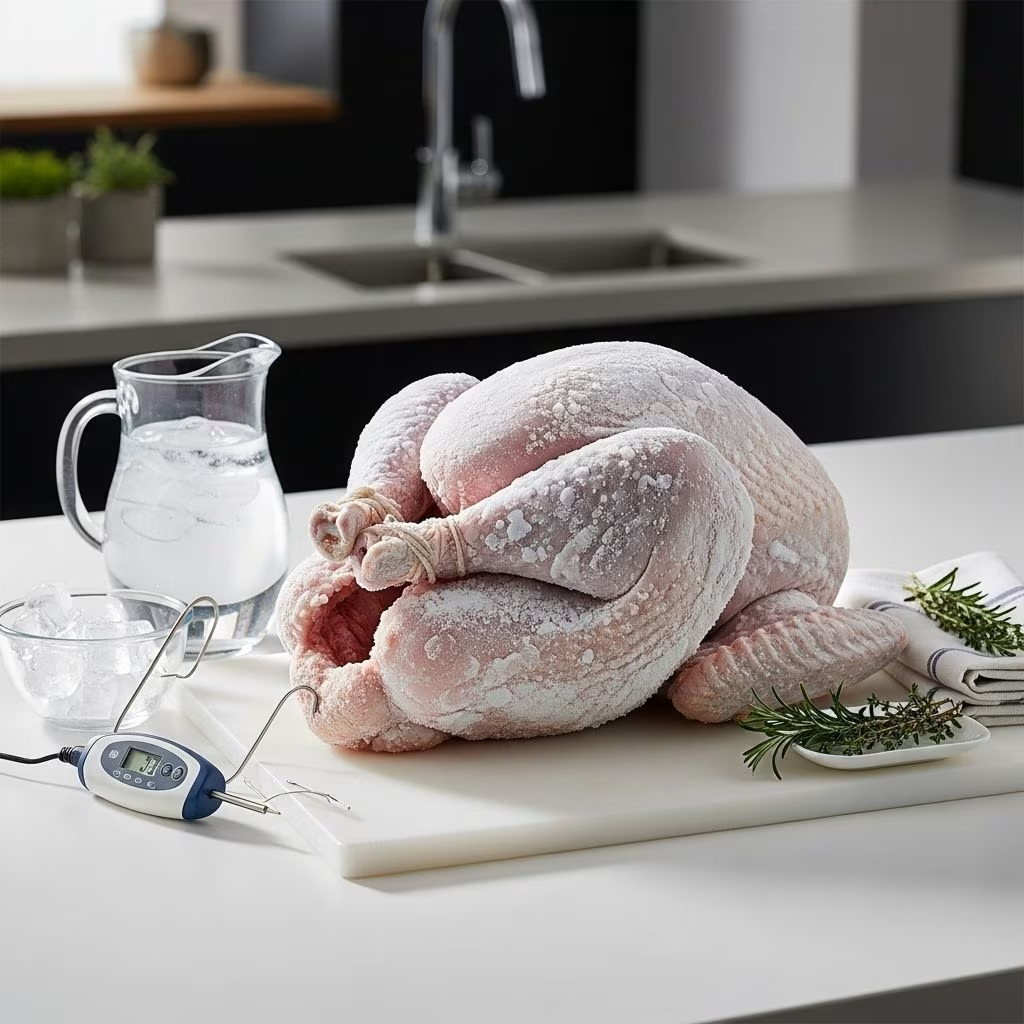
Thawing a turkey is a crucial step in preparing a delicious and safe holiday meal. A properly thawed turkey ensures even cooking, juicy meat, and protection against harmful bacteria. Yet, questions about timing, methods, and safety practices persist for home cooks every year. This detailed guide synthesizes USDA recommendations and expert advice to demystify turkey thawing, providing clear instructions and answering common questions—so your holiday centerpiece turns out perfect every time.
Why Proper Turkey Thawing Matters
A frozen turkey is safe indefinitely, but once it begins to thaw, any bacteria present before freezing can begin to multiply again. The methods used to thaw and the temperature controls during thawing directly impact food safety. Undercooked or unevenly thawed turkey is not only disappointing to eat but can also increase the risk of foodborne illness. The USDA and other food safety authorities recommend three approved methods for thawing turkey, which are detailed below.
Three USDA-Approved Methods for Thawing Turkey
Home cooks should adhere to these three safe thawing methods—refrigerator thawing, cold water thawing, and microwave thawing. All other methods are considered unsafe and potentially hazardous.
1. Refrigerator Thawing (Preferred Method)
This method is highly recommended by food safety experts due to its consistency and control over temperature. The turkey thaws slowly in the refrigerator (below 40°F/4°C), dramatically reducing the risk of bacterial growth.
- Keep the turkey in its original wrapper.
- Place it in a pan or tray to catch juices.
- Allow one day for every 4–5 pounds (approx. 24 hours per 4–5 lbs).
- A thawed turkey can remain in the refrigerator for 1–2 days before cooking.
- If needed, a properly thawed turkey in the refrigerator can be refrozen.
| Size of Whole Turkey | Approximate Days Needed |
|---|---|
| 4 to 12 pounds | 1 to 3 days |
| 12 to 16 pounds | 3 to 4 days |
| 16 to 20 pounds | 4 to 5 days |
| 20 to 24 pounds | 5 to 6 days |
Tip: For Thanksgiving, it’s best to start thawing your turkey the Friday or Saturday before the holiday to give yourself plenty of time.
2. Cold Water Thawing
This method is faster than refrigerated thawing but requires close attention. Cold water thawing involves submerging the turkey in cold water, ensuring the water is changed every 30 minutes to keep it at a safe temperature.
- Keep the turkey in a leak-proof plastic bag to prevent water absorption and cross-contamination.
- Submerge in cold tap water—not warm or hot.
- Change the water every 30 minutes.
- Allow 30 minutes per pound of turkey.
- Cook the turkey immediately after thawing; do not refreeze.
| Size of Whole Turkey | Approximate Hours Needed |
|---|---|
| 4 to 12 pounds | 2 to 6 hours |
| 12 to 16 pounds | 6 to 8 hours |
| 16 to 20 pounds | 8 to 10 hours |
| 20 to 24 pounds | 10 to 12 hours |
Note: If your turkey is over 16 pounds, you may need to start very early (sometimes as soon as dawn!) if you want it ready for a midday meal.
3. Microwave Thawing
Microwave thawing is practical for smaller turkeys and when time is short. However, check the owner’s manual for your microwave for the appropriate size and settings.
- Remove all outside wrapping.
- Place the turkey on a microwave-safe dish to catch juices.
- Use the defrost function by weight; as a rule: 6 minutes per pound is standard.
- Rotate or flip the turkey periodically for even thawing.
- If any part of the turkey begins to cook instead of thaw, pause and let it rest for about 5 minutes before continuing.
- Cover wing and drumstick tips with small pieces of foil if they seem to cook faster, but follow microwave safety instructions about foil.
- Cook immediately after thawing; do not refreeze.
Unsafe Thawing Methods to Avoid
Food safety authorities strongly caution against trying alternate thawing methods, which can result in unsafe poultry:
- Thawing on the countertop, in the garage, or on the porch.
- Thawing in a brown paper bag or plastic garbage bag.
- Using a dishwasher (with or without water).
- Any method other than refrigerator, cold water, or microwave.
All of these can allow the outer portions of the turkey to reach unsafe temperatures, giving bacteria a chance to multiply.
General Food Safety Tips When Handling Turkey
- Wash hands before and after handling raw turkey.
- Keep kitchen surfaces, utensils, and dishes clean to prevent cross-contamination.
- Store thawed turkey on a pan or tray to catch any leaking juices.
- Never use the same platter or utensils for raw and cooked turkey meat.
- Cook stuffing separately (do not buy fresh pre-stuffed turkeys; they are prone to bacterial contamination).
- Always cook turkey immediately after using cold water or microwave thawing methods.
Can You Cook a Turkey from Frozen?
It is possible to cook a turkey directly from its frozen state, but expect the cooking time to increase by at least 50% compared to a fully thawed turkey. This approach can be a safe backup if you forget to thaw or run out of time on the holiday morning.
Key Timelines and Holiday Planning Advice
- For Refrigerator Thawing: Plan at least a week ahead for large turkeys (20+ lbs), especially around holidays like Thanksgiving.
- For Cold Water Thawing: Start early in the day, and allocate enough time for every 30 minutes per pound.
- For Microwave Thawing: Only do so if your turkey fits the microwave guidelines, and begin the cooking process immediately after thawing.
Frequently Asked Questions (FAQs)
Q: How far in advance can I thaw my turkey in the refrigerator?
A: Start thawing 1 day for every 4–5 pounds; you can keep the thawed turkey in the fridge for another 1–2 days before cooking. For a 16-pound bird, start 4 days before your holiday.
Q: What happens if I thaw the turkey using an unsafe method?
A: Unsafe methods such as thawing on the counter or in hot water can expose the turkey to bacterial growth, leading to possible foodborne illness. Stick to USDA-approved thawing methods.
Q: Can I refreeze a turkey once it’s thawed?
A: If the turkey was thawed in the refrigerator, you can safely refreeze it. Do not refreeze turkey after cold water or microwave thawing.
Q: How can I tell if my turkey is thawed?
A: Check the cavity of the turkey; if you can move the giblet package freely and there are no icy patches, your turkey is fully thawed.
Q: Does the method of thawing affect the taste or quality?
A: Thawing in the refrigerator helps retain moisture and preserve the quality of the meat. Cold water thawing is safe and effective, but microwave thawing may cause uneven thawing and partial cooking in some areas.
Bonus Tips for a Safe and Tasty Turkey
- Place the turkey breast-side-up in the pan for thawing and, if possible, for cooking.
- Do not stuff the turkey before cooking. Prepare stuffing separately.
- After thawing, cook to an internal temperature of at least 165°F (74°C) in the thickest part of the bird to ensure safety.
- Discard any juices that leak from packaging to avoid contamination.
- Keep pets and children away from thawing areas, especially sinks and countertops.
Summary Table: Turkey Thawing Methods at a Glance
| Thawing Method | Time Required | Additional Requirements | Can Refreeze? |
|---|---|---|---|
| Refrigerator | 1 day per 4–5 lbs | Store at 40°F or below | Yes |
| Cold Water | 30 min per lb | Leak-proof bag, change water every 30 min, cook immediately | No |
| Microwave | 6 min per lb | Microwave-safe dish, rotate for even thawing, cook immediately | No |
Key Takeaways for Holiday Cooks
- Use only the three USDA-approved thawing methods.
- Plan ahead—thaw times can surprise even experienced cooks.
- Always cook turkey to proper internal temperatures using a food thermometer.
- Don’t risk foodborne illness; never thaw at room temperature.
- Consult USDA, FDA, or local health department websites for further guidance and up-to-date tips.
References
- https://www.usda.gov/about-usda/news/blog/how-safely-thaw-turkey
- https://food.unl.edu/how-thaw-turkey/
- https://www.health.state.mn.us/people/foodsafety/foods/turkey.html
- https://cfaes.osu.edu/features/three-ways-safely-thaw-turkey
- https://www.butterball.com/how-to/thaw-a-turkey
- https://tools.cdc.gov/api/v2/resources/media/402553/html