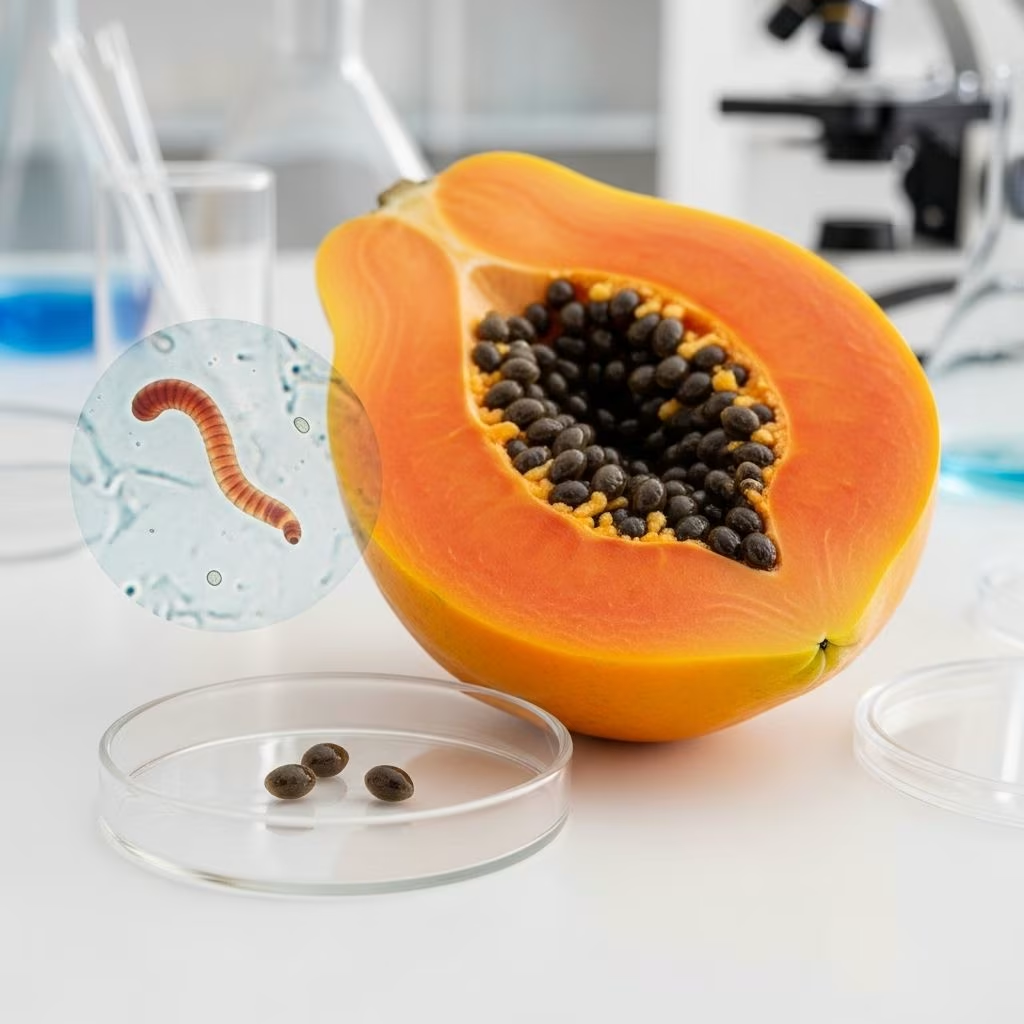
Papaya seeds have become a viral sensation on social media, with claims that chewing a spoonful can cleanse your body of intestinal parasites. But does this natural remedy really work? In this article, we’ll examine the scientific evidence, myths and misconceptions, expert opinions, and safety considerations regarding the use of papaya seeds for parasites.
Why Are People Eating Papaya Seeds for Parasite Removal?
The idea of eating papaya seeds as a natural dewormer comes from a mix of traditional remedies and viral internet trends, especially on platforms like TikTok. Videos and testimonials often show people describing visible changes in their stool or claiming detox benefits after consuming papaya seeds. Folk medicine, especially in tropical countries, has used different parts of the papaya plant—including its seeds and flesh—for digestive and antiparasitic purposes for centuries.
- Recent social media trends have spotlighted papaya seeds as a supposed cure for intestinal worms.
- Many of these claims cite anecdotal experiences, but some reference actual research studies.
- Interest is especially high among those seeking “natural” or “home” remedies rather than prescription medications.
Examining the Evidence: What Does Science Actually Say?
The scientific support for papaya seeds as an antiparasitic remedy is limited, but not nonexistent. A few small studies have suggested benefits, mostly in specific groups and under controlled circumstances.
Notable Studies and Their Findings
The most widely cited research comes from a 2007 clinical trial in Nigeria. In this study, 60 children with stool-confirmed intestinal parasites were randomly assigned to receive either:
- An elixir of air-dried papaya seeds mixed with honey
- Honey alone as a placebo
After just one dose, 76.7% of those who received the papaya seed mixture had their stools cleared of parasites within a week, compared to only 16.7% of the placebo group. There were no adverse effects noted in the papaya seed group. The study concluded that air-dried papaya seeds might be an effective, safe, and affordable antiparasitic option, especially where access to standard medications is limited.
Another innovative study involved the integration of ground papaya seeds into school meal snacks (fortified maize porridge) provided to children in Kenya. After two months:
- Children consuming porridge with papaya seeds had a 63.9% reduction in the intensity of roundworm (Ascaris lumbricoides) infections.
- The cure rate was lower than conventional albendazole medication but still significant.
- There was improvement in nutritional status, including reduced rates of anemia.
This study highlighted papaya seeds as a possible cost-effective and environmentally friendly addition to public deworming and nutrition programs, particularly in resource-limited settings.
Active Compounds and Potential Mechanisms
Papaya seeds contain several bioactive compounds believed to contribute to their antiparasitic effects:
- Benzyl isothiocyanate: Shown in some studies to have anthelmintic (anti-worm) properties.
- Caricin: Another possible antiparasitic agent found in papaya.
- Digestive enzymes (such as papain): May help break down proteins in parasite membranes.
However, while lab and animal studies further support the biological activity of these compounds, controlled human research is still limited in scale and scope.
Limitations of the Research and Key Caveats
While the above studies are promising, it’s important to understand their limits:
- Small sample sizes: The main Nigerian study included only 60 children and may not represent broader populations.
- Geographic and demographic limitations: Most trials have been limited to children in rural or low-resource tropical settings.
- Short-term follow-up: Most studies only monitored participants for days or weeks, not long-term parasite recurrence.
- Variable preparations: Most research used air-dried papaya seeds, often mixed with honey, whereas viral trends promote eating fresh seeds directly.
Also, the visual identification of parasites passed in stool after consuming papaya seeds is unreliable. Most intestinal parasites are microscopic and not visible to the naked eye, despite what some social media stories suggest. Only a physician or laboratory test can reliably confirm clearance of infections.
Potential Health Benefits of Papaya Seeds Beyond Parasite Treatment
Beyond parasite removal, papaya seeds may offer other health benefits, although evidence varies in quality:
- Digestive aid: Traditional medicine uses papaya seeds to alleviate digestive complaints.
- A source of nutrients: Papaya seeds contain healthy fats, fiber, antioxidants, and micronutrients like calcium and magnesium.
- Possible antibacterial activity: Some studies have reported mild effects against certain bacteria, but this is still early-stage research.
- Anti-inflammatory effects: Mainly noted in animal studies, not yet proven in humans.
However, eating large quantities of papaya seeds is not recommended for routine health maintenance, as potential side effects (see below) and optimal dosages are not well-established.
Myths, Misconceptions, and Social Media Misinformation
Much of the excitement about papaya seeds for parasites can be traced back to viral posts and videos, which often:
- Confuse anecdotal testimony with scientific evidence.
- Fail to distinguish between visible food particles or normal stool changes versus actual passage of parasites.
- Encourage self-diagnosis and self-treatment, which can be risky with potentially serious conditions like intestinal parasitosis.
Fact Check:
- You cannot reliably identify intestinal parasites in your stool without laboratory analysis.
- Eating papaya seeds in various forms (fresh, dried, blended) is not a substitute for medical care, especially in symptomatic cases.
- Most conventional antiparasitic medications are more thoroughly researched and have higher cure rates in clinical trials.
Are There Any Risks or Side Effects?
Papaya seeds are considered edible in small amounts and have been used in both traditional cuisine and folk remedies. However, they are not without risks, especially when consumed in large amounts or over long periods. Possible concerns include:
- Potential toxicity: Some compounds found in papaya seeds may be toxic at high doses, particularly for pets, pregnant women, and children.
- Digestive discomfort: Consuming large amounts can cause nausea, diarrhea, or abdominal pain in some people.
- Male fertility effects: Animal studies have indicated possible reproductive harm when papaya seed extracts are taken in high doses over time.
- Unknown drug interactions: Those taking medications or with underlying health conditions should consult a healthcare provider before trying papaya seeds as a remedy.
Expert Opinions: What Do Health Professionals Say?
Doctors and nutrition experts generally advise caution regarding papaya seeds for parasite treatment. Key points include:
- No substitute for diagnosis: If you suspect a parasite infection (e.g., due to persistent digestive symptoms, anemia, unexplained weight loss, or after travel to high-risk areas), seek medical evaluation and testing.
- Evidence is limited: While some studies show promise, papaya seeds are not recommended as a first-line therapy.
- Prescription medications: Standard deworming medications like albendazole or mebendazole are much more thoroughly tested, regulated, and effective in clinical practice.
- Safe dosage unclear: There are no medically approved guidelines for how much or what form of papaya seed should be consumed.
Should You Try Papaya Seeds for Parasite Removal?
Trying papaya seeds may be tempting due to tradition and social media buzz, but consider the following before adding them to your routine:
- Consult your doctor if you have any signs of a possible parasite infection.
- Remember, research so far applies mostly to air-dried seeds, not busy-eating fresh seeds as shown in most viral videos.
- Use only small, occasional amounts if you do decide to try them, and monitor for any side effects.
- Avoid if you are pregnant, breastfeeding, planning pregnancy, or giving to young children or pets.
Comparing Papaya Seeds vs. Prescription Dewormers
| Feature | Papaya Seeds | Prescription Dewormers (e.g., Albendazole) |
|---|---|---|
| Scientific Evidence | Limited small studies, mostly on children in Africa; potentially effective but unproven long-term and in broad populations | Extensive clinical trials; proven safe and effective in diverse groups |
| Active Form | Air-dried, sometimes fresh; not standardized | Standardized, regulated tablets or suspensions |
| Side Effects | Possible GI upset, unknown long-term safety at high doses | Mild and temporary; regulated for safety |
| Dosing Guidelines | No medical consensus; not FDA-approved | Clear, officially approved dosage protocols |
| Cost and Access | Free or low-cost, especially in tropical regions | Low-cost generics widely available, but requires a prescription in many countries |
Who Might Benefit from Papaya Seeds?
Given the above, papaya seeds might be considered as an adjunct, not a replacement, for standard antiparasitic treatments in settings where access to medicine is limited, and under supervision of a knowledgeable provider. They may also have a role in culturally traditional practices. For most people, however, the risks and lack of standardized dosing make them a less favorable option than proven medications.
How to Use Papaya Seeds Safely (If At All)
If you choose to consume papaya seeds despite the caveats, follow these safety tips:
- Rinse and optionally dry the seeds; air-dried forms were used in most studies.
- Start with a small quantity—no more than half to one teaspoon.
- Mash or blend with honey, as done in clinical research; avoid crushing or eating large amounts fresh.
- Never use as a substitute for professional medical care if you suspect an infection.
Frequently Asked Questions (FAQs)
Q: Can you identify intestinal parasites by looking at your poop after eating papaya seeds?
A: No. Most intestinal parasites are microscopic and cannot be detected visually. Only laboratory testing can confirm their presence or absence.
Q: Are papaya seeds safe for everyone?
A: Papaya seeds are generally considered edible in small amounts for healthy adults. However, large quantities or prolonged use may pose risks, especially for children, pregnant women, or those with allergies or certain health conditions. Always consult a healthcare provider first.
Q: How many papaya seeds should I eat for parasite cleansing?
A: There is no evidence-based, medically approved dosage of papaya seeds for parasite treatment. Studies have used around 1 gram (about half to one teaspoon) of air-dried seeds mixed with honey. Fresh seeds, as promoted in videos, have not been clinically studied for safety or efficacy.
Q: Do papaya seeds have other health benefits?
A: Papaya seeds are a source of antioxidants, fiber, and certain micronutrients, but research supporting wider health claims is still preliminary and limited. They are not a substitute for a balanced diet or proper medical treatment for illness.
Key Takeaways
- Small studies suggest papaya seeds may reduce certain intestinal parasites in children under specific conditions.
- Evidence is limited and mostly supports the use of air-dried, not fresh, seeds.
- Prescription medications remain more effective and reliable for deworming.
- Large-scale studies and official medical guidelines are lacking.
- If you think you have a parasite, consult your doctor for testing and treatment advice rather than self-diagnosing or self-treating with papaya seeds.
References
- https://pubmed.ncbi.nlm.nih.gov/17472487/
- https://www.prevention.com/food-nutrition/a36383130/papaya-seeds-for-parasites/
- https://pmc.ncbi.nlm.nih.gov/articles/PMC6286506/
- https://health.clevelandclinic.org/papaya-seeds-parasite-cleanse
- https://www.healthline.com/nutrition/papaya-seeds
- https://www.rupahealth.com/post/5-scientifically-proven-foods-that-kill-parasites-in-humans