What Does the USDA ‘Bioengineered’ Food Label Mean?
As of January 1, 2022, U.S. shoppers are seeing a new label on some food products: “Bioengineered”. The transition from the term GMO (Genetically Modified Organism) to “Bioengineered” marks one of the most significant changes in American food labeling in recent years. But what does this label actually mean, why was it implemented, and what should consumers know when they spot it on food packages?
Why Did the USDA Require a Bioengineered Label?
The United States Department of Agriculture (USDA) introduced the National Bioengineered Food Disclosure Standard (NBFDS) to create a uniform, national approach to labeling foods that have been genetically modified. Before the NBFDS, states had varying standards regarding the labeling of genetically altered foods, causing confusion and compliance challenges for both manufacturers and consumers.
- Misalignment between state rules: States like Vermont, Colorado, and Oregon had begun to require some form of GMO labeling, but their rules differed significantly, creating a patchwork system.
- Transparency: The USDA intended the label to increase transparency, letting consumers know if the food on their table contains genetic modifications enforced on a national level.
- Preempt state laws: Federal regulation preempted state policies, unifying the labeling standard across the country and reducing complexity for manufacturers distributing foods nationwide.
- Consumer empowerment: According to USDA officials, a uniform standard was meant to empower Americans with information about the ingredients in their food while avoiding unnecessary panic or confusion.
What Is a ‘Bioengineered’ Food?
The term bioengineered refers to foods that contain detectable genetic material that has been modified through specific laboratory techniques—typically via recombinant DNA technology. This means:
- The food has genes that were deliberately changed in a way that does not occur naturally or via conventional breeding.
- Not all GMOs are classified as bioengineered: Some genetically modified foods may avoid the label if the modified genes are no longer detectable in the final product.
- Ingredients matter: Products made with certain processed ingredients, like refined sugars or oils, may not need to be labeled because the genetic material is undetectable after processing.
- Foods derived from animals fed genetically modified feed (e.g., cows given GMO corn) are not labeled as bioengineered if there is no modification in the animal itself.
Bioengineered Labeling Options on Packaging
The USDA provides manufacturers four approved labeling methods for disclosing bioengineered ingredients, designed to give flexibility while maintaining accessibility:
- Text Statement: Clearly stating “Bioengineered” or “Contains a bioengineered food ingredient” on the package.
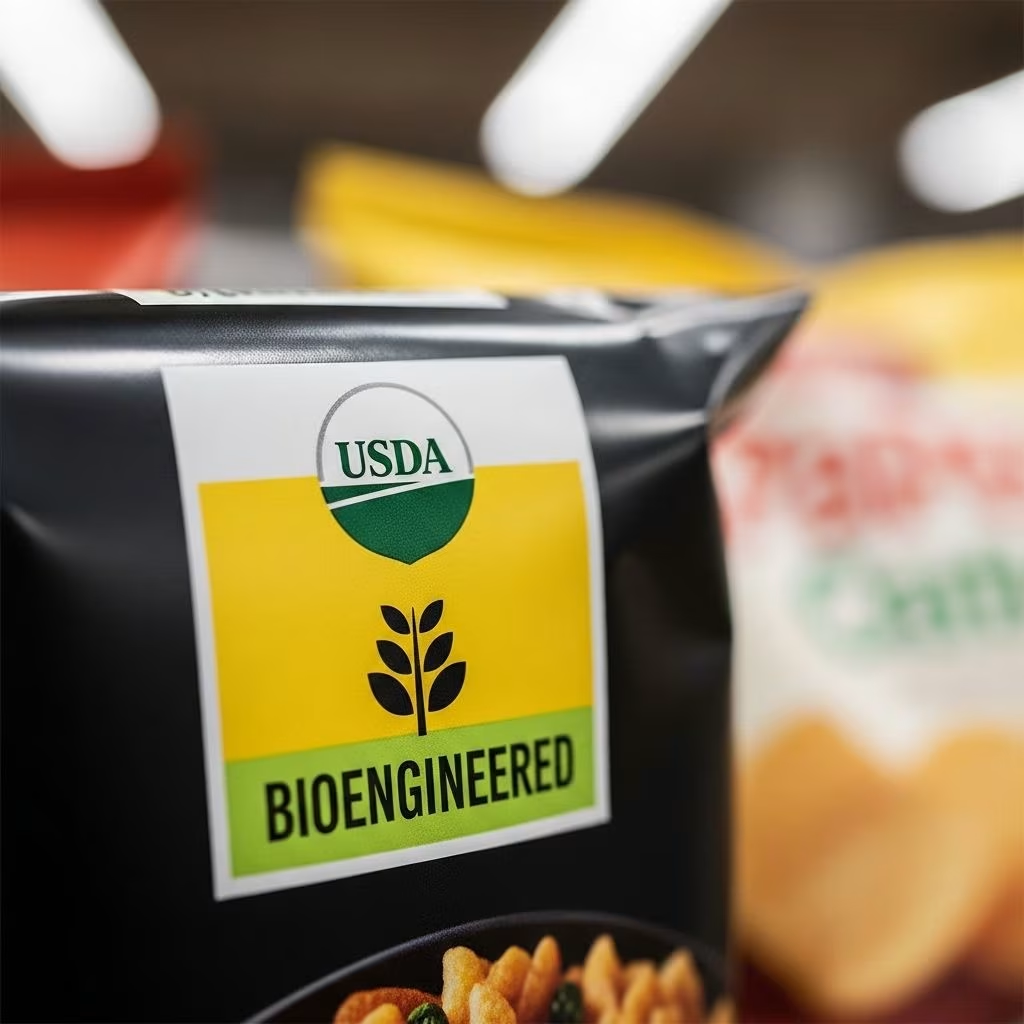
- Symbol: Using the USDA’s official ‘BIOENGINEERED’ symbol in color or black and white, which features a stylized plant motif.
- Electronic or Digital Disclosure: Placing a QR code on the package with accompanying text, such as “Scan here for more food information.” Scanning the code with a smartphone takes shoppers to a website with ingredient disclosures.
- Text Message Disclosure: Shoppers can text a specified command to a listed number and receive more information about the food’s bioengineered status.
For small packages or foods where space is limited, alternative options such as providing a website or phone number are allowed.
Which Foods Need the Bioengineered Label?
The USDA released a list of crops and foods that are commonly bioengineered. Foods on this list and products derived from them that contain detectable modified genetic material must be labeled. Some of the most common bioengineered foods include:
- Alfalfa
- Apples (Arctic varieties)
- Canola
- Corn
- Cotton
- Eggplant (Bangladeshi varieties)
- Potato (Innate varieties)
- Papaya (ringspot virus-resistant varieties from Hawaii and China)
- Pineapple (pink flesh varieties)
- Salmon (AquaBounty’s genetically engineered salmon)
- Soybean
- Sugarbeet
- Summer squash (zucchini and yellow squash)
If a processed product (like corn syrup, soybean oil, or sugar) uses a source crop on the bioengineered list and the final ingredient retains detectable genetic material, it must carry the label. However, heavily refined products—such as certain oils and sugars—often are exempt because the genetic modifications are not detectable after processing.
Which Foods Are Exempt from Bioengineered Labeling?
There are several notable exemptions to the USDA’s standard. Foods that do not require the label include:
- Animal products: Meat, poultry, dairy, and eggs derived from animals fed genetically modified feed are not considered bioengineered unless the animal itself has been genetically modified. For example, non-GMO chickens fed with GMO corn are not considered bioengineered.
- Highly refined ingredients: Products like refined sugar, corn syrup, and oils may be exempt if there is no detectable modified DNA in the final product.
- Restaurant and food service foods: Foods prepared in restaurants or similar settings are exempt from the labeling requirement.
- Very small food manufacturers: The law provides a “very small business” exemption for producers with annual sales below a certain threshold.
- Organic foods: By definition, foods certified as USDA organic must not contain genetically modified or bioengineered ingredients. These may be labeled as “not bioengineered” or “non-GMO.”
Bioengineered Label vs. Non-GMO Label: What’s the Difference?
| Label | What It Means | Who Regulates |
|---|---|---|
| Bioengineered | Product contains detectable genetic material that has been purposely altered using modern biotechnology (as defined by USDA) | USDA (required by law) |
| Non-GMO Project Verified | Product has been independently verified to avoid GMOs/BE ingredients to the lowest possible level of contamination | Private, third-party organizations (voluntary) |
In practice, many foods can remain without the ‘bioengineered’ label if processing removes detectable DNA, even if their source materials were genetically engineered. In contrast, ‘Non-GMO’ and ‘Organic’ labels signify a broader commitment to avoiding genetically modified technology at all stages of production.
How Can Consumers Identify Bioengineered Foods?
Consumers may see one of several indicators on food packaging:
- A clear text statement: “Bioengineered food” or “Contains a bioengineered food ingredient”
- The USDA’s official symbol, generally a green circular or plant-themed logo with “Bioengineered” text
- A QR code leading to a digital disclosure site
- A phone number for further information, or instructions to send a text message
On processed foods, the disclosure may appear with other ingredient and nutritional details. Consumers should note that some products derived from bioengineered crops—like canola oil or refined sugar—may not display the bioengineered label if the DNA is not detectable post-processing.
Are Bioengineered Foods Safe?
According to the U.S. Food and Drug Administration (FDA) and USDA, foods produced through genetic engineering and approved for consumption are considered as safe as their conventional counterparts. Numerous studies and scientific authorities have found no unique health risks directly associated with consuming bioengineered foods compared to traditionally bred varieties. The labeling is intended for consumer information and transparency rather than as a safety warning.
Implementation and Enforcement
The USDA has delegated enforcement responsibilities for the labeling regulation:
- Consumers can file complaints with the USDA Agricultural Marketing Service (AMS) if they suspect a product is not labeled according to the rules.
- The USDA may review and investigate complaints to ensure compliance, but current enforcement is primarily complaint-based rather than rooted in routine inspections.
- Penalties for noncompliance are determined by the USDA but currently do not include mandatory product recalls.
- Implementation was phased in: large manufacturers needed to comply by 2020, small businesses by 2021, and the rules are fully effective from January 2022 onward.
Challenges and Criticisms of the Bioengineered Label
Despite the attempt to standardize and increase transparency, the new labeling system faces several criticisms and ongoing challenges:
- Terminology: The replacement of “GMO” terminology with “bioengineered” has led to confusion. Many consumers are more familiar with the GMO label from years of advocacy and discussion, and the new term requires public education.
- Limited scope: Since the label only applies to foods with detectable modified DNA, many genetically altered foods are not labeled, limiting the system’s transparency.
- Access to digital disclosures: Reliance on QR codes or digital means can disadvantage consumers without access to smartphones or reliable internet, especially among older or lower-income populations.
- Varying disclosure among highly refined ingredients: Because processes like refining can destroy or remove genetic material, many foods that began as bioengineered crops do not require labeling, frustrating some consumer advocacy groups.
What Should Shoppers Do If They Want to Avoid Bioengineered Ingredients?
If avoiding genetically engineered foods or bioengineered ingredients is important to you, consider the following guidelines:
- Seek out foods certified by the Non-GMO Project or labeled as USDA Organic, which have stricter requirements that go beyond detectability and include source transparency.
- Read ingredient lists closely and, when unsure, opt for products with clearer disclosures.
- Familiarize yourself with the USDA list of bioengineered crops and avoid foods and ingredients commonly derived from them if concerned.
- Contact food manufacturers directly or use available customer hotlines and online resources for additional transparency.
Frequently Asked Questions (FAQs)
What does “bioengineered” mean on a food label?
It indicates that the food contains detectable genetic material that has been modified using modern biotechnology techniques under USDA definitions.
Are all GMO foods labeled as “bioengineered”?
No. Only those with detectable modified DNA are covered. Heavily refined products, like some oils and sugars, are often exempt.
Is the new label a safety warning?
No. The label is meant for transparency and consumer information, not as an indicator of food safety or risk.
Do animal products need to be labeled if the animals ate bioengineered feed?
No. Meat, milk, eggs, and poultry from animals fed genetically modified feed are exempt from the label, unless the animal itself is genetically modified.
Why isn’t the label just called ‘GMO’?
The USDA chose “bioengineered” for legal clarity and alignment with the precise scientific and regulatory definition required for the standard, though this has led to some consumer confusion.
Key Takeaways for Consumers
- The USDA Bioengineered Food Disclosure Standard creates a mandatory labeling law for certain foods containing detectable genetically modified material.
- Many foods commonly understood as GMO-based, especially highly processed derivatives, may not need the “bioengineered” label.
- The new standard increases uniformity and preempts inconsistent state laws, but leaves significant discretion to manufacturers and still requires careful label reading from consumers.
References
- https://njaes.rutgers.edu/fs1334/
- https://nebraskapublicmedia.org/es/news/news-articles/gmo-food-labeling-has-been-required-in-the-us-for-a-year-have-consumers-noticed/
- https://www.seafoodsource.com/news/food-safety-health/fda-publishes-gmo-package-labeling-rules
- https://nationalaglawcenter.org/congress-finalizes-mandatory-gmo-labeling-law-2/
- https://www.ams.usda.gov/rules-regulations/be
- https://www.nongmoproject.org/blog/what-is-bioengineered-food/
- https://www.ams.usda.gov/rules-regulations/be/bioengineered-foods-list