Boiled Peanuts: The Soulful Snack with a Storied Past
Of all the foods woven into the tapestry of Southern culture, boiled peanuts stand out as a humble icon—a roadside snack, a taste of home, and an edible emblem of resilience and adaptation. Their story, rooted in trans-Atlantic journeys and Civil Rights struggles, is as rich, slippery, and complex as the peanuts themselves.
From the Andes of South America to the fields of West Africa and finally the American South, boiled peanuts trace a global route. Their journey is marked by invention and loss, by necessity and celebration. What began in plantation fields and slave kitchens now fills gas station crockpots, festival bags, and family memories—“the caviar of the South,” as Southerners like to say.
Origins: A Global Story of Peanuts and People
The peanut, or Arachis hypogaea, is native to South America. Archaeologists have unearthed evidence that peanuts were cultivated in the Andes some 10,000 years ago, their husks buried with the dead and painted onto ancient pottery. Sometime in the 16th century, European colonists, particularly the Portuguese, carried peanuts from Brazil and Peru across the Atlantic to Africa.
Peanut Facts:
- Peanuts are not true nuts, but legumes, related to beans and lentils.
- They adapt readily to hot, sandy soils, making them ideal for tropical and subtropical climates.
- In Africa, peanuts thrived and became integral to local diets, often boiled rather than roasted.
This practice of boiling green, freshly harvested peanuts spread across West Africa, becoming a mainstay in local cuisines and setting the stage for their next journey—to North America through the forced migration of enslaved Africans.
The African Connection and Legacy of Slavery
The story of boiled peanuts is inseparable from the Atlantic slave trade. The word “goober,” a common Southern term for peanut, is derived from the Bantu word “nguba.” Slaves brought not only the seeds but also the culinary traditions of Africa with them to the Americas. They cultivated peanuts in plantation gardens and incorporated them into stews, porridges, and of course, boiled snacks.
- Boiling peanuts was a celebratory and communal act: During harvest surplus, enslaved and free Black communities would hold “peanut boils” to mark the occasion, often singing and sharing stories as they worked.
- The fusion of indigenous American crops (the peanut) and African cooking methods created something unique that would one day redefine “Southern food.”
Boiled peanuts became more than sustenance; they were symbols of adaptation, innovation, and cultural survival under extraordinary hardship.
Arrival in the American South: Innovation and Adaptation
The deep, sandy soils and humid climate of the southeastern United States offered ideal conditions for peanut cultivation. By the 18th and 19th centuries, peanuts had become a central crop across Georgia, South Carolina, Alabama, and beyond.
- While roasted peanuts soon became popular across the U.S., boiled peanuts remained primarily a Southern delicacy.
- Letters and accounts from the Civil War era describe soldiers boiling their “goober peas” over the campfire—using copious salt to preserve them on marches.
The act of boiling created a unique snack: briny, creamy, and distinctly different from their crunchy, roasted cousins.
Civil War, Goober Peas, and Folk Memory
During the American Civil War, food was scarce, especially for Confederate soldiers. Peanuts, easily grown and adaptable, became a nutritional lifeline. They were boiled in makeshift pots—a method favored for its simplicity and ability to use immature (“green”) peanuts that could not yet be roasted.
- The Civil War folk song “Goober Peas” captures the daily fare of Southern troops:
Just before the battle, the general hears a row
He says, ‘The Yanks are coming, I hear their rifles now.’
He turns around in wonder, and what do you think he sees?
The Georgia Militia eating goober peas.
After the war, roasted peanuts became fashionable in the North, but boiled peanuts persisted as a common, beloved snack across the rural South.
Twentieth-Century Surge: From Farm Fields to Festivals
With each new generation, boiled peanuts became intimately tied to memories of home and community. By the early 20th century, they made their way from farm kitchens to county fairs, football games, and family reunions.
- In 1899, the first printed recipe for boiled peanuts appeared in American cookbooks, signaling growing acceptance and demand.
- By the 1920s, boiled peanuts were sold at roadside stands and ballparks, becoming a staple of Southern snacking.
- Stories abound of children selling small bags for five cents, cementing the peanut’s status as cheap and plentiful nourishment.
Boiled peanuts, with their unique texture and flavor, drew amused or appalled reactions from outsiders—but for Southerners, they became part of the region’s very identity.
Snack of Community, Controversy, and Civil Rights
Boiled peanuts, despite their everyday simplicity, found themselves swept into the political and cultural upheavals of the mid-20th century:
- Post-war Southern identity: Peanuts became a point of pride and a marker of regional difference. They were featured at both humble gatherings and high-society affairs, served alongside cocktails in elegant parlors as well as at backdoor kitchen tables.
- The “Keating-Goober Rights” Amendments: In the late 1950s, boiled peanuts became an unlikely symbol in the Congressional struggle over Civil Rights law. Northern politicians, seeking to force debate, attached amendments regarding peanut farmland subsidies—mockingly called “goober rights”—to legislative packages addressing African American voting and civil rights.
- Boiled peanuts’ association with African American traditions and rural poverty was held up by some as a stereotype to be challenged; by others, it was celebrated as a legacy of ingenuity and endurance.
The snack thus took on layered significance: comfort food for some, a reminder of exploitation for others, and a tool in the fight for justice in the halls of Congress.
| Cultural Role | Positive Associations | Complications |
|---|---|---|
| Community/Celebration | Family gatherings, storytelling, roadside camaraderie | Regional stereotypes, racial politics |
| Civil Rights | Marker of Black culinary heritage | Mocked in legislative context |
| Memory | Nostalgia, taste of home | History of servitude and injustice |
Modern Boiled Peanut Culture: From Roadside Stand to State Snack
Today, the “Caviar of the South” is an apt nickname—boiled peanuts are both an everyman’s snack and a cultural emblem. The landscape of the South—from North Florida’s backroads to South Carolina’s gas stations—is dotted with hand-lettered signs advertising “BOILED PEANUTS.”
- South Carolina declared boiled peanuts its official state snack in 2006.
- They are found at nearly every summer festival, sports event, and roadside produce stand throughout the Southeast.
- Recipes for boiled peanuts now span from classic salted versions to modern twists flavored with Cajun spices, garlic, and more.
- For many, the process is as important as the flavor: sitting outdoors, talking, and shelling peanuts with family or neighbors, hands slick with brine.
Beyond the South: Boiled Peanuts Around the World
The boiled peanut’s story doesn’t end at the Mason–Dixon line. In fact, it is a food of global resonance:
- Across Africa, boiled peanuts remain a beloved street snack, cooked in large cauldrons and eaten from newspaper cones.
- In China and India, fresh “groundnuts” are boiled with salt, spices, and at times star anise or turmeric, a crucial part of seasonal food fare.
- In Hawaii, where peanuts arrived via Chinese immigrants, boiled peanuts are enjoyed as “crack seed” treats and are often seasoned with soy sauce and ginger.
The globalization of boiled peanuts reflects both shared hardship and shared joy—evidence that culinary creativity emerges wherever people adapt to new lands and conditions.
How to Enjoy Boiled Peanuts
If you’re new to boiled peanuts, eating them is an experience in itself:
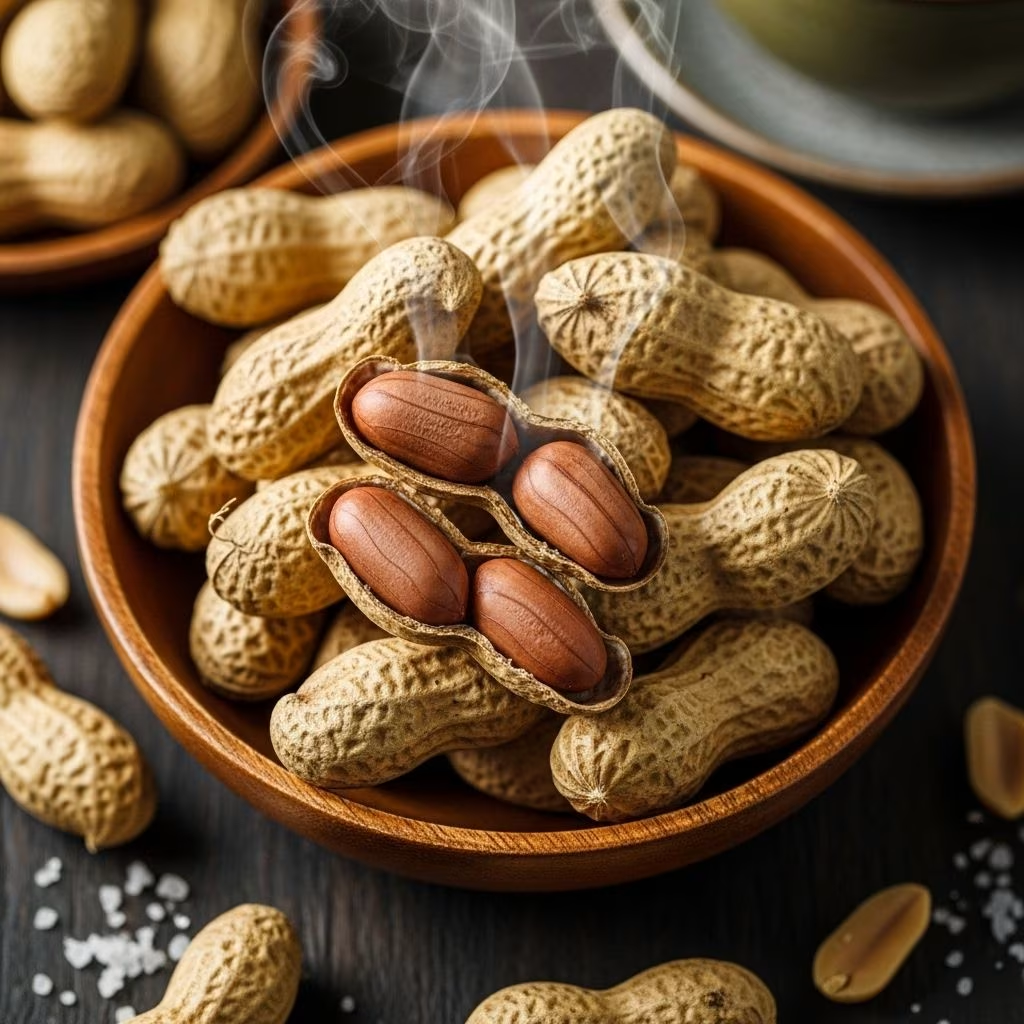
- Pick up a shell. Squeeze gently to split.
- Pop the peanuts out—they should be tender, not mushy, and bathed in salty broth.
- Sample flavors:
- Salted traditional
- Cajun (spicy, with garlic and chili)
- Garlic or dill-brined
- Eat them warm—the briny liquid is as coveted as the legumes themselves.
Boiled peanuts are best made with “green” (raw and freshly harvested) peanuts, simmered in salty water for several hours until yielding and rich.
Frequently Asked Questions (FAQs)
What makes boiled peanuts different from roasted peanuts?
Boiled peanuts are simmered in salt water, giving them a creamy, bean-like texture and savory flavor, unlike the crunchy, intense taste of roasted peanuts.
Where can you buy boiled peanuts?
They are widely available at roadside stands, festivals, gas stations, and even supermarkets across the American South. In other regions, international groceries may carry them, especially fresh during harvest season.
Are boiled peanuts healthy?
Yes—boiled peanuts are high in protein, fiber, antioxidants, and healthy fats. The boiling process increases their antioxidant content compared to roasted peanuts.
What are “goober peas”?
“Goober peas” is a Southern term for peanuts, derived from African languages and immortalized in Civil War songs celebrating this staple food.
Can you make boiled peanuts at home?
Absolutely. With green peanuts, water, salt, and a few hours of simmering, you can enjoy homemade boiled peanuts. Spices like cayenne, garlic, or even star anise offer regional variations.
Are there international versions of boiled peanuts?
Yes. Throughout Africa, Asia, and the Pacific Islands, boiled peanuts are seasoned regionally and eaten as street food or a festive treat.
Conclusion: The Enduring Legacy of Boiled Peanuts
The story of boiled peanuts is one of cultural adaptation, transformation, and survival. From the farms of South America and West Africa to the backroads of Georgia and South Carolina, their legacy is deeply tied to the lives of those who grew, boiled, and shared them—often in the face of adversity. Today, as you crack open a shell and taste that salty, yielding goodness, you taste not only a Southern snack but a centuries-old testament to resilience across continents, communities, and generations.
References
- https://www.tallahassee.com/story/entertainment/2021/07/30/boiled-peanuts-let-us-now-praise-caviar-south/5392173001/
- https://nationalpeanutboard.org/news/history-boiled-peanuts-from-necessity-to-southern-delicacy/
- https://bittersoutherner.com/feature/2023/the-global-love-of-boiled-peanuts
- https://civilwartalk.com/threads/boiled-peanuts-from-necessity-to-southern-delicacy.103586/page-3