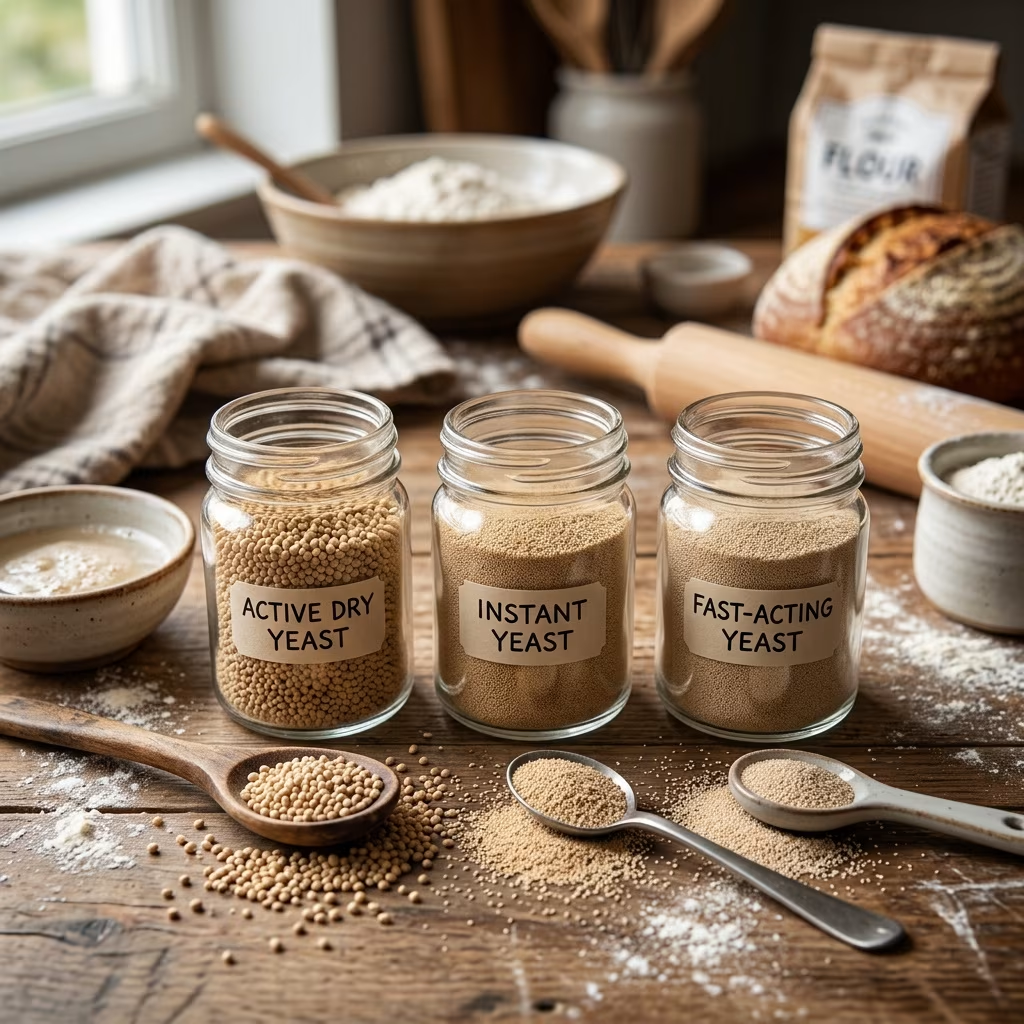
Whether you’re a seasoned bread baker or a home cook dabbling in yeast doughs for the first time, understanding the world of dry yeast is key to successful baking. This guide explores the major categories of dry yeast—instant, active dry, and fast-acting—along with their histories, best uses, and expert advice for optimal results.
What is Baker’s Yeast?
Yeast is a single-celled fungus, primarily Saccharomyces cerevisiae, that works by consuming sugar and producing carbon dioxide and alcohol. In baking, the trapped carbon dioxide makes breads and other yeast-leavened baked goods rise, creating desirable textures and flavors.
Baker’s yeast is available in both fresh/wet (cake yeast) and dry forms. This article focuses on dry forms, which are by far the most common and convenient for home baking.
History of Dry Yeast
Dry yeast revolutionized home baking in the mid-20th century. Early on, bakers relied on fresh yeast, but its perishability posed challenges. With the introduction of active dry yeast in the 1940s and later instant yeast in the 1970s, yeast became shelf-stable, portable, and easier to use, changing home baking forever.
Major Types of Dry Yeast
There are three main types of dry yeast available to bakers:
- Active Dry Yeast
- Instant Yeast
- Fast-Acting/Fast-Rising (Rapid-Rise) Yeast
Active Dry Yeast
Active Dry Yeast is the classic type found in supermarkets. It consists of larger, larger-grained particles and must be dissolved (“proofed”) in warm liquid (100–110°F/38–43°C) before mixing into your dough. This proofing step confirms the yeast’s viability and helps jump-start the fermentation process. It’s ideal for recipes with longer, slower rises, allowing more complex flavors to develop.
- Granular texture; appears as coarse grains
- Requires proofing in warm water/liquid
- Best for standard and artisan breads with longer rises
- Shelf life: Up to 2 years unopened (cool, dry storage), several weeks once opened and refrigerated
Instant Yeast
Instant Yeast is finer and more powdery than active dry yeast. It’s produced with a slightly different drying process that leaves more live yeast cells intact. Instant yeast can be mixed directly into flour without needing to be dissolved first. It works faster and produces more gas early in the fermentation process, making it ideal for recipes requiring a quicker rise.
- Fine texture; small, uniform granules
- No proofing required—adds directly to dry ingredients
- Produces a faster rise than active dry yeast
- Shelf life: Similar to active dry; 2 years unopened, longer if refrigerated/freezer stored after opening
Fast-Acting or Rapid-Rise Yeast
This yeast goes by several names: fast-acting, rapid-rise, quick-rise, or bread machine yeast. It’s formulated to produce carbon dioxide even more quickly during the first rise than even instant yeast. It’s marketed for convenience—ideal for one-hour or express bread recipes or use in bread machines. However, its faster rise often results in less flavor complexity, as less time is given for fermentation and enzymatic reactions.
- Ultra-fine granules; blends easily with flour
- Designed for minimal rising time
- Often contains added dough conditioners or ascorbic acid
- Used in bread machines and quick-rise recipes
Comparing the 3 Types: Table Overview
| Yeast Type | Granule Size | Proofing Needed? | Speed of Rise | Common Uses |
|---|---|---|---|---|
| Active Dry Yeast | Coarse | Yes | Slow-to-moderate | Breads, pizza doughs, rolls |
| Instant Yeast | Fine | No | Moderate-to-fast | Breads, sweet doughs, no-knead |
| Fast-Acting/Rapid-Rise | Very fine | No | Fastest | Bread machines, fast breads |
Other Yeast Forms: Brief Notes
- Fresh/Cake Yeast: Sold in blocks; highly perishable; needs refrigeration. Mostly used by commercial bakers or traditional recipes.
Substitutions require careful weight and moisture adjustments. - Wild Yeast (Sourdough Starter): Home-cultured yeast and bacteria mixtures; not a dry yeast product.
How Yeast Works in Baking
When baker’s yeast is activated with warmth and moisture (and food, often from the dough’s sugars), it produces carbon dioxide, causing dough to expand and rise. The fermentation process also creates flavor and improves the bread’s texture by breaking down starches and gluten, making them more digestible and aromatic.
How to Use Each Type of Dry Yeast
Using Active Dry Yeast
- Add to warm liquid (100–110°F/38–43°C) with a pinch of sugar; let sit for 5–10 minutes. The mixture should become foamy, indicating activation.
- Combine the proofed yeast liquid with flour and other ingredients as your recipe indicates.
Using Instant Yeast
- Mix directly with dry ingredients; no need for separate proofing.
- Add liquid according to recipe—usually slightly cooler than for active dry yeast.
Using Fast-Acting/Rapid-Rise Yeast
- Add directly to the flour in place of instant yeast.
- Use in recipes designed for single, quick proofing steps; not ideal for recipes requiring long fermentation times for flavor development.
Substituting Between Yeast Types
In most cases, active dry yeast and instant yeast can be used interchangeably in recipes. However, there are subtle differences to keep in mind:
- Use a 1:1 substitution by weight.
- For active dry in place of instant, proof in liquid before adding; your dough may need a slightly longer rise.
- For instant in place of active dry, add directly to flour; check dough earlier, as it might rise more rapidly.
- Fast-acting yeasts should generally only replace other types in recipes specifically designed for short rises (e.g., bread machine cycles).
Conversion Table: Common Yeast Substitutions
| To Replace | Use This (by weight) | Additional Instructions |
|---|---|---|
| 1 tsp Instant Yeast | 1 1/4 tsp Active Dry Yeast | Proof before using |
| 1 tsp Active Dry Yeast | 3/4 tsp Instant Yeast | Add direct to flour |
Storing Dry Yeast
- Keep yeast sealed in a cool, dry place until opened. Once opened, store in the refrigerator or freezer inside an airtight container.
- Active dry yeast and instant yeast last up to 2 years unopened, several months open if properly stored cold.
- Before each use, check expiration/best-by dates and, if in doubt, proof a small amount to ensure it’s still active.
Tips for Successful Yeast Baking
- Measure yeast by weight for best results—volume can be inconsistent due to granule size.
- Use water or another liquid at the appropriate temperature: too hot can kill the yeast, too cold will slow fermentation.
- Don’t add salt directly on top of yeast—mix salt with flour first to avoid killing yeast cells.
- Allow dough to ferment/rise in a warm (but not hot), draft-free place.
Common Troubleshooting
- Dough Not Rising: Yeast may have expired, liquid was too hot/cold, or dough environment was too cold.
- Bread Flavor Bland: Fermentation time too short; consider retarding fermentation in refrigerator for more flavor.
- Dough Over-proofed: Dough became overly puffy, lacks structure when handled; reduce rise time or try a cooler place.
Frequently Asked Questions (FAQs)
Can I substitute instant yeast for active dry yeast?
Yes. Use an equal weight. Instant yeast can be added directly to the flour; active dry yeast should be dissolved first. Rising times may differ slightly—keep an eye on your dough.
What’s the difference between rapid-rise and instant yeast?
Both are similar, but rapid-rise is formulated to maximize gas production immediately, ideally for quick breads or bread machines. Instant yeast can be used in a wider range of recipes, including those requiring longer fermentation.
Is proofing yeast always necessary?
For active dry yeast, it’s recommended to proof, especially if you’re unsure about the yeast’s freshness. Instant and rapid-rise yeasts typically do not require proofing unless you want to verify their activity.
How do I store opened packages of dry yeast?
Always keep opened dry yeast in an airtight container in the refrigerator or freezer. Avoid moisture and temperature fluctuations for maximum shelf life.
Why is my dough rising too slowly?
The environment may be too cool, or the yeast amount may be insufficient. Check yeast freshness, and try finding a warmer place for dough to rise (ideally 75–80°F/24–27°C).
Can I use dry yeast in sweet doughs?
Yes, but high sugar content can inhibit yeast activity. Look for recipes specifying osmotolerant yeast or use slightly more yeast to ensure good rise in enriched doughs.
Conclusion
Dry yeast is a versatile and indispensable tool for bakers, available in several varieties that cater to different baking projects and needs. By understanding the characteristics, best uses, and handling of active dry, instant, and fast-acting yeast types, you’ll be well-equipped to tackle everything from rustic breads to quick weeknight rolls with confidence and consistently great results.