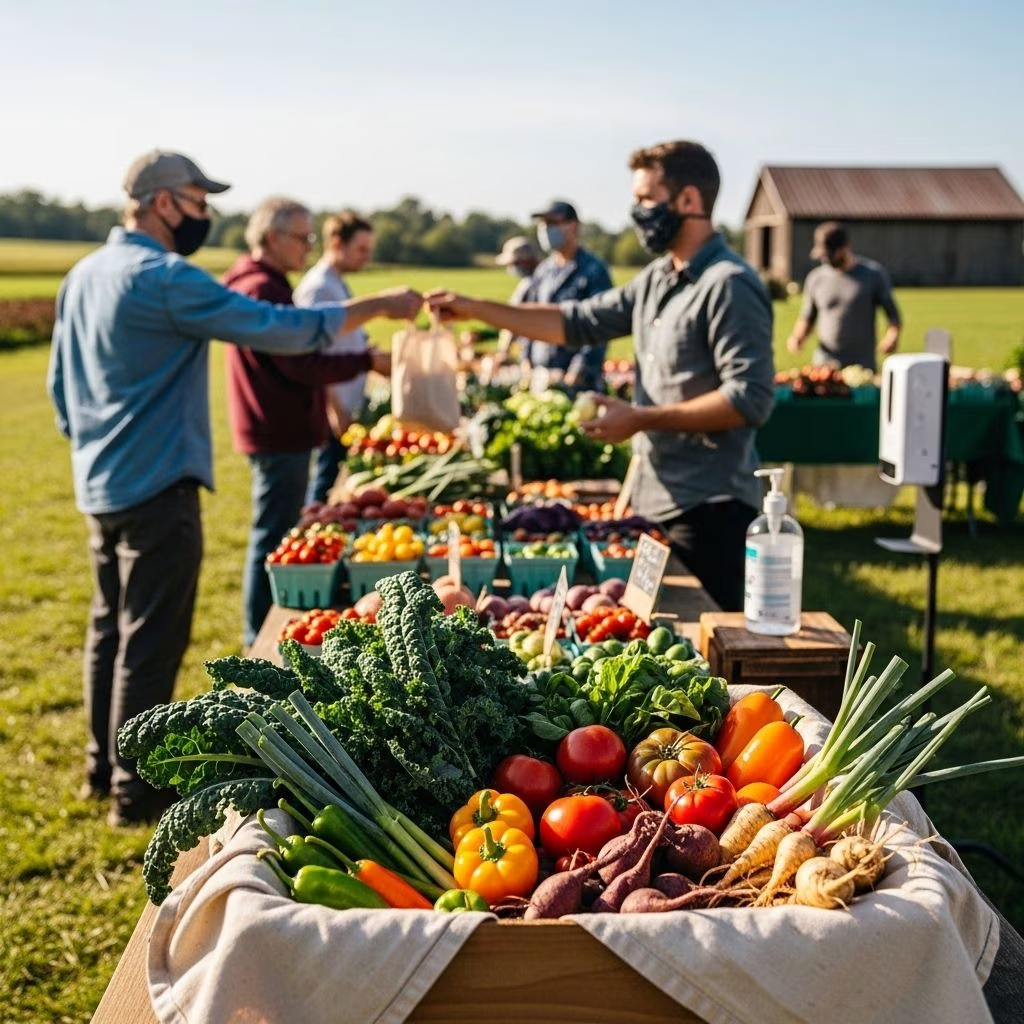
How the COVID-19 Pandemic Fueled a CSA Boom—and Changed Local Farming
When COVID-19 upended daily life in early 2020, grocery shelves ran bare, and the fragility of industrial supply chains became clear. As restaurants shuttered and panic-buying swept the nation, a centuries-old agricultural movement—Community Supported Agriculture (CSA)—suddenly became a lifeline for farmers and consumers alike. This article explores the surge in demand for CSA farm boxes during the pandemic, how it changed local farming, and whether the CSA model is poised for long-term growth.
The Pre-Pandemic CSA Landscape
Community Supported Agriculture has its roots in connecting local communities directly to farms, allowing consumers to buy shares of the season’s harvest. Before COVID-19 struck, the traditional CSA model faced challenges:
- Declining membership and competition from tech-driven grocery delivery services, such as apps and corporate food aggregators.
- A shift from focusing solely on farmer stories to consumer convenience and choice.
- USDA data showed a sharp drop in farms selling CSA shares, from over 12,600 in 2012 to about 7,200 in 2020.
Amidst these pressures, many traditional CSA operations were struggling to retain customers and adapt to changing demand.
Pandemic Panic and the Rise in CSA Demand
The arrival of COVID-19 triggered a cascade of disruptions in the global food system:
- Supply chain bottlenecks and grocery shortages left many shelves empty.
- Consumers frightened of shopping in crowded stores, especially those with at-risk family members, looked for safer, more reliable food sources.
- Panic-buying further exposed vulnerabilities in mainstream food distribution.
As a result, CSA subscriptions skyrocketed. Farms across the U.S. reported wait lists and record-high sign-ups. For instance, the Northern California-based Terra Firma Farm doubled its CSA membership from approximately 700 to 1,300 in a month, quickly building wait lists that continued to grow. Phone lines and inboxes were flooded with desperate requests from new customers.
Nationally, 43.1% of farms selling through CSA or farm stores reported increased sales in 2020 compared to 2019. According to consumer studies, 35% of people bought food from a farm or local food outlet new to them in April 2020, with 3% trying a CSA for the first time. By September 2020, about one-third of these newcomers were still sourcing food this way.
How CSAs Adapted During COVID-19
The unprecedented CSA spike required fast, creative adaptation by farmers and organizers. Key strategies included:
- Emphasizing safety and reliability: Marketing stressed that local food was minimally handled, safe, and free from global supply chain disruptions.
- Pre-packaged shares: Traditional open choice models gave way to pre-packed boxes to limit handling and reduce contact.
- Contactless delivery and pickup: Farms shifted to driveway drop-offs, home delivery, and pre-order pickups to maximize safety and convenience.
- Integrating e-commerce: Online ordering platforms and CSA management software streamlined sign-ups, labeling, and tracking bulk add-on orders for eggs, meat, or specialty goods.
- Enhanced customer engagement: With farm visits and events canceled, virtual engagement flourished—social media posts, email newsletters, and even live farm videos connected members to their local farm’s work.
Table: Key CSA Adaptations During the Pandemic
| Adaptation | Impact |
|---|---|
| Contactless Pickup/Delivery | Enabled safe food access, boosted signups |
| Pre-packaged Boxes | Reduced staff/customer contact, increased efficiency |
| E-commerce Platforms | Streamlined orders, expanded customer reach |
| Virtual Community Building | Maintained member loyalty and transparency |
| Marketing Food Safety | Assuaged consumer fears, highlighted CSA strengths |
Who Benefited—and Who Lost?
While the CSA resurgence brought hope, benefits and challenges were not distributed evenly:
- Established CSAs with e-commerce and delivery infrastructure benefited most, easily absorbing the jump in demand.
- Farms new to CSA, or with small staff and limited resources, struggled with the logistics of rapid scaling – from sourcing packaging to labor shortages.
- Under-resourced or non-English-speaking farmers found adaptation to new models significantly more difficult, with less access to digital tools or marketing resources.
- Farms lost institutional and restaurant business, offset in many cases by direct-to-consumer sales, but not always completely.
Challenges on the Farm: Risks of Rapid Expansion
Behind every overnight CSA success story lay intense work and uncertainty. Farmers faced challenges such as:
- Uncertain crops and planting decisions – Not knowing how long demand would last made planning speculative.
- Managing wait lists and customer requests – Many requests came from vulnerable individuals (elderly, immunocompromised, families with young children) seeking priority.
- Scaling up quickly – Increased add-on orders (bulk items in addition to CSA shares) required building new inventory and logistical systems almost overnight.
- Staffing and safety concerns – Farms had to implement PPE and social distancing in the field and packing areas to keep workers safe.
The workloads for many farms were overwhelming. As one farmer shared, „Decision-making was speculative at best with unknowns about how long the quarantine would last and whether new CSA members would stick around. I remember this being a chaotic and stressful time.“
CSA Programs and Innovations Across the Country
Nationally, a few overarching trends emerged as CSAs responded to pandemic-era markets:
- Container farming: Automated, small-footprint container farms allowed even non-traditional suppliers (like grocers) to launch CSA programs or supplement supply with local produce, demonstrating the model’s adaptability.
- Hybrid models: Bent by necessity, some CSAs mixed traditional subscriptions with farm stand sales, pop-up hubs, and bulk buying clubs.
- Expanded market channels: According to a study of direct-to-consumer farms, CSAs were the second most-added market channel during early COVID-19 (March–December 2020), trailing only online marketplaces.
CSA Ethos: Has It Changed?
The CSA movement has historically centered on reciprocal community between farmers and members—shared risk, farm transparency, and local connection. The COVID-19 surge challenged this ethos in several ways:
- Many newcomers prioritized convenience and safety over the traditional ideals of mutual support and seasonality.
- Larger, tech-driven “box” delivery models (not always tied to small farms or direct farmer connection) adapted CSA branding, raising concerns over dilution of the CSA mission.
- Nonetheless, increased exposure brought more people into dialogue with where their food comes from, fostering education and appreciation for local food systems.
Member Retention and the Future of CSAs
By mid-to-late 2020 and into 2021, some of the initial surge in CSA demand began to fade. As grocery stores normalized, some members returned to old habits. Key questions now shape the future of CSA:
- Will new members stay? Early studies suggest that 1 in 3 new CSA customers continued direct farm purchases into fall 2020, but it’s uncertain whether these rates will hold long-term.
- Has the CSA shifted from niche to mainstream? The pandemic revealed demand for resilient, local food sources. Maintaining this requires farms to innovate on price, flexibility, and accessibility.
- What about farm viability? Traditional CSAs depend on pre-paid shares and direct relationships. Tech-enabled, aggregator-style “farm boxes” could disrupt this, for better or worse.
Some key factors affecting future CSA participation include:
- Continued consumer concern for food safety and security.
- Desire for convenience and customization (e.g., choice of items, size of boxes, delivery options).
- Perceived value and quality compared to grocery alternatives.
What the Pandemic Taught Us About Food Systems
The COVID-19 crisis highlighted the vulnerabilities of global food supply chains and the strengths of local, community-based systems. The CSA surge underscored several lessons:
- Resilient local networks matter when large-scale systems fail.
- Direct connection between farms and consumers offers flexibility and mutual support when conditions change unexpectedly.
- Local food can be safer, fresher, and more responsive to community needs.
For many consumers, joining a CSA during the pandemic was about more than access to fresh food—it was about forging trust with local food producers and investing in regional food security.
Frequently Asked Questions (FAQs)
What is a CSA and how does it work?
A CSA, or Community Supported Agriculture program, connects consumers directly with a local farm. Members pay an upfront fee for a share of the farm’s harvest during a growing season. Subscribers usually receive a box of fresh, seasonal produce (and sometimes eggs, meat, bread, or other goods) weekly or bi-weekly.
Why did CSA demand spike during the pandemic?
CSA demand surged due to grocery store shortages, disrupted commercial food chains, and consumer concern about exposure to COVID-19 in public places. CSAs offered reliable, local, low-contact food sources.
Are CSAs here to stay?
While many new members joined during the pandemic, retention remains to be seen. Farms are working to adapt to changing tastes, convenience needs, and competition, but local food’s future is looking brighter thanks to the attention and innovation brought by the crisis.
Can CSAs offer products beyond produce?
Yes. Many CSA programs offer “add-on” options for eggs, dairy, meat, bread, jams, and other specialty foods—sometimes sourced from partner farms or local food makers.
How do I find a CSA near me?
Local directories (such as LocalHarvest.org) allow users to search for CSAs by location, season, and box type. Many farms also update their own websites or use social media for membership information.
Key Takeaways for Consumers and Farmers
- For consumers: Joining a CSA supports local farmers, strengthens your community’s resilience, and introduces you to the seasonality and diversity of local foods.
- For farmers: Flexibility, creativity, and robust digital tools are key to meeting shifting demand and securing your place in the evolving local food market.
Through all the challenges, the pandemic has brought new appreciation for the farmers who feed us and the power of local food systems to adapt and thrive in times of crisis.
References
- https://communitydevelopment.ucdavis.edu/sites/g/files/dgvnsk1186/files/inline-files/Baddorf_Thesis_FINAL%20with%20signatures.pdf
- https://farmboxfoods.com/community-supported-agriculture/
- https://lfscovid.localfoodeconomics.com/impact_assessments/csa-innovation-network-csa-in/
- https://www.thenaturalfarmer.org/post/pivoting-in-the-pandemic-how-a-small-farm-maximized-its-impact-during-covid
- https://pmc.ncbi.nlm.nih.gov/articles/PMC7337867/
- https://pmc.ncbi.nlm.nih.gov/articles/PMC7900660/