How to Boil Water Faster: Science, Practical Tips, and Simmering vs. Boiling Explained
Boiling water is a fundamental kitchen task, yet the science and technique behind doing it efficiently are often misunderstood. Whether you’re eager to get pasta boiling, want to shave minutes off dinner prep, or wish to understand the nuances between simmering and boiling, this guide delivers all the information you need. Drawing on cooking science and expert advice, you’ll learn how to boil water as fast as possible and to harness the subtleties that temperature permits in your recipes.
The Science of Boiling Water
Boiling is more than bubbles rolling across the pot. Water boils at 212°F (100°C) at sea level. This is the point where water turns from liquid to gas, releasing steam. Several factors influence how quickly you can reach this point, including initial water temperature, equipment efficiency, pot shape, and even atmospheric pressure.
- Heat Transfer: The faster energy is transferred to the water, the quicker the rise to boiling.
- Thermodynamics: The greater the temperature difference between your heat source and the water, the faster it heats.
Picking the Right Equipment
Choosing appropriate cookware and heat sources makes a significant difference in how quickly water reaches a boil.
- Induction Cooktops: Use magnetic fields to directly heat cookware. Results in
avery rapid boil because nearly all the energy goes into the pot. - Electric Stovetops: Transfer heat slower than induction but are generally quicker than gas due to consistent surface contact.
- Gas Stovetops: Provide immediate heat but often result in energy loss around the pot’s sides.
- Electric Kettles: Specifically designed for boiling water efficiently; often much faster than stove methods.
- Pot Material: Pots with high thermal conductivity (aluminum, copper, or stainless steel with clad bottoms) help transfer heat to water quickly.
- Wide Surface Area: Using a wider pot increases exposed surface area, promoting faster evaporation and quicker heating.
Comparison Table: Heat Source Efficiency
| Heat Source | Boiling Speed | Notes |
|---|---|---|
| Induction Cooktop | Fastest | Highly efficient, most energy goes straight to the pot |
| Electric Kettle | Very fast | Specialized for water, often faster than stovetops |
| Electric Stovetop | Moderate | Can be slower due to indirect heating |
| Gas Stovetop | Moderate to fast | Immediate response but heat loss on sides |
Expert Tips for Boiling Water Faster
Practical kitchen strategies go beyond equipment. Here are proven methods to speed up your boil:
- Use Only as Much Water as Needed: The more water in your pot, the longer it takes to heat. Measure for your recipe, and avoid overfilling.
- Start with Hot or Warm Water: Heating hot tap water will always take less time than starting cold, provided your tap water is safe for cooking use.
- Utilize an Electric Kettle: Boil water in an electric kettle (which is optimized for rapid heating), then pour it into your pot. This method is especially helpful for pasta or large volumes.
- Cover the Pot: Always put the lid on! A covered pot traps heat, raising the temperature more quickly and reducing evaporation loss.
- Use a Wide, Shallow Pot: Increased surface area speeds heat transfer and can bring water to a boil more rapidly than a tall, narrow pot.
- Stir Occasionally: Stirring ensures more even temperature distribution, helping all the water get hot quickly.
Step-by-Step: Fastest Way to Boil Water in a Pot
- Use the smallest volume of water needed for your cooking task.
- Add hot tap water if safe, or preheat water in a kettle.
- Pour water into a wide, high-quality metal pot.
- Turn your stove or induction burner to the highest safe heat.
- Cover with a tight-fitting lid to trap steam and heat.
- If impatient, check and stir the water occasionally for even heating.
Common Myths About Boiling Water
- Myth 1: Cold Water Boils Faster Than Hot
Truth: Hot or warm water always boils faster than cold, assuming equal starting volumes. The misconception (sometimes attributed to the so-called Mpemba effect) is not valid in everyday cooking. - Myth 2: Adding Salt Makes Water Boil Faster
Truth: Adding salt actually raises the boiling point slightly, which makes water slower to boil, not faster. Salt should be added for flavor not for speed. - Myth 3: More Heat Makes Water Hotter Than Boiling
Truth: Water cannot get hotter than its boiling point, unless heavily pressurized (as in a pressure cooker). Excessive heat only makes it boil more vigorously, not faster.
Simmering vs. Boiling: What’s the Difference?
Understanding the difference between simmering and boiling is essential for executing recipes properly. Both refer to water’s behavior at high temperatures, but their effects on cooking are distinct.
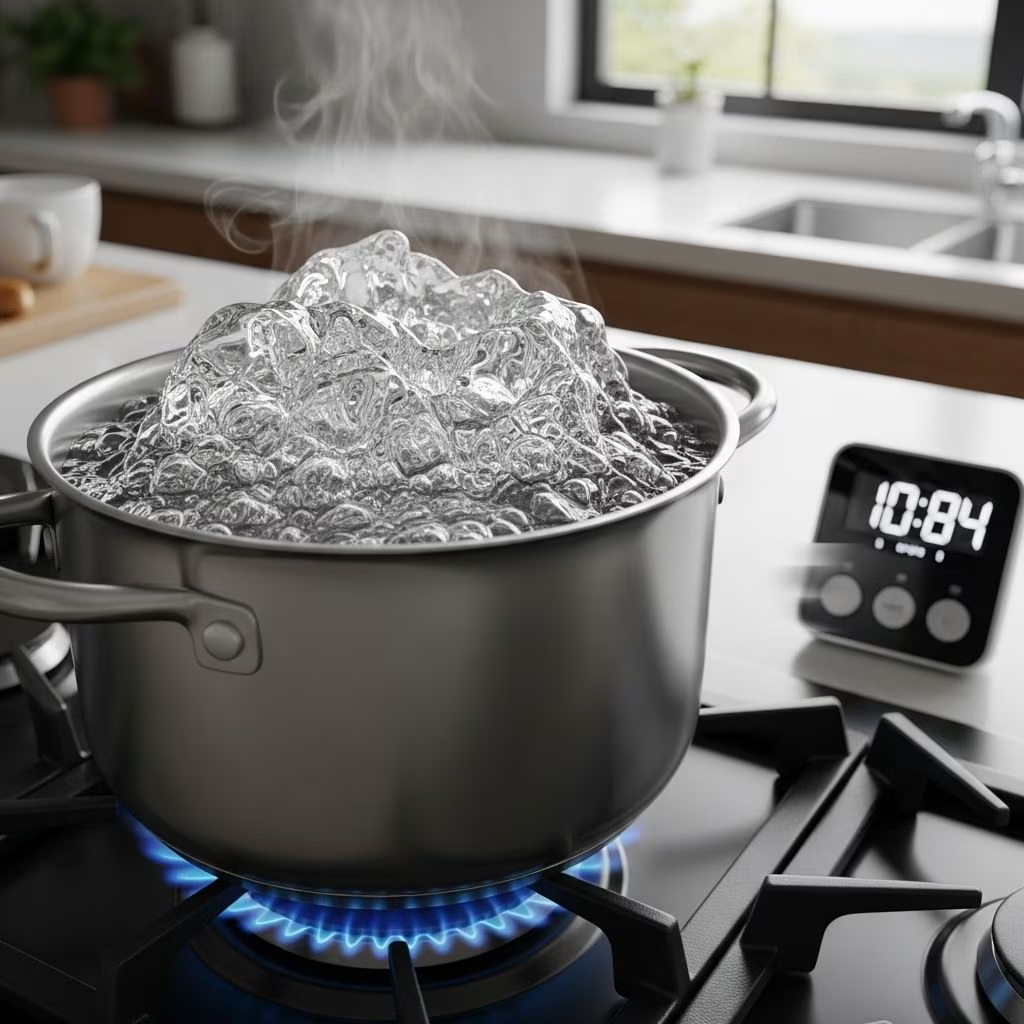
- Boiling: Large, rolling, and constant bubbles. Temperature is around 212°F (100°C) at sea level. Used for pasta, blanching vegetables, and sterilizing.
- Simmering: Gentle, steady, small bubbles. Temperature typically stays between 180°F and 205°F (82°C–96°C). Used for soups, braises, sauces, and poaching primarily to avoid toughening proteins or breaking emulsions.
Visually, a simmer looks like water “smiling”—occasional movement and tiny bubbles at the surface. Full boiling, in contrast, involves vigorous agitation and large bubbles constantly rising.
Table: Characteristics of Boiling vs. Simmering
| Technique | Temperature Range | Visual Cue | Best For |
|---|---|---|---|
| Boiling | 212°F (100°C) | Large, rapid bubbles; rolling action | Pasta, potatoes, blanching |
| Simmering | 180–205°F (82–96°C) | Gentle, small bubbles; few bursts | Soups, stews, poaching |
Tip: If you see food rapidly jostling or hear a constant splashing, you are boiling, not simmering. For delicate foods, drop the heat to maintain a gentle ripple instead of a rowdy boil.
Frequently Asked Questions (FAQs)
Q: Can I use an electric kettle for cooking all dishes that require boiling water?
A: Electric kettles are ideal for quickly heating water, but the lack of temperature control and open surface area makes them unsuitable for actual “cooking” processes like boiling pasta or veggies.
Q: Why is putting a lid on the pot so effective?
A: Lids trap steam and retain heat, significantly reducing heat loss and ensuring all energy goes toward heating water, bringing it to a boil faster.
Q: Does stirring the water make a real difference?
A: Occasionally stirring the pot distributes heat more evenly, potentially shaving off some time by preventing hot or cold spots in large volumes of water.
Q: Is it unsafe to use hot tap water for boiling purposes?
A: Hot tap water can contain more dissolved metals from pipes, which may be undesirable for cooking. For the absolute best flavor and safety, preheat cold water in an electric kettle or pot when possible unless you’re confident in your water supply’s safety.
Q: Why do some recipes call specifically for simmering?
A: Gentle simmering prevents breaking up fragile foods and avoids overcooking proteins, keeping broths, stews, and sauces clear and tender rather than cloudy or tough.
Summary Table: Do’s and Don’ts for Speedy and Effective Boiling
| Do | Don’t |
|---|---|
| Use only as much water as you need | Use extra water “just in case” |
| Choose wide, thin pots for better surface area | Use tall, narrow pots for initial boiling |
| Put on a tight-fitting lid | Leave the pot uncovered |
| Stir occasionally during heating | Let water sit still throughout |
| Add salt only for flavor, not speed | Expect salt to hasten boiling |
Conclusion
With a sound grasp of the underlying science, carefully chosen equipment, and practical kitchen habits, you can minimize the time spent waiting for a boil—and master one of the most essential cooking skills. Remember: use the right amount of water, optimal heat sources, and a lid for speed; learn simmering vs. boiling for culinary finesse. These small shifts will not only save you minutes but also raise the quality of your kitchen results.